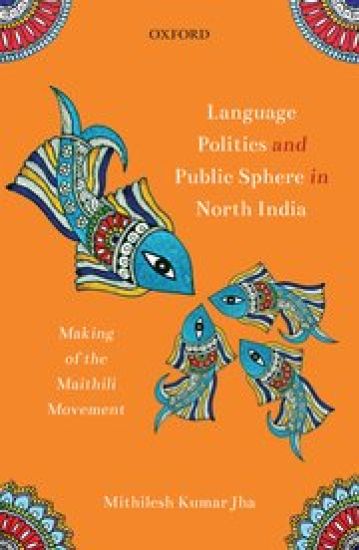
Moving beyond the existing scholarship on language politics in north India which mainly focuses on Hindi-Urdu debates, Language Politics and Public Sphere in North India examines the formation of Maithili movement in the context of expansion of Hindi as the 'national' language. It revisits the dynamic hierarchy through which a distinction is produced between 'major' and 'minor' languages. The movement for recognition of Maithili as an independent language has grown assertive even when the authority of Hindi is resolutely reinforced. The book also examines increasing politicization of the Maithili movement -- from Hindi-Maithili ambiguities and antagonisms, to territorial consciousness, and subsequently to separate statehood demand, along with the persistent popular indifference. Mithilesh Jha examines such processes historically, tracing the formation of Maithili movement from mid-nineteenth century until its inclusion into the eighth schedule of the Indian constitution in 2003.
Research work on coastal Bengal has mostly focused on maritime trading networks. In a clear departure from the existing scholarship, this volume questions the linearity of considering trade as the sole determinant of creation of settlement in the coastal regions. Focusing on settlement strategies, Chattopadhyay unravels how human societies, through successive generations, have adapted to the coastal environment and bioregime. First-hand data, procured through extensive fieldwork, forms the sound basis of this work. From structural remains, ceramic and bone implements, and stone tools, to terracotta figurines and inscriptions, a vast array of sources, including epigraphic and literary sources, is analysed. Significantly, the volume also highlights the interconnection between coastal geography and the hinterland. Chattopadhyay's meticulously researched work offers a geographical and temporal frame which allows the research on coastal Bengal to be viewed as an integral part of the archaeological developments in not only the subcontinent but also the adjoining region of the Southeast Asian countries.
Everyday life in contemporary rural India is characterized by an increased sense of mobility, inequality, and uncertainty. Ordinary villagers often find themselves caught between the promises and failures of democracy and development. This ethnographic study of the village of Khanpur (in Uttar Pradesh, north India) is an attempt to grasp everyday life in rural India. Drawing on descriptions of village life, interspersed with theoretical analyses, the author examines how ordinary people construct their own sense of their lives and their futures in everyday activities: working on farms, attending college, searching for non-farm employment, celebrating religious rituals, and dealing with local elections and democracy. The villagers confront growing economic and moral uncertainty; they creatively harmonize public discourse and local practice; and sometimes they resolve incoherence and unease through the use of irony. In so doing, they perform everyday village and caste ethics and re-create transient political, economic, and moral communities at a time of massive social dislocation. Satendra Kumar in this lucid book shows, in no uncertain terms, that villages in Uttar Pradesh and elsewhere have been and continue to be vibrant grounds for the production of culture, sociality, hope, politics, and persons. He also addresses anthropology's forfeiture of the village as a subject of study in an era of globalization.
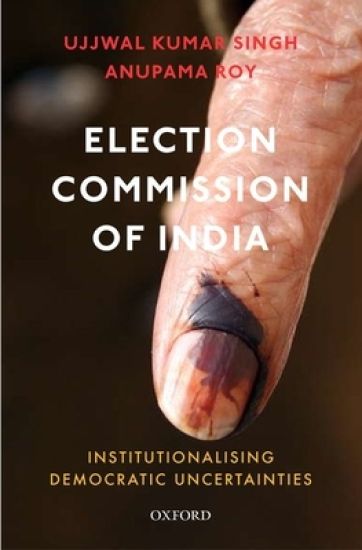
Responding to a pressing need for a focussed study of India's public institutions, Singh and Roy put together the first comprehensive monograph-length study of the Election Commission (EC) of India. They probe the consistent credibility that the EC enjoys as a non-partisan constitutional body entrusted with the responsibility of conducting elections in India. The EC is generally seen as a regulatory body which enforces rules to conduct elections effectively and efficiently. The authors argue that the EC must be seen as performing a range of functions, not all of which are regulatory. The EC is actively engaged in framing and implementing rules to ascertain procedural certainty in order to ensure the democratic principle of uncertainty of electoral outcome. Innovations in conducting elections which are often seen through the lens of electoral 'management' and 'electoral integrity' have become part of the deliberative content of elections. The work also examines the relationship between the legal-institutional frameworks of electoral governance within the larger institutional matrix of democracy, and the political field in which they are located. The latter, the authors argue, both limit and enable the effectiveness of the EC in the shared space of democracy in India.
This new Bangla book discusses Michel Foucault's political and philosophical thoughts in the last decade of his career. The author argues that this decade was one of his most restless, creative, and fascinating. He discusses and analyses Foucauldian theories, such as sexuality, governmentality, bio-politics, and bio-power, as also his concern with the politics of truth, which includes his thoughts on modernity and critique. The book attempts to offer an intellectual history of Foucault's last decade and tries to show how a thinker thinks between the possible and the as-yet unimaginable. The author also engages with the period when Foucault positioned Kant as a critique of modernity. Through his essays on critique and Enlightenment, the author argues, Foucault was searching for another kind of critical philosophy. The essays in this book thus attempt to show the thinking in motion of an innovative intellectual of the twentieth century and in the process try to trace the finer nuances of Foucault's new critical philosophy.
When an investor believes a stock is overvalued and will soon drop in price, he might decide to "short" it. First, he borrows an amount of the stock, and then sells it. He waits for the stock to tank before buying back the same amount of shares at a deflated price. After returning the shares to his lender, he pockets the difference-unless any one of several hard-to-predict variables interferes, and the stock fails to drop. Since these variables are so hard to predict, short selling is difficult for even seasoned investors. It takes great talent and experience to isolate the best short ideas for falling stocks-skills Amit Kumar developed and honed over decades of market analysis and trading. This book shares his short-selling framework, built on themes common to falling stocks and the market's endemic strengths and cycles. Featuring key case studies and exclusive interviews with successful fund managers Bill Ackman (Pershing Square Capital Management) and Mark Roberts (Off Wall Street Consulting Group), Kumar shows investors how to avoid traps and profit from well-researched short ideas. Investors may not always act on short ideas, but they can avoid losses by using Kumar's framework to identify overvalued stocks. Professionals and amateur investors alike will benefit from this fundamental research approach, which transforms short selling into a long-term strategy.
Written exclusively from broadcasters perspective, Mobile Broadcasting with WiMAX will help you move ahead in the use of WiMAX technologies. Whether you are an engineer, content provider, manager, or operator and planning such services, this book helps you understand the dimensions of this new medium and integration of communication, broadcasting and Multimedia technologies. The book oulines migrating to a new generation of broadcasting which integrates the Mobile, Wireless and Fixed network domains, then gives you a complete picture on what is happening in the field. The book is divided into five parts as follows: PART I Gives an introduction to Broadband Wireless Technologies and Mobile WiMAX. Wi-Fi including 802.11a,b,n and g, WiMAX technologies with focus on Mobile WiMAX 802.16e, and provides a global overview of deployment of Wireless broadband networks. PART-II is about Mobile Multimedia broadcasting and Mobile TV technologies, based on both cellular and broadband wireless. PART III covers Resources for Mobile multimedia broadcasting and comprises of four structured chapters on Spectrum for WiMAX networks, WiMAX terrestrial broadcasting networks, client devices for WiMAX and an update of on chipsets developments. Part IV is devoted to the Network Architectures and the integration of WiMAX with other networks, both fixed and mobile. Part V deals with Software architectures and Applications which help the process of mobile multimedia broadcasting. Case studies of prominent networks are given with country specific examples.
'A warm, smart, sexy, and absolutely charming debut' COLLEEN HOOVER, It Ends With Us-----"Think of it like Tinder. Except your parents are the algorithm"Meghna has tried everything to find her jaan: blind dates, the dreaded apps, even attempting conversations with strangers. Everything except arranged marriage.Then Seth, her best friend and the-one-who-got-away, asks her to be his "best man" and suddenly her parent's taste doesn't seem so bad. Which is how she meets the cranky but handsome Karthik, who knows marriage is not for him.They’re the perfect match – if not the one their parents think they are making – and a deal is struck. They’ll announce their engagement: Karthik will be excused from his mother’s set-ups and Meghna will have a date for the wedding from her nightmares.But how can you fake it and get away with it, when you’re not faking it at all?For fans of WEDDING SEASON, SAY YOU'LL BE MY JAAN is brimming with characters you can't help but fall for, off-the-charts chemistry and all the joy of a 90s romcom as it takes a fresh look on that age old search for your other half.-----Everyone’s falling hard for Say You’ll Be My Jaan'The type of South Asian diaspora romance I’ve always wished for. Naina Kumar’s debut is spectacular' Nisha Sharma, Dating Dr. Dil'A fresh and charming story about finding love without losing yourself' Linda Holmes, Evvie Drake Starts Over'This debut about love, culture, family, and friendship is absolutely irresistible?I didn’t want to put it down' Sarah Adler, Mrs. Nash’s Ashes'An instant romance classic!' Farah Heron, Accidentally Engaged'Stuffed to the brim with emotion, chemistry, and all the best microtropes' Ava Wilder, Will They or Won’t They
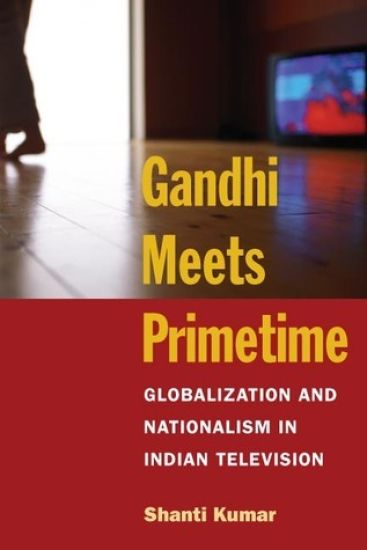
Shanti Kumar's Gandhi Meets Primetime examines how cultural imaginations of national identity have been transformed by the rapid growth of satellite and cable television in postcolonial India. To evaluate the growing influence of foreign and domestic satellite and cable channels since 1991, the book considers a wide range of materials including contemporary television programming, historical archives, legal documents, policy statements, academic writings and journalistic accounts. Kumar argues that India's hybrid national identity is manifested in the discourses found in this variety of empirical sources. He deconstructs representations of Mahatma Gandhi as the Father of the Nation on the state-sponsored network Doordarshan and those found on Rupert Murdoch's STAR TV network. The book closely analyzes print advertisements to trace the changing status of the television set as a cultural commodity in postcolonial India and examines publicity brochures, promotional materials and programming schedules of Indian-language networks to outline the role of vernacular media in the discourse of electronic capitalism. The empirical evidence is illuminated by theoretical analyses that combine diverse approaches such as cultural studies, poststructuralism and postcolonial criticism.
Outside the Box presents an in-depth study of media representation of the 1997 United Parcel Service (UPS) workers' strike. Deepa Kumar delineates the history of the strike, how it coincided with the rise of globalization, and how the mainstream media were pressured to incorporate pro-labor arguments that challenged the dominant logic of neoliberalism. Drawing on a textual analysis of over five hundred news reports, Kumar argues that media reform is more complicated than is suggested by liberal media theorists. She makes a case for a dialectical understanding, developing a "dominance/resistance model" for media analysis.
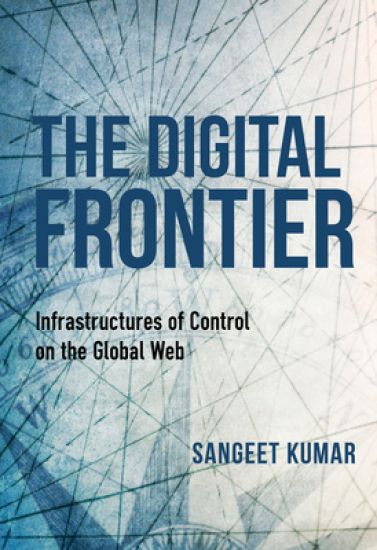
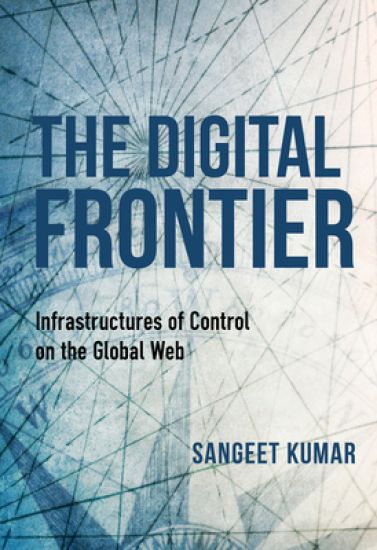
The global web and its digital ecosystem can be seen as tools of emancipation, communication, and spreading knowledge or as means of control, fueled by capitalism, surveillance, and geopolitics. The Digital Frontier interrogates the world wide web and the digital ecosystem it has spawned to reveal how their conventions, protocols, standards, and algorithmic regulations represent a novel form of global power. Sangeet Kumar shows the operation of this power through the web's "infrastructures of control" visible at sites where the universalizing imperatives of the web run up against local values, norms, and cultures. These include how the idea of the "global common good" is used as a ruse by digital oligopolies to expand their private enclosures, how seemingly collaborative spaces can simultaneously be exclusionary as they regulate legitimate knowledge, how selfhood is being redefined online along Eurocentric ideals, and how the web's political challenge is felt differentially by sovereign nation states. In analyzing this new modality of cultural power in the global digital ecosystem, The Digital Frontier is an important read for scholars, activists, academics and students inspired by the utopian dream of a truly representative global digital network.
The global web and its digital ecosystem can be seen as tools of emancipation, communication, and spreading knowledge or as means of control, fueled by capitalism, surveillance, and geopolitics. The Digital Frontier interrogates the world wide web and the digital ecosystem it has spawned to reveal how their conventions, protocols, standards, and algorithmic regulations represent a novel form of global power. Sangeet Kumar shows the operation of this power through the web's "infrastructures of control" visible at sites where the universalizing imperatives of the web run up against local values, norms, and cultures. These include how the idea of the "global common good" is used as a ruse by digital oligopolies to expand their private enclosures, how seemingly collaborative spaces can simultaneously be exclusionary as they regulate legitimate knowledge, how selfhood is being redefined online along Eurocentric ideals, and how the web's political challenge is felt differentially by sovereign nation states. In analyzing this new modality of cultural power in the global digital ecosystem, The Digital Frontier is an important read for scholars, activists, academics and students inspired by the utopian dream of a truly representative global digital network.
Enterprises all over the world are experiencing a rapid development of networked computing for applications that are required for the daily survival of an organization. Client-server computing offers great potential for cost-effective networked computing. However, many organizations have now learned that the cost of maintenance and support of these networked distributed systems far exceeds the cost of buying them. Computer Supported Creative Work (CSCW) is the new evolving area that promotes the understanding of business processes and relevant communication technologies. Cooperative Management of Enterprise Networks uses CSCW as the medium for conveying ideas on the integration of business processes with network and systems management. This book will be useful for systems management professionals wishing to know about business process integration; business managers wishing to integrate their tasks with network/systems management; software system developers wishing to adopt participatory design practices; and students and researchers.
The second in a two-part series on Life-Threatening Infections. Article topics include: Biowarfare/Bioterrorism pathogens, Infections in neutropenics, Infections in AIDS, Influenza and endemic viral pneumonias, Resistant gram negative infections, Toxic Shock Syndrome, Fulminant viral myocarditis, and Overwhelming post-splenectomy infection.
This issue, edited by Dr. Rakesh Kumar, reviews current clinical information in "PET Based Interventions." Articles will include: PET/CT in Radiofrequency Ablation; PET/CT Guided FNAC/Biopsy; PET/CT in Radiotherapy Planning; Dual Time Point Imaging; The Role of PET in Radiation Oncology; PET/CT in Individualization of Treatment (Personalized medicine); Ga68-DOTA-TOC PET/CT in targeted radionuclide therapy (Lu188 therapy for NET); Role of FDG PET/CT in Targeted Radionuclide Therapy of Endocrine Malignancies; Overview of Conventional Imaging Based Intervention in Clinical Practice; Special Techniques in PET/CT in Evaluating Genito-urinary Malignancies; and more!
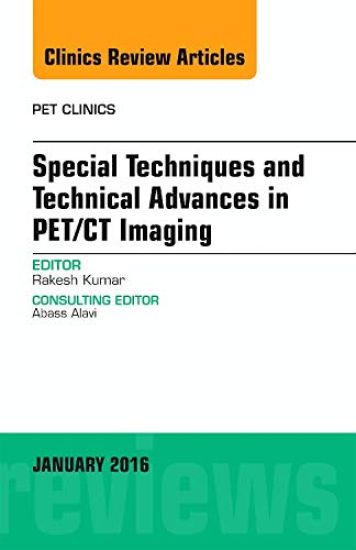
This issue of PET Clinics focuses on Special Techniques and Technical Advances in PET/CT Imaging. Articles will include: PET/CT Guided FNAC/Biopsy; Dual Time Point Imaging; Overview of Conventional imaging based intervention in clinical practice; Special Techniques in PET/CT in evaluating genito-urinary malignances; Special techniques in PET/CT imaging for evaluation of head and neck cancer; PET/CT enteroclysis; Contrast media in PET/CT imaging; PET/CT guided RFA; Non-attenuated corrected PET/CT imaging and applications; and more!
Readable and highly illustrated, Robbins and Cotran Pathologic Basis of Disease, 10th Edition presents an in-depth, state-of-the-art overview of human diseases and their cellular and molecular basis. This best-selling text delivers the latest, most essential pathology knowledge in a readable, interesting manner, ensuring optimal understanding of the latest basic science and clinical content. More than 1,000 high-quality photographs and full-color illustrations highlight new information in molecular biology, disease classifications, new drugs and drug therapies, and much more. This superb learning package also includes an enhanced eBook with a full complement of ancillary content on Student Consult. Provides uniquely authoritative and readable coverage, ideal for USMLE or specialty board preparation, as well as for coursework. Covers the hot topics you need to know about, including novel therapies for hepatitis C, classification of lymphomas, unfolded protein response, non-apoptotic pathways of cell death, coronavirus infections, liquid biopsy for cancer detection, regulation of iron absorption, clonal hematopoiesis and atherosclerosis, thrombotic microangiopathies, heparin-induced thrombocytopenias, inflammatory myopathies, genetic tools for treatment of cystic fibrosis, and many more. Uses an outstanding full-color, user-friendly design to simplify your study and quickly direct you to the information you need to know, with learning features such as boldface overviews at the beginning of each section, key concepts boxes, suggested readings, schematic diagrams that illustrate complex concepts, and new gross and microscopic figures for clarity of morphology. Brings you up to date with the latest information in molecular and genetic testing, mechanisms of disease, personalized medicine and its impact on treatment of human diseases, the role of microbiome and metabolome in non-communicable diseases, and much more. Provides access to a wealth of interactive ancillaries online: pathology case studies, videos, self-assessment questions, Targeted Therapy boxes that discuss drug therapy for specific diseases, interactive cases, and more. Enhanced eBook version included with purchase. Your enhanced eBook allows you to access all of the text, figures, and references from the book on a variety of devices
The newest addition to the highly regarded Robbins family of pathology references, Robbins Essential Pathology is a concise resource that covers the core knowledge needed for coursework and exams in an integrated, multimedia format designed for today's students. Ideal for use with an integrated medical curriculum, this easy-to-study multimedia package provides reliable Robbins content in a concentrated, highly efficient format, now fully integrated with interactive digital resources (cases, MCQs, images). Efficient, effective, and up to date, this new Robbins learning resource delivers the essential information you need to obtain a strong scientific foundation in pathology. The most concise Robbins text available, providing high-quality content and a case-based approach in a focused, multimedia learning package for coursework and exam preparation. Focuses on the core knowledge of disease mechanisms and essential clinical aspects that medical students need to know. Features more than 500 images and tables that illustrate key disorders and concepts. Includes Student Consult access which features the full contents of the book, plus exclusive integrated digital learning tools: Interactive cases and images that reinforce clinical application of core concepts Therapy boxes that describe new advances in medical therapeutics and support your transition to practice Self-assessment questions to help you evaluate your progress, with links to the Essentials text Searchable glossary of terms
Easy to read and abundantly illustrated, Electrocardiography of Arrhythmias: A Comprehensive Review, 2nd Edition, provides the core knowledge and clinical competencies you need to accurately interpret ECGs in preparation for cardiology boards and clinical practice. World-renowned cardiologists Mithilesh K. Das and Douglas P. Zipes offer a concise yet definitive review of all the ECG basics with realistic scenarios and detailed explanations for a wide range of ECG applications. Use this outstanding review tool alone or as a companion to Cardiac Electrophysiology: From Cell to Bedside. Provides a solid understanding of normal electrocardiograms and common abnormal findings, preparing you to accurately interpret ECGs and ace the ECG part of cardiology boards or the ABIM ICE ECG certifying exam. Contains realistic cases that simulate the clinical exam experience, and each ECG includes a brief clinical history in board format. Features more than 250 ECGs that demonstrate virtually any arrhythmia you're likely to encounter. Includes new ECGs covering intracardiac electrophysiology, atrial fibrillation, ablation of many arrhythmias, arrhythmias associated with valvular surgery, idiopathic PVCs, arrhythmias associated with structural heart disease, ARVC, Brugada syndrome, and others. Covers key topics such as AV conduction abnormalities, complex atrial and ventricular arrhythmias, idiopathic ventricular tachycardia, and inherited arrhythmia syndromes. Enhanced eBook version included with purchase. Your enhanced eBook allows you to access all of the text, figures, and references from the book on a variety of devices.
Surfactants in Slurry Stabilisation and Transportation: Preparation and Characterization describes methods for the isolation and characterization of natural surfactants and their potential as slurry stabilizers. It also describes the characterization of physical and chemical properties of slurries, in relation to their particle distribution. It also includes slurry preparation and characterization by using different rheological parameters and discusses mechanisms of stabilization of different slurries. The book includes a comparative cost analysis and offers rheological modelling and Computational fluid dynamics (CFD) analysis of different slurry systems.