Kirjojen hintavertailu. Mukana 12 390 323 kirjaa ja 12 kauppaa.

Kirjahaku

Etsi kirjoja tekijän nimen, kirjan nimen tai ISBN:n perusteella.

1000 tulosta hakusanalla Kurt Jahn-Nottebohm

Why Isn't God Nice?

Why Isn't God Nice?

Kurt Bruner

Monarch Books
2015
nidottu
What do we do with a God who calls Himself "jealous," who allows suffering in the world, and who promises in His Word to judge everyone on earth? How does that reconcile with the image of God popular in evangelical churches - loving, forgiving, and shepherding us? More importantly, how does a person going through hard times learn to embrace a God who can allow such difficult circumstances? Longtime pastor and director of Open Doors Kurt Bruner explores who God is, how He works in our lives, and how we can see Him at work.
Legacy of Friedrich von Hayek DVD, Volume 5
Each of the seven DVDs in this series, represents one of a series of seven lectures sponsored in 1999 by Liberty Fund and the Committee on Social Thought at the University of Chicago in celebration of the hundredth anniversary of Friedrich von Hayek's birth. Approximate running time: 82 minutes.
Birds of Lesotho

Birds of Lesotho

Kurt Bonde

University of KwaZulu-Natal Press
1996
nidottu
Records on the birds of Lesotho are sketchy, scattered, and often difficult to find. The author has brought these records together, and used them to make comparisons with his own extensive observations. The result is a far more comprehensive list of sightings, breeding observations, and status changes than has ever before been available. An annotated reference list, an ornithological history, and a guide to good birding areas point the way to continued exploration. ""Birds of Lesotho"" will be of interest to a wide range of readers, from amateur birders visiting or residing in the area to more serious students of bird populations in relation to changing habitats.
For the Love of Rivers

For the Love of Rivers

Kurt D. Fausch

Oregon State University
2015
nidottu
Rivers and streams supply our water and capture our imaginations. We seek the more pristine ones to fish or paddle, to hike along or simply sit and watch. But what is it we are seeing? What is essential about streams and rivers for us as humans?In For the Love of Rivers, stream ecologist Kurt Fausch draws readers across the reflective surface of streams to view and ponder what is beneath, and how they work. While celebrating their beauty and mystery, he uses his many years of experience as a field biologist to explain the underlying science connecting these aquatic ecosystems to their streamside forests and the organisms found there—including humans.For the Love of Rivers introduces readers to the life and work of Shigeru Nakano, a pioneering river ecologist who inspired other scientists around the world with his innovative research on stream-forest connections. Fausch takes readers along as he journeys to Japan, where he awakens to an unfamiliar culture, to Nakano, and his research.Nakano’s life was abruptly ended in a tragic field accident, and his death was deeply mourned. Fausch joins Japanese and American colleagues to continue Nakano’s research legacy, learn everything they can about the effects that humans have on rivers, fish, and their intricate links with riparian zones, and share this knowledge with others.More than a book about stream ecology, For the Love of Rivers is a celebration of the interconnectedness of life. It is an authoritative and accessible look at the science of rivers and streams, but it also ponders the larger questions of why rivers are important to humans, why it is in our nature to want to be near them, and what we can do now to ensure the future of these essential ecosystems.
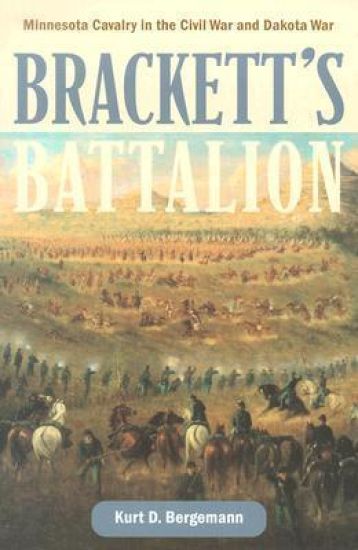
Brackett's Battalion

Brackett's Battalion

Kurt D. Bergemann

Minnesota Historical Society Press,U.S.
2004
nidottu
Amidst the chaos of a two-front war -- one against the Confederacy and the other against the Dakota Indians -- Brackett's Battalion of Mionnesota Cavalry transformed from raw recruits into seasoned and battle-hardened troops and served longer than any other Minnesota unit in the Civil War. Told through the extant journals, diaries and letters of the troopers themselves, this book brings to light a long neglected aspect of Minnesota's role in the Civil War and reveals a side of the conflict rarely portayed in the war's literature.
Orphan Road

Orphan Road

Kurt E. Armbruster

Washington State University Press
2016
pokkari
Seattle residents were bitterly disappointed in 1873 when the Northern Pacific selected rival Tacoma as the future Puget Sound terminus for Washington Territory's first transcontinental railroad. Kurt E. Armbruster's enthralling account describes their frantic quest for an Elliott Bay saltwater depot--including the scheming between city founders and railroad companies.Even in early territorial times Seattle aspired to be the "Queen City of Puget Sound" by tapping into a rich Asian Pacific commerce, and a cross-country rail link to the eastern United States would play a critical role. Frustratingly thwarted again and again, "Seattle Spirit" finally prevailed by 1890, but not without cost. The city was forced into "war" with the Northern Pacific over extensive land grants, and with railroad barons attempting to manipulate local politics and commercial expansion.Armbruster's lavishly illustrated narrative portrays the growth of railways across the Puget Sound region-from the initial 1853-54 government surveys to the completion of the Milwaukee Road in 1911. The accounts include details about individual lines, the intense Seattle-Tacoma rivalry, and the colorful personalities and urban ambitions that eventually brought the Emerald City to the forefront of Washington commerce.
Coining Corruption

Coining Corruption

Kurt Hohenstein

Northern Illinois University Press
2007
sidottu
In the wake of Watergate, Congress passed the Federal Election Campaign Act (FECA) in an effort to prevent the corruption of future elections. The U.S. Supreme Court, in Buckley v. Valeo (1976), defined corruption as quid pro quo—"get for giving"—meaning Congress could only regulate the kind of corruption that had occurred if a campaign contributor received political favors from the candidate. This definition has since shaped and limited efforts at campaign finance reform, often with ironic and unintended consequences. By shifting the focus to the source and amount of contributions, the justices in the Buckley decision ignored disparities in funding and the resulting ability of particular candidates to dominate communication channels. In Coining Corruption, legal and political historian Kurt Hohenstein provides a hitherto untold story about the successes and limitations of political reform. From 1876 until 1976, lawmakers and courts permitted regulation that potentially infringed upon freedom of speech: they understood corruption as the conversion of economic power into political power. In their view, corruption existed if a candidate's unfettered campaign spending overwhelmed other voices and limited real deliberation. Yet, as Hohenstein shows, Buckley's limited "quid pro quo" definition ignores these considerations. Following the evolution of the campaign finance system through the Bipartisan Campaign Reform Act of 2001 and the Supreme Court's decisions in McConnell v. FEC (2001) and Landell v. Sorrell (2006), Hohenstein calls for a return to a broad, historical understanding of corruption. American democracy demands regulation of the sources and amounts of campaign funding in order to prevent a monopoly on the vehicles of political debate. Those interested in reform politics, public policy, constitutional history, and Congress will appreciate this groundbreaking study.
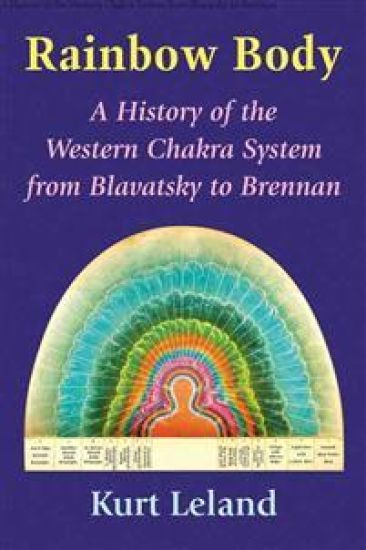
The Rainbow Body

The Rainbow Body

Kurt Leland

Ibis Press
2016
nidottu
If you've ever had questions about the inconsistencies between chakra systems or wondered where the names, colors, locations, and other associations came from--you'll find the answers here, along with 24 tables and 28 black-and-white illustrations showing how the Western chakra system developed from the mid-19th through the 20th century, many from rare and forgotten sources.Based on the teachings of Indian Tantra, the chakras have been used for centuries as focal points for healing, meditation, and achieving a gamut of physical, emotional, and spiritual benefits, from improved health to ultimate enlightenment. Contemporary yoga teachers, energy healers, psychics, and self-help devotees think of the chakra system as thousands of years old. Yet the most common version in use in the West today came together as recently as 1977.Never before has the story been told of how the Western chakra system developed from its roots in Indian Tantra, through Blavatsky to Leadbeater, Steiner to Alice Bailey, Jung to Joseph Campbell, Ramakrishna to Aurobindo, and Esalen to Shirley MacLaine and Barbara Brennan.
First Pennsylvanians

First Pennsylvanians

Kurt W. Carr; Roger W. Moeller

Pennsylvania Historical Museum Commission
2015
pokkari
In First Pennsylvanians, Kurt Carr and Roger Moeller provide a broad, accessible, and wide-ranging overview of the archaeological record of Native Americans in Pennsylvania from early prehistory through the Paleoindian, Archaic, Transitional, Woodland, and Contact periods, stretching from 16,500 years ago to 1750 C.E. The authors present and analyze specific traits of each archaeological time period covered and use the archaeological record to provide a glimpse of Native Americans' daily life in Pennsylvania. First Pennsylvanians also includes personal stories and anecdotes from archaeologists about their experiences in the field as well as a wealth of illustrations and diagrams. The chapters examine the environment, social groups, tools, subsistence, and settlement patterns of Native Americans in Pennsylvania and describe how these factors profoundly affected the populations and cultures of these early inhabitants of the region.
Hiring Legally

Hiring Legally

Kurt Decker

Baywood Publishing Company Inc
1999
nidottu
The principles, procedures, and policies applicable to hiring are reviewed by this book to assist in minimizing litigation risks for employers and acquainting employees with these employer procedures to protect their disclosures of non-job-related information. Areas covered include the hiring process, pre-employment screening fundamentals, data verification, and federal and state statutes affecting the hiring process.
Urban Villages and Local Identities

Urban Villages and Local Identities

Kurt E. Kinbacher; Timothy R. Mahoney

Texas Tech Press,U.S.
2015
sidottu
Urban Villages and Local Identities examines immigration to the Great Plains by surveying the experiences of three divergent ethnic groups Volga Germans, Omaha Indians, and Vietnamese that settled in enclaves in Lincoln, Nebraska, beginning in 1876, 1941, and 1975, respectively. These urban villages served as safe havens that protected new arrivals from a mainstream that often eschewed unfamiliar cultural practices. Lincoln's large Volga German population was last fully discussed in 1918; Omahas are rarely studied as urban people although sixy-five percent of their population lives in cities; and the growing body of work on Vietnamese tends to be conducted by social scientists rather than historians, few of whom contrast Southeast Asian experiences with those of earlier waves of immigration. As a comparative study, Urban Villages and Local Identities is inspired, in part, by Reinventing Free Labor, by Gunther Peck. By focusing on the experiences of three populations over the course of 130 years, Urban Villages connects two distinct eras of international border crossing and broadens the field of immigration to include Native Americans. Ultimately, the work yields insights into the complexity, flexibility, and durability of cultural identitiesamong ethnic groups and the urban mainstream in one capital city.
Urban Villages and Local Identities

Urban Villages and Local Identities

Kurt E. Kinbacher; Timothy R. Mahoney

Texas Tech Press,U.S.
2015
nidottu
Urban Villages and Local Identities examines immigration to the Great Plains by surveying the experiences of three divergent ethnic groups—Volga Germans, Omaha Indians, and Vietnamese—that settled in enclaves in Lincoln, Nebraska, beginning in 1876, 1941, and 1975, respectively. These urban villages served as safe havens that protected new arrivals from a mainstream that often eschewed unfamiliar cultural practices.Lincoln's large Volga German population was last fully discussed in 1918; Omahas are rarely studied as urban people although sixy-five percent of their population lives in cities; and the growing body of work on Vietnamese tends to be conducted by social scientists rather than historians, few of whom contrast Southeast Asian experiences with those of earlier waves of immigration.As a comparative study, Urban Villages and Local Identities is inspired, in part, by Reinventing Free Labor, by Gunther Peck. By focusing on the experiences of three populations over the course of 130 years, Urban Villages connects two distinct eras of international border crossing and broadens the field of immigration to include Native Americans. Ultimately, the work yields insights into the complexity, flexibility, and durability of cultural identities among ethnic groups and the urban mainstream in one capital city.
Musical Life in a Changing Society

Musical Life in a Changing Society

Kurt Blaukopf

Amadeus Press
1992
nidottu
The sociology of music is a young discipline and this book addresses the seminal issues explaining the role musical activity plays in our social and cultural life. It also contains practical aspects in how music is structured and tonal material is used.
The Organism

The Organism

Kurt Goldstein; Oliver Sacks

Zone Books
1995
sidottu
Foreword by Oliver Sacks Kurt Goldstein (1878-1965) was already an established neuropsychologist when he emigrated from Germany to the United States in the 1930s. This book, his magnum opus and widely regarded as a modern classic in psychology and biology, grew out of his dissatisfaction with traditional natural science techniques for analyzing living beings. It offers a broad introduction to the sources and ranges of application of the "holistic" or "organismic" research program that has since become a standard part of biological thought. Goldstein was especially concerned with the breakdown of organization and the failure of central controls that take place in catastrophic responses to situations such as physical or mental illness. But he was equally attuned to the amazing powers of the organism to readjust to such catastrophic losses, if only by withdrawal to a more limited range that it could manage by a redistribution of its reduced energies, thus reclaiming as much wholeness as new circumstances allowed. Goldstein's theses in The Organism have had an important impact on philosophical and psychological thought throughout the twentieth century, as evidenced in the work of Maurice Merleau-Ponty, Georges Canguilhem, Ernst Cassirer, and Ludwig Binswanger.
The Organism

The Organism

Kurt Goldstein; Oliver Sacks

Zone Books
2000
pokkari
Foreword by Oliver Sacks Kurt Goldstein (1878-1965) was already an established neuropsychologist when he emigrated from Germany to the United States in the 1930s. This book, his magnum opus and widely regarded as a modern classic in psychology and biology, grew out of his dissatisfaction with traditional natural science techniques for analyzing living beings. It offers a broad introduction to the sources and ranges of application of the "holistic" or "organismic" research program that has since become a standard part of biological thought. Goldstein was especially concerned with the breakdown of organization and the failure of central controls that take place in catastrophic responses to situations such as physical or mental illness. But he was equally attuned to the amazing powers of the organism to readjust to such catastrophic losses, if only by withdrawal to a more limited range that it could manage by a redistribution of its reduced energies, thus reclaiming as much wholeness as new circumstances allowed. Goldstein's theses in The Organism have had an important impact on philosophical and psychological thought throughout the twentieth century, as evidenced in the work of Maurice Merleau-Ponty, Georges Canguilhem, Ernst Cassirer, and Ludwig Binswanger.