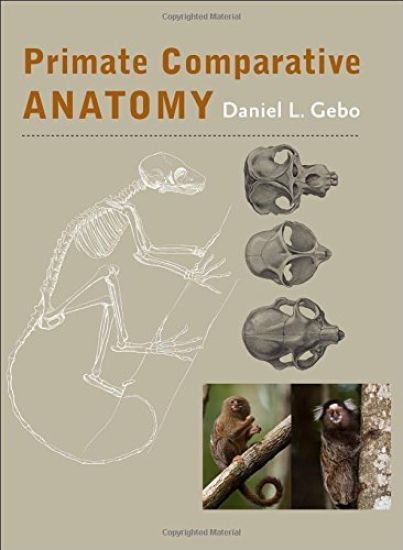
Why do orangutan arms closely resemble human arms? What is the advantage to primates of having long limbs? Why do primates have forward-facing eyes? Answers to questions such as these are usually revealed by comparative studies of primate anatomy. In this heavily illustrated, up-to-date textbook, primate anatomist Daniel L. Gebo provides straightforward explanations of primate anatomy that move logically through the body plan and across species. Including only what is essential in relation to soft tissues, the book relies primarily on bony structures to explain the functions and diversity of anatomy among living primates. Ideal for college and graduate courses, Gebo's book will also appeal to researchers in the fields of mammalogy, primatology, anthropology, and paleontology. Included in this book are discussions of: Phylogeny; Adaptation; Body size; The wet- and dry-nosed primates; Bone biology; Musculoskeletal mechanics; Strepsirhine and haplorhine heads; Primate teeth and diets; Necks, backs, and tails; The pelvis and reproduction; Locomotion; Forelimbs and hindlimbs; Hands and feet; and Grasping toes.
Expert advice on how any citizen can fight government fraud, waste, abuse, and corruption.Does government fraud, waste, abuse, and corruption make your blood boil?In The Art of the Watchdog, Daniel L. Feldman and David R. Eichenthal show how to fight back. Based on their own work in federal, state, and local government over the last forty years, they will arm you with the tools and techniques needed to put the spotlight on those who cheat and steal from the public or who squander valuable taxpayer dollars through waste and inefficiency. At the same time, Feldman and Eichenthal outline what they see as the good and the bad of current oversight efforts based on case studies from across the nation. Ultimately their goal is to ensure that the "art of the watchdog" does not become a lost one and to improve the quality and integrity of government and strengthen democracy.
Expert advice on how any citizen can fight government fraud, waste, abuse, and corruption.Does government fraud, waste, abuse, and corruption make your blood boil?In The Art of the Watchdog, Daniel L. Feldman and David R. Eichenthal show how to fight back. Based on their own work in federal, state, and local government over the last forty years, they will arm you with the tools and techniques needed to put the spotlight on those who cheat and steal from the public or who squander valuable taxpayer dollars through waste and inefficiency. At the same time, Feldman and Eichenthal outline what they see as the good and the bad of current oversight efforts based on case studies from across the nation. Ultimately their goal is to ensure that the "art of the watchdog" does not become a lost one and to improve the quality and integrity of government and strengthen democracy.
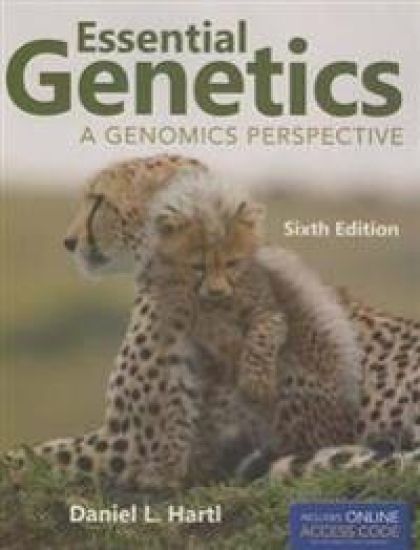
Every new copy includes access to the student companion website Updated throughout to reflect the latest discoveries in this fast-paced field, Essential Genetics: A Genomics Perspective, Sixth Edition, provides an accessible, student-friendly introduction to modern genetics. Designed for the shorter, less comprehensive course, the Sixth Edition presents carefully chosen topics that provide a solid foundation to the basic understanding of gene mutation, expression, and regulation. It goes on to discuss the development and progression of genetics as a field of study within a societal and historical context. The Sixth Edition includes new learning objectives within each chapter which helps students identify what they should know as a result of their studying and highlights the skills they should acquire through various practice problems. What's new in the Sixth Edition? Chapter 1 includes a new section on the origin of life Chapter 2 includes a revised discussion of the complementation test and how it is used to determine whether two mutations have defects in the same gene Chapter 3 incorporates new data showing that the folding of interphase chromatin into chromosome territories has the form of a fractal globule. It also includes a new section on progenitor cells and embryonic stem cells Chapter 4 includes a new section discussing how copy-number variation in human amylase evolved in response to increased dietary starch as well as the latest on hotspots of recombination Chapter 5 is updated with the latest information on hazards of polycarbonate food containers. It also includes a new section on the genetics of schizophrenia and autism spectrum disorder Chapter 6 includes a revised section on restriction mapping and also discusses the newest massively parallel DNA sequencing technologies that can yield the equivalent of 200 human genomes' worth of DNA sequence in a single sequencing run Chapter 7 has been updated with a shortened and streamlined discussion of recombination in bacteriophage Chapter 8 includes new discoveries concerning the mechanisms of intrinsic transcriptional termination as well as rho-dependent termination Chapter 9 is updated with a new section on stochastic effects on gene expression and an expanded discussion of the lactose operon. There is also a revised discussion of galactose gene regulation in yeast, as well as new sections on lon noncoding RNAs Chapter 10 includes new sections on ancient DNA sequences of the Neandertal and Denisovan genomes Chapter 11 examines master control genes in development Chapter 12 includes a new section on the repair of double-stranded breaks in DNA by nonhomologous end joining or template-directed gap repair Chapter 13 has been extensively revised with the latest data on cancer. Chapter 14 includes a new section on the detection of natural selection, as well as a new section on conservation genetics Key Features of Essential Genetics, Sixth Edition: New Learning Objectives within each chapter help students to: Identify what they should know or be able to do as a result of their study Focus on the knowledge they should have acquired from studying the chapter Guide them to identify key concepts and use them at a variety of learning levels including comprehension, application, analysis, and synthesis Highlight the skill they should acquire through practice of various problem types Each chapter includes several different types and levels of problems, including: concept, synthesis, and discussion questions, problem solving questions, and application and analysis problems. The companion Website, GeNETics on the Web, includes numerous study tools and learning resources such as animated flashcards, crosswords, and practice quizzes An electronic Student Study Guide and Solutions Manual is available, containing chapter summaries, key terms, and extra study questions, as well as worked solutions for all Concepts in Action problems. The Instructor's Media CD-ROM includes a PowerPoint Image Bank and PowerPoint Lecture Slides. An online Test Bank is also available for use in most course management systems.