Kirjojen hintavertailu. Mukana 11 627 466 kirjaa ja 12 kauppaa.

Kirjahaku

Etsi kirjoja tekijän nimen, kirjan nimen tai ISBN:n perusteella.

1000 tulosta hakusanalla Laurie J. Vitt; Janalee P. Caldwell

Courting Power

Courting Power

Laurie Shepard

CRC Press Inc
1998
sidottu
This text chronicles a change in epistolary persuasion in the 1230's, crystallized at the imperial chancery of Frederick II, Emperor from 1220-1250. There, traditional appeals, premised on authority and harmony, were challenged by letters in which historical circumstances functioned as an integral part of the strategy of persuasion. Based on the close reading of "Artes Dictandi", as well as a series of letters issued from the papal and imperial chanceries, this book explores the theory and practice of medieval letter-writing. Letters are evaluated as verbal acts intended to persuade, with the public as the ultimate arbiter of success. The author argues that the form, proportion and style of letters were contoured by ideology.
Labor and Writing in Early Modern England, 1567?1667
Looking at texts by non-aristocratic authors, in this studythe author investigates the relationship between nascent early modern notions of professional authorship and the emerging idea of vocation - the sense that one's identity is bound up in one's work. The author analyzes how the concept of labor as a calling, which was assisted by early modern experiments in democracy, print, and Protestant religion, had a lasting effect on the history of authorship as a profession. In so doing, she reveals the construction of an approach to early modern authorship that values diligence over the courtly values of leisure and play. This study expands the scope of scholarship to develop a cultural history that acknowledges the considerable impact of non-aristocratic poets on the idea of authorship as a vocation. The author shows that our modern, post-Romantic notions of the professional writer as materially impoverished-and yet committed to his or her art-has recognizable roots in early modern England's workaday lives.
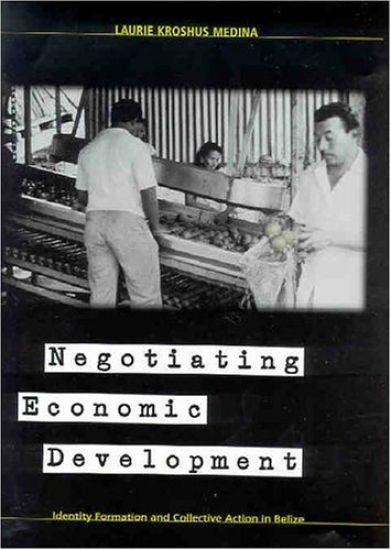
Negotiating Economic Development

Negotiating Economic Development

Laurie Kroshus Medina

University of Arizona Press
2004
sidottu
The citrus industry in Belize could be said to exist primarily to satisfy the needs of people in other countries. A business that is highly dependent on global markets and the geopolitics of international trade, it comprises some 500 farmers, many hundreds of wage laborers, and two processing companies that produce frozen juice concentrate for export. This new study examines how those farmers, laborers, and companies define and pursue shared interests, and how they respond differently to the impact of national development strategies and global economic and political forces. Laurie Kroshus Medina analyzes the development of the citrus industry in Belize over fifteen years to explore the relationship between the production of collective identities and the negotiation of development policies at the interface of global and local processes. She shows how citrus farmers and workers, processing companies, and politicians compete to construct shared identities, how they mobilize collective actors, and how their collective action shapes the goals, policies, and practices associated with development. Taking an ethnographic approach, Medina describes how the Belizean citrus industry responds to cycles of boom and bust, and the implications of such cycles for workers and growers. She offers a close look at the major actors workers, union members, small and large growers, and politicians as they respond to global changes in the citrus industry. Her analysis is made more compelling through an account of two open struggles in the industry over the formation of a rival union and the attempt to buy the processing company, owned by the multinational corporation Nestle. She also includes a discussion of the impact of NAFTA on the industry. Medina's research demonstrates how collective agency in Belize has pushed the citrus industry's development in directions that simultaneously conform to and diverge from the trajectories laid out by foreign agencies. Negotiating Economic Development provides a bridge from old to new studies of Latin American social movements as it offers key insights into competing forms of identity for a wide range of social scientists concerned with the human and social aspects of development issues and globalization.
News to Me

News to Me

Laurie Hertzel

University of Minnesota Press
2010
sidottu
Laurie Hertzel wasn't yet a teenager in Duluth, Minnesota, when she started her first newspaper, which she appropriately christened Newspaper. Complete with the most sensational headlines of the day-MARGO FLUEGEL HAS ANOTHER BIRTHDAY!-and with healthy competition from her little brothers and their rival publication, Magapaper (a magazine and a newspaper), this venture would become Hertzel's first step toward realizing what her heart was already set on: journalism as her future.News to Me is the adventurous story of Hertzel's journey into the bustling world of print journalism in the mid-1970s, a time when copy was still banged out on typewriters by chain-smoking men in fedoras and everybody read the paper. A coming-of-age tale in more ways than one, Hertzel's eighteen-year career at the Duluth News Tribune began when journalism was a predominantly male profession. And while the newspaper trade was booming, Duluth had fallen on difficult times as factories closed and more and more people moved away. Hertzel describes her climb up the ranks of the paper against the backdrop of a Midwestern city during a time of extraordinary change. She was there during major events like the Congdon murders, the establishment of the BWCA, and the rise of Indian treaty rights, and eventually follows the biggest story of her life to Soviet Russia-and completely blows her deadline.Written with the insight and humor of someone who makes a living telling stories, News to Me is the chronicle of a small-city newspaper on the cusp of transformation, an affectionate portrait of Duluth and its people, and the account of a talented, persistent journalist who witnessed it all and was changing right along with it-whether she wanted to or not.(Oh, Newspaper doggedly outlasted the full-color Magapaper).
Shifting Genres, Changing Realities

Shifting Genres, Changing Realities

Laurie Fitzgerald

Peter Lang Publishing Inc
1995
sidottu
In this analysis, Laurie Fitzgerald argues that the late eighteenth-century novels should be read as composites of many literary genres. This approach would allow contemporary readers to orient these novels in literary history and also get a sense of the strategies eighteenth-century audiences used in reading the novels of their time. Shifts in genre that occur within one work often indicate the novel's experimental exploration of social issues.
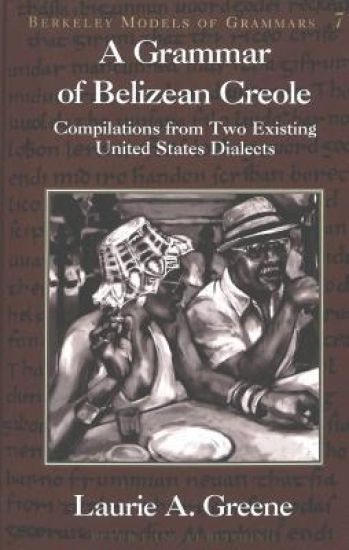
A Grammar of Belizean Creole

A Grammar of Belizean Creole

Laurie A Greene

Peter Lang Publishing Inc
1999
sidottu
In New Orleans and the boroughs of New York City, varieties of Belizean Creole are spoken within immigrant communities. This text provides a grammatical description and comparison of these two expatriate varieties of the Caribbean Creole language, Belizean Creole. The grammar is unusual in that it incorporates cultural and social variables in the formal grammatical analysis, describing linguistic -performance- as well as communal -competence.- Two appendices are included containing an abridged Belizean Creole-English dictionary and a group of sample dialogues that have been phonetically transcribed and translated."
The Mother Mirror

The Mother Mirror

Laurie L. Corbin

Peter Lang Publishing Inc
2001
nidottu
In "The Mother Mirror," Laurie Corbin studies the mother-daughter relationships portrayed in autobiographical works by Colette, Simone de Beauvoir, and Marguerite Duras. Psychoanalytic theory, in particular the work of Luce Irigaray and Julia Kristeva, is used to show how women's self-representations can be determined by the ways in which they see their mothers. Corbin's feminist theoretical framework illuminates both the psychological and the social contexts of these autobiographical works, showing that even the most intimate relationships are shaped by social structures and that social reality is dependent on the workings of the psyche.
Queer in Russia

Queer in Russia

Laurie Essig

Duke University Press
1999
sidottu
In Queer in Russia Laurie Essig examines the formation of gay identity and community in the former Soviet Union. As a sociological fieldworker, she began her research during the late 1980s, before any kind of a public queer identity existed in that country. After a decade of conducting interviews, as well as observing and analyzing plays, books, pop music, and graffiti, Essig presents the first sustained study of how and why there was no Soviet gay community or even gay identity before perestroika and the degree to which this situation has-or has not-changed.While male homosexual acts were criminalized in Russia before 1993, women attracted to women were policed by the medical community, who saw them less as criminals than as diseased persons potentially cured by drug therapy or transsexual surgery. After describing accounts of pre-perestroika persecution, Essig examines the more recent state of sexual identities in Russia. Although the fall of communism brought new freedom to Russian queers, there are still no signs of a mass movement forming around the issue, and few identify themselves as lesbians or gay men, even when they are involved in same-sex relations. Essig does reveal, however, vibrant manifestations of gay life found at the local level-in restaurants, discos, clubs, and cruising strips, in newspapers, journals, literature, and the theater. Concluding with a powerful exploration of the surprising affinities between some of Russia’s most prominent nationalists and its queers, Queer in Russia fills a gap in both Russian and cultural studies.
Queer in Russia

Queer in Russia

Laurie Essig

Duke University Press
1999
pokkari
In Queer in Russia Laurie Essig examines the formation of gay identity and community in the former Soviet Union. As a sociological fieldworker, she began her research during the late 1980s, before any kind of a public queer identity existed in that country. After a decade of conducting interviews, as well as observing and analyzing plays, books, pop music, and graffiti, Essig presents the first sustained study of how and why there was no Soviet gay community or even gay identity before perestroika and the degree to which this situation has-or has not-changed.While male homosexual acts were criminalized in Russia before 1993, women attracted to women were policed by the medical community, who saw them less as criminals than as diseased persons potentially cured by drug therapy or transsexual surgery. After describing accounts of pre-perestroika persecution, Essig examines the more recent state of sexual identities in Russia. Although the fall of communism brought new freedom to Russian queers, there are still no signs of a mass movement forming around the issue, and few identify themselves as lesbians or gay men, even when they are involved in same-sex relations. Essig does reveal, however, vibrant manifestations of gay life found at the local level-in restaurants, discos, clubs, and cruising strips, in newspapers, journals, literature, and the theater. Concluding with a powerful exploration of the surprising affinities between some of Russia’s most prominent nationalists and its queers, Queer in Russia fills a gap in both Russian and cultural studies.

Trumpets in the Mountains

Trumpets in the Mountains

Laurie Aleen Frederik

Duke University Press
2012
sidottu
Trumpets in the Mountains is a compelling ethnography about Cuban culture, artistic performance, and the shift in national identity after 1990, when the loss of Soviet subsidies plunged Cuba into a severe economic crisis. The state's response involved opening the economy to foreign capital and tourism, and promoting previously deprecated cultural practices as quintessentially Cuban. Such contradictions of Cuba's revolutionary ideals elicited an official preoccupation with how twenty-first-century cubanía, or Cubanness, was to be understood by its citizens and creatively interpreted by its artists. The rural campesino was re-envisioned as a key symbol of the future; the embodiment of socialist humility, cultural pureness, and educated refinement; potentially the Hombre Novísimo (even newer man) to replace the Hombre Nuevo (new man) of Cuban communist philosophy. Campesinos inhabit some of the island's most isolated areas, including the mountainous regions in central and eastern Cuba where Laurie A. Frederik conducted research among rural communities and professional theater groups. Analyzing the ongoing dialogue of cultural officials, urban and rural artists, and campesinos, Frederik provides an on-the-ground account of how visions of the nation are developed, manipulated, dramatized, and maintained in public consciousness. She shows that cubanía is defined, and redefined, in the interactive movement between intellectual, political, and everyday worlds.
Trumpets in the Mountains

Trumpets in the Mountains

Laurie Aleen Frederik

Duke University Press
2012
pokkari
Trumpets in the Mountains is a compelling ethnography about Cuban culture, artistic performance, and the shift in national identity after 1990, when the loss of Soviet subsidies plunged Cuba into a severe economic crisis. The state's response involved opening the economy to foreign capital and tourism, and promoting previously deprecated cultural practices as quintessentially Cuban. Such contradictions of Cuba's revolutionary ideals elicited an official preoccupation with how twenty-first-century cubanía, or Cubanness, was to be understood by its citizens and creatively interpreted by its artists. The rural campesino was re-envisioned as a key symbol of the future; the embodiment of socialist humility, cultural pureness, and educated refinement; potentially the Hombre Novísimo (even newer man) to replace the Hombre Nuevo (new man) of Cuban communist philosophy. Campesinos inhabit some of the island's most isolated areas, including the mountainous regions in central and eastern Cuba where Laurie A. Frederik conducted research among rural communities and professional theater groups. Analyzing the ongoing dialogue of cultural officials, urban and rural artists, and campesinos, Frederik provides an on-the-ground account of how visions of the nation are developed, manipulated, dramatized, and maintained in public consciousness. She shows that cubanía is defined, and redefined, in the interactive movement between intellectual, political, and everyday worlds.
#4 Happy Birthday, Mallory!

#4 Happy Birthday, Mallory!

Laurie Friedman

Darby Creek (Tm)
2006
nidottu
Mallory McDonald is turning nine And she is ready to celebrate getting the past year over--one troubled with moving, starting a new school, making new friends, and sibling rivalry. Mallory wants her ninth birthday to be extra special. So instead of celebrating just one day, she plans an entire "birth month" celebration. But soon, things aren't going according to plan, and Mallory fears that being nine may be just as difficult as being eight.
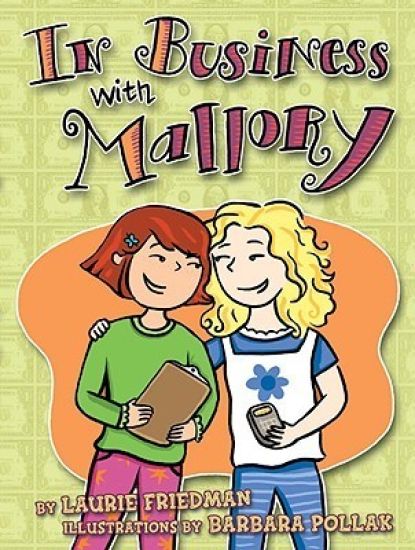
In Business with Mallory

In Business with Mallory

Laurie Friedman

Darby Creek (Tm)
2007
nidottu
Mallory McDonald has her eye on the perfect purse, but it's too expensive and Mallory's mom is not buying So Mallory comes up with the perfect plan to get the perfect purse. She'll just start a business Yet starting a business isn't as easy as it seems. Mallory finally earns enough to buy what she wants. But if her business is such as success, why does Mallory feel like such a failure?
Heart to Heart with Mallory

Heart to Heart with Mallory

Laurie Friedman

Darby Creek (Tm)
2007
nidottu
Valentine's Day is approaching and everyone seems to be crazed with love--except for Mallory. She's been invited to a Valentine's party next door and rumor has it that her next-door neighbor's dad is going to propose to her best friend's mom. What will it mean if her two best friends become brother and sister? Where will she fit in? And to make matters even more confusing, Mallory is receiving presents from a secret admirer. Who could it be? Mallory feels like everything is changing and she has lots of questions about life, love, and friendship. Since her two best friends are preoccupied, Mallory turns to her diary to find the answers.
Red, White & True Blue Mallory

Red, White & True Blue Mallory

Laurie Friedman

Darby Creek (Tm)
2009
sidottu
Mallory is in Washington, D.C., with her fourth grade class. She can't wait to see the famous monuments and museums. But from the moment she sets foot in the nation's capital, there's one thing she doesn't see much of . . . her best friend. Mary Ann is spending so much time with the new boy in their class, she's forgotten all about being partners with Mallory. And when Mallory wanders off to wiggle her loose tooth, her tooth isn't the only thing that is lost Will Mallory's trip to Washington turn out to be one she'll always remember or something she'd rather forget?
Mallory on Board

Mallory on Board

Laurie Friedman

Darby Creek (Tm)
2008
nidottu
Bon Voyage Mallory and her family and friends are setting sail on a cruise. But poor Mallory feels like she's sunk and she hasn't even set sail yet. Her two best friends' parents are getting married and even though Mallory is trying her best to be happy for Mary Ann and Joey, she can't help feeling left out. Can Mallory find a way to be happy for her friends and not feel like a third wheel?
Singing The City

Singing The City

Laurie Graham

University of Pittsburgh Press
2002
nidottu
Singing the City is an eloquent tribute to a way of life largely disappearing in America, using Pittsburgh as a lens. Graham is not blind to the damage industry has done—both to people and to the environment, but she shows us that there is also a rich human story that has gone largely untold, one that reveals, in all its ambiguities, the place of the industrial landscape in the heart. Singing the City is a celebration of a landscape that through most of its history has been unabashedly industrial. Convinced that industrial landscapes are too little understood and appreciated, Graham set out to investigate the city\u2019s landscape, past and present, and to learn the lessons she sensed were there about living a good life. The result, told in both her voice and the distinctive voices of the people she meets, is a powerful contribution to the literature of place. Graham begins by showing the city as an outgrowth of its geography and its geology—the factors that led to its becoming an industrial place. She describes the human investment in the area: the floods of immigrants who came to work in the mills in the late nineteenth and early twentieth centuries, their struggles within the domains of Andrew Carnegie and Henry Clay Frick. She evokes the superhuman aura of making steel by taking the reader to still functioning mills and uncovers for us a richness of tradition in ethnic neighborhoods that survives to this day.
Fearless World Traveler

Fearless World Traveler

Laurie Lawlor

Holiday House Inc
2021
sidottu
Scientist. Artist. Rule-breaker. The vibrant and daring life of Marianne North by the award-winning author of Super Women and Rachel Carson and Her Book That Changed the World. In 1882, Marianne North showed the gray city of London paintings of jaw-dropping greenery like they'd never seenbefore. As a self-taught artist and scientist, Marianne North subverted Victorian gender roles and advanced the field of botanical illustration. Her technique of painting specimens in their natural environment was groundbreaking. The legendary Charles Darwin was among her many supporters. Laurie Lawlor deftly chronicles North's life, from her restrictive childhood to her wild world travels to the opening of the Marianne North Gallery at Kew Gardens to her death in 1890. The North gallery at Kew Gardens remains open to the public today. Becca Stadtlander's award-winning lush, verdant artwork pairs wonderfully with the natural themes. A Junior Library Guild Gold Standard Selection
What Music!

What Music!

Laurie Lawlor

HOLIDAY HOUSE INC
2023
sidottu
Strings quivered. Notes shimmered. Meet best friends acclaimed composer Ludwig van Beethoven and bold female entrepreneur Nannette Streicher in this lively and lyrical nonfiction picture book. In a tall, narrow building on a wide avenue pianos plinked and plunked day and night.Everyone in quiet Augsburg knew the Stein home.What music In 1787, aspiring yet unknown composer Ludwig van Beethoven arrives at young Nannette Stein's home. What follows is a decades-long friendship that persists whether life hits a low or high note. Acclaimed nonfiction writer Laurie Lawlor deftly depicts how these two fascinating friends--a composer with hearing loss and a woman who became an innovative piano maker in a time that discouraged female entrepreneurship--fought the odds and worked together in perfect harmony. The author of picture book biography Fearless World Traveler, Lawlor masterfully uses forgotten historical letters, a glossary, and rich back matter on both friends' lives and art to introduce readers to the man behind the music, from his loud laughter to his crushing handshake. Complete with Fearless World Traveler collaborator Becca Stadtlander's intricate mixed-media artwork, What Music deftly dives into musical history-and herstory-in an intimate yet expansive picture book biography that hits just the right note.