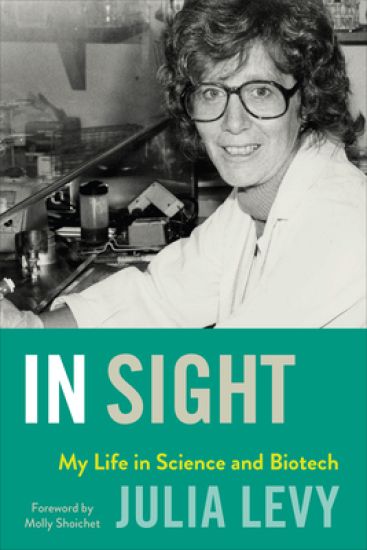
In Sight is a memoir about how a love of science and discovery drove Julia Levy, a celebrated scholar and biotech CEO, to work her way through gender bias in order to achieve academic and professional recognition. Her story traces the unconventional invention of a breakthrough drug treatment from its development from laboratory research to its application as a medical treatment for vision loss. Told from a female perspective, In Sight is a unique and personal story covering Levy’s early years as a refugee, her university training in the UK, and her appointment as professor at the University of British Columbia. Years spent as an academic led the author to unexpected exposure to the biotechnology industry and a chance meeting with colleagues that led to the formation of a lucrative biotechnology company, known today as QLT Inc. The bulk of the book covers the years spent building the company, and Levy’s surprising transition from chief scientific officer to CEO. In Sight is an honest description of the trials of drug development, the tensions inherent in the commercialization of health innovations, and the truly remarkable hurdles faced by women in the scientific community.
Le Bonheur est une constructionPartir du principe selon lequel le Bonheur est une construction signifie que celui-ci, dans la mesure o il n'est pas donn , est accessible tous pour peu qu'on se donne la peine de s'en emparer, en adoptant une philosophie et des comportements ad quats. C'est en ce sens que le Bonheur s'apprend et se construit. Il n cessite quelques apprentissages, quelques efforts aussi, mais peut avec aisance tre atteint. Si le malheur n'est donc pas une fatalit , le Bonheur quant lui est une v ritable opportunit . vous de la saisir.
User experience (UX) strategy lies at the intersection of UX design and business strategy, but until now, there hasn't been an easy-to-apply framework for executing it. This hands-on guide introduces lightweight product strategy tools and techniques to help you and your team devise innovative digital solutions that people want. Author Jaime Levy shows UX/UI designers, product managers, entrepreneurs, and aspiring strategists simple to advanced methods that can be applied right away. You'll gain valuable perspective through business cases and historical context. This second edition includes new real-world examples, updated techniques, and a chapter on conducting qualitative online user research. Define value propositions and validate target users through provisional personas and customer discovery techniques Explore marketplace opportunities by conducting competitive research and analysis Design experiments using rapid prototypes that are focused on the business model Conduct online user research to gain valuable insights quickly on any budget Test business ideas and validate marketing channels by running online advertising and landing page campaigns
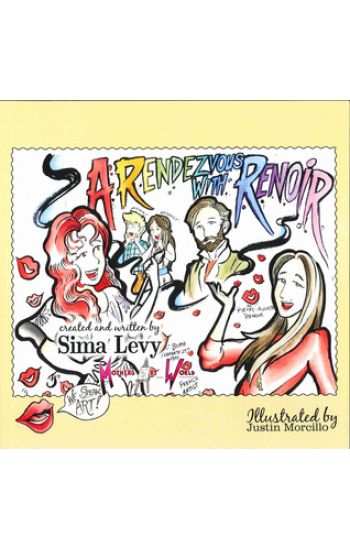
Ms. Simone's art class is studying the life and works of the impressionist artist, Pierre-August Renoir. Mary is fascinated with Renoir's paintings of caf s and outdoors sights. She wishes to meet with Renoir and his friends in France, to capture her own Parisian scenes and truthful moments. Together with her friend Manet, they say the magic word three times: "Wackadoey, wackadoey, wackadoey," and then away they blow to the past to meet Renoir in Montmartre, Paris France. The artist teaches them how to capture snapshots of real life quickly, with fluid brush strokes before the moment and light is lost. Mary and Manet also learn how the artist observes and paints flickering lights, children, women and very happy folks. Mary returns to her art class and paints what she observed in France. To her illustration, she adds her friends Renoir and Manet, in a candid position. The outcome is superb Read A Rendezvous With Renoir and you will experience a "Manet Day," learn to use your imagination to improve your art, and feel coo-cooey wackadoey. So what do you say?
The Traveler's Guide to Hebrew is a quick start way to learn Hebrew. This pronunciation guide uses transliteration to help you learn spoken Hebrew quickly without having to master Hebrew script. This guide will let you rapidly learn Hebrew words so that you can understand and converse in Hebrew.The guide includes vocabulary and phrases for many situations you may encounter during your trip.It also includes the Hebrew alphabet (Alef-Bet) as well as mini English-Hebrew and Hebrew-English dictionaries and a set of verb tables.Whether you are traveling to Israel for business or pleasure this guide will enhance your experience.
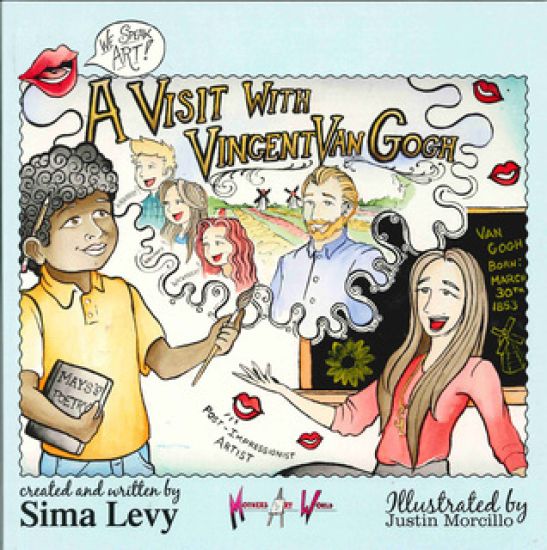
Mays is a poet and artist in Ms. Simone's art appreciation class. The class is learning about the history and works of the Post-Impressionist artist Vincent van Gogh. As Mays gains knowledge about the style of Van Gogh, he realizes that he has a lot in common with the artist. Like Van Gogh, Mays uses his feelings to guide his painting and writing, but he has a dilemma: he doesn't know which to do first, compose his poem or illustrate. Mays's classmates Paris and Manet have a secret magic word that takes them to "The Land of Artists," and they decide to share their secret with Mays. They say "Wackadoey" three times and then bingo They're in the Netherlands with Mr. Van Gogh. The artist teaches them to quickly capture their feelings of real life situations with heavy paint and thick brush strokes. He assures Mays that there is no set order when one is expressing oneself. Find out what happens when Mays returns back to art class. Read A Visit with Vincent van Gogh and you will experience a "Manet Day," learn to use your imagination to improve your art, and feel coo-cooey wackadoey. So what do you say?
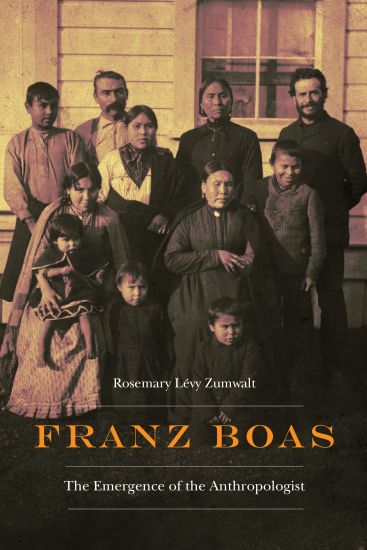
Rosemary Lévy Zumwalt tells the remarkable story of Franz Boas, one of the leading scholars and public intellectuals of the late nineteenth and early twentieth centuries. The first book in a two-part biography, Franz Boas begins with the anthropologist’s birth in Minden, Germany, in 1858 and ends with his resignation from the American Museum of Natural History in 1906, while also examining his role in training professional anthropologists from his berth at Columbia University in New York City. Zumwalt follows the stepping-stones that led Boas to his vision of anthropology as a four-field discipline, a journey demonstrating especially his tenacity to succeed, the passions that animated his life, and the toll that the professional struggle took on him. Zumwalt guides the reader through Boas’s childhood and university education, describes his joy at finding the great love of his life, Marie Krackowizer, traces his 1883 trip to Baffin Land, and recounts his efforts to find employment in the United States. A central interest in the book is Boas’s widely influential publications on cultural relativism and issues of race, particularly his book The Mind of Primitive Man (1911), which reshaped anthropology, the social sciences, and public debates about the problem of racism in American society.Franz Boas presents the remarkable life story of an American intellectual giant as told in his own words through his unpublished letters, diaries, and field notes. Zumwalt weaves together the strands of the personal and the professional to reveal Boas’s love for his family and for the discipline of anthropology as he shaped it.
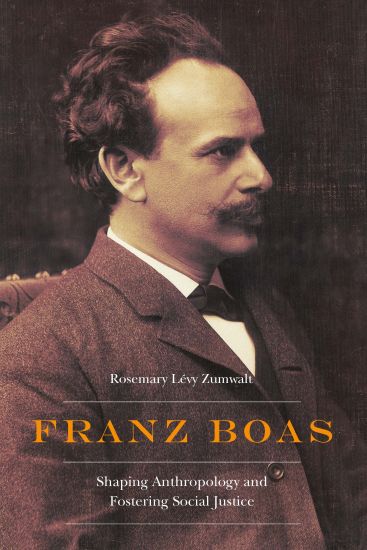
Franz Boas defined the concept of cultural relativism and reoriented the humanities and social sciences away from race science toward an antiracist and anticolonialist understanding of human biology and culture. Franz Boas: Shaping Anthropology and Fostering Social Justice is the second volume in Rosemary Lévy Zumwalt’s two-part biography of the renowned anthropologist and public intellectual. Zumwalt takes the reader through the most vital period in the development of Americanist anthropology and Boas’s rise to dominance in the subfields of cultural anthropology, physical anthropology, ethnography, and linguistics. Boas’s emergence as a prominent public intellectual, particularly his opposition to U.S. entry into World War I, reveals his struggle against the forces of nativism, racial hatred, ethnic chauvinism, scientific racism, and uncritical nationalism. Boas was instrumental in the American cultural renaissance of the 1920s and 1930s, training students and influencing colleagues such as Melville Herskovits, Zora Neale Hurston, Benjamin Botkin, Alan Lomax, Langston Hughes, and others involved in combating racism and the flourishing Harlem Renaissance. He assisted German and European émigré intellectuals fleeing Nazi Germany to relocate in the United States and was instrumental in organizing the denunciation of Nazi racial science and American eugenics. At the end of his career Boas guided a network of former student anthropologists, who spread across the country to university departments, museums, and government agencies, imprinting his social science more broadly in the world of learned knowledge.Franz Boas is a magisterial biography of Franz Boas and his influence in shaping not only anthropology but also the sciences, humanities, social science, visual and performing arts, and America’s public sphere during a period of great global upheaval and democratic and social struggle.