Kirjahaku
Etsi kirjoja tekijän nimen, kirjan nimen tai ISBN:n perusteella.
1000 tulosta hakusanalla Lewis Allen
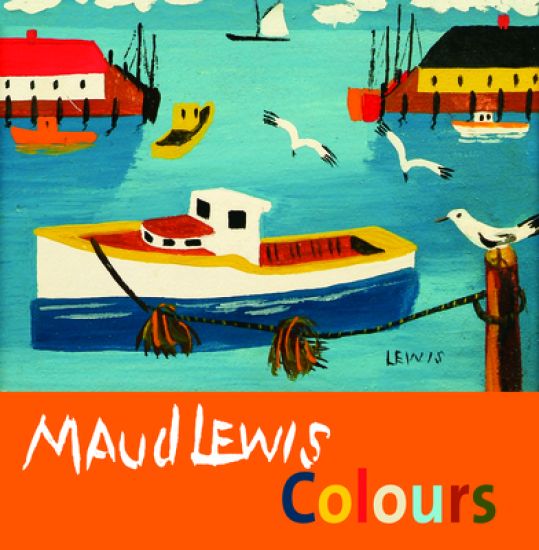
Maud Lewis Colours is a perfect first introduction to colours through the joy-filled art of Nova Scotia's most famous folk painter, Maud Lewis. Even the youngest babies will be drawn to the bright colours and bold forms in Lewis's whimsical paintings. Babies and toddlers will have fun learning their colours as they explore each vibrant image. A perfect companion to Maud Lewis 1 2 3, this set makes a great baby gift.

From black cats to iconic snowscapes, Maud Lewis paints our waking dreams.One of Canada's most beloved folk artists, Maud Lewis was famous in her lifetime for her brightly coloured and endearing paintings of rural Nova Scotia. Working from her tiny, road-side house in Marshalltown, she produced hundreds of small works that captured aspects of rapidly changing country life. Until now, the story of her difficult life has dominated the discussion of her art: her triumph over her physical disabilities and poverty, the harsh treatment she received at the hands of her family, and her alliance by chance with her husband Everett Lewis, who enabled her successful painting career over many decades.This book, accompanied by an exhibition at the McMichael Canadian Art Collection, will examine the aesthetic achievements of Maud Lewis's paintings — her serial repetition of images and motifs and the dizzying variety that she brought to the problems of picture making. From her black cats and kittens, to her cart horses and oxen hauling logs, to her quayside scenes of ships in port and the Maritime landscape in all seasons, Maud Lewis made paintings that still delight in their optimism and buoyant vitality.Featuring a comprehensive selection of paintings drawn from leading Maud Lewis collectors in Nova Scotia, Maud Lewis: Paintings for Sale offers a unique opportunity to experience the range and depth of her work.
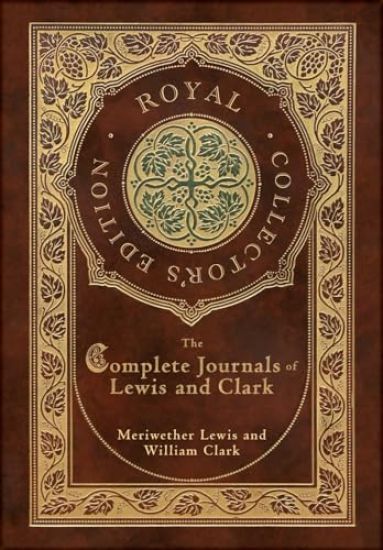
The Complete Journals of Lewis and Clark (Royal Collector's Edition) (Case Laminate Hardcover with Jacket)
Meriwether Lewis; William Clark
Royal Classics
2024
sidottu
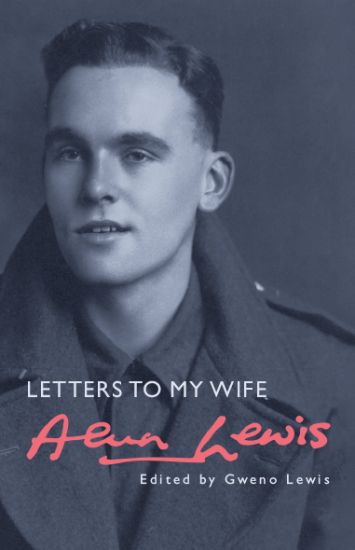
Soldier and poet Alun Lewis wrote frequently to his family, friends and other writers such as Robert Graves. Mostly these letters are uncollected. Those that have been published received high praise, and were compared to Keats's letters by critic Walter Allen. Letters to My Wife includes over 240 letters to his wife Gweno Ellis, beginning with his enlistment and continuing until his death in Burma in 1944. From them emerges a unique account of daily army life, of the phoney war in Britain and with descriptions of the journey to India via Brazil and South Africa. The letters also shed light on Lewis' development to become the writer of World War Two, with first hand references to his popular poems and stories, how they originated and how they were first published. Above all, Lewis's letters testify to his love for his war bride Gweno, whom he married in July 1941 before embarkation. Letters to My Wife is the story of Alun Lewis's war.
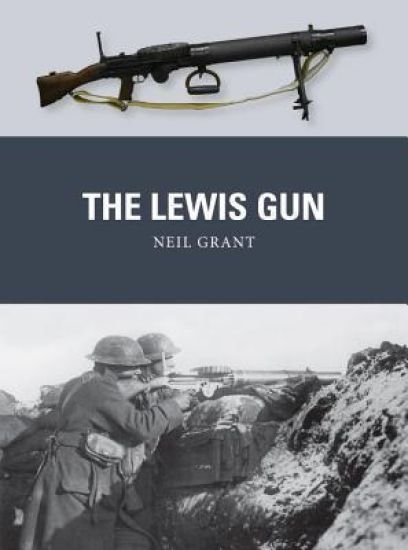
During World War I, the British adopted the US-designed Lewis gun as an infantry weapon, realizing that its light weight and the fact that it could be fired both prone and on the move made it ideal for supporting advances and defending captured trenches. Later adopted by an array of countries from the Netherlands to Japan, the Lewis successfully served as the primary or secondary armament in armoured fighting vehicles and in both ground-based anti-aircraft and aircraft-mounted roles. Although it was superseded by the Bren in British service in 1937, the outbreak of World War II meant that thousands returned to active service, and it played a key role as far afield as Libya, with the Long-Range Desert Group, and the Philippines, with the US Marine Corps. Written by an authority on this iconic light machine gun, this is the fascinating story of the innovative and influential Lewis gun, from the trenches of World War I to the Libyan desert and Pacific islands of World War II and beyond.
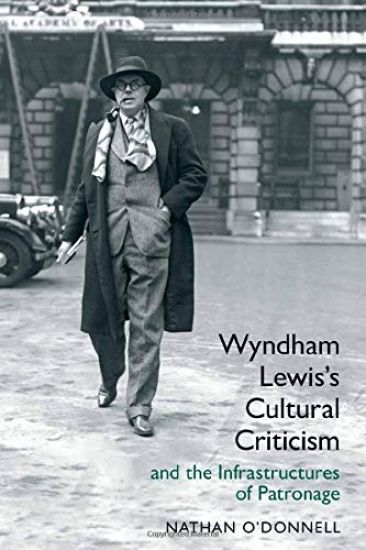
Wyndham Lewis's Cultural Criticism and the Infrastructures of Patronage
Nathan O’Donnell
Liverpool University Press
2020
sidottu
Wyndham Lewis was both a serious proponent and forthright critic of modernism. His assault upon his contemporaries foreshadowed the twenty-first century scholarly interest in the networks, professions, and coteries – rather than the myths and heroics – of modernism. Lewis, after a long period of neglect, now sits increasingly at the heart of a revised field of modernist studies.This book explores Lewis’s cultural criticism as a valuable body of writing which posed questions that have yet to be answered about subsidy and the function of the artist, about professionalism and ethics, about who should pay for the arts, and what the artist’s obligations should be in return. It is the first book-length study of this body of critical writing, through which Lewis articulated the central and most lasting of his critical preoccupations: the question of how the work of the artist is to be valued, and the artist to be paid, in a professionalised society. This book makes an important contribution to the long overdue reassessment of a complex, contrarian figure, spanning the disciplines of literature and the visual arts, who asked pressing questions about the role and status of the artist, and ultimately about the value (economic, civic, political) of the work of art.
FROM ALFRED THE GREAT and CHARLEMAGNE TO JOHN W. LEWIS And Beyond
Cosette Lewis
Independently Published
2019
nidottu
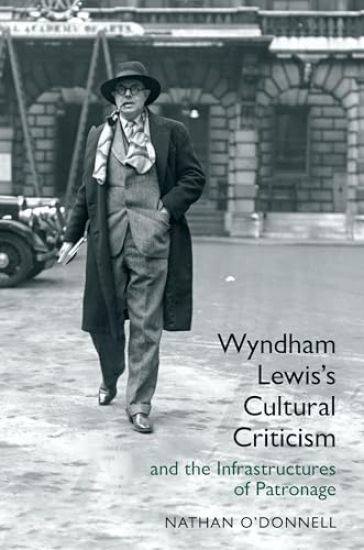
Wyndham Lewis's Cultural Criticism and the Infrastructures of Patronage
Nathan O’Donnell
LIVERPOOL UNIVERSITY PRESS
2023
nidottu
Wyndham Lewis was both a serious proponent and forthright critic of modernism. His assault upon his contemporaries foreshadowed the twenty-first century scholarly interest in the networks, professions, and coteries – rather than the myths and heroics – of modernism. Lewis, after a long period of neglect, now sits increasingly at the heart of a revised field of modernist studies.This book explores Lewis’s cultural criticism as a valuable body of writing which posed questions that have yet to be answered about subsidy and the function of the artist, about professionalism and ethics, about who should pay for the arts, and what the artist’s obligations should be in return. It is the first book-length study of this body of critical writing, through which Lewis articulated the central and most lasting of his critical preoccupations: the question of how the work of the artist is to be valued, and the artist to be paid, in a professionalised society. This book makes an important contribution to the long overdue reassessment of a complex, contrarian figure, spanning the disciplines of literature and the visual arts, who asked pressing questions about the role and status of the artist, and ultimately about the value (economic, civic, political) of the work of art.
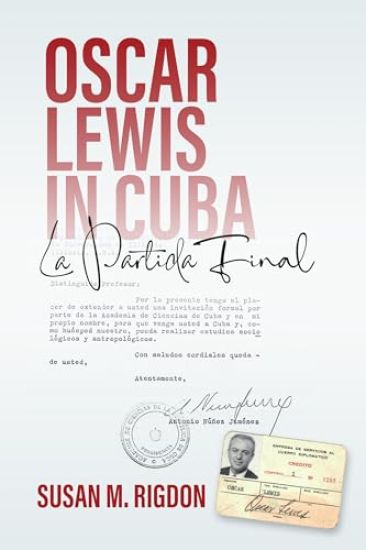
American anthropologist Oscar Lewis secured permission from Fidel Castro to undertake three years of field research on cultural and economic change in Cuba in the decade after the victory of Castro’s M-26 Movement. This book delves into Lewis’ research goals, methods, the training and composition of his field team, and the difficulties of executing the plan in the political climate in Cuba at the time. The government’s reasons for early termination of the research agreement are enumerated and their many discrepancies and inconsistencies evaluated. The experience of Project Cuba offers lessons on the difficulties of doing social science research in any highly surveilled, politically controlled environment however sympathetic the principal investigator.
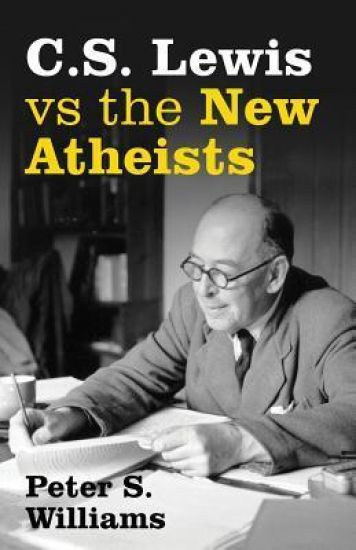
The book will counter the 'new atheist' movement using the arguments of C.S. Lewis, thereby appealing to readers interested in both loci and showing that there is nothing especially 'new' about the new atheism. How might C.S. Lewis, the greatest Christian apologist of the twentieth century, respond to the twenty-first century 'new atheism' of Richard Dawkins, Christopher Hitchens and company? Might Lewis' own journey from atheism to Christian belief illuminate and undercut the objections of the new atheists? Christian philosopher Peter S. Williams takes us on an intellectual journey through Lewis' conversion in conversation with today's anti-theists. 'This book shows the breadth, depth, and durability of Lewis's Christian apologetics.' Michael Ward, chaplain at St Peter's College, Oxford

David Lewis's work is of fundamental importance in many areas of philosophical inquiry and there are few areas of Anglo-American philosophy where his impact has not been felt. Lewis's philosophy also has a rare unity: his views form a comprehensive philosophical system, answering a broad range of questions in metaphysics, philosophy of mind, philosophy of language, philosophy of action and many other areas. This breadth of Lewis's work, however, has meant that it is difficult to know where to start in Lewis's work and a casual reader may often miss some of the illuminating connections between apparently quite disparate pieces of Lewis's work. This book aims to make this body of work more accessible to a general philosophical readership, while also providing a unified overview of the many contributions Lewis has made to contemporary Anglo-American philosophy. The book can be divided into four parts. The first part examines Lewis's metaphysical picture - one of the areas where he has had the greatest impact and also the framework for the rest of his theories. The second section discusses Lewis's important contributions in the philosophy of mind, language and meaning. The third part explores some of Lewis's work in decision theory, metaethics and applied ethics, areas where his work in not necessarily as widely appreciated, but in which he has done a range of work that is both accessible and important. The final section focuses on Lewis's distinctive philosophical method, perhaps one of his most significant legacies, which combines naturalism with "common-sense" theorizing.

David Lewis's work is of fundamental importance in many areas of philosophical inquiry and there are few areas of Anglo-American philosophy where his impact has not been felt. Lewis's philosophy also has a rare unity: his views form a comprehensive philosophical system, answering a broad range of questions in metaphysics, philosophy of mind, philosophy of language, philosophy of action and many other areas. This breadth of Lewis's work, however, has meant that it is difficult to know where to start in Lewis's work and a casual reader may often miss some of the illuminating connections between apparently quite disparate pieces of Lewis's work. This book aims to make this body of work more accessible to a general philosophical readership, while also providing a unified overview of the many contributions Lewis has made to contemporary Anglo-American philosophy. The book can be divided into four parts. The first part examines Lewis's metaphysical picture - one of the areas where he has had the greatest impact and also the framework for the rest of his theories. The second section discusses Lewis's important contributions in the philosophy of mind, language and meaning. The third part explores some of Lewis's work in decision theory, metaethics and applied ethics, areas where his work in not necessarily as widely appreciated, but in which he has done a range of work that is both accessible and important. The final section focuses on Lewis's distinctive philosophical method, perhaps one of his most significant legacies, which combines naturalism with "common-sense" theorizing.
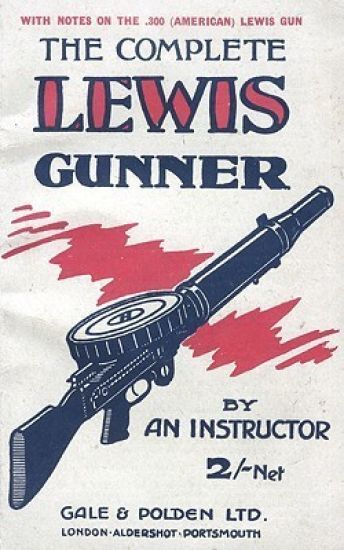
COMPLETE LEWIS GUNNERWith Notes on the .300 (American) Lewis Gun
Anon
Naval Military Press Ltd
2009
pokkari
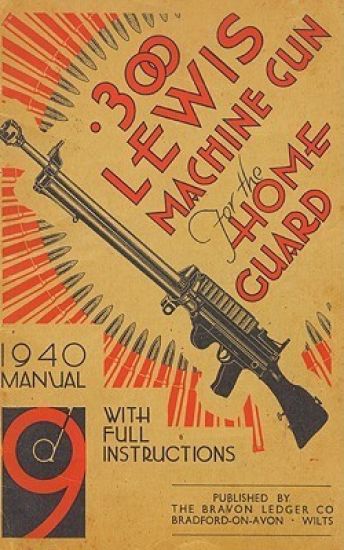
300 Lewis Machine Gun for the Home Guard 1940 Manual
H. W. Bodman
Naval Military Press Ltd
2009
pokkari
'.300 Lewis Machine Gun for the Home Guard 1940 Manual.
Alun Lewis (1915-1944) was one of the few great British writers of the Second World War. His early death at the age of twenty-eight robbed Wales of its most promising poet and story writer. Although he had been writing since an early age, becoming a soldier had a stimulating effect on Lewis's writing: his first book of poems, Raiders' Dawn, was published in 1942, and The Last Inspection, a collection of stories, appeared in the same year, alerting critics and editors to the arrival of a new war writer. Both books are characterised by vivid realism and emotional power.Later in 1942 Lewis's new regiment, the South Wales Borderers, travelled to India. His experiences there are recreated in the beautiful poems of Ha! Ha! Among the Trumpets and the stories and letters of In the Green Tree. On the reputation of these four books Alun Lewis is widely seen, with Keith Douglas, as the outstanding writer of World War Two.Collected Stories reprints the war stories in their entirety for the first time. It also collects stories published in student magazines and newspapers such as The Guardian, together with several previously unseen. In bringing together all this material, editor Cary Archard shows Lewis's development from remarkable schoolboy writer to mature and established author whose stories appeared in magazines such as Horizon and Lilliput. "... one of the mightiest poets and fiction writers of the twentieth century... a superb Collected Stories" Richard Simpson, Tar River Poetry"So lyrical, so larky, that, almost unconsciously, one starts to read them aloud to an empty room"Sunday Times"Each story is a gem, full of wise understanding of human experience, and deeply moving"PN Review"Stories of such artistry that one is inclined to reread them immediately to savour the moments they capture" Publishers' WeeklyAlun Lewis (1915-1944), the remarkable poet and short story writer, died, aged twenty-eight, in Burma in the Second World War. Some critics see him as the last of the great Romantic poets, a twentieth century Keats. Others describe his poetry as the path from pre-war Yeats and Auden to post-war poets like Hughes and Gunn. In Wales there are those who think his greater versatility and finer intelligence place him above his contemporaries Dylan Thomas and R.S. Thomas.
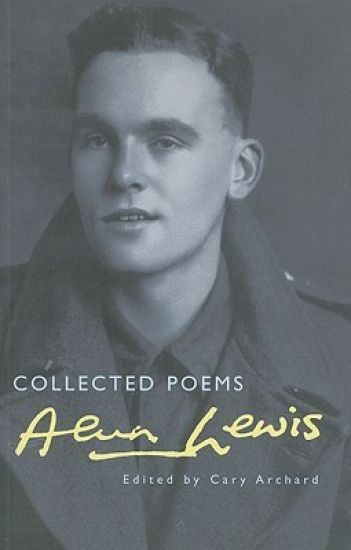
The poems of one of the great British writers of World War II are compiled in this collection of war poetry whose brilliance and scope transcends its genre. Widely considered the last works in the Romantic style, the poetry is characterized by a vivid realism and emotional power. The poems spans the length of its artist's late adolescence and early adulthood, tracing the developing mastery of the poet and serving as a tragic testament to the lost potential of a literary figure whose accidental death at the age of 28 prevented him from reaching the full height of his artistic power.