Kirjojen hintavertailu. Mukana 11 699 587 kirjaa ja 12 kauppaa.

Kirjahaku

Etsi kirjoja tekijän nimen, kirjan nimen tai ISBN:n perusteella.

1000 tulosta hakusanalla Louis Becke

The Political and Historical Works of Louis Napoleon Bonaparte

The Political and Historical Works of Louis Napoleon Bonaparte

Louis Napoleon Bonaparte

University Press of the Pacific
2004
pokkari
The various historical and political works of Prince Louis Napoleon Bonaparte, though composed at intervals, and while the author was in exile or captivity, have all one great object mainly in view, the constitutional reorganization of France. His theory of national reformation is based upon a revival of what he terms the Idie Napolionienne, which he labors to show is the only political system which can meet the requirements, accord with the habits, and command the respect and sympathy of the French nation.
The Political and Historical Works of Louis Napoleon Bonaparte

The Political and Historical Works of Louis Napoleon Bonaparte

Louis Napoleon Bonaparte

University Press of the Pacific
2004
pokkari
The various historical and political works of Prince Louis Napoleon Bonaparte, though composed at intervals, and while the author was in exile or captivity, have all one great object mainly in view, the constitutional reorganization of France. His theory of national reformation is based upon a revival of what he terms the Idee Napoleonienne, which he labors to show is the only political system which can meet the requirements, accord with the habits, and command the respect and sympathy of the French nation.
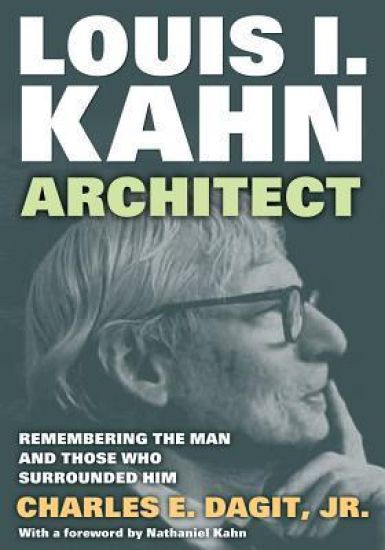
Louis I. Kahn—Architect

Louis I. Kahn—Architect

Jr. Dagit

AldineTransaction
2013
sidottu
Few people in the history of art and architecture have planted a seed of inspiration that grew to become a towering oak of lasting influence. There are those, particularly colleagues and students of Louis I. Kahn, who would say that he was one of these people. Certainly Kahn was one of the foremost architects of the twentieth century, designing such famous landmarks as the National Assembly Building in Dhaka, Bangladesh; the Salk Institute in La Jolla, California; and the Kimbell Museum in Fort Worth, Texas. In this commemorative volume, Charles E. Dagit, Jr. shows the power and influence that Kahn displayed at the University of Pennsylvania department of architecture in the 1960s. Since Dagit knew Kahn personally, this is a factual history as well as a glimpse into Kahn's personal wisdom and humanity. Beginning with a prelude that starts with the author's undergraduate years at the University of Pennsylvania, Dagit launches readers on an intellectual journey of how he first met Kahn. From there he details his experiences with Kahn and explores Kahn's interactions with Penn faculty members, including Mario Romanach, Robert Le Ricolet and Aldo Giurgola. This first-hand account sheds fascinating new light on one of the most prominent architects of the twentieth century.
Louis I. Kahn—Architect

Louis I. Kahn—Architect

Jr. Dagit

AldineTransaction
2017
nidottu
Few people in the history of art and architecture have planted a seed of inspiration that grew to become a towering oak of lasting influence. There are those, particularly colleagues and students of Louis I. Kahn, who would say that he was one of these people. Certainly Kahn was one of the foremost architects of the twentieth century, designing such famous landmarks as the National Assembly Building in Dhaka, Bangladesh; the Salk Institute in La Jolla, California; and the Kimbell Museum in Fort Worth, Texas. In this commemorative volume, Charles E. Dagit, Jr. shows the power and influence that Kahn displayed at the University of Pennsylvania department of architecture in the 1960s. Since Dagit knew Kahn personally, this is a factual history as well as a glimpse into Kahn's personal wisdom and humanity. Beginning with a prelude that starts with the author's undergraduate years at the University of Pennsylvania, Dagit launches readers on an intellectual journey of how he first met Kahn. From there he details his experiences with Kahn and explores Kahn's interactions with Penn faculty members, including Mario Romanach, Robert LeRicolais, and Aldo Giurgola. This first-hand account sheds fascinating new light on one of the most prominent architects of the twentieth century.