This book investigates the role of humor in the good life, specifically as discussed by three prominent French intellectuals who were influenced by Nietzsche's thought: Georges Bataille, Gilles Deleuze, and Clément Rosset. Lydia Amir begins by discussing Nietzsche’s reception in France, and she explains why and how he came to be considered a "philosopher of laughter" in the French academe. Each of the subsequent three chapters focuses on the significance of humor and laughter in the good life as advocated by Bataille, Deleuze, and Rosset. These chapters also explore the complex relationship between the comic and the tragic, and of humor and laughter to irony, satire, and ridicule. The Legacy of Nietzsche’s Philosophy of Laughter makes an invaluable contribution to recent interpretive work done on Bataille and Deleuze, and offers further introduction to the relatively understudied Rosset. It illuminates the philosophies of these three thinkers, their connection to Nietzsche, and, overall, the significant role that humor plays in philosophy.
This book explores the concept of civic stratification and examines its contemporary relevance for analysis and understanding of the functioning of rights in society.David Lockwood’s (1996) concept of civic stratification outlines the way in which the rights associated with citizenship can be a source of inequality by virtue of their formal granting or denial by the state, or by informal impediments to their full realisation. The purpose of this book is to explore the meaning and significance of this concept, and elaborate its potential in offering a framework for understanding the dynamic nature of rights. Lockwood’s model reverses Marshall’s (1950) view of citizenship as guaranteed inclusion in society and is linked to the way that the differential entitlement and the qualifying conditions associated with certain rights can be harnessed as a means of control. While both Marshall and Lockwood were principally concerned with the rights attaching to citizenship, this book extends the insights of these two authors to show how such controls apply in various ways to both citizens and non-citizens alike. Building on Lockwood’s conception of ‘moral resources’ the book set out a theoretical framework and empirical illustration of how the position of different groups within society is subject to shifting perceptions of social worth and is engaged both in claims to fuller access to rights and in justifications of their denial or removal.This book will appeal to scholars and higher-level students with relevant interests in sociolegal studies, sociology, social policy and politics.The Open Access version of this book, available at www.taylorfrancis.com, has been made available under a Creative Commons Attribution-NoDerivatives (CC-BY-ND) 4.0 license. This publication was supported by the University of Essex’s open access fund.
This book explores the concept of civic stratification and examines its contemporary relevance for analysis and understanding of the functioning of rights in society. David Lockwood’s (1996) concept of civic stratification outlines the way in which the rights associated with citizenship can be a source of inequality by virtue of their formal granting or denial by the state, or by informal impediments to their full realisation. The purpose of this book is to explore the meaning and significance of this concept, and elaborate its potential in offering a framework for understanding the dynamic nature of rights. Lockwood’s model reverses Marshall’s (1950) view of citizenship as guaranteed inclusion in society and is linked to the way that the differential entitlement and the qualifying conditions associated with certain rights can be harnessed as a means of control. While both Marshall and Lockwood were principally concerned with the rights attaching to citizenship, this book extends the insights of these two authors to show how such controls apply in various ways to both citizens and non-citizens alike. Building on Lockwood’s conception of ‘moral resources’ the book set out a theoretical framework and empirical illustration of how the position of different groups within society is subject to shifting perceptions of social worth and is engaged both in claims to fuller access to rights and in justifications of their denial or removal. This book will appeal to scholars and higher-level students with relevant interests in sociolegal studies, sociology, social policy and politics. The Open Access version of this book, available at www.taylorfrancis.com, has been made available under a Creative Commons Attribution-NoDerivatives (CC-BY-ND) 4.0 license. This publication was supported by the University of Essex’s open access fund.
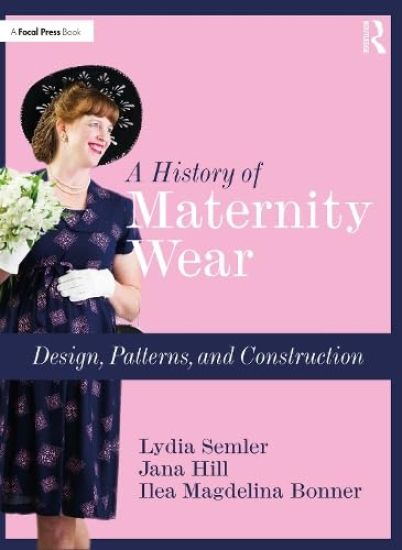
A History of Maternity Wear: Design, Patterns, and Construction explores pregnancy clothing worn throughout the decades, providing historical information, images, and patterns.Filled with photos showing extant attire, with intricate details and sample patterns that can be recreated to scale, this book examines how maternity clothes were constructed, provides historical context, and aids readers in designing their own maternity garments. Each chapter includes examples of commonly worn maternity styles from a number of regions of the English-speaking world, with information from the United States, Britain, Australia, and Canada. The book concludes with a chapter on historically accurate underpinnings from the 17th century to the present day.A History of Maternity Wear: Design, Patterns, and Construction is written for costume professionals looking to research historically accurate characters and costumes for production, as well as fashion historians and costume enthusiasts.
A History of Maternity Wear: Design, Patterns, and Construction explores pregnancy clothing worn throughout the decades, providing historical information, images, and patterns.Filled with photos showing extant attire, with intricate details and sample patterns that can be recreated to scale, this book examines how maternity clothes were constructed, provides historical context, and aids readers in designing their own maternity garments. Each chapter includes examples of commonly worn maternity styles from a number of regions of the English-speaking world, with information from the United States, Britain, Australia, and Canada. The book concludes with a chapter on historically accurate underpinnings from the 17th century to the present day.A History of Maternity Wear: Design, Patterns, and Construction is written for costume professionals looking to research historically accurate characters and costumes for production, as well as fashion historians and costume enthusiasts.
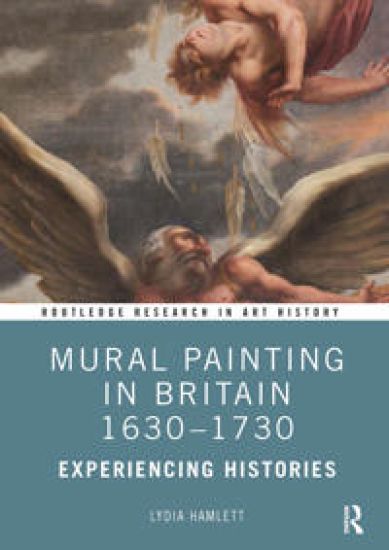
This book illuminates the original meanings of seventeenth- and early-eighteenth-century mural paintings in Britain.At the time, these were called ‘histories’. Throughout the eighteenth century, though, the term became directly associated with easel painting and, as ‘history painting’ achieved the status of a sublime genre, any link with painted architectural interiors was lost. Whilst both genres contained historical ?gures and narratives, it was the ways of viewing them that differed. Lydia Hamlett emphasises the way that mural paintings were experienced by spectators within their architectural settings. New iconographical interpretations and theories of effect and affect are considered an important part of their wider historical, cultural and social contexts.This book is intended to be read primarily by specialists, graduate and undergraduate students with an interest in new approaches to British art of the seventeenth and eighteenth centuries.
Engagements with Children’s and Young Adult Literature offers an accessible guide to studying Children’s and Young Adult (CYA) literature, teaching readers how to read critically. This book introduces this dynamic field encompassing diverse genres, audiences, and interpretations. Lydia Kokkola and Sara Van den Bossche examine its historical, cultural, and ideological dimensions while addressing adult perspectives and the ambivalence of child agency. Tools for critical analysis, genre-specific insights, and emerging research trends enhance readers’ engagement with CYA literature and its broader implications.The book approaches CYA literature from various complementary angles:Historical: the influence of religious and philosophical convictions on its development;Thematic: commonly-occurring genres and types of CYA literature, such as realism versus speculative fiction;Narratological: plot, time, tension, character, and setting;Visual: the main principles for 'reading' images in picturebooks, graphic novels, and comics;Ideological: power dynamics and common constructions of childhood;Social: questions of identity politics related to race, gender, and orientation, and offers tools to read critically.Engagements with Children’s and Young Adult Literature brings together established theories and new perspectives on CYA literature, combining engagement with theory with hands-on analytical, interpretive, and methodological tools for budding scholars of CYA literature. Exploring a diverse range of writing, this dynamic introduction is an invaluable resource for students and scholars of this vibrant field.
Engagements with Children’s and Young Adult Literature offers an accessible guide to studying Children’s and Young Adult (CYA) literature, teaching readers how to read critically. This book introduces this dynamic field encompassing diverse genres, audiences, and interpretations. Lydia Kokkola and Sara Van den Bossche examine its historical, cultural, and ideological dimensions while addressing adult perspectives and the ambivalence of child agency. Tools for critical analysis, genre-specific insights, and emerging research trends enhance readers’ engagement with CYA literature and its broader implications.The book approaches CYA literature from various complementary angles:Historical: the influence of religious and philosophical convictions on its development;Thematic: commonly-occurring genres and types of CYA literature, such as realism versus speculative fiction;Narratological: plot, time, tension, character, and setting;Visual: the main principles for 'reading' images in picturebooks, graphic novels, and comics;Ideological: power dynamics and common constructions of childhood;Social: questions of identity politics related to race, gender, and orientation, and offers tools to read critically.Engagements with Children’s and Young Adult Literature brings together established theories and new perspectives on CYA literature, combining engagement with theory with hands-on analytical, interpretive, and methodological tools for budding scholars of CYA literature. Exploring a diverse range of writing, this dynamic introduction is an invaluable resource for students and scholars of this vibrant field.
Originally published in 1954, this was a new study of aggressive behaviour and phantasies in children of school age, combining the scientific-experimental with the clinical approach. It was, therefore, at the time, likely to be of interest both to experimental psychologists and to clinicians, as well as to all who worked in the fields of child guidance and mental health and were concerned with the welfare of children, including parents and teachers. The author’s group studies of normal, neurotic and delinquent children, made with the help a specially designed pictorial projection test, and the individual studies of her young patients demonstrated objectively the close connection between the forms taken by the aggressive impulse of the child and their relationships with the members of their family.The writer re-defines the concept of aggression, taking a closely argued view that the aggressive urge is a manifestation of the vital impulse to self-realization through exploratory and constructive activities, and that destructive aggression arises only when the ways to constructive activities are blocked at an early age. This theory, with its wide social and educational implications, is put forward as a well-reasoned and hopeful alternative to the traditional view which represents aggressive behaviour as an outcome of an instinct by its very nature asocial and destructive.
Originally published in 1954, this was a new study of aggressive behaviour and phantasies in children of school age, combining the scientific-experimental with the clinical approach. It was, therefore, at the time, likely to be of interest both to experimental psychologists and to clinicians, as well as to all who worked in the fields of child guidance and mental health and were concerned with the welfare of children, including parents and teachers. The author’s group studies of normal, neurotic and delinquent children, made with the help a specially designed pictorial projection test, and the individual studies of her young patients demonstrated objectively the close connection between the forms taken by the aggressive impulse of the child and their relationships with the members of their family.The writer re-defines the concept of aggression, taking a closely argued view that the aggressive urge is a manifestation of the vital impulse to self-realization through exploratory and constructive activities, and that destructive aggression arises only when the ways to constructive activities are blocked at an early age. This theory, with its wide social and educational implications, is put forward as a well-reasoned and hopeful alternative to the traditional view which represents aggressive behaviour as an outcome of an instinct by its very nature asocial and destructive.
This book considers the notion of ‘historical escapism’ through both costume and fashion design, illustrating how one informs the other to produce different consumable representations of the past, to quell contemporary anxieties, and to confront generational traumas. Many audiences rely on historically themed theatre, film and television to provide a glimpse of what life was like, and crucially, what clothes were worn at various points in history. But most often, they look to this version of the past to escape contemporary anxieties. To what extent do the interpolations and artistic license taken by designers affect our enjoyment and our sense of what a production ‘should’ portray? How far does accuracy matter, and by what yardstick are we measuring it? This book pursues historical accuracy merged the ‘real and the romantic’ resulting in highly atmospheric, yet highly contemporary design choices. This book presents the theory that, in essence, not much has changed in the way audiences perceive and consume historical dress, and that the cyclical relationship between history and fashion should add theatre, film and TV representation into the mix. This makes it necessary to consider the social and cultural factors (especially post-pandemic) that have resulted in markedly similar design solutions being made well over a century later. This book can be used by students across a wide range of courses including Fashion History, Theatre History, Costume Design, Art History, Film Studies, and Memory Studies. It applies a multi-disciplinary approach to examine the ways in which history is consumed and understood through period dramas.
In today’s data-driven economy, it is essential for companies to protect their trade secrets against unlawful acquisition,use and disclosure; with the ease of digital communications, employee migration and international trade, trade secret violations now often occur across national borders. This book examines how trade secret protection can differ across jurisdictions, where trade secret holders can bring proceedings, and which country’s law is applicable.Lundstedt provides a European perspective, analysing how the EU’s rules on jurisdiction and applicable law relate to the EU’s wider objectives on encouraging cross-border innovation activities. Using common trade secret scenarios as a springboard for analysis, this book questions whether EU private international law rules can be interpreted to facilitate the objectives of the EU Trade Secret Directive and in doing so it sets out a detailed examination of both regimes.Providing a clear and comprehensive perspective on a complex area of law, this book will be valuable for scholars of private international law, intellectual property law and EU law. Due to its practical approach to analysis, it will also be useful for policy makers and legal practitioners seeking information about uncertainties that exist in the current law.
Sophie and Sarah's love story is anything but conventional. It begins with Sarah ditching her fianc at the altar in sun-soaked Crete, fleeing to London to seek comfort in the familiar arms of her ex-fling, Sophie. What starts as a moment of crisis quickly reignites a passion neither woman expected to revisit.As their relationship deepens, so do the complications. Sarah, an Irish woman nearing forty, finds herself torn between the happiness she's found with Sophie and the expectations of her family back home - the same family she disappointed with her Runaway Bride act. Sophie struggles with being kept a secret and the growing fear that she's merely a rebound in Sarah's tumultuous life.Set against the backdrop of bustling London, this poignant novel explores the complexities of same-sex relationships later in life, the challenges of coming out, and the weight of societal expectations. As Sarah grapples with her identity and the fallout from her almost-wedding, Sophie fights for acknowledgment and both women must confront their deepest fears and desires.With each lie Sarah tells her family and each moment Sophie feels pushed aside, their love is tested. Can their relationship survive the strain of secrecy and Sarah's recent dramatic past? Will Sarah find the courage to embrace her true self? Will Sophie decide that love isn't enough after all?Some Tulip is a heart-wrenching tale of love, identity, and the courage it takes to live authentically. It asks the difficult question: is love enough when the world isn't ready for it?
Josie Bateil had one remaining option to escape the harassment and terror that's been thrust upon her. RUN She uprooted her entire life. She left behind family, friends plus a career she loved. For two years, Josie kept running, constantly looking over her shoulder. When she would arrive in a new town, small and tucked out of the way, she'd begin the cycle again, dealing with her situation the only way she knew how. She'd never stay put for long-the risk was far too great. Then she finds Grapeland, her most recent homestead. It isn't like other towns-here she feels safe, content, and at home. It's almost like she's been welcomed back after a long stint away. Josie finds herself a couple of part-time jobs, wonderful friends, and one remarkable cowboy. Maybe this time will be different. Maybe the dreadful times are over. "I KNOW WHERE YOU LIVE."Lucy, has tracked her down once again. With an unshakeable determination, Lucy is never far behind, leaving chaos in her wake. Lucy hounds Josie, inflicting terror at every turn. Should Josie pick up and run like so many times before? Or should she stay and put an end to Lucy's madness, bolstered by the love and support of her new-found community?
Josie Bateil had one remaining option to escape the harassment and terror that's been thrust upon her. RUN She uprooted her entire life. She left behind family, friends plus a career she loved. For two years, Josie kept running, constantly looking over her shoulder. When she would arrive in a new town, small and tucked out of the way, she'd begin the cycle again, dealing with her situation the only way she knew how. She'd never stay put for long-the risk was far too great. Then she finds Grapeland, her most recent homestead. It isn't like other towns-here she feels safe, content, and at home. It's almost like she's been welcomed back after a long stint away. Josie finds herself a couple of part-time jobs, wonderful friends, and one remarkable cowboy. Maybe this time will be different. Maybe the dreadful times are over. "I KNOW WHERE YOU LIVE."Lucy, has tracked her down once again. With an unshakeable determination, Lucy is never far behind, leaving chaos in her wake. Lucy hounds Josie, inflicting terror at every turn. Should Josie pick up and run like so many times before? Or should she stay and put an end to Lucy's madness, bolstered by the love and support of her new-found community?
In view of recent criticisms of the environmentalist movement for centring middle-class whiteness, this book examines the discourses, strategies, and theories of environmentalism in modern Britain through the Black feminist lens of intersectionality. The author proposes a framework of 'intersectional absences and presences' to argue that how environmentalists understand—or ignore—intersectionality shapes their social movements in important ways. It affects how they build and communicate their political demands as environmentalists, as well as the literal spaces in which they organize. Drawing on interviews, ethnography, and archival research, it demonstrates the importance of intersectionality for analysing the structural relationships between discrete structures of oppression such as racism, sexism, and classism, and how political demands are built and communicated. This book will appeal to scholars, postgraduate students, and researchers of gender studies, social movements, political sociology, environmental sociology, and race and ethnicity.