Kirjojen hintavertailu. Mukana 12 390 323 kirjaa ja 12 kauppaa.

Kirjahaku

Etsi kirjoja tekijän nimen, kirjan nimen tai ISBN:n perusteella.

1000 tulosta hakusanalla M C Beynon

Sonya Kovalevsky

Sonya Kovalevsky

Anne C Leffler; A Furuhjelm; Annie M C Bayley

Hansebooks
2020
pokkari
Sonya Kovalevsky - a biography is an unchanged, high-quality reprint of the original edition of 1895. Hansebooks is editor of the literature on different topic areas such as research and science, travel and expeditions, cooking and nutrition, medicine, and other genres. As a publisher we focus on the preservation of historical literature. Many works of historical writers and scientists are available today as antiques only. Hansebooks newly publishes these books and contributes to the preservation of literature which has become rare and historical knowledge for the future.
Thermal Quantum Field Theory: Algebraic Aspects And Applications

Thermal Quantum Field Theory: Algebraic Aspects And Applications

Faqir C Khanna; Adolfo P C Malbouisson; Jorge M C Malbouisson; Ademir E Santana

World Scientific Publishing Co Pte Ltd
2009
sidottu
This monograph presents recent developments in quantum field theory at finite temperature. By using Lie groups, ideas from thermal theory are considered with concepts of symmetry, allowing for applications not only to quantum field theory but also to transport theory, quantum optics and statistical mechanics. This includes an analysis of geometrical and topological aspects of spatially confined systems with applications to the Casimir effect, superconductivity and phase transitions. Finally, some developments in open systems are also considered. The book provides a unified picture of the fundamental aspects in thermal quantum field theory and their applications, and is important to the field as a result, since it combines several diverse ideas that lead to a better understanding of different areas of physics.
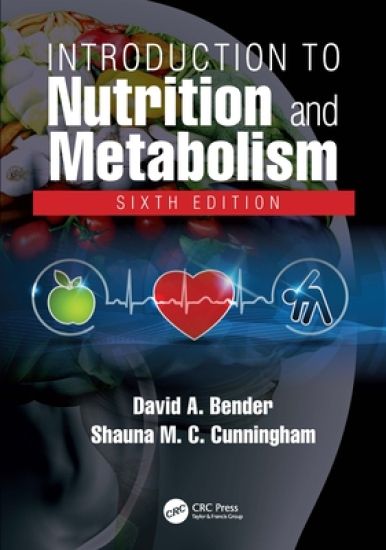
Introduction to Nutrition and Metabolism

Introduction to Nutrition and Metabolism

David A Bender; Shauna M C Cunningham

CRC Press
2021
nidottu
Introduction to Nutrition and Metabolism equips readers with an understanding of the scientific basis of what we call a healthy diet. Now in its sixth edition, this highly recognized textbook provides clear explanations of how nutrients are metabolized and gives the principles of biochemistry needed for comprehending the science of nutrition.This full-color textbook explores the need for food and the uses to which food is put in the body, as well as the interactions between health and diet. Outlining the scientific basis behind nutritional requirements and recommendations, this new edition has been extensively revised to reflect current knowledge.Features:Lists key objectives at the beginning, and summary points at the end of each chapter.Accompanying online resources include interactive tutorial exercises based on interpretation of clinical and research data.Covers topics including: Chemical reactions and catalysis by enzymes; the role of ATP; digestion and absorption of carbohydrates, fats and proteins; issues associated with being overweight; problems of malnutrition; diet and health; and vitamin and mineral requirements and functions.Updated sections focus on the interaction of the gut microbiome and epigenetics with our metabolic responses to diet.Provides a foundation of scientific knowledge for the interpretation and evaluation of future advances in nutrition and health sciences.Following its predecessors, this sixth edition is relevant to any student or practitioner interested in how diet influences our health, including in the fields of nutrition, dietetics, medicine and public health.
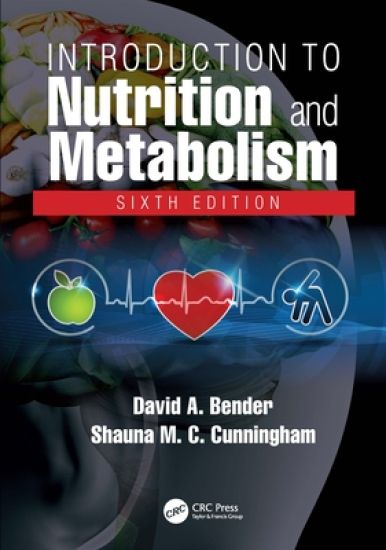
Introduction to Nutrition and Metabolism

Introduction to Nutrition and Metabolism

David A Bender; Shauna M C Cunningham

CRC Press
2021
sidottu
Introduction to Nutrition and Metabolism equips readers with an understanding of the scientific basis of what we call a healthy diet. Now in its sixth edition, this highly recognized textbook provides clear explanations of how nutrients are metabolized and gives the principles of biochemistry needed for comprehending the science of nutrition.This full-color textbook explores the need for food and the uses to which food is put in the body, as well as the interactions between health and diet. Outlining the scientific basis behind nutritional requirements and recommendations, this new edition has been extensively revised to reflect current knowledge.Features:Lists key objectives at the beginning, and summary points at the end of each chapter.Accompanying online resources include interactive tutorial exercises based on interpretation of clinical and research data.Covers topics including: Chemical reactions and catalysis by enzymes; the role of ATP; digestion and absorption of carbohydrates, fats and proteins; issues associated with being overweight; problems of malnutrition; diet and health; and vitamin and mineral requirements and functions.Updated sections focus on the interaction of the gut microbiome and epigenetics with our metabolic responses to diet.Provides a foundation of scientific knowledge for the interpretation and evaluation of future advances in nutrition and health sciences.Following its predecessors, this sixth edition is relevant to any student or practitioner interested in how diet influences our health, including in the fields of nutrition, dietetics, medicine and public health.
The Role of Apoptosis in Development, Tissue Homeostasis and Malignancy

The Role of Apoptosis in Development, Tissue Homeostasis and Malignancy

R.M. Dexter; A.H. Wyllie; M.C. Raff

Chapman and Hall
1995
sidottu
The past five years have witnessed a remarkable development of interest in cell death 'from inside out'. After 30 years of relative obscurity, its quantitative importance in the building and maintenance of normal tissues, the subtle strategies involved in its regulation, and its significance in the pathogenesis of diseases of major social importance are becoming clear. Moreover, because a distinct set of biological events is involved in this death, these events themselves become reason­ able targets for new pharmacological agents in the treatment of cancer. The articles in this volume summarize the contents of a discussion meeting held at the Royal Society on 23 and 24 February 1994. The authors are a distinguished international group from a variety of disciplines in biology and medicine and hopefully their articles will convey something of the excitement of this fast-moving field. The three organizers are enormously indebted to all the contributors for the enthusiasm with which they delivered their talks, shared in discussion, and finally committed their contributions to these printed pages. We would also like to acknowledge the gracious way in which the Royal Society hosted the meeting, and in particular Mary Manning for making it the trouble-free and enjoyable experience that it was, and Janet Clifford and Simon Gribbin for skillfully managing the editorial processing of this volume. Michael Dexter June 1994 Martin Raff Andrew Wyllie x 1 Death from inside out: an overVIew ANDREW H.
Low Intensity Operations

Low Intensity Operations

Frank Kitson K.C.B. C.B.E. M.C.

Faber Faber
2010
pokkari
Low Intensity Operations is an important, controversial and prophetic book that has had a major influence on the conduct of modern warfare. First published in 1971, it was the result of an academic year Frank Kitson spent at University College, Oxford, under the auspices of the Ministry of Defence, to write a paper on the way in which the army should be prepared to deal with future insurgency and peacekeeping operations. Its findings and propositions are as striking as when the work was first published. 'To understand the nature of revolutionary warfare, one cannot do better than read Low Intensity Operations... The author has had unrivalled experience of such operations in many parts of the world.' Daily Telegraph 'A highly practical analysis of subversion, insurgency and peacekeeping operations... Frank Kitson's book is not merely timely but important.' The Economist
Directing Operations

Directing Operations

Frank Kitson K.C.B. C.B.E. M.C.

Faber Faber
2010
pokkari
Throughout the world, countries are obliged to make great sacrifices in order to raise the vast sums of money needed to secure their defence. But both the sacrifice and the money will be wasted unless properly prepared and qualified commanders are available to direct military operations in the event of war breaking out.Many books have been written which attempt to deduce the qualities required of contemporary generals by studying the performance of the great captains of history. By contrast, in Directing Operations, first published in 1989, Kitson works out the qualities needed by studying the tasks that would be likely to confront commanders of the day. He goes on to discuss how traditional methods of producing senior officers, which may have been suited to the needs of the massed armies of the first half of the twentieth century, should be adapted to fit the demands of the modern world.Kitson's writings continue to be widely read and provoke strong opinions, and the ideas contained in Directing Operations remain highly relevant to the armies of all developed countries.
Has your House got Cracks?

Has your House got Cracks?

Tim Freeman; Richard M.C. Driscoll; G S Littlejohn

Thomas Telford Ltd
2001
nidottu
This guide was commissioned by the Institution of Civil Engineers and the Building Research Establishment to provide practical guidance for homeowners whose properties have been affected by subsidence, or heave, or who are concerned by the potential risk of damage. The first, best-selling, edition dealt specifically with the problems associated with properties founded on shrinkable clay soils, and was reprinted many times. The second edition has been expanded to include sections on other types of subsidence and causes of damage that are unrelated to foundation movement.
Sedimentation and Thickening

Sedimentation and Thickening

E.M. Tory; Raimund Bürger; F. Concha; M.C. Bustos

Springer
1999
sidottu
The aim of this book is to present a rigorous phenomenological and mathematical formulation of sedimentation processes and to show how this theory can be applied to the design and control of continuous thickeners. The book is directed to stu­ dents and researchers in applied mathematics and engineering sciences, especially in metallurgical, chemical, mechanical and civil engineering, and to practicing en­ gineers in the process industries. Such a vast and diverse audience should read this book differently. For this reason we have organized the chapters in such a way that the book can be read in two ways. Engineers and engineering students will find a rigorous formulation of the mathematical model of sedimentation and the exact and approximate solutions for the most important problems encountered in the laboratory and in industry in Chapters 1 to 3, 7 and 8, and 10 to 12, which form a self-contained subject. They can skip Chapters 4 to 6 and 9, which are most important to applied mathematicians, without losing the main features of sedimentation processes. On the other hand, applied mathematicians will find special interest in Chapters 4 to 6 and 9 which show some known but many recent results in the field of conservation laws of quasilinear hyperbolic and degenerate parabolic equations of great interest today. These two approaches to the theory keep their own styles: the mathematical approach with theorems and proofs, and the phenomenological approach with its deductive technique.
Distortion Analysis of Analog Integrated Circuits

Distortion Analysis of Analog Integrated Circuits

Piet Wambacq; Willy M.C. Sansen

Springer
1998
sidottu
The analysis and prediction of nonlinear behavior in electronic circuits has long been a topic of concern for analog circuit designers. The recent explosion of interest in portable electronics such as cellular telephones, cordless telephones and other applications has served to reinforce the importance of these issues. The need now often arises to predict and optimize the distortion performance of diverse electronic circuit configurations operating in the gigahertz frequency range, where nonlinear reactive effects often dominate. However, there have historically been few sources available from which design engineers could obtain information on analysis tech­ niques suitable for tackling these important problems. I am sure that the analog circuit design community will thus welcome this work by Dr. Wambacq and Professor Sansen as a major contribution to the analog circuit design literature in the area of distortion analysis of electronic circuits. I am personally looking forward to hav­ing a copy readily available for reference when designing integrated circuits for communication systems.
Low-Noise Wide-Band Amplifiers in Bipolar and CMOS Technologies

Low-Noise Wide-Band Amplifiers in Bipolar and CMOS Technologies

Zhong Yuan Chong; Willy M.C. Sansen

Springer
1990
sidottu
Analog circuit design has grown in importance because so many circuits cannot be realized with digital techniques. Examples are receiver front-ends, particle detector circuits, etc. Actually, all circuits which require high precision, high speed and low power consumption need analog solutions. High precision also needs low noise. Much has been written already on low noise design and optimization for low noise. Very little is available however if the source is not resistive but capacitive or inductive as is the case with antennas or semiconductor detectors. This book provides design techniques for these types of optimization. This book is thus intended firstly for engineers on senior or graduate level who have already designed their first operational amplifiers and want to go further. It is especially for engineers who do not want just a circuit but the best circuit. Design techniques are given that lead to the best performance within a certain technology. Moreover, this is done for all important technologies such as bipolar, CMOS and BiCMOS. Secondly, this book is intended for engineers who want to understand what they are doing. The design techniques are intended to provide insight. In this way, the design techniques can easily be extended to other circuits as well. Also, the design techniques form a first step towards design automation. Thirdly, this book is intended for analog design engineers who want to become familiar with both bipolar and CMOS technologies and who want to learn more about which transistor to choose in BiCMOS.
Symbolic Analysis for Automated Design of Analog Integrated Circuits
It is a great honor to provide a few words of introduction for Dr. Georges Gielen's and Prof. Willy Sansen's book "Symbolic analysis for automated design of analog integrated circuits". The symbolic analysis method presented in this book represents a significant step forward in the area of analog circuit design. As demonstrated in this book, symbolic analysis opens up new possibilities for the development of computer-aided design (CAD) tools that can analyze an analog circuit topology and automatically size the components for a given set of specifications. Symbolic analysis even has the potential to improve the training of young analog circuit designers and to guide more experienced designers through second-order phenomena such as distortion. This book can also serve as an excellent reference for researchers in the analog circuit design area and creators of CAD tools, as it provides a comprehensive overview and comparison of various approaches for analog circuit design automation and an extensive bibliography. The world is essentially analog in nature, hence most electronic systems involve both analog and digital circuitry. As the number of transistors that can be integrated on a single integrated circuit (IC) substrate steadily increases over time, an ever increasing number of systems will be implemented with one, or a few, very complex ICs because of their lower production costs.
Design Criteria for Low Distortion in Feedback Opamp Circuits

Design Criteria for Low Distortion in Feedback Opamp Circuits

Bjørnar Hernes; Willy M.C. Sansen; Trond Sæther

Springer-Verlag New York Inc.
2003
sidottu
Broadband opamps for multi-channel communication systems have strong demands on linearity performance. When these opamps are integrated in deep sub-micron CMOS technologies, the signal-swing has to occupy a large part of the rather low supply voltage to maintain the signal-to-noise-ratio. To obtain opamps with low distortion it is necessary to do a thorough analysis of the nonlinear behaviour of such circuits and this is the main subject of Design Criteria for Low Distortion in Feedback Opamp Circuits. The biasing of each transistor in the circuit is a major issue and is addressed in this work. It is important to bias the transistor such that the distortion is low and stable in the entire range of its terminal voltages. This will ensure high linearity and robustness against variations in circuit conditions such as power supply voltage, bias current and process variations. Design Criteria for Low Distortion in Feedback Opamp Circuits is written for .
Distortion Analysis of Analog Integrated Circuits

Distortion Analysis of Analog Integrated Circuits

Piet Wambacq; Willy M.C. Sansen

Springer-Verlag New York Inc.
2011
nidottu
The analysis and prediction of nonlinear behavior in electronic circuits has long been a topic of concern for analog circuit designers. The recent explosion of interest in portable electronics such as cellular telephones, cordless telephones and other applications has served to reinforce the importance of these issues. The need now often arises to predict and optimize the distortion performance of diverse electronic circuit configurations operating in the gigahertz frequency range, where nonlinear reactive effects often dominate. However, there have historically been few sources available from which design engineers could obtain information on analysis tech­ niques suitable for tackling these important problems. I am sure that the analog circuit design community will thus welcome this work by Dr. Wambacq and Professor Sansen as a major contribution to the analog circuit design literature in the area of distortion analysis of electronic circuits. I am personally looking forward to hav­ing a copy readily available for reference when designing integrated circuits for communication systems.