This book provides an in-depth study of the Soviet Army during the offensive operations that started with Battle of Stalingrad in December 1942 and went until Spring 1943. The lessons learned by the Soviet Army from these experiences helped design the military steamroller that decimated the German panzer divisions at Kursk in the Summer of 1943.
David Glantz examines the Soviet study of war, the re-emergence of the operation level and its connection with deep battle, the evolution of the Soviet theory of operations in depth before 1941, and its refinement and application in the European theatre and the Far East between 1941 and 1945.
This text is the second of three volumes written by Colonel Glantz on the contribution of intelligence and deception operations to the Soviet victory over Nazi Germany. It examines the area where intelligence and operations overlap; the nature of co-ordination between the two; and the support provided by intelligence to operational planning and execution (or the absence of such support). This is not a study of intelligence work as such, but of how intelligence can improve the chances of success on the battlefield by facilitating the more effective and economical use of troops.
Beginning with Operation Barbarossa, the German invasion of the Soviet Union in June 1941, this volume draws upon eye-witness German accounts supplemented with German archival and detailed Soviet materials. Formerly classified Soviet archival materials has been incorporated.
The Soviet Study of War" series examines the lessons Soviet military theorists and commanders learned from the study of their own military experience. These are translations of Soviet documents.
Armed revolution and civil war gave birth to the Soviet Union, world War II propelled it to global pre-eminence, and the Cold War contributed to the Soviet Union's demise. Given Marxism-Leninism's idological preoccupation with war and threats of war, it is understandable that the spectre of war should play a vital role in the life and fate of the Soviet state. This study of Soviet military strategy is based upon the twin pillars of Soviet political-military actions and Soviet writings on the subject of military strategy. Thanks to the policy of glasnost, it incorporates Soviet materials hitherto unavailable in the West. It aims to be not simply a retrospective account of what was, but to form part of the context for what will be in the future.
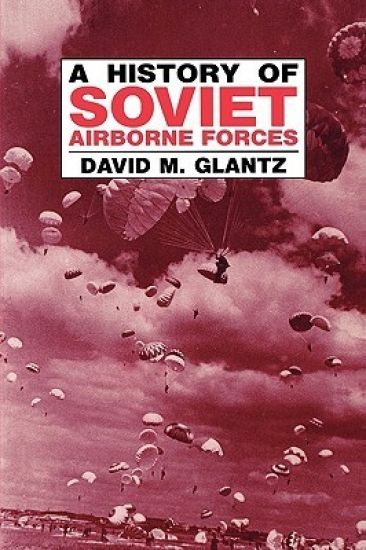
For almost 70 years Soviet and Russian military theorists have been fascinated with the concept of airborne operations. Now Russian theorists tackle the problems posed to such operations by high-precision weaponry. This work, using newly released and formerly classified Soviet and East German archives, provides a detailed record of the performance of Soviet airborne forces during peace and war.
This book provides an in-depth study of the Soviet Army during the offensive operations that started with Battle of Stalingrad in December 1942 and went until Spring 1943. The lessons learned by the Soviet Army from these experiences helped design the military steamroller that decimated the German panzer divisions at Kursk in the Summer of 1943.
This text is the second of three volumes written by Colonel Glantz on the contribution of intelligence and deception operations to the Soviet victory over Nazi Germany. It examines the area where intelligence and operations overlap; the nature of co-ordination between the two; and the support provided by intelligence to operational planning and execution (or the absence of such support). This is not a study of intelligence work as such, but of how intelligence can improve the chances of success on the battlefield by facilitating the more effective and economical use of troops.
David Glantz examines the Soviet study of war, the re-emergence of the operation level and its connection with deep battle, the evolution of the Soviet theory of operations in depth before 1941, and its refinement and application in the European theatre and the Far East between 1941 and 1945.
For almost 70 years Soviet and Russian military theorists have been fascinated with the concept of airborne operations. Now Russian theorists tackle the problems posed to such operations by high-precision weaponry. This work, using newly released and formerly classified Soviet and East German archives, provides a detailed record of the performance of Soviet airborne forces during peace and war.
This collection of texts has been taken from formerly classified material in the official Red Army General Staff journal 'Military Thought'. The results are two volumes of great scope based on archival evidence. They stand as a compulsory reference point for anyone with an interest in the operational endeavours of the Soviet Army from the 1920's onward.
The Soviet military concept of operational art and the associated theories such as "war of annihilations", "deep battle", and "deep operations" have been observed by the West since World War II. The Soviet government hid their military-theoretical work behind a veil of secrecy. Here, the Soviet theories are revealed in the words of those who created them in peacetime and applied them in war.
Beginning with Operation Barbarossa, the German invasion of the Soviet Union in June 1941, this volume draws upon eye-witness German accounts supplemented with German archival and detailed Soviet materials. Formerly classified Soviet archival materials has been incorporated.
This collection of texts has been taken from formerly classified material in the official Red Army General Staff journal 'Military Thought'. The results are two volumes of great scope based on archival evidence. They stand as a compulsory reference point for anyone with an interest in the operational endeavours of the Soviet Army from the 1920's onward.
The Soviet military concept of operational art and the associated theories such as "war of annihilations", "deep battle", and "deep operations" have been observed by the West since World War II. The Soviet government hid their military-theoretical work behind a veil of secrecy. Here, the Soviet theories are revealed in the words of those who created them in peacetime and applied them in war.
An anthropological study of Berber society and particularly the Rifian tribes of Morocoo, a Muslim society. This book deals with the background of these tribes, their settlement in various areas and contemporary issues.
An anthropological study of Berber society and particularly the Rifian tribes of Morocoo, a Muslim society. This book deals with the background of these tribes, their settlement in various areas and contemporary issues.
Armed revolution and civil war gave birth to the Soviet Union, world War II propelled it to global pre-eminence, and the Cold War contributed to the Soviet Union's demise. Given Marxism-Leninism's idological preoccupation with war and threats of war, it is understandable that the spectre of war should play a vital role in the life and fate of the Soviet state. This study of Soviet military strategy is based upon the twin pillars of Soviet political-military actions and Soviet writings on the subject of military strategy. Thanks to the policy of glasnost, it incorporates Soviet materials hitherto unavailable in the West. It aims to be not simply a retrospective account of what was, but to form part of the context for what will be in the future.
This comprehensive new two-volume work provides the reader with a detailed insight into the use of the finite element method in geotechnical engineering. As specialist knowledge required to perform geotechnical finite element analysis is not normally part of a single engineering degree course, this lucid work will prove invaluable. It brings together essential information presented in a manner understandable to most engineers. Volume 1 presents the theory, assumptions and approximations involved in finite element analysis while Volume 2 concentrates on its practical applications to real geotechnical problems. The theory explored in the first volume is referred to in the case studies of the second volume to provide a holistic impression of finite element analysis as it is applied in geotechncial engineering. Using practical examples, the second volume illustrates the restrictions, pitfalls, advantages and disadvantages of numerical analysis. The authors examine popular constitutive models, numerical techniques and case studies. Together, both volumes aim to provide the reader with sufficient knowledge to judge the credibility of the numerical results that the reader may obtain, or review, in the future. Finite element analysis in geotechnical engineering: theory and application will be essential reading for practising geotechnical and structural engineers and researchers, particularly users of commercial finite element software, both in industry and in academia. Students performing project work at undergraduate and postgraduate level will also find this book invaluable.