Blue hat den Blues. Ihr Vater, der Universitätsprofessor, zieht schon wieder um. Nie länger als ein Semester bleiben Tochter und Vater an einem Ort. Bald kennt Blue jedes College. Zum Glück hat sie die Bücher - ihre engsten Vertrauten. Und so hungrig wie sie Geschichten auf Papier verschlingt, so lustvoll stürzt sie sich ins pralle Leben: Charmant und witzig besticht sie als wandelndes Lexikon und läßt zugleich keine Wodkaflasche an sich vorbeiziehen. Jeder weiß, Blue ist besonders. Man liegt ihr zu Füßen. Und dann passiert ein mysteriöser Mord und ihr Leben gerät aus den Fugen. Ein Aufsehen erregender und temporeicher Roman und ein spannend komischer Streifzug quer durch die Sätze von Shakespeare bis Cary Grant. Donna Tartt 2 + Alfred Hitchcock x Atomenergie = Formel-los das beste Debüt aller Zeiten.
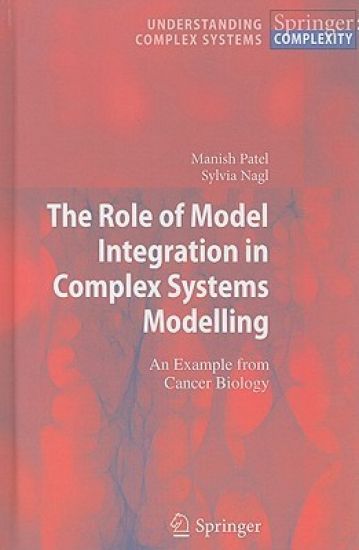
Model integration – the process by which different modelling efforts can be brought together to simulate the target system – is a core technology in the field of Systems Biology. In the work presented here model integration was addressed directly taking cancer systems as an example. An in-depth literature review was carried out to survey the model forms and types currently being utilised. This was used to formalise the main challenges that model integration poses, namely that of paradigm (the formalism on which a model is based), focus (the real-world system the model represents) and scale.A two-tier model integration strategy, including a knowledge-driven approach to address model semantics, was developed to tackle these challenges. In the first step a novel description of models at the level of behaviour, rather than the precise mathematical or computational basis of the model, is developed by distilling a set of abstract classes and properties. These can accurately describe model behaviour and hence describe focus in a way that can be integrated with behavioural descriptions of other models. In the second step this behaviour is decomposed into an agent-based system by translating the models into local interaction rules.The book provides a detailed and highly integrated presentation of the method, encompassing both its novel theoretical and practical aspects, which will enable the reader to practically apply it to their model integration needs in academic research and professional settings. The text is self-supporting. It also includes an in-depth current bibliography to relevant research papers and literature. The review of the current state of the art in tumour modelling provides added value.
Model integration – the process by which different modelling efforts can be brought together to simulate the target system – is a core technology in the field of Systems Biology. In the work presented here model integration was addressed directly taking cancer systems as an example. An in-depth literature review was carried out to survey the model forms and types currently being utilised. This was used to formalise the main challenges that model integration poses, namely that of paradigm (the formalism on which a model is based), focus (the real-world system the model represents) and scale.A two-tier model integration strategy, including a knowledge-driven approach to address model semantics, was developed to tackle these challenges. In the first step a novel description of models at the level of behaviour, rather than the precise mathematical or computational basis of the model, is developed by distilling a set of abstract classes and properties. These can accurately describe model behaviour and hence describe focus in a way that can be integrated with behavioural descriptions of other models. In the second step this behaviour is decomposed into an agent-based system by translating the models into local interaction rules.The book provides a detailed and highly integrated presentation of the method, encompassing both its novel theoretical and practical aspects, which will enable the reader to practically apply it to their model integration needs in academic research and professional settings. The text is self-supporting. It also includes an in-depth current bibliography to relevant research papers and literature. The review of the current state of the art in tumour modelling provides added value.