Kirjahaku
Etsi kirjoja tekijän nimen, kirjan nimen tai ISBN:n perusteella.
1000 tulosta hakusanalla Maria R Bottermann-Broj
This collection examines Axel Honneth's theory of recognition and the crucial role played by the media in struggles for recognition. It brings together debates on controversial aspects of Honneth's work and a set of intriguing empirical studies including with slum-dwelling adolescents, leprosy patients and women exposed to child labor exploitation
Crozet's Voyage To Tasmania, New Zealand, The Ladrone Islands, And The Philippines In The Years 1771-1772 (1891)
Julien Marie Crozet; James R Boose
Kessinger Publishing
2008
pokkari
Chester: A Buddy Forever
Ann Marie Griffin-Sanford; Gary R. Sanford
Createspace Independent Publishing Platform
2015
nidottu
Transforming Family Businesses - from Dysfunctional to Extraordinary
Ann Marie Kwaiser; James R. Kwaiser
Createspace Independent Publishing Platform
2017
nidottu
Living into a less colonial way of being together. Methodism and American Empire investigates historical trajectories and theological developments that connect American imperialism since World War II to the Methodist tradition as a global movement. The volume asks: to what extent is United Methodists' vision of the globe marred by American imperialism? Through historical analyses and theological reflections, this volume chronicles the formation of an understanding of The United Methodist Church since the mid-20th century that is both global and at the same time dominated by American interests and concerns. Methodism and American Empire provides a historical and theological perspective to understand the current context of The United Methodist Church while also raising ecclesiological questions about the impact of imperialism on how Methodists have understood the nature and mission of the church over the last century. Gathering voices and perspectives from around the world, this volume suggests that the project of global Methodism and the tensions one witnesses therein ought to be understood in the context of American imperialism and that such an understanding is critical to the task of continuing to be a global denomination. The volume tells a tale of complex negotiations happening between United Methodists across different national, cultural, and ecclesial contexts and sets up the historical backdrop for the imminent schism of The United Methodist Church.
Spiritual, religious teachings and scientific theories and facts are examined, compared and paralleled within this book. Biblical symbols and metaphors are decoded with the aid of mystical insights and the corroboration of the latest scientific discoveries and theories. What will be revealed is the marvellous design of the human body - "made in the image and likeness of God" (Genesis 1:27). By realising and observing certain sacred truths the magnificent potential of the God Design can be unlocked and activated. Specifically, this book discusses the scientific discovery of biochemicals, naturally produced in the human body, and associated neurophysiological structures that facilitate the awareness of realms of existence beyond ordinary, physical reality. Serious, credentialed scientists are cited in this book, who based on careful experimentation, have concluded that these experiences in altered states of consciousness are as real as our physical reality.This book includes specific details regarding the phenomenom now known as the "Sacred Secretion."
The Law of Unshakable Wealth Creation
R J Baptiste; Marie Asher Baptiste
B.O.Y. Enterprises, Inc
2024
pokkari
This powerful book is a blueprint for a life beyond your imagination. It is the key to achieving unshakable and undeniable wealth creation. It is loaded with the most salient wealth-creation wisdom. The Law of Unshakable Wealth Creation is an extraordinary guide about how to achieve success by transforming your mind with undeniable and unshakable laws to help you achieve wealth creation. This book will reveal to you a fascinating new pathway to wealth.
Samyj pervyj shakhmatnyj uchebnik, kotoryj poznakomit malenkikh shakhmatistov i ikh roditelej s azami drevnej igry. Podrobnoe izlozhenie pravil, kharakteristika shakhmatnykh figur, rasskaz o razlichnykh strategijakh, istorija shakhmatnykh chempionatov izlozheny dostupnym detjam jazykom. V knigu takzhe vkljucheny shakhmatnye zadachi s postepenno narastajuschim urovnem slozhnosti. Zamechatelnye igrovye illjustratsii, izobrazhajuschie shakhmatnye figury v vide korolej i rytsarej, a shakhmatnuju dosku - kak pole boja ili rytsarskogo turnira, prevratjat izuchenie shakhmatnoj teorii v veseloe prikljuchenie.
Kak primenqt' strategii w real'nom mire:
Mariq Auxiliadora Brisen'o B.; Hose Daniäl' Anido R.
Sciencia Scripts
2021
nidottu
La legitimidad de la mutación constitucional a través de la interpretación judicial
R. Passos Maia
Ediciones Nuestro Conocimiento
2024
nidottu
The Animal Magnetism Collection from MillsBoon
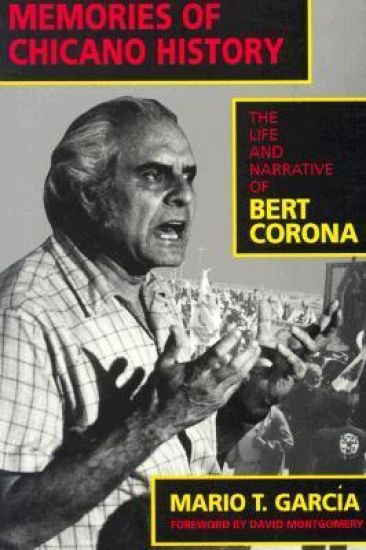
Memories of Chicano History
Mario T. García; David R. Montgomery
University of California Press
1994
pokkari
Who is Bert Corona? Though not readily identified by most Americans, nor indeed by many Mexican Americans, Corona is a man of enormous political commitment whose activism has spanned much of this century. Now his voice can be heard by the wide audience it deserves. In this landmark publication - the first autobiography by a major figure in Chicano history - Bert Corona relates his life story. Corona was born in El Paso in 1918. Inspired by his parents' participation in the Mexican Revolution, he dedicated his life to fighting economic and social injustice. An early labor organizer among ethnic communities in southern California, Corona has agitated for labor and civil rights since the 1940s. His efforts continue today in campaigns to organize undocumented immigrants. This book evolved from a three-year oral history project between Bert Corona and historian Mario T. Garcia. The result is a testimonio, a collaborative autobiography in which historical memories are preserved more through oral traditions than through written documents. Corona's story represents a collective memory of the Mexican-American community's struggle against discrimination and racism. His narration and Garcia's analysis together provide a journey into the Mexican-American world. Bert Corona's reflections offer us an invaluable glimpse at the lifework of a major grass-roots American leader. His story is further enriched by biographical sketches of others whose names have been little recorded during six decades of American labor history.
Early Flowers and Angiosperm Evolution
Friis Else Marie; Crane Peter R.; Pedersen Kaj Raunsgaard
Cambridge University Press
2011
sidottu
The recent discovery of diverse fossil flowers and floral organs in Cretaceous strata has revealed astonishing details about the structural and systematic diversity of early angiosperms. Exploring the rich fossil record that has accumulated over the last three decades, this is a unique study of the evolutionary history of flowering plants from their earliest phases in obscurity to their dominance in modern vegetation. The discussion provides comprehensive biological and geological background information, before moving on to summarise the fossil record in detail. Including previously unpublished results based on research into Early and Late Cretaceous fossil floras from Europe and North America, the authors draw on direct palaeontological evidence of the pattern of angiosperm evolution through time. Synthesising palaeobotanical data with information from living plants, this unique book explores the latest research in the field, highlighting connections with phylogenetic systematics, structure and the biology of extant angiosperms.
New Faces, New Voices
Marisa A. Abrajano; R. Michael Alvarez
Princeton University Press
2012
pokkari
Making up 14.2 percent of the American population, Hispanics are now the largest minority group in the United States. Clearly, securing the Hispanic vote is more important to political parties than ever before. Yet, despite the current size of the Hispanic population, is there a clear Hispanic politics? Who are Hispanic voters? What are their political preferences and attitudes, and why? The first comprehensive study of Hispanic voters in the United States, New Faces, New Voices paints a complex portrait of this diverse and growing population. Examining race, politics, and comparative political behavior, Marisa Abrajano and R. Michael Alvarez counter the preconceived notion of Hispanic voters as one homogenous group. The authors discuss the concept of Hispanic political identity, taking into account the ethnic, generational, and linguistic distinctions within the Hispanic population. They compare Hispanic registration, turnout, and participation to those of non-Hispanics, consider the socioeconomic factors contributing to Hispanics' levels of political knowledge, determine what segment of the Hispanic population votes in federal elections, and explore the prospects for political relationships among Hispanics and non-Hispanics. Finally, the authors look at Hispanic opinions on social and economic issues, factoring in whether these attitudes are affected by generational status and ethnicity. A unique and nuanced perspective on the Hispanic electoral population, New Faces, New Voices is essential for understanding the political characteristics of the largest and fastest growing group of minority voters in the United States.
Women, Texts and Authority in the Early Modern Spanish World
Marta V. Vicente; Luis R. Corteguera
Ashgate Publishing Limited
2003
sidottu
This is the first essay collection to examine the relation between text and gender in Spain from a broad geographical, social and cultural perspective covering more than 300 years. The contributors examine women and the construction of gender thematically, dealing with the areas of politics, law, religion, sexuality, literature and economics, and in a variety of social categories, from Christians and Moriscas, queens and merchants, peasants and visionaries, heretics and madwomen. The essays cover different regions in the Spanish monarchy, including Andalusia, Aragon, Castile, Catalonia, Valencia and Spanish America, from the fifteenth century through to the eighteenth century. Women, Texts and Authority in Early Modern Spain focuses on two central themes: gender relations in the shaping of family and community life, and women's authority in spheres of power. The representation of women in a variety of texts such as poetry, court cases, or even account books illustrate the multifaceted world in which women lived, constantly choosing and negotiating their identities. The appeal of this collection is not limited to scholars of Spanish history and literature; it is deliberately designed to address the issue of how gender relations were constructed in the formation of modern society, and therefore will be of interest to scholars of women's and gender history generally. Because of the emphasis on how this construction occurs in texts, the collection will also be attractive to scholars interested in literary studies and/or print culture.
Task Groups in the Social Services
Marian F. Fatout; Steven R. Rose
SAGE Publications Inc
1995
sidottu
This work should serve as a sound foundation for students and practitioners as they begin their study of the significance of various groups in social work practice. --Choice Collective problem solving: a powerful and effective means of assessing a situation, determining a course of action, and accomplishing goals. In the realm of social services, this formidable method has been evidenced in the development of task groups; in the textbook arena, it is clearly and definitively presented in Task Groups in the Social Services. Focusing on the role of the social worker, the authors consider such aspects as the recruitment and composition of groups, participation as a team member, group shepherding, and dealing with problem behaviors within the group. Selected problem-solving approaches, including brainstorming, societal judgment analysis, and the Delphi technique, are evaluated in terms of process and outcome. From implementation through achievement, the merits and methods of application for a variety of task groups are assessed. This sophisticated work will be a vital resource for students of social work and social work practitioners alike.
Task Groups in the Social Services
Marian F. Fatout; Steven R. Rose
SAGE Publications Inc
1995
nidottu
This work should serve as a sound foundation for students and practitioners as they begin their study of the significance of various groups in social work practice. --Choice Collective problem solving: a powerful and effective means of assessing a situation, determining a course of action, and accomplishing goals. In the realm of social services, this formidable method has been evidenced in the development of task groups; in the textbook arena, it is clearly and definitively presented in Task Groups in the Social Services. Focusing on the role of the social worker, the authors consider such aspects as the recruitment and composition of groups, participation as a team member, group shepherding, and dealing with problem behaviors within the group. Selected problem-solving approaches, including brainstorming, societal judgment analysis, and the Delphi technique, are evaluated in terms of process and outcome. From implementation through achievement, the merits and methods of application for a variety of task groups are assessed. This sophisticated work will be a vital resource for students of social work and social work practitioners alike.
The Fragile Community
Mara B. Adelman; Larry R. Frey
Routledge Member of the Taylor and Francis Group
1996
sidottu
This book examines the concept of "community," focusing on how communication practices help manage the tensions of creating and sustaining everyday communal life amidst the crisis of human loss. While acknowledging how the contradictory and inconsistent nature of human relationships inevitably affects community, this intimate and compelling text shows how community is created and sustained in concrete communication practices. The authors explore these ideas at Bonaventure House, an award-winning residential facility for people with AIDS, where the web of social relationships and the demands of a life-threatening illness intersect in complex ways. Facing a life-threatening illness can defy meaningful social connections, but it can also inspire such ties, sometimes in ways that elude us in the course of daily life. By understanding how collective communication practices help residents forge a sense of community out of the fragility and chaos of living together with AIDS, we are able to better understand how communication is inexorably intertwined with the formation of community in other environments. Based on seven years of ethnographic research including participant-observation, in-depth interviews, and questionnaires, this book weaves together narratives and visual images with conceptual analysis to uncover the ongoing oppositional forces of community life, and to show how both mundane and profound communication processes ameliorate these tensions, and thereby sustain this fragile community. Because the average length of stay for a resident is seven months -- in which time he or she moves from being a newcomer to a community member to someone the community remembers -- the text reflects this short, but crystallized life, starting with the day a new resident opens the door to the day he or she passes away. The writing is rich -- intimate, engaging, personal, compelling, and vivid. The stories told discuss such deeply personal topics as the dilemmas of romantic relationships in a context fraught with many perils; issues of power, authority, and control that enable and constrain social life; and communicative practices that help residents cope with bereavement over the loss of others as well as their own impending deaths. The text concludes by examining the lessons learned from Bonaventure House about creating and sustaining a health community, and serves as an inspiration for strengthening interpersonal relationships and communities in other environments.
The Fragile Community
Mara B. Adelman; Larry R. Frey
Routledge Member of the Taylor and Francis Group
1996
nidottu
This book examines the concept of "community," focusing on how communication practices help manage the tensions of creating and sustaining everyday communal life amidst the crisis of human loss. While acknowledging how the contradictory and inconsistent nature of human relationships inevitably affects community, this intimate and compelling text shows how community is created and sustained in concrete communication practices. The authors explore these ideas at Bonaventure House, an award-winning residential facility for people with AIDS, where the web of social relationships and the demands of a life-threatening illness intersect in complex ways. Facing a life-threatening illness can defy meaningful social connections, but it can also inspire such ties, sometimes in ways that elude us in the course of daily life. By understanding how collective communication practices help residents forge a sense of community out of the fragility and chaos of living together with AIDS, we are able to better understand how communication is inexorably intertwined with the formation of community in other environments. Based on seven years of ethnographic research including participant-observation, in-depth interviews, and questionnaires, this book weaves together narratives and visual images with conceptual analysis to uncover the ongoing oppositional forces of community life, and to show how both mundane and profound communication processes ameliorate these tensions, and thereby sustain this fragile community. Because the average length of stay for a resident is seven months -- in which time he or she moves from being a newcomer to a community member to someone the community remembers -- the text reflects this short, but crystallized life, starting with the day a new resident opens the door to the day he or she passes away. The writing is rich -- intimate, engaging, personal, compelling, and vivid. The stories told discuss such deeply personal topics as the dilemmas of romantic relationships in a context fraught with many perils; issues of power, authority, and control that enable and constrain social life; and communicative practices that help residents cope with bereavement over the loss of others as well as their own impending deaths. The text concludes by examining the lessons learned from Bonaventure House about creating and sustaining a health community, and serves as an inspiration for strengthening interpersonal relationships and communities in other environments.