Kirjojen hintavertailu. Mukana 12 390 323 kirjaa ja 12 kauppaa.

Kirjahaku

Etsi kirjoja tekijän nimen, kirjan nimen tai ISBN:n perusteella.

1000 tulosta hakusanalla Mariah Marsden

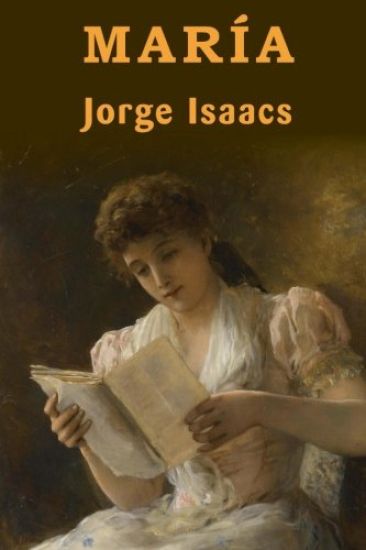
María

María

Jorge Isaacs

Createspace Independent Publishing Platform
2013
nidottu
Mar a es considerada una de las obras m s destacadas de la literatura hispanoamericana del siglo XIX. La novela rom ntica tiene un tono eleg aco. La obra se destaca por el sentimiento del paisaje, as como por la calidad art stica de su prosa. Puede considerarse precursora de la novela criollista de las d cadas de 1920 y 1930. Mar a se public en 1867 y tuvo un xito inmediato. Fue traducida a 31 idiomas. Tanto en Colombia como en otros pa ses de Latinoam rica Isaacs se convirti en una figura muy conocida, lo que dio inicio a una dilatada carrera period stica y pol tica.
Maria

Maria

Jack Griner

Trafford Publishing
2017
pokkari
There are many Mexican families now struggling to get along, and they are good Americans. Yet I?m sure few people are aware how they struggle like everyone else nowadays. They strive to improve themselves and are so proud to live in this great country, even with money and job scares. You have to take your hat off to those that continue trying and succeeding.
Maria do Mar

Maria do Mar

Eduardo Brazao

Createspace Independent Publishing Platform
2014
nidottu
Maria do Mar hist ria de uma paix o imposs vel entre um pescador da Nazar e a sua amada, a quem foi ocultado um terr vel segredo. "As fisionomias par dicas, o requintado decorativismo dos cen rios dom sticos e o dramatismo oper tico das cenas exteriores acentuam a mise en sc ne do texto, que sem o assumir, uma pe a de teatro, caminhando irremediavelmente para um desenlace fatal, onde o Mar, personagem maior da trama, reclamar cruel tributo."
Maria Czaplicka

Maria Czaplicka

Grazyna Kubica

University of Nebraska Press
2020
sidottu
This biography of the Polish British anthropologist Maria Czaplicka (1884–1921) is also a cultural study of the dynamics of the anthropological collective presented from a researcher-centric perspective. Czaplicka, together with Bronislaw Malinowski, studied anthropology in London and later at Oxford, then she headed the Yenisei Expedition to Siberia (1914–15) and was the first female lecturer of anthropology at Oxford. She was an engaged feminist and an expert on political issues in Northern Asia and Eastern Europe. But this remarkable woman’s career was cut short by suicide. Like many women anthropologists of the time, Czaplicka journeyed through various academic institutions, and her legacy has been dispersed and her field materials lost. Grazyna Kubica covers the major events in Czaplicka’s life and provides contextual knowledge about the intellectual formation in which Czaplicka grew up, including the Warsaw radical intelligentsia and the contemporary anthropology of which she became a part. Kubica also presents a critical analysis of Czaplicka’s scientific and literary works, related to the issues of gender, shamanism, and race. Kubica shows how Czaplicka’s sense of agency and subjectivity enriched and shaped the practice of anthropology and sheds light on how scientific knowledge arises and is produced.
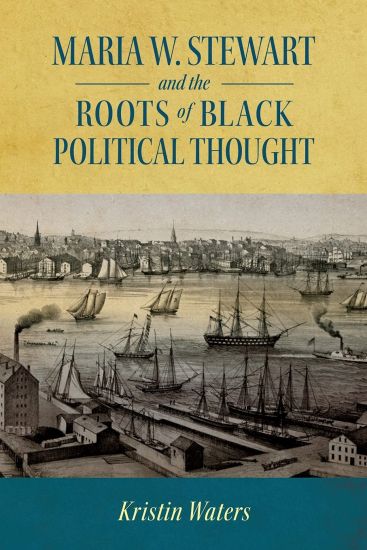
Maria W. Stewart and the Roots of Black Political Thought

Maria W. Stewart and the Roots of Black Political Thought

Kristin Waters

University Press of Mississippi
2021
sidottu
Maria W. Stewart and the Roots of Black Political Thought tells a crucial, almost-forgotten story of African Americans of early nineteenth-century America. In 1833, Maria Stewart (1803–1879) told a gathering at the African Masonic Hall on Boston’s Beacon Hill: "African rights and liberty is a subject that ought to fire the breast of every free man of color in these United States." She exhorted her audience to embrace the idea that the founding principles of the nation must extend to people of color. Otherwise, those truths are merely the hypocritical expression of an ungodly white power, a travesty of original democratic ideals. Like her mentor, David Walker, Stewart illustrated the practical inconsistencies of classical liberalism as enacted in the US and delivered a call to action for ending racism and addressing gender discrimination. Between 1831 and 1833, Stewart’s intellectual productions, as she called them, ranged across topics from true emancipation for African Americans, the Black convention movement, the hypocrisy of white Christianity, Black liberation theology, and gender inequity. Along with Walker’s Appeal to the Coloured Citizens of the World, her body of work constitutes a significant foundation for a moral and political theory that is finding new resonance today—insurrectionist ethics.In this work of recovery, author Kristin Waters examines the roots of Black political activism in the petition movement; Prince Hall and the creation of the first Black masonic lodges; the Black Baptist movement spearheaded by the brothers Thomas, Benjamin, and Nathaniel Paul; writings; sermons; and the practices of festival days, through the story of this remarkable but largely unheralded woman and pioneering public intellectual.
Maria W. Stewart and the Roots of Black Political Thought

Maria W. Stewart and the Roots of Black Political Thought

Kristin Waters

University Press of Mississippi
2021
pokkari
Maria W. Stewart and the Roots of Black Political Thought tells a crucial, almost-forgotten story of African Americans of early nineteenth-century America. In 1833, Maria Stewart (1803–1879) told a gathering at the African Masonic Hall on Boston’s Beacon Hill: "African rights and liberty is a subject that ought to fire the breast of every free man of color in these United States." She exhorted her audience to embrace the idea that the founding principles of the nation must extend to people of color. Otherwise, those truths are merely the hypocritical expression of an ungodly white power, a travesty of original democratic ideals. Like her mentor, David Walker, Stewart illustrated the practical inconsistencies of classical liberalism as enacted in the US and delivered a call to action for ending racism and addressing gender discrimination. Between 1831 and 1833, Stewart’s intellectual productions, as she called them, ranged across topics from true emancipation for African Americans, the Black convention movement, the hypocrisy of white Christianity, Black liberation theology, and gender inequity. Along with Walker’s Appeal to the Coloured Citizens of the World, her body of work constitutes a significant foundation for a moral and political theory that is finding new resonance today—insurrectionist ethics.In this work of recovery, author Kristin Waters examines the roots of Black political activism in the petition movement; Prince Hall and the creation of the first Black masonic lodges; the Black Baptist movement spearheaded by the brothers Thomas, Benjamin, and Nathaniel Paul; writings; sermons; and the practices of festival days, through the story of this remarkable but largely unheralded woman and pioneering public intellectual.
María de Molina, Queen and Regent

María de Molina, Queen and Regent

Paulette Lynn Pepin

Lexington Books
2016
sidottu
This biography of Queen María de Molina thematically explores her life and demonstrates her collective exercise of power and authority as queen. Throughout her public life, María de Molina’s resilient determination, as queen and later as regent, enabled her to not only work tirelessly to establish an effective governing partnership with her husband King Sancho IV, which never occurred, but also to establish the legitimacy of her children and their heirs and their right to rule. Such legitimacy enabled Queen María de Molina’s son and grandson, under her tutelage, to fend off other monarchs and belligerent nobles. The author demonstrates the queen’s ability to govern the Kingdom of Castile-León as a partner with her husband King Sancho IV, a partnership that can be described as an official union. A major theme of this study is María de Molina’s role as dowager queen and regent as she continued to exercise her queenly power and authority to protect the throne of her son Fernando IV and, later, of her grandson Alfonso XI, and to provide peace and stability for the Kingdom of Castile-León.