

Kirjahaku
Etsi kirjoja tekijän nimen, kirjan nimen tai ISBN:n perusteella.
1000 tulosta hakusanalla Mark-David Janus

Empathy has long been a topic of interest to psychologists, but it has been studied in a sometimes bewildering number of ways. In this volume, Mark Davis offers a thorough, evenhanded review of contemporary empathy research, especially work that has been carried out by social and personality psychologists.Davis' approach is explicitly multidimensional. He draws careful distinctions between situational and dispositional ?antecedents? of empathy, cognitive and noncognitive ?internal processes,? affective and nonaffective ?intrapersonal outcomes,? and the ?interpersonal behavioral outcomes? that follow. Davis presents a novel organizational model to help classify and interpret previous findings. This book will be of value in advanced undergraduate and graduate courses on altruism, helping, nad moral development.

Mastering the Adventure of International Dating: Real answers and straight talk for Gen Y-ers, Gen X-ers and Boomers to finding Romance in Eastern Eur
Mark Edward Davis
Booksurge Publishing
2009
nidottu
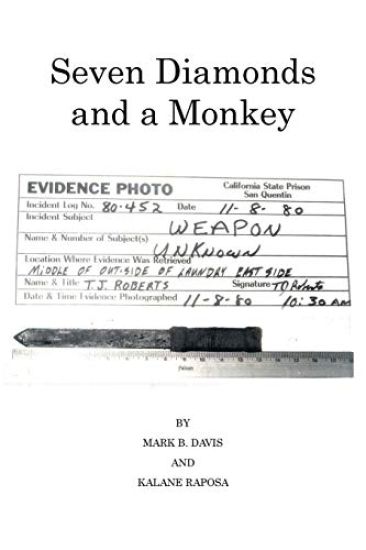

It is the spring of 1944. Blace Davis has no thought of fighting in the war. After all, he is a man with dependents -- a wife and six children, with a seventh on the way. But then everything changes.Mount of Congregation is a true story of bravery in the midst of one of the most audacious military operations in American history: the U.S. Army 42nd Infantry "Rainbow" Division's final assault into the heart of Nazi Germany. Author Mark A. Davis describes battle scenes with concussive clarity while faithfully retelling his grandfather's account of trying to survive the throes of war.Meticulously researched, yet imbued with the singular tenderness a boy feels for his grandfather, Mount of Congregation is an engrossing story of love, family and survival. It is also a transgenerational testament to belief in a Creator who has a plan for every person's life -- including an American infantryman far from his Appalachian home, pressing onward toward Hitler's Siegfried Line.Mark A. Davis received his degree in physician assistant studies from Jefferson College of Health Sciences in Roanoke, Virginia, in 2004. He has lived most of his life in the foothills of Virginia. He is a veteran of the United States armed forces and has practiced medicine as a physician assistant for the Department of the Army, taking part in the treatment and care of active duty service members, veterans, and their families. He currently resides in South Carolina with his wife, Melissa.

The Role of State Agencies in Translational Criminology
Mark S Davis
Springer International Publishing AG
2017
nidottu
This Brief discusses the role of state-level criminal justice organizations in the prevention and control of crime and delinquency. State agencies play an important role in translating criminological knowledge into criminal justice policy and practice. Their unique position enables them to help bridge the divide between the academic and federal agencies, and local communities that need the knowledge. Using several examples, the author shows how state agencies have facilitated translation with varying degrees of success. The agencies covered include: state police/patrol, attorneys general, adult and juvenile corrections, and state criminal justice planning agencies. To a lesser extent they also include statewide organizations representing law enforcement, prosecutors, judges, probation and parole officers, crime prevention professionals, and victim advocates. Most statewide criminal justice organizations are in an excellent position to translate criminological theory and research into policy and practice. Some, like those administering federal monies, to an extent are forced into the translation role for their constituents. Others, such as departments of corrections, do so out of necessity or because of enlightened leadership. Still others, such as state criminal justice planning agencies, provide leadership in translation because of the broad umbrella of their responsibilities and the incentives their pass-though dollars represent. Regardless, state agencies provide an important link between academic institutions and the federal government on one hand, and local criminal justice agencies on the other.? This Brief provides and important resource for navigating that link.
A handy reference for students of criminal justice and criminology, Dictionary of Crime and Justice takes a new approach to making everyday criminal justice terms accessible. The dictionary is unique because of its approach. Each term will contain the following: 1)A complete and current definition of the term 2)A discussion of common misconceptions or controversies surrounding the term 3)A cross-reference to other entries in the dictionary In addition, the volume will be set up alphabetically, to allow the reader to locate the terms quickly and effortlessly.
An excellent, wide-ranging resource with clear definitions for over 3,000 key criminal justice terms. Often going beyond simply definitions, the dictionary places the entries in a meaningful context, connecting the definitions with other concepts. The dictionary uniquely presents common misconceptions for selected terms, along with additional relevant information to clarify a term’s use or derivation.
Jeffrey S. Davis and Mark Cohen on The 24-Hour Turnaround
Jeffrey S Davis; Mark Cohen
Thinkaha
2017
sidottu
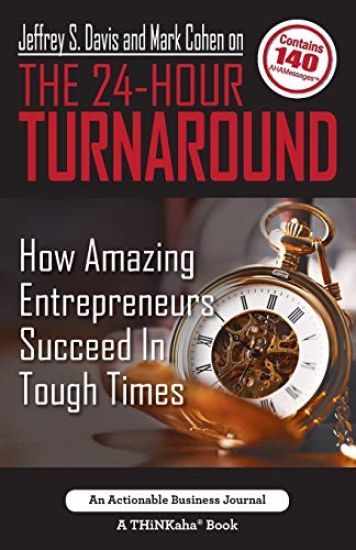
Jeffrey S. Davis and Mark Cohen on The 24-Hour Turnaround
Jeffrey S Davis; Mark Cohen
Thinkaha
2017
pokkari
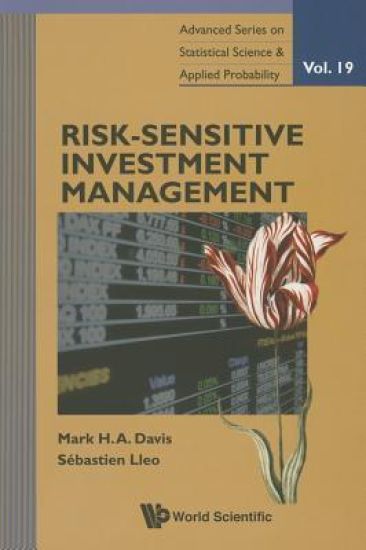
Risk-sensitive Investment Management
Mark H A Davis; Sebastien Lleo
World Scientific Publishing Co Pte Ltd
2014
sidottu
Over the last two decades, risk-sensitive control has evolved into an innovative and successful framework for solving dynamically a wide range of practical investment management problems.This book shows how to use risk-sensitive investment management to manage portfolios against an investment benchmark, with constraints, and with assets and liabilities. It also addresses model implementation issues in parameter estimation and numerical methods. Most importantly, it shows how to integrate jump-diffusion processes which are crucial to model market crashes.With its emphasis on the interconnection between mathematical techniques and real-world problems, this book will be of interest to both academic researchers and money managers. Risk-sensitive investment management links stochastic control and portfolio management. Because of its distinct emphasis on integrating advanced theoretical concepts into practical dynamic investment management tools, this book stands out from the existing literature in fundamental ways. It goes beyond mainstream research in portfolio management in a traditional static setting. The theoretical developments build on contemporary research in stochastic control theory, but are informed throughout by the need to construct an effective and practical framework for dynamic portfolio management.This book fills a gap in the literature by connecting mathematical techniques with the real world of investment management. Readers seeking to solve key problems such as benchmarked asset management or asset and liability management will certainly find it useful.
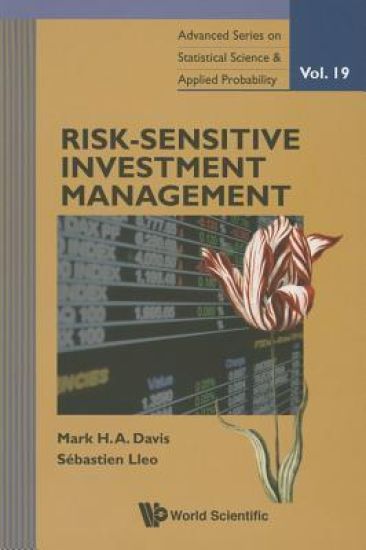
Risk-sensitive Investment Management
Mark H A Davis; Sebastien Lleo
World Scientific Publishing Co Pte Ltd
2014
nidottu
Over the last two decades, risk-sensitive control has evolved into an innovative and successful framework for solving dynamically a wide range of practical investment management problems.This book shows how to use risk-sensitive investment management to manage portfolios against an investment benchmark, with constraints, and with assets and liabilities. It also addresses model implementation issues in parameter estimation and numerical methods. Most importantly, it shows how to integrate jump-diffusion processes which are crucial to model market crashes.With its emphasis on the interconnection between mathematical techniques and real-world problems, this book will be of interest to both academic researchers and money managers. Risk-sensitive investment management links stochastic control and portfolio management. Because of its distinct emphasis on integrating advanced theoretical concepts into practical dynamic investment management tools, this book stands out from the existing literature in fundamental ways. It goes beyond mainstream research in portfolio management in a traditional static setting. The theoretical developments build on contemporary research in stochastic control theory, but are informed throughout by the need to construct an effective and practical framework for dynamic portfolio management.This book fills a gap in the literature by connecting mathematical techniques with the real world of investment management. Readers seeking to solve key problems such as benchmarked asset management or asset and liability management will certainly find it useful.
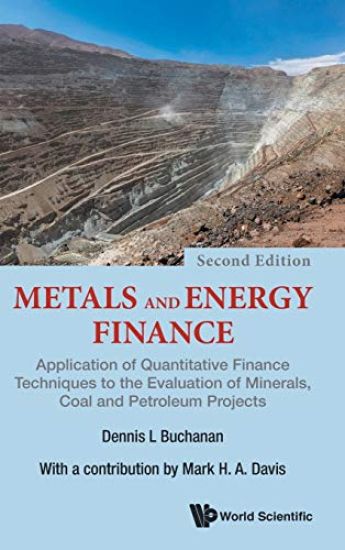
Metals And Energy Finance: Application Of Quantitative Finance Techniques To The Evaluation Of Minerals, Coal And Petroleum Projects
Dennis L Buchanan; Mark H A Davis
World Scientific Europe Ltd
2018
sidottu
'Dennis Buchanan’s text clearly shows how an understanding of the complementary disciplines of geoscience, conventional engineering and advanced financial engineering is essential to making the right decisions concerning how to appraise a resource or project and how to structure the funding of natural resources assets in order to mitigate technical and financial risk and to maximise value for owners. Crucially, the book also looks at how other sources of capital, such as limited recourse lenders, appraise metals and energy assets. Such an understanding is essential to optimising the capital structure and valuation of natural resources assets … The advanced methodologies revealed in Dennis Buchanan’s book will have great value to those working in the technical and financial functions, or to those spanning both functions, of the natural resources industry. 'Mineral EconomicsGiven the design component it involves, financial engineering should be considered equal to conventional engineering. By adopting this complementary approach, financial models can be used to identify how and why timing is critical in optimizing return on investment and to demonstrate how financial engineering can enhance returns to investors. Metals and Energy Finance capitalizes on this approach, and identifies and examines the investment opportunities offered across the extractive industry's cycle, from exploration through evaluation, pre-production development, development and production. The textbook also addresses the similarities of a range of natural resource projects, whether minerals or petroleum, while at the same time identifying their key differences.This new edition has been comprehensively revised with a new chapter on Quantitative Finance and three additional case studies. Contemporary themes in the revised edition include the current focus on the transition from open pit to underground mining as well as the role of real option valuations applied to marginal projects that may have value in the future.This innovative textbook is clear and concise in its approach. Both authors have extensive experience within the academic environment at a senior level as well as track records of hands-on participation in projects within the natural resources and financial services sectors. Metals and Energy Finance will be invaluable to both professionals and graduate students working in the field of mineral and petroleum business management.
Metals And Energy Finance: Application Of Quantitative Finance Techniques To The Evaluation Of Minerals, Coal And Petroleum Projects
Dennis L Buchanan; Mark H A Davis
World Scientific Europe Ltd
2018
nidottu
'Dennis Buchanan’s text clearly shows how an understanding of the complementary disciplines of geoscience, conventional engineering and advanced financial engineering is essential to making the right decisions concerning how to appraise a resource or project and how to structure the funding of natural resources assets in order to mitigate technical and financial risk and to maximise value for owners. Crucially, the book also looks at how other sources of capital, such as limited recourse lenders, appraise metals and energy assets. Such an understanding is essential to optimising the capital structure and valuation of natural resources assets … The advanced methodologies revealed in Dennis Buchanan’s book will have great value to those working in the technical and financial functions, or to those spanning both functions, of the natural resources industry. 'Mineral EconomicsGiven the design component it involves, financial engineering should be considered equal to conventional engineering. By adopting this complementary approach, financial models can be used to identify how and why timing is critical in optimizing return on investment and to demonstrate how financial engineering can enhance returns to investors. Metals and Energy Finance capitalizes on this approach, and identifies and examines the investment opportunities offered across the extractive industry's cycle, from exploration through evaluation, pre-production development, development and production. The textbook also addresses the similarities of a range of natural resource projects, whether minerals or petroleum, while at the same time identifying their key differences.This new edition has been comprehensively revised with a new chapter on Quantitative Finance and three additional case studies. Contemporary themes in the revised edition include the current focus on the transition from open pit to underground mining as well as the role of real option valuations applied to marginal projects that may have value in the future.This innovative textbook is clear and concise in its approach. Both authors have extensive experience within the academic environment at a senior level as well as track records of hands-on participation in projects within the natural resources and financial services sectors. Metals and Energy Finance will be invaluable to both professionals and graduate students working in the field of mineral and petroleum business management.

Atmospheric Chambers and Colourworld: Recent Work by Geoffrey Mark Matthews and Colin Davis
Michael a. Blackburn; Graham Freestone; Geoffrey Mark Matthews
Perennisperegrinator
2018
nidottu
This 24-page illustrated booklet was produced to accompany an exhibition of recent work by Geoffrey Mark Matthews and Colin Davis, which was held at the Gallery at St. Martins, Lincoln, UK from 3 to 15 April 2018. Introduction by the poet and writer Michael Blackburn, with an essay on Matthews's Atmospheric Chambers paintings by philosopher Graham Freestone, and an essay on Davis's Colourworld project by Geoffrey Mark Matthews.
MARK ROTHKO Mark Rothko (1903-1970, born Marcus Rothkowitz in Dvinsk, Russia) is one of the great 20th century American artists. A huge amount of material that has grown up around Rothko. Like Vincent van Gogh, Pablo Picasso, Claude Monet and Leonardo da Vinci, Mark Rothko has been lionized by hundreds of art critics. Rothko remains a greatly admired painter. His works will not, it seems, reach the same mass audiences as Monet or van Gogh, perhaps because Rothko is an abstract artist, and very few abstract artists achieve the mega stature of figurative painters such as van Gogh or Monet. Abstract art of the Mark Rothko kind - the colourfield skeins of Morris Louis, or the black stripes of polychrome shaped canvases of Frank Stella, or the bold, black, calligraphic brushstrokes of Franz Kline - has yet to become as widely accepted as Gustav Klimt's nudes or Sandro Botticelli's Madonnas. In the art world itself, though, Mark Rothko is a highly celebrated painter. He appears in the 20th century Olympian pantheon alongside Jackson Pollock, Piet Mondrian, Paul Klee, Robert Rauschenberg and Jasper Johns. Mark Rothko's art has been seen by critics as 'transcendent' (Ashton, Robertson), 'a sort of spiritual Stonehenge' (Brookner), 'lavish self-indulgence' (Kozloff), 'Dionysian' (Hobbs), 'sensuous and and spiritual' (Waldman), 'enormous, beautiful, opaque surfaces' (Selz), 'enigmatic, gripping presence' (Goldwater), 'incandescent color' (Greenberg), 'haunting' (Sylvester), 'visionary simplicity' (Sandler) and 'tinted hallucinatory cloth' (de Kooning). For poet John Ashbery, Rothko 'seems to eliminate criticism'. The archetypal response to Mark Rothko's art is that it is a (1) 'heroic', (2) 'transcendent', (3) 'spiritual' and (4) 'tragic' art. These are four of the most commonly deployed adjectives in Rothko art criticism (others include 'Buddhist', 'Faustian' and 'death-conscious'). Rothko's painting is seen as (1) 'heroic' because it attempts achieve something great in a world of Existential suffering. Out the slime and the pain and the horror of modern life rise Rothko's 'heroic' canvases. His canvases become a gesture of affirmation in amongst the global angst (as with Rothko's contemporaries, such as Pollock and Newman). Includes new illustrations.
MARK ROTHKO Mark Rothko (1903-1970, born Marcus Rothkowitz in Dvinsk, Russia) is one of the great 20th century American artists. A huge amount of material that has grown up around Rothko. Like Vincent van Gogh, Pablo Picasso, Claude Monet and Leonardo da Vinci, Mark Rothko has been lionized by hundreds of art critics. Rothko remains a greatly admired painter. His works will not, it seems, reach the same mass audiences as Monet or van Gogh, perhaps because Rothko is an abstract artist, and very few abstract artists achieve the mega stature of figurative painters such as van Gogh or Monet. Abstract art of the Mark Rothko kind - the colourfield skeins of Morris Louis, or the black stripes of polychrome shaped canvases of Frank Stella, or the bold, black, calligraphic brushstrokes of Franz Kline - has yet to become as widely accepted as Gustav Klimt's nudes or Sandro Botticelli's Madonnas. In the art world itself, though, Mark Rothko is a highly celebrated painter. He appears in the 20th century Olympian pantheon alongside Jackson Pollock, Piet Mondrian, Paul Klee, Robert Rauschenberg and Jasper Johns. Mark Rothko's art has been seen by critics as 'transcendent' (Ashton, Robertson), 'a sort of spiritual Stonehenge' (Brookner), 'lavish self-indulgence' (Kozloff), 'Dionysian' (Hobbs), 'sensuous and and spiritual' (Waldman), 'enormous, beautiful, opaque surfaces' (Selz), 'enigmatic, gripping presence' (Goldwater), 'incandescent color' (Greenberg), 'haunting' (Sylvester), 'visionary simplicity' (Sandler) and 'tinted hallucinatory cloth' (de Kooning). For poet John Ashbery, Rothko 'seems to eliminate criticism'. The archetypal response to Mark Rothko's art is that it is a (1) 'heroic', (2) 'transcendent', (3) 'spiritual' and (4) 'tragic' art. These are four of the most commonly deployed adjectives in Rothko art criticism (others include 'Buddhist', 'Faustian' and 'death-conscious'). Rothko's painting is seen as (1) 'heroic' because it attempts achieve something great in a world of Existential suffering. Out the slime and the pain and the horror of modern life rise Rothko's 'heroic' canvases. His canvases become a gesture of affirmation in amongst the global angst (as with Rothko's contemporaries, such as Pollock and Newman). Includes new illustrations.
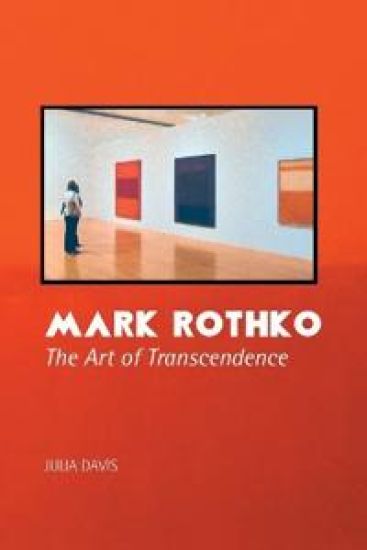
Mark Rothko (1903-1970, born Marcus Rothkowitz in Dvinsk, Russia) is one of the great 20th century American artists.


This ground-breaking publication provides a new view of the great Scottish artist Alan Davie (1920-2014), whose intensely physical gestural painting stood the staid post-war British art world on its head. In advance of a new Davie gallery in Hertford, the visually spectacular book argues that far from being an essentially historical figure, defined by the abstract expressionist era of the Fifties and early Sixties when he enjoyed his greatest fame, Davie was a prophetic artist whose preoccupations with universal creativity and self-realisation are more relevant today than they’ve ever been. Lavishly illustrated with rare archive photographs and little-seen paintings, Alan Davie in Hertford demonstrates that Davie’s visionary art was far more closely bound up with physical places than is generally supposed, not least the quiet market town of Hertford, where he lived for 60 years. A catalogue of 40 works intended as the new gallery’s core collection, provides a “rich and fabulous” survey of Davie’s work, from student works of the Thirties to some of his very last paintings.