

Kirjahaku
Etsi kirjoja tekijän nimen, kirjan nimen tai ISBN:n perusteella.
1000 tulosta hakusanalla Martin Bech
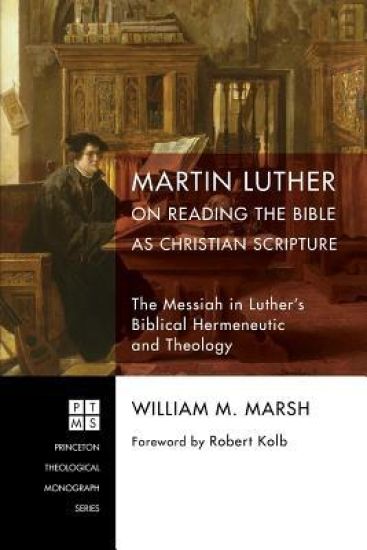
Martin Luther on Reading the Bible as Christian Scripture
William M Marsh; Robert Kolb
Pickwick Publications
2017
pokkari
Martin Luther King in the African American Preaching Tradition
Valentino Lassiter
Wipf Stock Publishers
2010
pokkari


Martin Luther: The Lion-Hearted Reformer
J. a. Morrison; John Arch Morrison
Great Christian Books
2016
nidottu
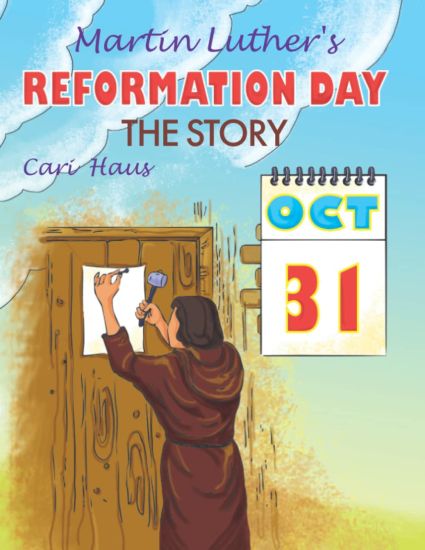
Embark on an extraordinary journey through history with "Martin Luther's Reformation Day: The Story." This captivating children's book takes young readers back in time to more than five hundred years ago, to the land of Germany where Martin Luther was born.Raised by parents who loved Jesus, Martin Luther's life was destined for greatness. As a young boy, he displayed a beautiful voice that earned him and his schoolmates a meal whenever they sang for the villagers. But one fateful day, a lightning bolt changed everything. Martin made a promise to become a monk if God saved his life, leading him to live in a monastery and dedicate himself to seeking closeness with God. However, he always felt a void, yearning for a deeper understanding of God's grace.Through the Bible, Martin Luther discovered a profound truth that transformed his life and would shake the foundations of the Church. He learned that salvation couldn't be earned through payments or good deeds; it was a free gift from Jesus Himself. Fueled by this newfound knowledge, Martin fearlessly penned the "95 Theses" and boldly nailed them to the door of the Catholic Church in Wittenberg. His words spread like wildfire, igniting a movement that would become known as "The Great Reformation.""Martin Luther's Reformation Day: The Story" is a captivating and educational children's book that not only brings history to life but also imparts valuable lessons to young hearts. Encourage children to explore the power of God's Word, embrace His free gift of salvation, and find inspiration to stand up for what is right in their own lives. Join Martin Luther on his remarkable journey and let his legacy inspire a "Great Reformation" in the hearts of children today.

Martin Faber and Other Stories
William Gilmore Simms
University of South Carolina Press
2015
nidottu
In partnership with the University of South Carolina Press, the Simms Initiatives at the University of South Carolina Libraries reissue authoritative editions of out of print works by William Gilmore Simms, antebellum South Carolina's preeminent man of letters. Each volume also includes a new scholarly introduction. This is a facsimile of 1837 edition, with critical introduction by Todd Hagstette and biographical overview by David Moltke-Hansen.

Martin Luther King, Jr.: The Last Interview
Martin Luther King
Melville House Publishing
2017
nidottu
As the Black Lives Matter movement gains momentum, and books like Ta-Nehisi Coates's Between the World and Me and Claudia Rankine's Citizen swing national attention toward the racism and violence that continue to poison our communities, it's as urgent now as ever to celebrate Martin Luther King, Jr., whose insistence on equality and peace defined the Civil Rights Movement and forever changed the course of American history. This collection ranges from an early 1961 interview in which King describes his reasons for joining the ministry (after considering medicine), to a 1964 conversation with Robert Penn Warren, to his last interview, which was conducted on stage at the convention of the Rabbinical Assembly, just ten days before King's assassination. Timely, poignant, and inspiring, Martin Luther King, Jr.: The Last Interview is an essential addition to the Last Interview series.

In his final speech ""I've Been to the Mountaintop,"" Martin Luther King Jr. delivered his support of African American garbage workers on strike in Memphis. Although some consider this oration King's finest, it is mainly known for its concluding two minutes, wherein King compares himself to Moses and seems to predict his own assassination. But King gave an hour-long speech, and the concluding segment can only be understood in relation to the whole. King scholars generally focus on his theology, not his relation to the Bible or the circumstance of a Baptist speaking in a Pentecostal setting. Even though King cited and explicated the Bible in hundreds of speeches and sermons, Martin Luther King's Biblical Epic is the first book to analyze his approach to the Bible and its importance to his rhetoric and persuasiveness.Martin Luther King's Biblical Epic argues that King challenged dominant Christian supersessionist conceptions of Judaism in favor of a Christianity that affirms Judaism as its wellspring. In his final speech, King implicitly but strongly argues that one can grasp Jesus only by first grasping Moses and the Hebrew prophets. This book also traces the roots of King's speech to its Pentecostal setting and to the Pentecostals in his audience. In doing so, Miller puts forth the first scholarship to credit the mostly unknown, but brilliant African American architect who created the large yet compact church sanctuary, which made possible the unique connection between King and his audience on the night of his last speech.

In his final speech ""I've Been to the Mountaintop,"" Martin Luther King Jr. delivered his support of African American garbage workers on strike in Memphis. Although some consider this oration King's finest, it is mainly known for its concluding two minutes, wherein King compares himself to Moses and seems to predict his own assassination. But King gave an hour-long speech, and the concluding segment can only be understood in relation to the whole. King scholars generally focus on his theology, not his relation to the Bible or the circumstance of a Baptist speaking in a Pentecostal setting. Even though King cited and explicated the Bible in hundreds of speeches and sermons, Martin Luther King's Biblical Epic is the first book to analyze his approach to the Bible and its importance to his rhetoric and persuasiveness.Martin Luther King's Biblical Epic argues that King challenged dominant Christian supersessionist conceptions of Judaism in favor of a Christianity that affirms Judaism as its wellspring. In his final speech, King implicitly but strongly argues that one can grasp Jesus only by first grasping Moses and the Hebrew prophets. This book also traces the roots of King's speech to its Pentecostal setting and to the Pentecostals in his audience. In doing so, Miller puts forth the first scholarship to credit the mostly unknown, but brilliant African American architect who created the large yet compact church sanctuary, which made possible the unique connection between King and his audience on the night of his last speech.

This book portrays the life of Martin Van Buren, an active architect of the Democratic Party and eighth president of the American republic, who still remains in the public mind as an obscure, if not forgotten, figure of our history. It depicts his rise to legal then political prominence. Van Buren's long-winding road to the White House was marked by the creation of his "Albany Regency", a well-disciplined political machine that he effectively managed through the so-called spoils system and adroitly used to his own political advantage. Blessed with sound political acumen but despised for his constant political manoeuvring, he was known as "the Little Magician" by his friends and enemies alike, with different motives. As president, Van Buren was beset with the Panic of 1837, a strong economic recession resulting mostly from his predecessor's wrong choices, but for which he paid a strong political price. This book details his life and career.

"Because Martin Buber lived, there is more love in the world than there would have been without him. And for him that was the reason above all others for the gift of life."-New York TimesThe writings of the Jewish religious thinker, Martin Buber (1878-1965), have had a significant influence on a number ofChristian theologians. In this overview, Stephen Panko provides a penetrating insight into the many facets of Buber and his work. Buber's idea of true life as relation was expressed in his famous book I and Thou, in which he asserted that we can only become a personal "I" when we treat others, nature, and God as a "Thou" rather than an impersonal "it." Buber's work became widely known in Christian circles and his concept of "I-Thou" relationships was adopted by Christian theologians Karl Barth, Emil Brunner, Rudolf Bultmann, Dietrich Bonhoeffer, and Friedrich Gogarten among others.