From the early demise of Trent Lott at the hands of bloggers to the agonized scream of Howard Dean; from Daily Kos and the blogosphere to the rise of Twitter and Facebook, politics and new media have co-existed and evolved in rapid succession. Here, an academic and practitioner team up to consider how new and old media technologies mix with combustible politics to determine, in real time, the shape of the emerging political order. Our political moment shares with other realigning periods the sense that political parties are failing to address the public interest. In an era defined by the collapse of the political center, extreme income inequality, rapidly changing demography, and new methods of communicating and organizing, a second-generation online progressive movement fueled by email and social media is coming into its own. In this highly readable text, the authors – one a scholar of Internet politics, the other a leading voice of the first generation netroots – draw on unique data and on-the-ground experience to answer key questions at the core of our tumultuous politics: How has Internet activism changed in form and function? How have the left and right changed with it? How does this affect American political power?
From the early demise of Trent Lott at the hands of bloggers to the agonized scream of Howard Dean; from Daily Kos and the blogosphere to the rise of Twitter and Facebook, politics and new media have co-existed and evolved in rapid succession. Here, an academic and practitioner team up to consider how new and old media technologies mix with combustible politics to determine, in real time, the shape of the emerging political order. Our political moment shares with other realigning periods the sense that political parties are failing to address the public interest. In an era defined by the collapse of the political center, extreme income inequality, rapidly changing demography, and new methods of communicating and organizing, a second-generation online progressive movement fueled by email and social media is coming into its own.In this highly readable text, the authors – one a scholar of Internet politics, the other a leading voice of the first generation netroots – draw on unique data and on-the-ground experience to answer key questions at the core of our tumultuous politics: How has Internet activism changed in form and function? How have the left and right changed with it? How does this affect American political power?
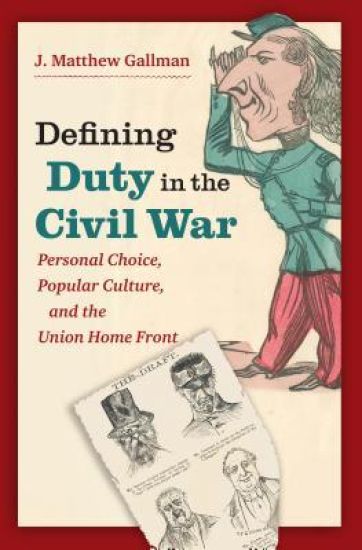
The Civil War thrust Americans onto unfamiliar terrain, as two competing societies mobilized for four years of bloody conflict. Concerned Northerners turned to the print media for guidance on how to be good citizens in a war that hit close to home but was fought hundreds of miles away. They read novels, short stories, poems, songs, editorials, and newspaper stories. They laughed at cartoons and satirical essays. Their spirits were stirred in response to recruiting broadsides and patriotic envelopes. This massive cultural outpouring offered a path for ordinary Americans casting around for direction. Examining the breadth of Northern popular culture, J. Matthew Gallman offers a dramatic reconsideration of how the Union's civilians understood the meaning of duty and citizenship in wartime. Although a huge percentage of military-aged men served in the Union army, a larger group chose to stay home, even while they supported the war. This pathbreaking study investigates how men and women, both white and black, understood their roles in the People's Conflict. Wartime culture created humorous and angry stereotypes ridiculing the nation's cowards, crooks, and fools, while wrestling with the challenges faced by ordinary Americans. Gallman shows how thousands of authors, artists, and readers together created a new set of rules for navigating life in a nation at war.
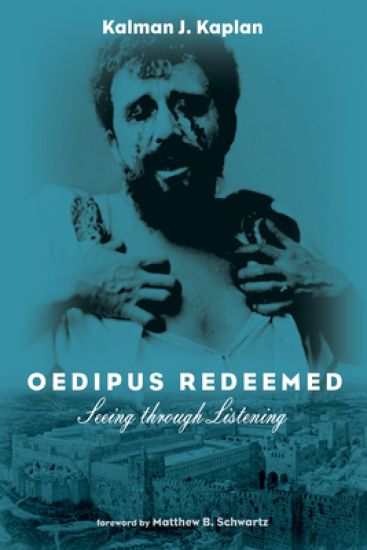
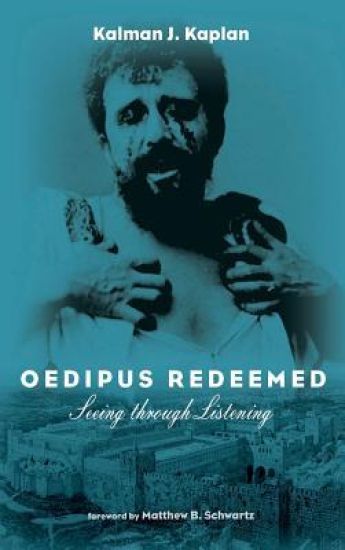
An initial play, Oedipus in Jerusalem, related the narrative of Nathan, the biblical prophet, encountering the blinded Oedipus wandering alone outside of Thebes. Nathan brings him to Jerusalem to be tried at the Jewish Sanhedrin. The Greek playwright Sophocles is the prosecutor, and Nathan serves as the defense attorney. Oedipus is acquitted, but he refuses to accept his acquittal, shouting, ""I am guilty I am guilty of patricide and incest.""Oedipus Redeemed focuses on Nathan and Sophocles combining forces to present Oedipus with two dialogues of historical/biblical characters within the play. The first contrasts the suicide of the Greek Zeno the Stoic after a minor mishap with the life affirmation expressed by the biblical Job after monumental losses. This is designed to uncover the possibility that Oedipus is experiencing shame rather than guilt (after all, he did not commit suicide until after he blinded himself). Nathan and Sophocles focus on the secondary psychological benefit Oedipus has received from insisting on his guilt, and on his coming to terms with the fact that he had blinded himself needlessly if he was innocent. The second dialogue between the biblical prophetess Judith and the blind Greek seer Teiresias focuses on the biblical story of Samson being betrayed by ""following his eyes."" Insight is contrasted with sight. Oedipus's surviving daughter Ismene reunites with Oedipus, telling him she loves and needs him. The play ends with Oedipus's return to the Sanhedrin, tentatively and tearfully accepting his acquittal. ""In this play, Kalman Kaplan, masterfully dramatizes how two great traditions that appear irreconcilably opposed can come together and find a resolution. Kaplan achieves this by brilliantly matching similar narratives delivered by analogous figures from the two opposing camps. While the play is set in the Ancient World where the Greek tradition of Fate opposes the Hebrew God, the dramatic dialogues provide a much needed model for conflict resolution in the divided world of today."" --Thomas H. Jobe, University of Illinois at Chicago Kalman J. Kaplan is a professor in the Department of Psychiatry at the University of Illinois at Chicago College of Medicine. Kaplan has published sixteen books and many articles, and was awarded a grant from the John Templeton Foundation and a Fellowship from the International Fulbright Exchange Program in Israel to develop a program in Biblical Psychology and Psychotherapy. Among Kaplan's books are The Fruit of Her Hands, A Psychology of Hope, Living Biblically, Biblical Psychotherapy, and the first play in this sequence, Oedipus in Jerusalem.
An initial play, Oedipus in Jerusalem, related the narrative of Nathan, the biblical prophet, encountering the blinded Oedipus wandering alone outside of Thebes. Nathan brings him to Jerusalem to be tried at the Jewish Sanhedrin. The Greek playwright Sophocles is the prosecutor, and Nathan serves as the defense attorney. Oedipus is acquitted, but he refuses to accept his acquittal, shouting, ""I am guilty I am guilty of patricide and incest.""Oedipus Redeemed focuses on Nathan and Sophocles combining forces to present Oedipus with two dialogues of historical/biblical characters within the play. The first contrasts the suicide of the Greek Zeno the Stoic after a minor mishap with the life affirmation expressed by the biblical Job after monumental losses. This is designed to uncover the possibility that Oedipus is experiencing shame rather than guilt (after all, he did not commit suicide until after he blinded himself). Nathan and Sophocles focus on the secondary psychological benefit Oedipus has received from insisting on his guilt, and on his coming to terms with the fact that he had blinded himself needlessly if he was innocent. The second dialogue between the biblical prophetess Judith and the blind Greek seer Teiresias focuses on the biblical story of Samson being betrayed by ""following his eyes."" Insight is contrasted with sight. Oedipus's surviving daughter Ismene reunites with Oedipus, telling him she loves and needs him. The play ends with Oedipus's return to the Sanhedrin, tentatively and tearfully accepting his acquittal. ""In this play, Kalman Kaplan, masterfully dramatizes how two great traditions that appear irreconcilably opposed can come together and find a resolution. Kaplan achieves this by brilliantly matching similar narratives delivered by analogous figures from the two opposing camps. While the play is set in the Ancient World where the Greek tradition of Fate opposes the Hebrew God, the dramatic dialogues provide a much needed model for conflict resolution in the divided world of today."" --Thomas H. Jobe, University of Illinois at Chicago Kalman J. Kaplan is a professor in the Department of Psychiatry at the University of Illinois at Chicago College of Medicine. Kaplan has published sixteen books and many articles, and was awarded a grant from the John Templeton Foundation and a Fellowship from the International Fulbright Exchange Program in Israel to develop a program in Biblical Psychology and Psychotherapy. Among Kaplan's books are The Fruit of Her Hands, A Psychology of Hope, Living Biblically, Biblical Psychotherapy, and the first play in this sequence, Oedipus in Jerusalem.
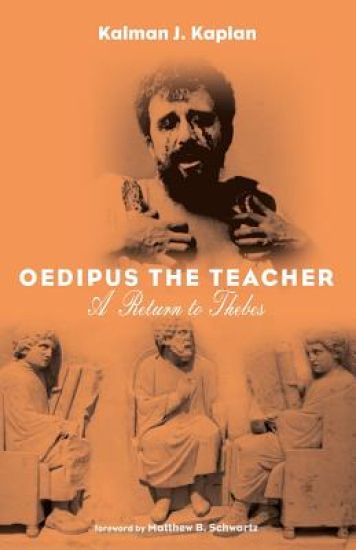
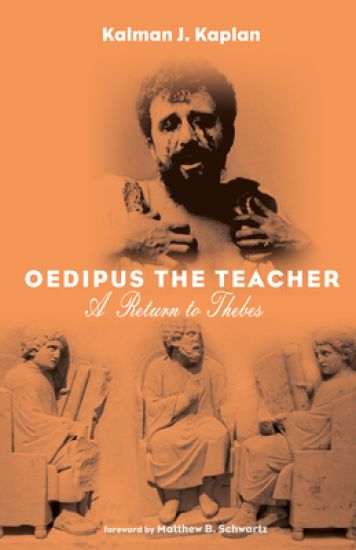
In Oedipus in Jerusalem, the biblical prophet Nathan meets blind Oedipus wandering alone outside of Thebes, becoming convinced that Oedipus has been entrapped by misleading information. He brings him to trial at the Jerusalem Sanhedrin, where Oedipus is acquitted of intentional patricide and incest, but won't accept his acquittal. Oedipus Redeemed describes attempts by Nathan and Sophocles to help Oedipus accept his acquittal, and his self-induced blindness, in the process reuniting him with his daughter Ismene. Oedipus returns to the Sanhedrin, where he agrees to try to emotionally accept the acquittal he has received In this third play, Oedipus the Teacher, Oedipus returns to Thebes with Ismene to teach the lessons he has learned in Jerusalem with the help of a Greek assistant, Kallias, recruited by Sophocles. Oedipus contrasts the destructive results of Greek riddles with parables emergent in biblical narratives. Kallias falls in love with Ismene and becomes rivalrous toward Oedipus, reflecting a distorted Greek view of relations between fathers (older men) and sons (younger men). Several biblical stories are offered as antidotes. Oedipus comes to live with Ismene and Kallias and becomes a doting grandfather. The play ends with the announcement that Oedipus's course is chosen to be taught all over Greece. Oedipus states that he is finally happy. ""It is a tour de force. I wonder if any other active person could write such a work, exhibiting the command of the gamut of Jewish and Hellenistic teachings. Kaplan considers both Greek and Jewish traditions, cloaked in a dramatic context, but focuses mainly on Judaism's profound ideas. Moreover, as he has done in major previous contributions, Kaplan explores the nature and meaning of the Judaic weltanschauung for therapy and the person's wellbeing."" --Daniel Algom, Professor of Psychology, Tel-Aviv University Kalman J. Kaplan is a Professor in the Department of Psychiatry at the University of Illinois College of Medicine. He has received grants from the John Templeton Foundation and the Fulbright Foundation to develop a ""Biblical Approach to Mental Health."" He has published sixteen books and a hundred articles. Among his books are TILT: Teaching Individuals to Live Together; Right to Die versus Sacredness of Life; The Fruit of Her Hands; A Psychology of Hope; and Living Biblically and Biblical Psychotherapy.
In Oedipus in Jerusalem, the biblical prophet Nathan meets blind Oedipus wandering alone outside of Thebes, becoming convinced that Oedipus has been entrapped by misleading information. He brings him to trial at the Jerusalem Sanhedrin, where Oedipus is acquitted of intentional patricide and incest, but won't accept his acquittal. Oedipus Redeemed describes attempts by Nathan and Sophocles to help Oedipus accept his acquittal, and his self-induced blindness, in the process reuniting him with his daughter Ismene. Oedipus returns to the Sanhedrin, where he agrees to try to emotionally accept the acquittal he has received In this third play, Oedipus the Teacher, Oedipus returns to Thebes with Ismene to teach the lessons he has learned in Jerusalem with the help of a Greek assistant, Kallias, recruited by Sophocles. Oedipus contrasts the destructive results of Greek riddles with parables emergent in biblical narratives. Kallias falls in love with Ismene and becomes rivalrous toward Oedipus, reflecting a distorted Greek view of relations between fathers (older men) and sons (younger men). Several biblical stories are offered as antidotes. Oedipus comes to live with Ismene and Kallias and becomes a doting grandfather. The play ends with the announcement that Oedipus's course is chosen to be taught all over Greece. Oedipus states that he is finally happy.
Wendell Berry's poetry, fiction, and essays persistently ask the question: How can we live meaningful lives in a consumer-driven, fragmented age? His honest search for health in the midst of disease has garnered attention and discussion in both conservative and progressive circles. Wendell Berry and the Cultivation of Life thoroughly examines Berry's main themes of community, place, and conservation. It offers an apology for the power of Berry's vision and the ways in which his account of the world resonates with the biblical narrative. Pastors, students, professors, and laity will discover in this book how to flesh out Berry's worldview and foster a culture of life in their neighborhoods, churches, and schools.
Matthew's Gospel makes mention of prophets and prophecy more than any other canonical Gospel. Yet its perspective on prophecy has generally been neglected within biblical scholarship when, in fact, Jesus' prophetic vocation is a central christological theme for Matthew. This new study by Matthew Anslow seeks to draw attention to this underdeveloped focus within Matthean studies. The central claim of the book is that in Matthew's Gospel, Jesus' prophetic vocation is presented as a multi-faceted phenomenon, drawing on several prophetic traditions. Like biblical and popular prophets before him, Jesus is depicted by Matthew as calling Israel back to covenantal faithfulness, thereby providing guidance for the identity, theology, and communal life of God's people.
Max versus the vampires. The final showdown. The third and final book in the "Four Elements" trilogy.As a private investigator in Shadow Pines, Max Long had no shortage of missing person cases. Unfortunately, they all ended the same way-with dead bodies.Whenever someone vanished, the official cause always said the same thing: animal attack. Shadow Pines bristled with paranormal rumors and wild conspiracy theories. However, the truth passed among residents in wordless stares or cryptic remarks that made sense only to those who knew what really happened: vampires made the scenic mountain town their personal feeding ground.Nature abhorred a vacuum, but it also sought balance.When someone dear to Max becomes a missing person case, he faces the most harrowing truth of his life: Nature gave him the powers of the elements for a reason. Starting a war with vampires could cost him more than his life, but he's the town's only chance at survival.