

Kirjahaku
Etsi kirjoja tekijän nimen, kirjan nimen tai ISBN:n perusteella.
1000 tulosta hakusanalla Max M. Stern; Liselotte Bendix Stern


In his prime Max Randy was a rising star in the world of adult entertainment; but, years of hard living have not been kind to him, and his career is on the rocks. To eek out a living, Max runs Money Shot Detective Agency that specializes in photographing cheating husbands for evidence in divorce court. Max's dirty little secret is that he employs fellow has-been adult film stars to seduce husbands that might otherwise be perfectly faithful. One day, Max is summoned to a meeting at Dick Long Productions (DLP), the largest and most well-respected adult entertainment company on the planet. There, Max learns that DLP's founder, CEO and president, Dick Long, has been kidnapped, and Max is hired to find Dick Long and save the company. Having no experience with real detective work, Max sets out on a case that twists and turns its way through the dangerous, surreal and larger-than-life world of the Southern California porn industry.

Max Horkheimer and the Foundations of the Frankfurt School
John Abromeit
Cambridge University Press
2011
sidottu
This book is the first comprehensive intellectual biography of Max Horkheimer during the early and middle phases of his life (1895–1941). Drawing on unexamined new sources, John Abromeit describes the critical details of Horkheimer's intellectual development. This study recovers and reconstructs the model of early Critical Theory that guided the work of the Institute for Social Research in the 1930s. Horkheimer is remembered primarily as the co-author of Dialectic of Enlightenment, which he wrote with Theodor W. Adorno in the early 1940s. But few people realize that Horkheimer and Adorno did not begin working together seriously until the late 1930s or that the model of Critical Theory developed by Horkheimer and Erich Fromm in the late 1920s and early 1930s differs in crucial ways from Dialectic of Enlightenment. Abromeit highlights the ways in which Horkheimer's early Critical Theory remains relevant to contemporary theoretical discussions in a wide variety of fields.

Max Weber is widely regarded as one of the foundational thinkers of the twentieth century. But how did this reclusive German scholar manage to leave such an indelible mark on modern political and social thought? Max Weber in Politics and Social Thought is the first comprehensive account of Weber's wide-ranging impact on both German and American intellectuals. Drawing on a wide range of sources, Joshua Derman illuminates what Weber meant to contemporaries in the Weimar Republic and Nazi Germany and analyzes why they reached for his concepts to articulate such widely divergent understandings of modern life. The book also accounts for the transformations that Weber's concepts underwent at the hands of émigré and American scholars, and in doing so, elucidates one of the major intellectual movements of the mid-twentieth century: the transatlantic migration of German thought.
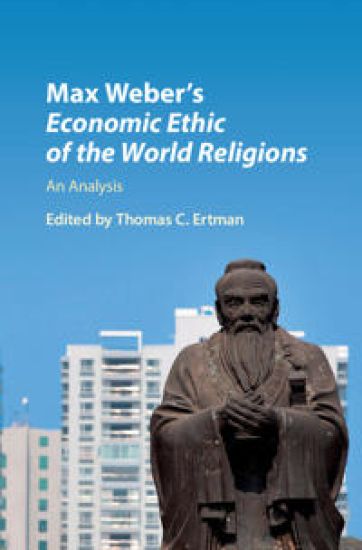
Max Weber's Economic Ethic of the World Religions
Cambridge University Press
2017
sidottu
This book brings together for the first time in English internationally-recognized specialists who seek to identify what is 'living' and what is 'dead' in the great German social scientist Max Weber's analyses of China, India and Ancient Israel found in his massive, unfinished Economic Ethic of the World Religions. In so doing, the volume offers a powerful new perspective on the current debate concerning the timing of and deeper roots of the 'Great Divergence' - and more recent convergence - in the economic and political development of the West on the one hand, and the great civilizations of Asia on the other. At the same time, this volume also rebalances our understanding of Weber's entire intellectual output by returning The Protestant Ethic and the Spirit of Capitalism to its proper place within Economic Ethic of the World Religions and establishing that work as the equal of the similarly unfinished Economy and Society.

Max Horkheimer and the Foundations of the Frankfurt School
Abromeit John
Cambridge University Press
2013
pokkari
This book is the first comprehensive intellectual biography of Max Horkheimer during the early and middle phases of his life (1895–1941). Drawing on unexamined new sources, John Abromeit describes the critical details of Horkheimer's intellectual development. This study recovers and reconstructs the model of early Critical Theory that guided the work of the Institute for Social Research in the 1930s. Horkheimer is remembered primarily as the co-author of Dialectic of Enlightenment, which he wrote with Theodor W. Adorno in the early 1940s. But few people realize that Horkheimer and Adorno did not begin working together seriously until the late 1930s or that the model of Critical Theory developed by Horkheimer and Erich Fromm in the late 1920s and early 1930s differs in crucial ways from Dialectic of Enlightenment. Abromeit highlights the ways in which Horkheimer's early Critical Theory remains relevant to contemporary theoretical discussions in a wide variety of fields.
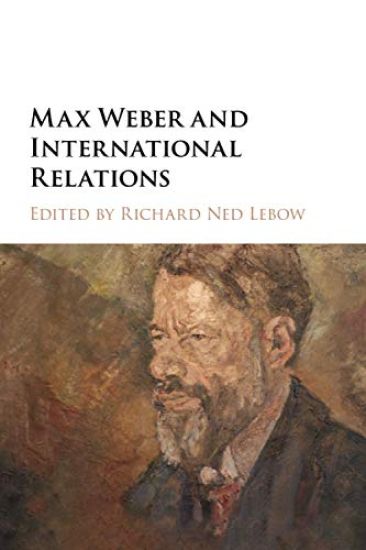
Max Weber and International Relations
Cambridge University Press
2020
pokkari
Max Weber explored the political, epistemological and ethical problems of modernity, and understood how closely connected they were. His efforts are imaginative, sophisticated, even inspiring, but also flawed. Weber's epistemological successes and failures highlight unresolvable tensions that are just as pronounced today and from which we have much to learn. This edited collection of essays offers novel readings of Weber's politics, approach to knowledge, rationality, counterfactuals, ideal types, power, bureaucracy, the state, history, and the non-Western world. The conclusions look at how some of his prominent successors have addressed or finessed the tensions of the epistemological between subjective values and subjective knowledge; the sociological between social rationalization and irrational myths; the personal among conflicting values; the political between the kinds of leaders democracies select and the national tasks that should be performed; and the tragic between human conscience and worldly affairs.
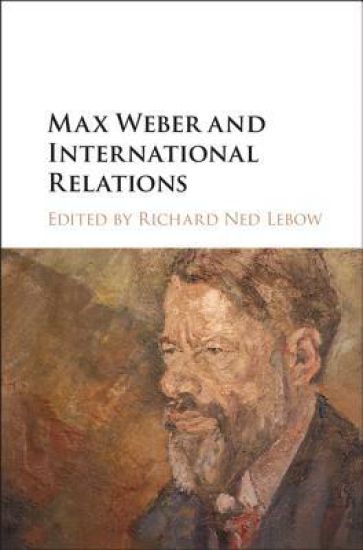
Max Weber and International Relations
Cambridge University Press
2017
sidottu
Max Weber explored the political, epistemological and ethical problems of modernity, and understood how closely connected they were. His efforts are imaginative, sophisticated, even inspiring, but also flawed. Weber's epistemological successes and failures highlight unresolvable tensions that are just as pronounced today and from which we have much to learn. This edited collection of essays offers novel readings of Weber's politics, approach to knowledge, rationality, counterfactuals, ideal types, power, bureaucracy, the state, history, and the non-Western world. The conclusions look at how some of his prominent successors have addressed or finessed the tensions of the epistemological between subjective values and subjective knowledge; the sociological between social rationalization and irrational myths; the personal among conflicting values; the political between the kinds of leaders democracies select and the national tasks that should be performed; and the tragic between human conscience and worldly affairs.

Max Muller And The Science Of Language
William Dwight Whitney
KESSINGER PUBLISHING, LLC
2009
pokkari

Max Cohen Und Sohn Publisher: Kronprinzessin Charlotte Von R
Max Cohen Und Sohn Publisher
KESSINGER PUBLISHING, LLC
2009
nidottu

Andreas Anter reconstructs Max Weber's theory of the modern state, showing its significance to contemporary political science. He reveals the ambivalence of Weber's political thought: the oscillation between an étatiste position, mainly oriented to the reason of state, and an individualistic one, focussed on the freedom of individuals
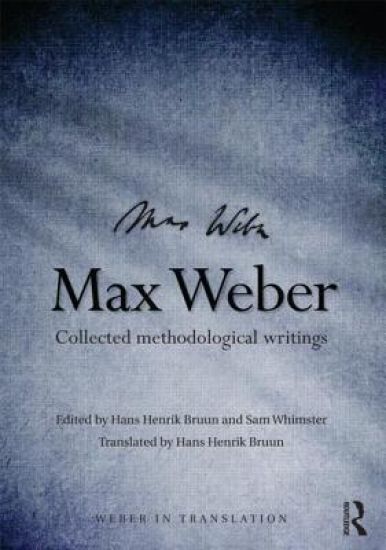
Max Weber
Routledge
2013
nidottu
Weber’s methodological writings form the bedrock of key ideas across the social sciences. His discussion of value freedom and value commitment, causality, understanding and explanation, theory building and ideal types have been of fundamental importance, and their impact remains undiminished today. These ideas influence the current research practice of sociologists, historians, economists and political scientists and are central to debates in the philosophy of social science. But, until now, Weber's extensive writings on methodology have lacked a comprehensive publication.Edited by two of the world's leading Weber scholars, Collected Methodological Writings will provide a completely new, accurate and reliable translation of Weber’s extensive output, including previously untranslated letters. Accompanying editorial commentary explains the context of, and interconnections between, all these writings, and additional useful features include a glossary of German terms and an English key, endnotes, bibliography, and person and subject indexes.
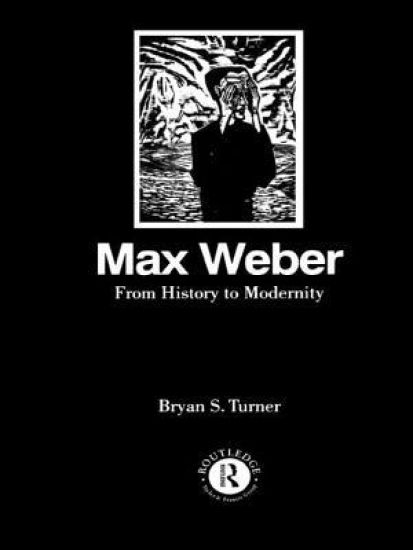
This wide-ranging and assured book, written by one of the leading Weber scholars in the English-speaking world, shows us the many sides of Max Weber. The book provides an authoritative guide to the current burning issues in social theory, religion, rationalization, the body, modernization and capitalism. It will be essential reading for anyone interested in Weber's claim that the aim of sociology must be to explain what is distinctive about the times in which we live.

This book is the first account of the way in which Weber appropriated and modified sources in the legal tradition, in which he was trained, to construct his sociology. It leads directly to a new understanding of Weber's intent and his relations to the tradition of social and political theory. the book takes the reader into the heart of Weber's conceptualizations of action and social science, without ever giving the impression that these are rarefied and marginal issues. This is an important book for understanding the significance of one of the key sociologist's of the twentieth century.
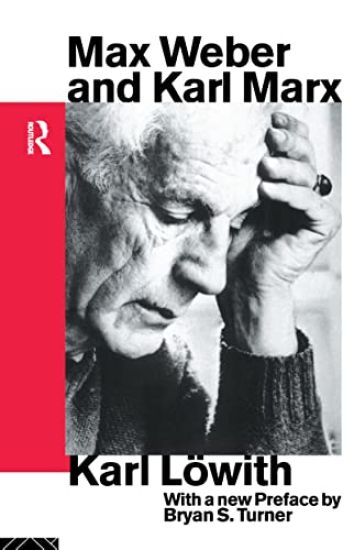
First Published in 2004. Lowith's study of Max Weber and Karl Marx is a key text in modem interpretations of the theme of alienation in Marxist theory and rationalisation in Weber's sociology. It remains the best short student introduction to the differences and comparisons between these essential thinkers. This new edition includes a Preface by Professor Bryan S. Turner which demonstrates the relevance of the book for contemporary sociology.

Max Reger (1873-1916) is perhaps best-known for his organ music. This quickly assumed a prominent place in the repertory of German organists due in large measure to the efforts of Reger’s contemporary Karl Straube (1873-1950). The personal and collegial relationship between the composer and performer began in 1898 and developed until Reger’s death. By that time, Straube had established himself as an important artist and teacher in Leipzig and the central authority for the interpretation of Reger’s organ music. The Reger-Straube relationship functioned on a number of levels with decisive consequences both for the composition of the music and its interpretation over a period fraught with upheaval on sociopolitical, religious and aesthetic fronts. This book evaluates the significance of the relationship between the composer and organist using primary source materials such as autograph performing manuscripts, reviews, programmes, letters and archival sources from contemporary organ building. The result is a much enhanced understanding of Reger in terms of performance practice and reception history, and a re-examination of Straube and, more broadly, of Leipzig as a musical centre during this period.

First published in 1997, this book revolves around a textual analysis of the Weberian thesis that 'classes', 'status groups' and 'parties’ are phenomena of the distribution of power within a 'community'. An internal reconstruction of Weber’s own ideas on what is called social stratification in contemporary sociological discourse is undertaken. The reason for this reconstruction inheres in the fact that Weber’s thought (especially in the field of social stratification) has been modified and misappropriated to such an extent that Weber himself is usually lost in the commentaries. Moreover, this reconstruction is crucial because the secondary literature does not contain a single account teasing out the analytic structure underlying Weber’s statements on the nature of social inequality in various societies. It is the principal intention of the book, then, to retrieve the essential form and significance of Weber’s ideas on social stratification.

First published in 1997, this book revolves around a textual analysis of the Weberian thesis that 'classes', 'status groups' and 'parties’ are phenomena of the distribution of power within a 'community'. An internal reconstruction of Weber’s own ideas on what is called social stratification in contemporary sociological discourse is undertaken. The reason for this reconstruction inheres in the fact that Weber’s thought (especially in the field of social stratification) has been modified and misappropriated to such an extent that Weber himself is usually lost in the commentaries. Moreover, this reconstruction is crucial because the secondary literature does not contain a single account teasing out the analytic structure underlying Weber’s statements on the nature of social inequality in various societies. It is the principal intention of the book, then, to retrieve the essential form and significance of Weber’s ideas on social stratification.
Bringing together the author's major scholarly work on Weber over the last thirty years, Max Weber's Comparative-Historical Sociology Today addresses major themes in Weber's thought, whilst also examining the mode of analysis practised in his comparative-historical writings. By exploring Weber's concepts and procedures, the individual chapters seek to convey the rigor of his research strategies, demonstrating their uniqueness. In this light, this study proceeds to identify as incomplete and then reconstruct the analyses undertaken by Weber of the rise of Confucianism in China, the caste system in India, and monotheism in ancient Israel. The analysis then advances to the modern era, utilising Weber's research procedures to explain the origins of four independent phenomena: the singularity of the American political culture, the cultural foundations of modern citizenship, cultural pessimism (Kulturpessimismus) in nineteenth century Germany, and the 'location' of work in contemporary German society. A dialogue with a variety of recent major schools is pursued throughout this volume. Offering a rich examination of the major themes in Weber's sociology, alongside a reconstruction of his mode of analysis and application of his approach, this book will appeal to scholars around the world with interests in social theory, German and American societies, cultural sociology, political sociology, the sociology of knowledge, comparative-historical sociology, and the sociology of civilizations.