

Kirjahaku
Etsi kirjoja tekijän nimen, kirjan nimen tai ISBN:n perusteella.
1000 tulosta hakusanalla Maynard Savin

Birds Of Washington And Vicinity
Lucy Warner Maynard; Florence Merriam Bailey
Kessinger Pub
2008
pokkari


Panic Attack Survival Guide
CEO Christine Maynard; Julia Higginbotham
Siton Youryoni Books
2008
pokkari
The Panic Attack Survival Guide teaches one how to recognize stress, and dissolve it. Each chapter focuses on one logical, powerful tool (from breath work to visualizations) which we invite you to integrate into your practice of daily Living, to effect the change you seek. This offering was created because we believe that you can find peace and connection through these straightforward measures. They have worked, personally, for us, as well as for students, peers, children and friends.


The Naturalist's Guide in Collecting and Preserving Objects of Natural History
C J Maynard
Trieste Publishing
2018
nidottu

The Towers of Metropolis Volume One
Michael Richard Maynard; Michael Panush; Kevin Noel Olson
Airship 27
2016
nidottu
Before MetropolisIn 1927 German filmmaker Fritz Lang brought to the screen one of the most ground-breaking sci-fi melodramas of all time based on the screenplay he co-wrote with his wife, novelist Thea von Harbou. Set in a futuristic urban dystopia, the story follows the attempts of Freder, the son of the city's ruler, and Maria, a citizen of the lower levels, to bridge the gulf separating the economic classes of the city. It is regarded as a classic and one of the first full-length movies in the genre.Five visionary new pulp writers have envisioned four dramatic tales which unfold in this amazing world prior to the events of that film. William Patrick Maynard & Michael Richard Maynard join forces with Michael Panush, Kevin Noel Olson and Erik Franklin to guide readers back to those vaulted, shining Towers of Metropolis in this new collection inspired by Lang's masterpiece.



Was Abraham Lincoln a Spiritualist or Curious Revelations from the Life of a Trance Medium 1917
Nettie Coburn Maynard
Kessinger Pub
2003
pokkari
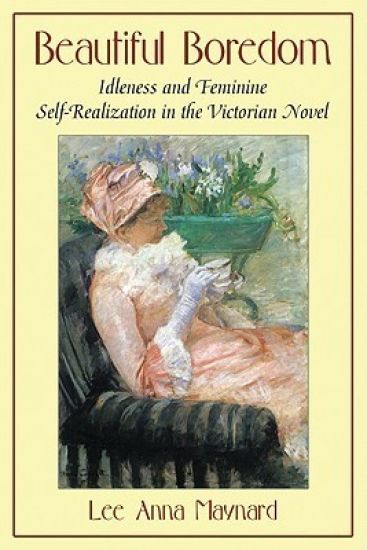
This volume explores boredom as a possible force for good in the Victorian novel. In Charlotte Bronte's Jane Eyre (1847), George Eliot's Middlemarch (1871-72), and Henry James's The Portrait of a Lady (1881), boredom is an important means through which female characters are able to achieve a greater sense of self-awareness. In her discussion of these works, the author examines both the deleterious and restorative aspects of boredom and shows how this subtle theme has continued to be used by more modern authors.
"A most remarkable book . . . a wonderful account of an odd and unlikely place where for a brief time a small number of people pursued a romantic vision of what a life dedicated to art should be like . . . a superb story."ÐÐWilliam O'Neill, author of American High: The Years of Confidence, 1945-1960The beatnik was born in Venice, California, in the 1950s. An imaginary figure in many respectsÐÐthe invention of both the media and the people who played the beatnik roleÐÐthe character quickly assumed nearly mythic proportions for the American public. Coffeehouses, beards, poetry, drugs, and free-wheeling sexuality were all associated with the beatnik, the quintessential rebel who, by rejecting material values, represented both a threat and an alluring alternative to the dominant middle-class culture. In this fascinating book, John Arthur Maynard tells the story of the poets and promoters who invented the Beat Generation and who, in many cases, destroyed themselves in the process. In this look at the least remembered (but in its time, most publicized) beat enclave, Maynard focuses on two of Venice's most newsworthy residentsÐÐLawrence Lipton and Stuart Z. Perkoff. Lipton began as a writer of popular detective stories and screenplays, but was determined to be recognized as a poet and social critic. He eventually published The Holy Barbarians, which helped to create the enduring public image of the beatnik. Stuart Perkoff was a more gifted poet; with fascination and horror, we follow his failed attempts to support his family, his heroin addiction, his first wive's courage and mental fragility, his sexual entanglements, his imprisonment, and the development of his own writing. Other characters who move in and out of the story are Kenneth Rexroth, Jack Kerouac, and Allen Ginsberg, as well as lesser-known poets, artists, hangers-on, and the many women who were rarely treated as full members of the community. For most of the 1950s, the Venice beatniks were able to live and work in isolation. Once the media decided that beats made good copy, however, their peace was shattered. Reporters, drug dealers, violent criminals, and would-be beatniks invaded Venice in such force that many "square" residents began an unrelenting campaign to purge their community of bohemianism. This campaign persisted long after the beats, who tended to ignore politics, had yielded the stage to a new generation of political activists. In this collective biography, based largely on unpublished sources, Maynard tells us how these events affected public perceptions and the beats' own perceptions of themselves.

Documents Delaware's architectural history from different periods. This title covers buildings of many styles, types, and materials, from grand mansions to vernacular structures, and from urban to rural settings. It is illustrated with photographs and maps, and supplemented by a glossary and bibliography.


Letters from Turkey, 1939-1946
Georgianna Mathew Maynard
Oriental Institute of the University of Chicago
1994
nidottu
When Georgianna Maynard went to Turkey in 1939 with her husband, Dick Maynard, she expected romance but found reality. The expected five year stay was extended to seven with the outbreak of World War II. The day-to-day struggle to cope with life as a young, married couple trapped in a foreign country is reflected by Mrs. Maynard's correspondence home. These letters, from the Maynards' first seven years in Turkey, describe visits to several of the great cities of the Middle East, from Alexandria to Istanbul, while portraying the rigors of organizing and operating a high school and running a household - all against the backdrop of world war. Her experiences in Turkey kindled in Georgie an interest in the history of the Near East, which led her to serving as a docent of the Oriental Institute for almost twenty years.

Who is to blame when America votes in its first African-American president and the Black community falls further in despair than it has been since the 1970s? How to Lead When No One Follows is a rebuke of a failed system of political leadership and an admonishment to the Black community to demand more of its leaders, and more importantly, itself.Jerry L. Maynard, II has fought for the Black community as a lawyer, politician, and pastor, and has seen the good and the bad of it all. This book is a manifesto invoked by his passion for equality and empowerment.

This work has been selected by scholars as being culturally important and is part of the knowledge base of civilization as we know it.This work is in the public domain in the United States of America, and possibly other nations. Within the United States, you may freely copy and distribute this work, as no entity (individual or corporate) has a copyright on the body of the work.Scholars believe, and we concur, that this work is important enough to be preserved, reproduced, and made generally available to the public. To ensure a quality reading experience, this work has been proofread and republished using a format that seamlessly blends the original graphical elements with text in an easy-to-read typeface.We appreciate your support of the preservation process, and thank you for being an important part of keeping this knowledge alive and relevant.


This work has been selected by scholars as being culturally important and is part of the knowledge base of civilization as we know it.This work is in the public domain in the United States of America, and possibly other nations. Within the United States, you may freely copy and distribute this work, as no entity (individual or corporate) has a copyright on the body of the work.Scholars believe, and we concur, that this work is important enough to be preserved, reproduced, and made generally available to the public. To ensure a quality reading experience, this work has been proofread and republished using a format that seamlessly blends the original graphical elements with text in an easy-to-read typeface.We appreciate your support of the preservation process, and thank you for being an important part of keeping this knowledge alive and relevant.