Kirjojen hintavertailu. Mukana 12 390 323 kirjaa ja 12 kauppaa.

Kirjahaku

Etsi kirjoja tekijän nimen, kirjan nimen tai ISBN:n perusteella.

1000 tulosta hakusanalla Mercy Chazuka

The Path of Mercy

The Path of Mercy

Mary C. Sullivan

The Catholic University of America Press
2012
sidottu
Breaking new ground in presenting the life of Catherine McAuley (1778?-1841), the Dublin woman who founded the Sisters of Mercy, Mary C. Sullivan has written the first full-length, documented narrative of McAuley in more than fifty years. This work places McAuley in her Irish context, particularly in post-penal Dublin, where the destitution, epidemics, and lack of basic education, especially of poor women and young girls, led her to a life of practical mercifulness.Using extensive primary sources and questioning aspects of earlier accounts, The Path of Mercy illumines Catherine's personality and details her life. It recounts her efforts, using her inheritance from her foster parents, to address the poverties of Irish people in her time. Together with those who eventually joined her when she founded the Sisters of Mercy in 1831, she sheltered homeless women, taught them employable skills, opened a school for the daughters of the very poor, and visited the sick and dying in the slums of Dublin. Later she founded the same works of mercy in nine other towns in Ireland, and in two cities in England.An intelligent, courageous, humorous woman, she was, even when exhausted by the rigors of her travel and ministries, always moved to ""get up again,"" as she said, for the sake of those in need. She wrote poems and letters to novices and others, urged the community to ""dance every evening,"" and never wished to be called ""Reverend Mother."" At age sixty-three she died of tuberculosis in the Baggot Street convent. During the past 180 years more than 55,000 Sisters of Mercy have served among the poor and needy throughout the world.

Hell and the Mercy of God

Hell and the Mercy of God

Adrian J. Reimers

The Catholic University of America Press
2017
nidottu
If God is truly merciful and loving, perfect in goodness, how can he consign human beings created in his own image to eternal torment in hell? God’s goodness seems incompatible with inflicting horrible evil upon those who oppose his will and defy his law. If to this paradox we add the metaphysical requirement that God be perfect in goodness, the eternal evil of hell seems to be contradictory to God’s own nature. Catholic philosopher Adrian Reimers takes on these challenges in Hell and the Mercy of God, drawing on relevant sources from Aristotle to Aquinas, from Dante to Tolkien, from Wagner to John Paul II, along with Billie Holliday, The Godfather, and the music of George Gershwin. He presents a philosophical theology, grounded in Scripture, of the nature of goodness and evil, exploring various types of pain, the seven capital sins, the resurrection of the body, the meaning of mammon, the core meaning of idolatry, the psychology of Satan and those who choose his path, and the moral responsibility of the human person. These reflections illuminate the intelligibility of orthodox Catholic teachings on the goodness of God and the reality of hell. Hell is not an arbitrary imposition set up for human rule-breakers but a continuation of a freely chosen way of life manifest even in this world. Examples from history, art, and contemporary culture lead the author to conclude that anyone who does not believe in the reality of hell is not paying enough attention. And yet, mercy and hope remain triumphant, because, just as Christ offers entrance into paradise to the “good thief” Dismas on the cross, God continues to offer repentance and salvation to all who live.
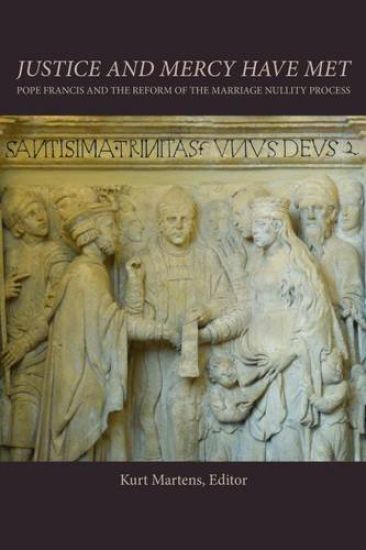
Justice and Mercy Have Met

Justice and Mercy Have Met

The Catholic University of America Press
2017
nidottu
With the promulgation of the motu proprio Mitis iudex Dominus Iesus for the Latin Church and the motu proprio Mitis et misericors Iesus for the Eastern Catholic Churches, both dated August 15, 2015, Pope Francis addressed the calls during the Third Extraordinary General Assembly of the Synod of Bishops (October 5–19, 2014) for a simplified procedure for the declaration of the nullity of marriages. Pope Francis introduced a briefer process to be conducted by the diocesan bishop and he simplified the current ordinary nullity process. The new procedural norms went into effect on December 8, 2015. New legislation always challenges first and foremost the practitioner: how is the new legislation to be understood and applied? Immediately after the new law was made public, a number of articles on this new legislation were published in The Jurist. The School of Canon Law of The Catholic University of America organized a March 2016 Workshop on the very topic of this important procedural reform. These articles are now brought together in one volume to assist those who work with these norms in the various tribunals dealing with marriage cases. It is hoped that this volume will be of great service to all those who serve the people of God in the ministry of justice, and that these contributions will truly be a help in understanding and applying the new norms.
Doing Justice to Mercy

Doing Justice to Mercy

University of Virginia Press
2007
sidottu
It is often assumed that the law and religion address different spheres of human life. Religion and ethics articulate complex systems of moral reasoning that concern norms, deliberation of ends, cultivation of disposition, and transformation of moral agency. Law, in contrast, seeks to govern human conduct through procedural justice, rights, and public good. ""Doing Justice to Mercy"" challenges this assumption by presenting the reader with an urgent conversation between the law and religion that yields a constructive approach, both theoretically and practically, to the complex role of mercy in our legal process. Authored by legal practitioners, activists, and theorists in addition to theologians and ethicists, the essays collected here are informed by timeless principles, and yet they could not be timelier. The trend in sentencing moves toward an increased severity, and the number of incarcerated people in the United States is at an all-time high. In the half-decade since 9/11, moreover, homeland security has established itself as a permanent fixture in our lives. In this atmosphere, the current volume seeks initially to clarify how justice and mercy intertwine in relation to a number of issues, such as rehabilitation, the death penalty, domestic violence, and war crimes. Exploring the legal, philosophical, and theological grounds for mercy in our courts, the discussion then moves to the practical ways in which mercy may be implemented.
Doing Justice to Mercy

Doing Justice to Mercy

University of Virginia Press
2007
nidottu
It is often assumed that the law and religion address different spheres of human life. Religion and ethics articulate complex systems of moral reasoning that concern norms, deliberation of ends, cultivation of disposition, and transformation of moral agency. Law, in contrast, seeks to govern human conduct through procedural justice, rights, and public good. ""Doing Justice to Mercy"" challenges this assumption by presenting the reader with an urgent conversation between the law and religion that yields a constructive approach, both theoretically and practically, to the complex role of mercy in our legal process. Authored by legal practitioners, activists, and theorists in addition to theologians and ethicists, the essays collected here are informed by timeless principles, and yet they could not be timelier. The trend in sentencing moves toward an increased severity, and the number of incarcerated people in the United States is at an all-time high. In the half-decade since 9/11, moreover, homeland security has established itself as a permanent fixture in our lives. In this atmosphere, the current volume seeks initially to clarify how justice and mercy intertwine in relation to a number of issues, such as rehabilitation, the death penalty, domestic violence, and war crimes. Exploring the legal, philosophical, and theological grounds for mercy in our courts, the discussion then moves to the practical ways in which mercy may be implemented.
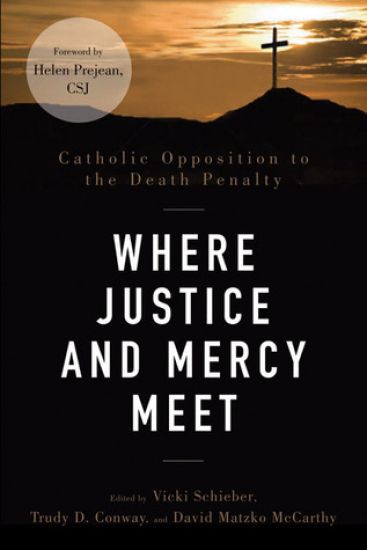
Where Justice and Mercy Meet

Where Justice and Mercy Meet

Helen Prejean

Liturgical Press
2013
pokkari
Where Justice and Mercy Meet: Catholic Opposition to the Death Penalty comprehensively explores the Catholic stance against capital punishment in new and important ways. The broad perspective of this book has been shaped in conversation with the Catholic Mobilizing Network to End the Use of the Death Penalty, as well as through the witness of family members of murder victims and the spiritual advisors of condemned inmates.The book offers the reader new insight into the debates about capital punishment; provides revealing, and sometimes surprising, information about methods of execution; and explores national and international trends and movements related to the death penalty. It also addresses how the death penalty has been intertwined with racism, the high percentage of the mentally disabled on death row, and how the death penalty disproportionately affects the poor.The foundation for the church's position on the death penalty is illuminated by discussion of the life and death of Jesus, Scripture, the Mass, the Catechism of the Catholic Church, and the teachings of Pope John Paul II. Written for concerned Catholics and other interested readers, the book contains contemporary stories and examples, as well as discussion questions to engage groups in exploring complex issues.
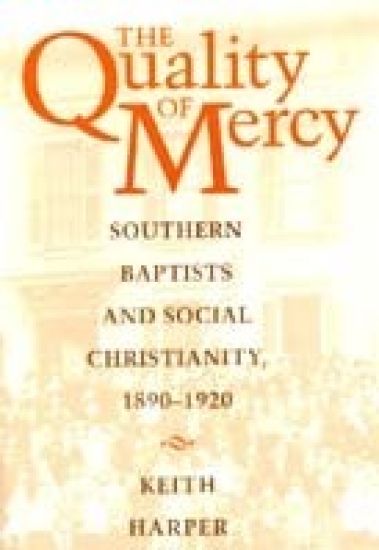
The Quality of Mercy

The Quality of Mercy

Keith Harper

The University of Alabama Press
1996
nidottu
Many academics have assumed that America's Southern Baptists expressed little social conscience. This study challenges this view, arguing that Southern Baptists in the late 19th and early 20th centuries were more attentive to social concerns than has been supposed.
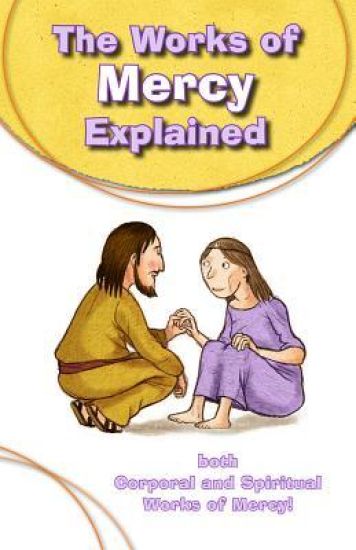
Works of Mercy Explained

Works of Mercy Explained

Silvia Vecchini

Pauline Books Media
2016
nidottu
This illustrated guide explains the corporal and spiritual works of mercy to children ages 8-12. Using examples from scripture, saints, and people of today, including Pope Francis, each section shows children how to practice the various works of mercy. They will learn how to develop a spirit of mercy toward family, friends, parish, and the wider community. Each section contains concrete examples of mercy in action and questions for individual reflection and group discussion. Also includes notebook sections for reflection.
Angels of Mercy

Angels of Mercy

William Seraile

Fordham University Press
2011
sidottu
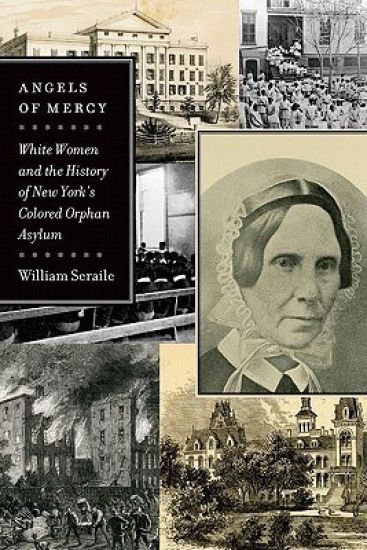
William Seraile uncovers the history of the colored orphan asylum, founded in New York City in 1836 as the nation's first orphanage for African American children. It is a remarkable institution that is still in the forefront aiding children. Although no longer an orphanage, in its current incarnation as Harlem-Dowling West Side Center for Children and Family Services it maintains the principles of the women who organized it nearly 200 years ago. The agency weathered three wars, two major financial panics, a devastating fire during the 1863 Draft Riots, several epidemics, waves of racial prejudice, and severe financial difficulties to care for orphaned, neglected, and delinquent children. Eventually financial support would come from some of New York's finest families, including the Jays, Murrays, Roosevelts, Macys, and Astors. While the white female managers and their male advisers were dedicated to uplifting these black children, the evangelical, mainly Quaker founding managers also exhibited the extreme paternalistic views endemic at the time, accepting the advice or support of the African American community only grudgingly. It was frank criticism in 1913 from W. E. B. Du Bois that highlighted the conflict between the orphanage and the community it served, and it wasn't until 1939 that it hired the first black trustee. More than 15,000 children were raised in the orphanage, and throughout its history letters and visits have revealed that hundreds if not thousands of "old boys and girls" looked back with admiration and respect at the home that nurtured them throughout their formative years. Weaving together African American history with a unique history of New York City, this is not only a painstaking study of a previously unsung institution of black history but a unique window onto complex racial dynamics during a period when many failed to recognize equality among all citizens as a worthy purpose.
Angels of Mercy

Angels of Mercy

William Seraile

Fordham University Press
2013
pokkari
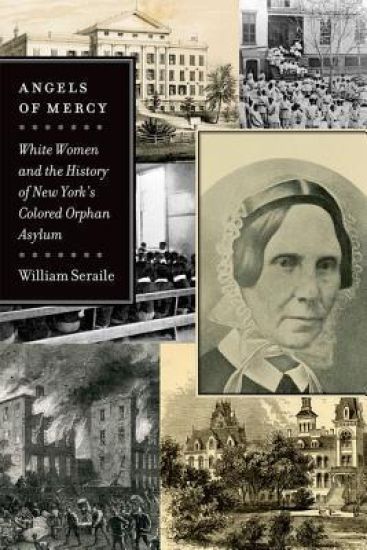
William Seraile uncovers the history of the colored orphan asylum, founded in New York City in 1836 as the nation's first orphanage for African American children. It is a remarkable institution that is still in the forefront aiding children. Although no longer an orphanage, in its current incarnation as Harlem-Dowling West Side Center for Children and Family Services it maintains the principles of the women who organized it nearly 200 years ago. The agency weathered three wars, two major financial panics, a devastating fire during the 1863 Draft Riots, several epidemics, waves of racial prejudice, and severe financial difficulties to care for orphaned, neglected, and delinquent children. Eventually financial support would come from some of New York's finest families, including the Jays, Murrays, Roosevelts, Macys, and Astors. While the white female managers and their male advisers were dedicated to uplifting these black children, the evangelical, mainly Quaker founding managers also exhibited the extreme paternalistic views endemic at the time, accepting the advice or support of the African American community only grudgingly. It was frank criticism in 1913 from W. E. B. Du Bois that highlighted the conflict between the orphanage and the community it served, and it wasn't until 1939 that it hired the first black trustee. More than 15,000 children were raised in the orphanage, and throughout its history letters and visits have revealed that hundreds if not thousands of "old boys and girls" looked back with admiration and respect at the home that nurtured them throughout their formative years. Weaving together African American history with a unique history of New York City, this is not only a painstaking study of a previously unsung institution of black history but a unique window onto complex racial dynamics during a period when many failed to recognize equality among all citizens as a worthy purpose.
The Politics of Mercy

The Politics of Mercy

Matthew T Eggemeier; Peter Joseph Fritz

Herder Herder
2020
nidottu
In an era where the credibility of the Catholic Church has been called into question, hope for the future springs up, in that Catholic social teaching and the concrete witness of communities displays a powerful commitment to mercy.The Politics of Mercy reimagines the traditional spiritual and corporal works of mercy as a Catholic politics composed of spirituality, local charitable action, and broader work for justice. The book examines five contemporary social crises - inequality, migration, mass incarceration, war, and environmental degradation - and how Catholic teaching and theology can illuminate them. Featured are stories of Catholic organizations, including the Catholic Worker, Jesuit Refugee Service, Homeboy Industries, Catholic Relief Services, and Bethlehem Farm, each of which responds in particularly vibrant ways to the crises each chapter considers. This book presents a new apologetic for Catholicism, presenting the best that Catholics have to offer, namely a holistic life of mercy, which can help to reconcile and to heal a world riven by inequality, racism, and violence. Above all, The Politics of Mercy offers a vision of hope for our world.
Catherine's Mercy

Catherine's Mercy

Nicole Evelina

Chalice Press
2023
nidottu
In 1824, Catherine, a Catholic spinster of 44, unexpectantly inherits millions. However, she doesn't use it to climb the social ladder or snare a husband; she uses it to fulfill a lifelong dream of building a refuge for the poor and sick of Dublin, Ireland. That an unmarried woman would dare propose such a thing is so scandalous, even her own brother calls it "Kitty's Folly." Society turns against her. The Church tries to take over. Catherine must defend her choices or lose not only her inheritance, but her reputation and life's calling. One of the first women who seeks Catherine's help is Margaret, a maid in the house of Lord Montague, the loudest of Catherine's detractors. Daring to protect herself from his advances and rebel against his maxim of total obedience, Margaret is forced to flee for her life. She desperately approaches Catherine for help, setting off a series of events that haunt Catherine all her days and prompt a rule that holds today, in the real-life Sisters of Mercy.
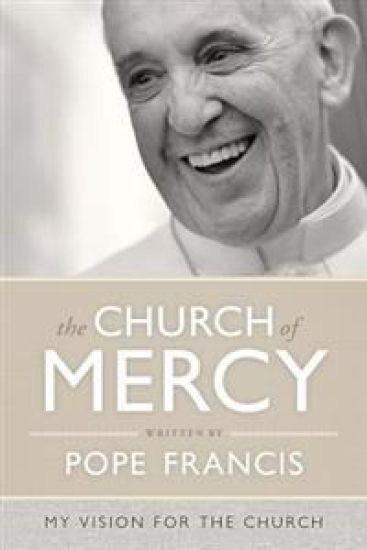
The Church of Mercy

The Church of Mercy

LOYOLA UNIVERSITY PRESS,U.S.
2014
pokkari
"A magnificent book, bursting with profound spiritual insights, from a man who has quickly become one of the greatest spiritual teachers of our time." --James Martin, SJ, author of Jesus: A Pilgrimage In the year since he was elected, Pope Francis's simple message of mercy, service, and renewal has spread to every corner of the world. Through his gentle demeanor, selfless actions, and welcoming call for service to others, Pope Francis has captured the attention of a world longing for an authentic message of hope--we want to hear what he has to say. Collected from Pope Francis's speeches, homilies, and papers presented during the first year of his papacy, The Church of Mercy is the first Vatican-authorized book detailing his vision for the Catholic Church. From how to be citizens of the world to answering God's call for evangelization, Pope Francis's deep wisdom reminds us that the Church must move beyond its own walls and joyfully bring God's mercy wherever suffering, division, or injustice exists. Named TIME Magazine's 2013 "Person of the Year," Pope Francis is helping the Church continue toward an authentic Christianity that is faithful to the Gospel and resonant with the world's greatest needs. The Church of Mercy encourages each of us to ignite the flame within to help share the light of Christ and revitalize the Church.
A Shared Mercy – Karl Barth on Forgiveness and the Church

A Shared Mercy – Karl Barth on Forgiveness and the Church

Jon Coutts; John Webster

Inter-Varsity Press,US
2016
nidottu
Christians regularly ask God to "forgive us our debts, as we forgive our debtors," but tend to focus on the first half and ignore the second. Something is missing if Christians think of mission only in terms of proclamation or social justice and discipleship only in terms of personal growth and renewal—leaving the relational implications of the gospel almost to chance. It is vital both to spiritual life and mission to think of the church as both invitation and witness to a particularly merciful social dynamic in the world. As a work of constructive practical theology and a critical commentary on the ecclesiology of Karl Barth's unfinished Church Dogmatics, A Shared Mercy explains the place and meaning of interpersonal forgiveness and embeds it within an account of Christ's ongoing ministry of reconciliation. A theologian well-practiced in church ministry, Jon Coutts aims to understand what it means to forgive and reconcile in the context of the Christ-confessing community. In the process he appropriates an area of Barth's theology that has yet to be fully explored for its practical ramifications and that promises to be of interest to both seasoned scholars and newcomers to Barth alike. The result is a re-envisioning of the church in terms of a mercy that is crucially and definitively shared. Featuring new monographs with cutting-edge research, New Explorations in Theology provides a platform for constructive, creative work in the areas of systematic, historical, philosophical, biblical, and practical theology.
Angels of Mercy or Development Diplomats?
Challenges many of the dominant beliefs in the discourse on development and aid. Is the world witnessing a global associational revolution spearheaded by development non-governmental organizations (NGOs)? Is the relationship between states and societies being more fundamentally redefined, even in remote, ruralcorners of the world? What role does the mushrooming of development NGOs play in this political-ideological process? What about NGO staff? Are they angels of mercy, government-paid development diplomats, propagandists for a triumphant West, or instruments in a coming clash between civilizations? Presented here are cases from Zimbabwe, Ethiopia, Eritrea, Sudan, Bangladesh and Nicaragua that shed light on these complex questions. The text puts forward a critique of central theories and concepts which have dominated research and discourse on development NGOs. It also proposes and demonstrates some different analytical approaches. North America: Africa World Press
The Weight of Mercy

The Weight of Mercy

Deb Richardson-Moore

Monarch Books
2012
nidottu
What kind of church nails its doors shut? 'That would be the Triune Mercy Center. 'And I am its pastor.' For 27 years Deb was a journalist in the Deep South. Then she retrained as a Baptist pastor, and accepted a post at the Triune Mercy Center, a run-down inner-city church where the homeless gathered. It was a shock. Gradually she learned whom she could trust - and whom she couldn't. Sometimes the best person to handle a situation was a drug addict. Sometimes Jesus had the face of a prostitute. All were fiercely welcomed into this bewildering church family. Full of color and incident, Deb's story is a testament to messy grace and the presence of the Spirit in the hard places of the world. "Deb Richardson-Moore is one of my 'most admired' people. I love her heart, her experience-learned wisdom, her honesty and her passion. You will praise God for the work He is doing at the Triune Mercy Center." - Ruth Graham, author of In Every Pew Sits a Broken Heart 'At the Triune Center, Deb not only found Christ among 'the least of these', but she also experienced Christ drawing her into His grand drama of redemption. Here is a loving, realistic account of a life commandeered for the work of God's Kingdom.' - Will Willimon, Bishop, The United Methodist Church and Professor of Christian Ministry, Duke University Divinity School 'Immensely moving and inspiring, reminding us of the power of grace.' - Patrick Regan OBE, Founder and CEO of XLP 'Causes you to see people in a way you never would have realised. Real, authentic and recommended reading.' - Roy Crowne, Executive Director, Hope
War Without Mercy

War Without Mercy

Gordon Kerr

OLDCASTLE BOOKS LTD
2026
pokkari
More than eighty-five years after it ended in defeat for the Republicans and victory for the Nationalists headed by General Francisco Franco, the Spanish Civil War remains a subject of debate and contention. We live in a time of political polarization, with opposing sides holding entrenched and unalterable positions and War Without Mercy sheds light on the consequences of such circumstances. It also presents a detailed but concise picture of this turbulent and pivotal moment in European history. The Spanish Civil War was a war of firsts: the first in which civilians were targeted, through the bombing of cities. It was also the first 'photogenic' war in history, the growth in photo-journalism bringing images of the fighting and of the huge number of refugees that were created by the conflict to the newspapers and newsreels of other European countries. New weapons, technologies and strategies were tried out, rehearsing for the increasingly inevitable war on European soil. War Without Mercy examines the origins of this deadly conflagration which date back to the nineteenth century and which finds its causes in the issues of mass suffrage, social welfare reform, and land reform, as well as in the increasing tensions between urbanism and rural tradition. The course of the war is laid out, including descriptions of the major battles and incidents, incorporating details of the bombing of major cities, most harrowingly, of course, the bombing of civilians at Guernica, famously depicted in Pablo Picasso's painting of the atrocity. The reaction of the other nations of Europe is also examined - the 'non-intervention' promulgated by Great Britain and France, and the direct intervention of the fascist nations, Germany and Italy, in support of the Nationalist cause, support that took the form of troops, planes and armaments.
Murder of Mercy

Murder of Mercy

Stanley M. Rosenblatt

PROMETHEUS BOOKS
1992
sidottu
Intends to capture the moment of Dr Rosier's legal ordeal. Describing an intriguing array of legal twists and turns, this book helps you find out why Patricia's father and brothers sought immunity before they would testify, and feel the rush of tension in planning defence strategy: how could anyone explain away Dr. Rosier's confessions?