Kirjahaku
Etsi kirjoja tekijän nimen, kirjan nimen tai ISBN:n perusteella.
1000 tulosta hakusanalla Michael A. Johnson
From 1938 until 1943 - before the German occupation and accompanying Holocaust - Fascist Italy drafted and enforced a comprehensive set of anti-Semitic laws. Notwithstanding later rationalizations, the laws were administered with a high degree of severity and resulted in serious damage to the Italian Jewish community. Written from the perspective of an American legal scholar, this book constitutes the first truly comprehensive survey of the Race Laws in the English language. Based on an exhaustive review of Italian legal, administrative and judicial sources, together with archives of the Italian Jewish community, Professor Michael A. Livingston demonstrates the zeal but also the occasional ambivalence and contradictions with which the Race Laws were applied by the Italian legal order and ordinary citizens. Although frequently depressing, the history of the Race Laws contains numerous examples of personal courage and idealism, providing a useful and timely study of what happens when otherwise decent people are confronted with an evil and unjust legal order.

Deliberative Democracy between Theory and Practice
Michael A. Neblo
Cambridge University Press
2015
sidottu
Deliberative democrats seek to link political choices more closely to the deliberations of common citizens, rather than consigning them to speak only in the desiccated language of checks on a ballot. Sober thinkers from Plato to today, however, have argued that if we want to make good decisions we cannot entrust them to the deliberations of common citizens. Critics argue that deliberative democracy is wildly unworkable in practice. Deliberative Democracy between Theory and Practice cuts across this debate by clarifying the structure of a deliberative democratic system, and goes on to re-evaluate the main empirical challenges to deliberative democracy in light of this new frame. It simultaneously reclaims the wider theory of deliberative democracy and meets the empirical critics squarely on terms that advance, rather than evade, the debate. Doing so has important implications for institutional design, the normative theory of democracy, and priorities for future research and practice.
When a young child begins to engage in everyday interaction, she has to acquire competencies that allow her to be oriented to the conventions that inform talk-in-interaction and, at the same time, deal with emotional or affective dimensions of experience. The theoretical positions associated with these domains - social-action and emotion - provide very different accounts of human development and this book examines why this is the case. Through a longitudinal video-recorded study of one child learning how to talk, Michael A. Forrester develops proposals that rest upon a comparison of two perspectives on everyday parent-child interaction taken from the same data corpus - one informed by conversation analysis and ethnomethodology, the other by psychoanalytic developmental psychology. Ultimately, what is significant for attaining membership within any culture is gradually being able to display an orientation towards both domains - doing and feeling, or social-action and affect.
Politics with the People
Michael A. Neblo; Kevin M. Esterling; David M. J. Lazer
Cambridge University Press
2018
sidottu
Many citizens in the US and abroad fear that democratic institutions have become weak, and continue to weaken. Politics with the People develops the principles and practice of 'directly representative democracy' - a new way of connecting citizens and elected officials to improve representative government. Sitting members of Congress agreed to meet with groups of their constituents via online, deliberative town hall meetings to discuss some of the most important and controversial issues of the day. The results from these experiments reveal a model of how our democracy could work, where politicians consult with and inform citizens in substantive discussions, and where otherwise marginalized citizens participate and are empowered. Moving beyond our broken system of interest group politics and partisan bloodsport, directly representative reforms will help restore citizens' faith in the institutions of democratic self-government, precisely at a time when those institutions themselves feel dysfunctional and endangered.
Tax scholars traditionally emphasize economics and assume that all tax systems can be evaluated in more or less the same way. By applying the insights of anthropology, sociology, and other social sciences, Michael A. Livingston demonstrates that tax systems frequently pursue different values and that the convergence of tax systems is frequently overstated. In Tax and Culture, he applies these insights to specific countries, such as China and India, and specific tax issues, including progressivity, tax avoidance, and the emerging area of environmental taxation. Livingston concludes that the concept of a global tax culture is, in many cases, merely a reflection of Western hegemony, and is unlikely to survive the changes implicit in the rise of non-Western nations and cultures.
Politics with the People
Michael A. Neblo; Kevin M. Esterling; David M. J. Lazer
Cambridge University Press
2019
pokkari
Many citizens in the US and abroad fear that democratic institutions have become weak, and continue to weaken. Politics with the People develops the principles and practice of 'directly representative democracy' - a new way of connecting citizens and elected officials to improve representative government. Sitting members of Congress agreed to meet with groups of their constituents via online, deliberative town hall meetings to discuss some of the most important and controversial issues of the day. The results from these experiments reveal a model of how our democracy could work, where politicians consult with and inform citizens in substantive discussions, and where otherwise marginalized citizens participate and are empowered. Moving beyond our broken system of interest group politics and partisan bloodsport, directly representative reforms will help restore citizens' faith in the institutions of democratic self-government, precisely at a time when those institutions themselves feel dysfunctional and endangered.
When a young child begins to engage in everyday interaction, she has to acquire competencies that allow her to be oriented to the conventions that inform talk-in-interaction and, at the same time, deal with emotional or affective dimensions of experience. The theoretical positions associated with these domains - social-action and emotion - provide very different accounts of human development and this book examines why this is the case. Through a longitudinal video-recorded study of one child learning how to talk, Michael A. Forrester develops proposals that rest upon a comparison of two perspectives on everyday parent-child interaction taken from the same data corpus - one informed by conversation analysis and ethnomethodology, the other by psychoanalytic developmental psychology. Ultimately, what is significant for attaining membership within any culture is gradually being able to display an orientation towards both domains - doing and feeling, or social-action and affect.
Between 1822 and 1857, eight Southern states barred the ingress of all free black maritime workers. According to lawmakers, they carried a 'moral contagion' of abolitionism and black autonomy that could be transmitted to local slaves. Those seamen who arrived in Southern ports in violation of the laws faced incarceration, corporal punishment, an incipient form of convict leasing, and even punitive enslavement. The sailors, their captains, abolitionists, and British diplomatic agents protested this treatment. They wrote letters, published tracts, cajoled elected officials, pleaded with Southern officials, and litigated in state and federal courts. By deploying a progressive and sweeping notion of national citizenship - one that guaranteed a number of rights against state regulation - they exposed the ambiguity and potential power of national citizenship as a legal category. Ultimately, the Fourteenth Amendment recognized the robust understanding of citizenship championed by Antebellum free people of color, by people afflicted with 'moral contagion'.
Between 1822 and 1857, eight Southern states barred the ingress of all free black maritime workers. According to lawmakers, they carried a 'moral contagion' of abolitionism and black autonomy that could be transmitted to local slaves. Those seamen who arrived in Southern ports in violation of the laws faced incarceration, corporal punishment, an incipient form of convict leasing, and even punitive enslavement. The sailors, their captains, abolitionists, and British diplomatic agents protested this treatment. They wrote letters, published tracts, cajoled elected officials, pleaded with Southern officials, and litigated in state and federal courts. By deploying a progressive and sweeping notion of national citizenship - one that guaranteed a number of rights against state regulation - they exposed the ambiguity and potential power of national citizenship as a legal category. Ultimately, the Fourteenth Amendment recognized the robust understanding of citizenship championed by antebellum free people of color, by people afflicted with 'moral contagion'.
The Nordic Model was originally understood as a compromise between Western and Soviet systems. The Soviet Union has been gone for a generation, but the Nordic Model survives. Much of this has to do with the Model's change from an economic to a largely cultural model. In particular the Model has come to emphasize human (especially women's) rights; environmental consciousness; and cultural innovation. While these each contain an element of fantasy, they retain sufficient substance to provide encouragement to 'progressive' circles in the United States, United Kingdom, and other countries. Important in its own right, the Nordic Model provides a fascinating case study of the transmission of goods and ideas between different regions, and the ability of a small and out of the way region to maintain its own identity in a globalized world.
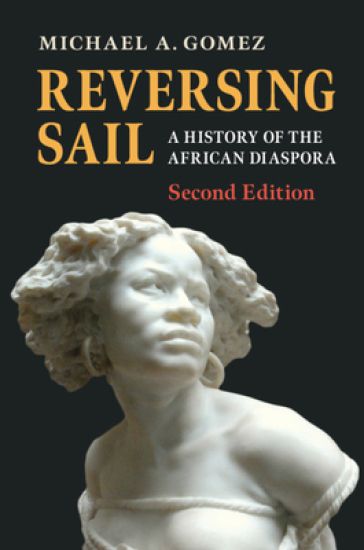
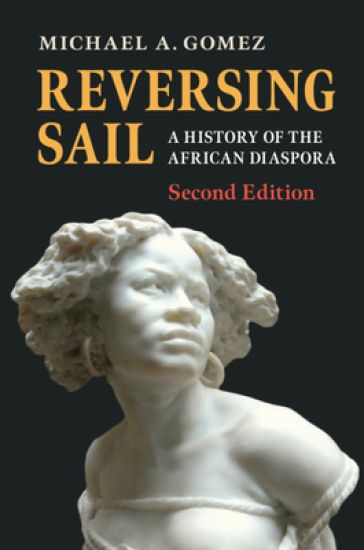
Beginning with antiquity, Reversing Sail: A History of the African Diaspora captures the essential political, cultural, social, and economic developments that shaped the black experience. In this second edition, Michael A. Gomez updates the text to include the most recent research on the African Diaspora. Continuing to pay particular attention to the lives of the working classes, the second edition expands its temporal boundaries to include developments into the twenty-first century, as well as integrating women and feminist perspectives more thoroughly. It also widens the geographical span to include Latin America, while incorporating more on African experiences in Europe, North Africa, and the Persian Gulf. Assessing the impact of religion, global trade, slavery and resistance, and the challenges of modernity, this edition further connects the experiences of Africans and their descendants over time and space, attending to both convergences and divergences, while explaining how the deep past informs subsequent developments.
The Nordic Model was originally understood as a compromise between Western and Soviet systems. The Soviet Union has been gone for a generation, but the Nordic Model survives. Much of this has to do with the Model's change from an economic to a largely cultural model. In particular the Model has come to emphasize human (especially women's) rights; environmental consciousness; and cultural innovation. While these each contain an element of fantasy, they retain sufficient substance to provide encouragement to 'progressive' circles in the United States, United Kingdom, and other countries. Important in its own right, the Nordic Model provides a fascinating case study of the transmission of goods and ideas between different regions, and the ability of a small and out of the way region to maintain its own identity in a globalized world.
Equivariant Stable Homotopy Theory and the Kervaire Invariant Problem
Michael A. Hill; Michael J. Hopkins; Douglas C. Ravenel
Cambridge University Press
2021
sidottu
The long-standing Kervaire invariant problem in homotopy theory arose from geometric and differential topology in the 1960s and was quickly recognised as one of the most important problems in the field. In 2009 the authors of this book announced a solution to the problem, which was published to wide acclaim in a landmark Annals of Mathematics paper. The proof is long and involved, using many sophisticated tools of modern (equivariant) stable homotopy theory that are unfamiliar to non-experts. This book presents the proof together with a full development of all the background material to make it accessible to a graduate student with an elementary algebraic topology knowledge. There are explicit examples of constructions used in solving the problem. Also featuring a motivating history of the problem and numerous conceptual and expository improvements on the proof, this is the definitive account of the resolution of the Kervaire invariant problem.
The US Supreme Court is the chief institution responsible for guarding minority rights and equality under the law, yet, in order to function authoritatively, the Court depends on a majority of Americans to accept its legitimacy and on policymakers to enforce its rulings. The Rights Paradox confronts this tension, offering a careful conceptualization and theory of judicial legitimacy that emphasizes its connection to social groups. Zilis demonstrates that attitudes toward minorities and other groups are pivotal for shaping popular support for the Court, with the Court losing support when it rules in favor of unpopular groups. Moreover, justices are aware of these dynamics and strategically moderate their decisions when concerned about the Court's legitimacy. Drawing on survey and experimental evidence, as well as analysis of Court decision-making across many recent high-profile cases, Zilis examines the implications for 'equal justice under the law' in an era of heightened polarization and conflict.
If you've been let down by the undelivered promises of marketing, this book is for you. Launch reveals a new way to grow your business that involves focusing on the needs of others, giving gifts, working with outsiders, and restraining your marketing messages. These principles are precisely the opposite of traditional marketing. Yet they work. And they are the future. If you follow the formula outlined in this book, you can attract countless customers and prospects, resulting in amazing business growth. This book will show you how to: Create highly sharable content that meets people's needsIdentify and work with outside experts, many of whom will gladly promote your contentAttract and retain raving fans that will help your business growCreatively market and sell to people who will gladly purchase your products and services Launch isn't like other marketing books. Rather than making keen observations about others who’ve achieved success, the ideas and principles in this book were developed, refined, and practiced by the author to great success. Pick up a copy for yourself and one for a friend.
A new, more comprehensive approach to long-term family wealth management More Than Money provides a high-level, integrated approach to preserving both financial resources and family harmony. Research has shown a failure rate of 70 percent in long-term multigenerational wealth management, and contrary to popular assumption, only five percent of that failure is due to bad investment, poor tax planning, or inadequate performance by legal and financial advisors. The number-one reason family wealth management fails is the family itself; poor communication, lack of trust, divergent visions, and a failure to prepare succeeding generations will tear down the resources the family has worked so hard to build. Traditional wealth management cannot fix this. Instead, this book offers a fresh approach that integrates strategic and tactical wealth management to align the family s assets with the family members. With helpful tools and advice drawn from a real-world understanding of family complexities, you ll improve your ability to preserve your family s resources over multiple generations. With an expert s perspective on the real forces behind successful family wealth management, this book provides a clear model and a practical roadmap for long-term financial preservation. * Develop a shared family vision and mission * Improve communication and trust among members * Merge strategic and tactical planning * Ensure the longevity of your family s wealth The wealth management sphere tends to focus on taxes, investments, banking, and estate planning, but little thought is given to the people themselves this overlooks the fact that individual family members are the most critical factor in multigenerational wealth management, and fails to provide solutions. More Than Money merges traditional strategies with family dynamics, communication, governance, and preparation to help your resources last for generations to come.
Organizational Behavior
Michael A. Hitt; C. Chet Miller; Adrienne Colella; Maria Triana
JOHN WILEY SONS INC
2021
nidottu
People, processes, and technology. These are the three major drivers of business achievement. The best leaders inherently understand that great companies start with great people. This is as true now as it was during the beginning of the industrial revolution, and understanding and staying current on the latest organizational behavior research and best practices paves the way for managerial success. In this updated edition of Organizational Behavior, theory, new research and real-world case studies are combined in an engaging manner to blend together the critical concepts and skills needed to successfully manage others and build a strong organization across all levels of a company. Featuring an in-depth view of the process and practice of managing individuals, teams, and entire organizations, the text provides a solid foundation for students and future managers.
The ADA Practical Guide to Soft Tissue Oral Disease
Michael A. Kahn; J. Michael Hall
Wiley-Blackwell
2018
nidottu
The ADA Practical Guide to Soft Tissue Oral Disease, Second Edition is a fully updated new edition of this popular guide to oral and maxillofacial diseases likely to be encountered in general or specialist dental practices. Easy-to-use, updated resource with brief synopses for everyday clinical referenceIncludes self-testing clinicopathologic exercises to help readers further their skills and gain confidence in their knowledgeFocuses on decision making, from communicating diagnoses to developing and discussing treatment plansPresents clinically oriented information on the most important aspects of common oral and maxillofacial diseasesFeatures detailed color illustrations, treatment algorithms, differential diagnosis, and case examples with discussion