Kirjojen hintavertailu. Mukana 11 699 587 kirjaa ja 12 kauppaa.

Kirjahaku

Etsi kirjoja tekijän nimen, kirjan nimen tai ISBN:n perusteella.

1000 tulosta hakusanalla Michael Angelo Williams

Leben Michelangelo's

Leben Michelangelo's

Herman Grimm

Salzwasser-Verlag Gmbh
2020
sidottu
Leben Michelangelo's ist ein unver nderter, hochwertiger Nachdruck der Originalausgabe aus dem Jahr 1873. Hansebooks ist Herausgeber von Literatur zu unterschiedlichen Themengebieten wie Forschung und Wissenschaft, Reisen und Expeditionen, Kochen und Ern hrung, Medizin und weiteren Genres.Der Schwerpunkt des Verlages liegt auf dem Erhalt historischer Literatur.Viele Werke historischer Schriftsteller und Wissenschaftler sind heute nur noch als Antiquit ten erh ltlich. Hansebooks verlegt diese B cher neu und tr gt damit zum Erhalt selten gewordener Literatur und historischem Wissen auch f r die Zukunft bei.
Leben Michelangelo's

Leben Michelangelo's

Herman Grimm

Salzwasser-Verlag Gmbh
2020
pokkari
Leben Michelangelo's ist ein unver nderter, hochwertiger Nachdruck der Originalausgabe aus dem Jahr 1873. Hansebooks ist Herausgeber von Literatur zu unterschiedlichen Themengebieten wie Forschung und Wissenschaft, Reisen und Expeditionen, Kochen und Ern hrung, Medizin und weiteren Genres.Der Schwerpunkt des Verlages liegt auf dem Erhalt historischer Literatur.Viele Werke historischer Schriftsteller und Wissenschaftler sind heute nur noch als Antiquit ten erh ltlich. Hansebooks verlegt diese B cher neu und tr gt damit zum Erhalt selten gewordener Literatur und historischem Wissen auch f r die Zukunft bei.
Leben Michelangelo's

Leben Michelangelo's

Herman Grimm

Salzwasser-Verlag Gmbh
2020
sidottu
Leben Michelangelo's ist ein unver nderter, hochwertiger Nachdruck der Originalausgabe aus dem Jahr 1873. Hansebooks ist Herausgeber von Literatur zu unterschiedlichen Themengebieten wie Forschung und Wissenschaft, Reisen und Expeditionen, Kochen und Ern hrung, Medizin und weiteren Genres.Der Schwerpunkt des Verlages liegt auf dem Erhalt historischer Literatur.Viele Werke historischer Schriftsteller und Wissenschaftler sind heute nur noch als Antiquit ten erh ltlich. Hansebooks verlegt diese B cher neu und tr gt damit zum Erhalt selten gewordener Literatur und historischem Wissen auch f r die Zukunft bei.
Leben Michelangelo's

Leben Michelangelo's

Herman Grimm

Salzwasser-Verlag GmbH
2020
pokkari
Leben Michelangelo's ist ein unver nderter, hochwertiger Nachdruck der Originalausgabe aus dem Jahr 1873. Hansebooks ist Herausgeber von Literatur zu unterschiedlichen Themengebieten wie Forschung und Wissenschaft, Reisen und Expeditionen, Kochen und Ern hrung, Medizin und weiteren Genres.Der Schwerpunkt des Verlages liegt auf dem Erhalt historischer Literatur.Viele Werke historischer Schriftsteller und Wissenschaftler sind heute nur noch als Antiquit ten erh ltlich. Hansebooks verlegt diese B cher neu und tr gt damit zum Erhalt selten gewordener Literatur und historischem Wissen auch f r die Zukunft bei.
Leben Michelangelo's

Leben Michelangelo's

Herman Grimm

Salzwasser-Verlag GmbH
2020
sidottu
Leben Michelangelo's ist ein unver nderter, hochwertiger Nachdruck der Originalausgabe aus dem Jahr 1873. Hansebooks ist Herausgeber von Literatur zu unterschiedlichen Themengebieten wie Forschung und Wissenschaft, Reisen und Expeditionen, Kochen und Ern hrung, Medizin und weiteren Genres.Der Schwerpunkt des Verlages liegt auf dem Erhalt historischer Literatur.Viele Werke historischer Schriftsteller und Wissenschaftler sind heute nur noch als Antiquit ten erh ltlich. Hansebooks verlegt diese B cher neu und tr gt damit zum Erhalt selten gewordener Literatur und historischem Wissen auch f r die Zukunft bei.
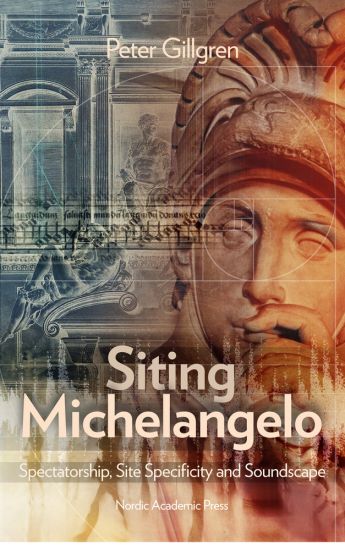
Siting Michelangelo

Siting Michelangelo

Peter Gillgren

Nordic Academic Press
2017
sidottu
Michelangelos storhet som konstnär ligger inte bara i hans strävan efter fullkomlighet och skönhet, utan även i hans unika sätt att närma sig den konstnärliga processen och platsens betydelse. Michelangelos fresker i Sixtinska kapellet, skulpturer i Medicikapellet och andra monument bör alla förstås som dramatiserande tillskott till miljöerna de placerades i. Istället för att anpassas och smälta in i sina omgivningar så interagerar dessa verk med rummen, ceremonierna och musiken som fanns runtom dem. Man kan också se hur konstnären i sina ofullbordade verk och egna skrifter pekar på en estetik under ständig förhandling där processen är lika viktig som de färdigställda verken. Peter Gillgren belyser Michelangelos verk som tillkomna i en strävan att förändra och ompröva den miljö som redan fanns på plats. Det är en nydanande och originell studie som tillför ett nytt, oumbärligt kritiskt perspektiv till konstvetenskapen.
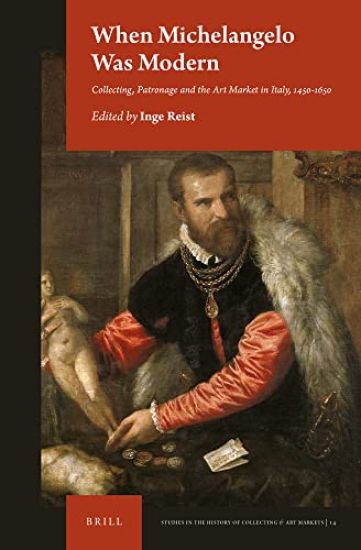
When Michelangelo Was Modern: Collecting, Patronage and the Art Market in Italy, 1450-1650
Through case studies of collectors, patrons, and agents who redefined collecting and the art market, this volume illuminates how the changing status of the artist, rise of connoisseurship, role of intermediaries and new patterns of consumption established models for collecting and display that resemble those still practiced today. The book presents new research by recognized scholars who examine the motivations of collectors and agents, emphasizing how their collecting, patronage and advocacy could require support of artists whose reputations were not fully established. Together, the essays invite consideration of works that are familiar in art-historical terms but less so as markers of the socio-economic shifts of a particular cultural moment. This book evolved from a symposium "When Michelangelo was Modern: The Art Market and Collecting in Italy, 1450-1650," organized by the Center for the History of Collecting, that was held at The Frick Collection on April 12 and 13, 2019. Both the book and the symposium were made possible through the generous support of the Robert H. Smith Family Foundation. The book is published in association with The Frick Collection.
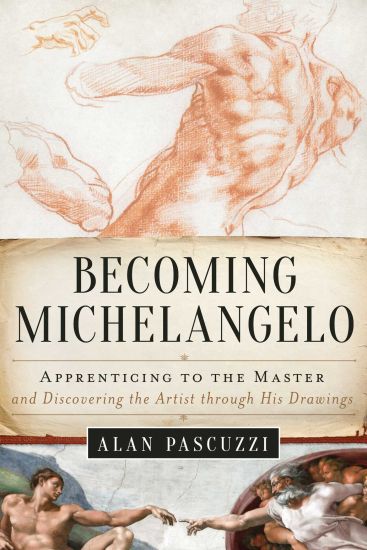
Becoming Michelangelo

Becoming Michelangelo

Alan Pascuzzi

Arcade Publishing
2019
sidottu
Michelangelo’s developing genius is revealed as never before by the man who became Michelangelo’s last apprentice—an American artist and art historian whose family helped carve Mount Rushmore. Many believe Michelangelo's talent was miraculous and untrained, the product of “divine” genius—a myth that Michelangelo himself promoted by way of cementing his legacy. But the young Michelangelo studied his craft like any Renaissance apprentice, learning from a master, copying, and experimenting with materials and styles. In this extraordinary book, Alan Pascuzzi recounts the young Michelangelo’s journey from student to master, using the artist’s drawings to chart his progress and offering unique insight into the true nature of his mastery. Pascuzzi himself is today a practicing artist in Florence, Michelangelo’s city. When he was a grad student in art history, he won a Fulbright to “apprentice” himself to Michelangelo: to study his extant drawings and copy them to discern his progression in technique, composition, and mastery of anatomy. Pascuzzi also relied on the Renaissance treatise that “Il Divino” himself would have been familiar with, Cennino Cennini's The Craftsman’s Handbook (1399), which was available to apprentices as a kind of textbook of the period. Pascuzzi’s narrative traces Michelangelo’s development as an artist during the period from roughly 1485, the start of his apprenticeship, to his completion of the Sistine Chapel ceiling in 1512. Analyzing Michelangelo’s burgeoning abilities through copies he himself executed in museums and galleries in Florence and elsewhere, Pascuzzi unlocks the transformation that made him great. At the same time, he narrates his own transformation from student to artist as Michelangelo’s last apprentice.
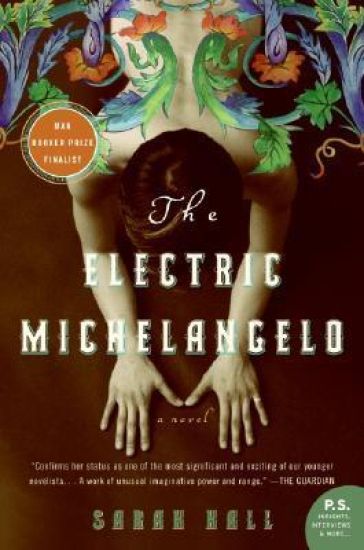
The Electric Michelangelo

The Electric Michelangelo

Sarah Hall

HARPER PERENNIAL
2005
nidottu
Growing up in England and serving an apprenticeship under a drunken, frequently vicious tattoo master, Cy heads for America in search of new opportunities, setting up his own shop on the Coney Island boardwalk under the name of "The Electric Michelangelo" and falling in love with Grace, a mysterious circus performer. Original. 35,000 first printing.
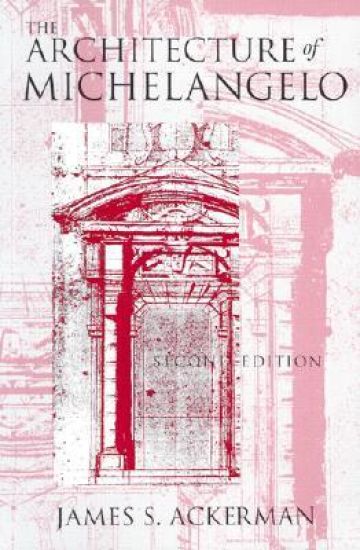
The Architecture of Michelangelo

The Architecture of Michelangelo

James S. Ackerman

University of Chicago Press
1986
nidottu
In this widely acclaimed work, James Ackerman considers in detail the buildings designed by Michelangelo in Florence and Rome—including the Medici Chapel, the Farnese Palace, the Basilica of St. Peter, and the Capitoline Hill. He then turns to an examination of the artist's architectural drawings, theory, and practice. As Ackerman points out, Michelangelo worked on many projects started or completed by other architects. Consequently this study provides insights into the achievements of the whole profession during the sixteenth century. The text is supplemented with 140 black-and-white illustrations and is followed by a scholarly catalog of Michelangelo's buildings that discusses chronology, authorship, and condition. For this second edition, Ackerman has made extensive revisions in the catalog to encompass new material that has been published on the subject since 1970.
Sonnets for Michelangelo

Sonnets for Michelangelo

Vittoria Colonna

University of Chicago Press
2005
sidottu
The most published and lauded woman writer of early sixteenth-century Italy, Vittoria Colonna (1490-1547) in effect defined what was the "acceptable" face of female authorship for her time. Hailed by the generation's leading male literati as an equal, she was praised both for her impeccable command of Petrarchan style and for the unimpeachable chastity and piety of the persona she promoted through her literary works. This book presents for the very first time a body of Colonna's verse that reveals much about her poetic aims and outlook, while also casting new light on one of the most famous friendships of the age, Sonnets for Michelangelo, originally presented in manuscript form to her close friend. Michelangelo Buonarroti as a personal gift, illustrates the striking beauty and originality of Colonna's mature lyric voice and distinguishes her as a poetic innovator who would be widely imitated by female writers in Italy and Europe in the sixteenth century. After three centuries of relative negleet, this new edition promises to restore Colonna to her rightful place at the forefront of female cultural production in the Renaissance.
Sonnets for Michelangelo – A Bilingual Edition

Sonnets for Michelangelo – A Bilingual Edition

Vittoria Colonna; Abigail Brundin

University of Chicago Press
2005
nidottu
The most published and lauded woman writer of early sixteenth-century Italy, Vittoria Colonna (1490-1547) in effect defined what was the "acceptable" face of female authorship for her time. Hailed by the generation's leading male literati as an equal, she was praised both for her impeccable command of Petrarchan style and for the unimpeachable chastity and piety of the persona she promoted through her literary works. This book presents for the very first time a body of Colonna's verse that reveals much about her poetic aims and outlook, while also casting new light on one of the most famous friendships of the age, Sonnets for Michelangelo, originally presented in manuscript form to her close friend. Michelangelo Buonarroti as a personal gift, illustrates the striking beauty and originality of Colonna's mature lyric voice and distinguishes her as a poetic innovator who would be widely imitated by female writers in Italy and Europe in the sixteenth century. After three centuries of relative negleet, this new edition promises to restore Colonna to her rightful place at the forefront of female cultural production in the Renaissance.
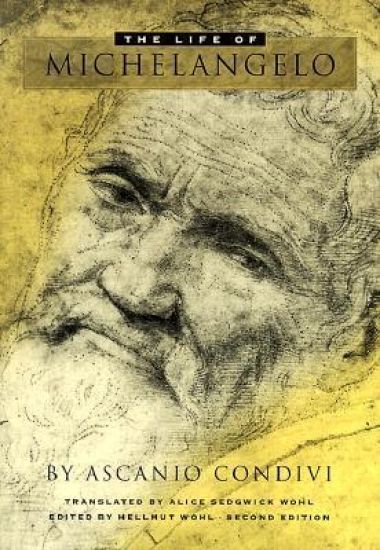
The Life of Michelangelo

The Life of Michelangelo

Pennsylvania State University Press
2000
pokkari
Ascanio Condivi was a young pupil and assistant of Michelangelo's who gained the trust and confidence of the great artist. His biography of Michelangelo to a large extent is based on the artist's own words, tells the story of his life, his relationship with his patrons, his objectives as an artist, and his accomplishments, forming the basis of a biography that has been central to the study of Michelangelo for four centuries. The significance of Condivi's text was recognized early on. Within fifteen years of its publication in 1553, Vasari incorporated much of it to correct and revise his biography of Michelangelo in the second edition of his Lives of the Artists. But, although Vasari knew Michelangelo well, the sculptor never confided in him to the extent that he did in Condivi, making this the indispensable source for the life of Michelangelo.First published in 1976, this translation is now available in paperback for the first time and includes a revised introduction based on new research, as well as an up-to-date bibliography and endnotes section.
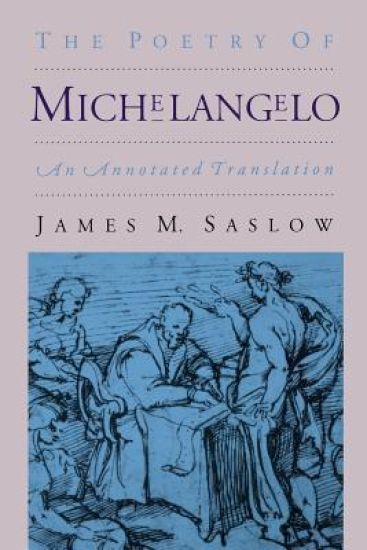
The Poetry of Michelangelo

The Poetry of Michelangelo

James M. Saslow

Yale University Press
1993
pokkari
This is the only available bilingual edition of the more than three hundred sonnets, madrigals, and other poems produced by Michelangelo over his long career. The poems are invaluable for what they reveal of the artist's innermost feelings about such universal themes as love, death, and redemption. "A superb introduction to Michelangelo's life, a masterful bilingual presentation of his written work, commentaries, and an annotated bibliography. . . . A handsome volume of pure scholarship that will find a permanent place in one's library, to be dipped into from time to time as a source of deep enjoyment."—Virginia Quarterly Review "For educated readers who want to know what Michelangelo's poetry manages to do, who want a guide through the Italian and even more through the conventions that enabled Michelangelo to write at all, this is an indispensable book."—Richard Howard"The exceptionally difficult task of translating Michelangelo's poetry has been accomplished with aplomb: equally successful is the no less difficult task of placing the poems within their biographical, social, intellectual, and artistic context. Saslow's annotated translation will be the standard critical edition of Michelangelo's poetry."—William E. Wallace
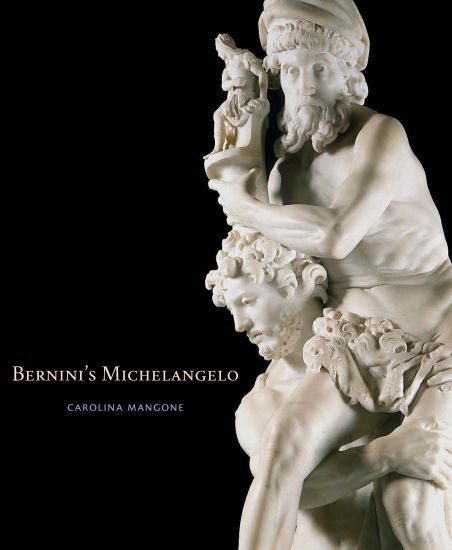
Bernini's Michelangelo

Bernini's Michelangelo

Carolina Mangone

Yale University Press
2020
sidottu
A novel exploration of the threads of continuity, rivalry, and self-conscious borrowing that connect the Baroque innovator with his Renaissance paragon Gianlorenzo Bernini (1598–1680), like all ambitious artists, imitated eminent predecessors. What set him apart was his lifelong and multifaceted focus on Michelangelo Buonarroti—the master of the previous age. Bernini’s Michelangelo is the first comprehensive examination of Bernini’s persistent and wide-ranging imitation of Michelangelo’s canon (his art and its rules). Prevailing accounts submit that Michelangelo’s pervasive, yet controversial, example was overcome during Bernini’s time, when it was rejected as an advantageous model for enterprising artists. Carolina Mangone reconsiders this view, demonstrating how the Baroque innovator formulated his work by emulating his divisive Renaissance forebear’s oeuvre. Such imitation earned him the moniker “Michelangelo of his age.” Investigating Bernini’s “imitatio Buonarroti” in its extraordinary scope and variety, this book identifies principles that pervade his production over seven decades in papal Rome. Close analysis of religious sculptures, tomb monuments, architectural ornament, and the design of New Saint Peter’s reveals how Bernini approached Michelangelo’s art as a surprisingly flexible repertory of precepts and forms that he reconciled—here with daring license, there with creative restraint—to the aesthetic, sacred, and theoretical imperatives of his own era. Situating Bernini’s imitation in dialogue with that by other artists as well as with contemporaneous writings on Michelangelo’s art, Mangone repositions the Renaissance master in the artistic concerns of the Baroque from peripheral to pivotal. Without Michelangelo, there was no Bernini.
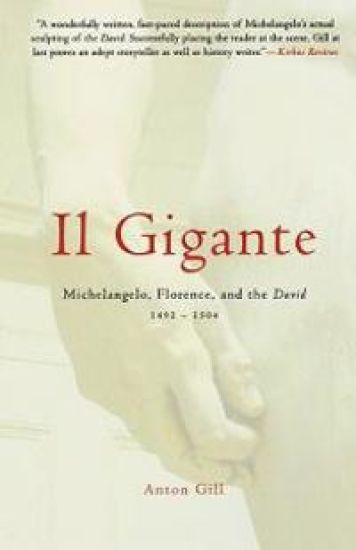
Il Gigante: Michelangelo, Florence, and the David 1492-1504
At the turn of the 16th century, Italy was a turbulent territory made up of independent states, each at war with or intriguing against its neighbor. There were the proud, cultivated, and degenerate Sforzas in Milan, and in Rome, the corrupt Spanish family of the Borgia whose head, Rodrigo, ascended to St Peter's throne as Pope Alexander VI. In Florence, a golden age of culture and sophistication ended with the death of the greatest of the Medici family, Lorenzo the Magnificent, giving way to an era of uncertainty, cruelty, and religious fundamentalism. In the midst of this turmoil, there existed the greatest concentration of artists that Europe has ever known. Influenced by the rediscovery of the ancient cultures of Greece and Rome, artists and thinkers such as Botticelli and da Vinci threw off the shackles of the Middle Ages to produce one of the most creative periods in history - the Renaissance. This is the story of twelve years when war, plague, famine, and chaos made their mark on a volatile Italy, and when a young, erratic genius, Michelangelo Buonarroti, made his first great statue - the David. It was to become a symbol not only of the independence and defiance of the city of Florence but also of the tortured soul who created it. This is a wonderful history of the artist, his times, and one of his most magnificent works.
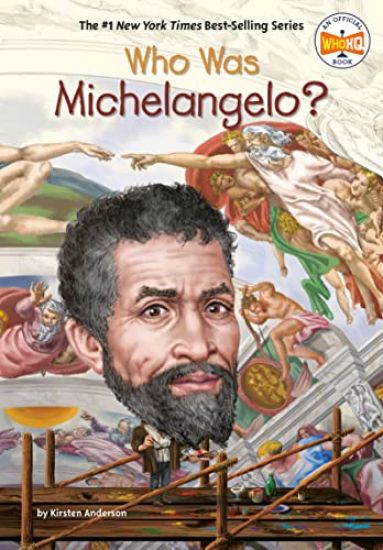
Who Was Michelangelo?

Who Was Michelangelo?

Kirsten Anderson

Penguin Putnam Inc
2022
pokkari
Michelangelo created some of the world's most recognisable art, from the statue of David to the intricate ceiling fresco of the Sistine Chapel. Beyond his well-known painting and sculpting, he was a gifted poet and architect. Young readers can learn about the entirety of Michelangelo's life, from his time as a young apprentice, his relationships with several Catholic popes and the Medici family, to his unwillingness to stop working into his late eighties. A perfect read for art lovers and fans of the Renaissance.
Who Was Michelangelo?

Who Was Michelangelo?

Kirsten Anderson; Who Hq

Penguin Workshop
2022
sidottu
Travel to Renaissance Italy and learn about the young apprentice who went on become a true master, and one of the most beloved sculptors and painters of all time in this addition to the #1 New York Times Best-Selling Who Was? series Michelangelo created some of the world's most recognizable art, from the statue of David to the intricate ceiling fresco of the Sistine Chapel. Beyond his well-known painting and sculpting, he was a gifted poet and architect. Young readers can learn about the entirety of Michelangelo's life, from his time as a young apprentice, his relationships with several Catholic popes and the Medici family, to his unwillingness to stop working into his late eighties. A perfect read for art lovers and fans of the Renaissance.
The Poetry of Michelangelo

The Poetry of Michelangelo

Christopher Ryan

BLOOMSBURY PUBLISHING PLC
2000
sidottu
The poetry of Michelangelo offers an insight into one of the greatest artists of all time, and is a notable literary achievement in its own right. This text lays out the broad chronological evolution of the poems and clarifies both their meaning and the verbal artistry that shaped their construction. The poetry is always quoted in Italian and in translation.
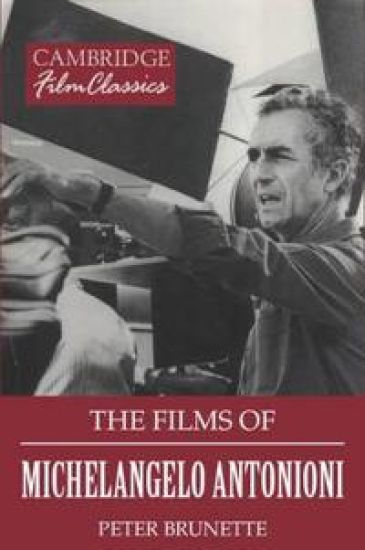
The Films of Michelangelo Antonioni

The Films of Michelangelo Antonioni

Brunette Peter

Cambridge University Press
1998
sidottu
The Films of Michelangelo Antonioni provides an overview of the Italian director's life and work, and examines six of his most important and intellectually challenging films. L'avventura, La notte, and L'eclisse, released in the early 1960s, form the trilogy that first brought the director to international attention. Red Desert was his first film in colour. Blow-up, shot in English and set in swinging London, became one of the best-known (and most notorious) films of its era. The Passenger, starring Jack Nicholson, is the greatest work of his maturity. Rather than emphasizing the stress and alienation of Antonioni's characters, in this book Peter Brunette places the films in the context of the director's ongoing social and political analysis of the Italy of the great postwar economic boom, and demonstrates also how they are formal exercises that depend on painterly abstraction for their expressive effects.