Kirjojen hintavertailu. Mukana 11 699 587 kirjaa ja 12 kauppaa.

Kirjahaku

Etsi kirjoja tekijän nimen, kirjan nimen tai ISBN:n perusteella.

1000 tulosta hakusanalla Michael B. Beckerman

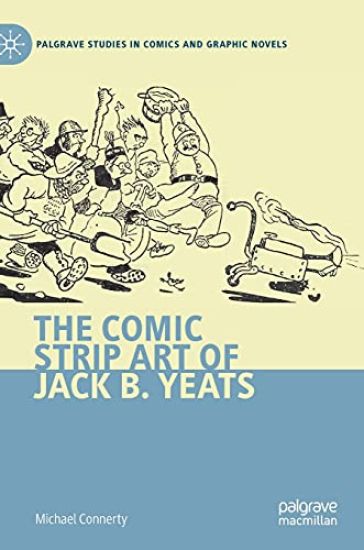
The Comic Strip Art of Jack B. Yeats

The Comic Strip Art of Jack B. Yeats

Michael Connerty

Springer Nature Switzerland AG
2021
sidottu
This monograph seeks to recover and assess the critically neglected comic strip work produced by the Irish painter Jack B. Yeats for various British publications, including Comic Cuts, The Funny Wonder, and Puck, between 1893 and 1917. It situates the work in relation to late-Victorian and Edwardian media, entertainment and popular culture, as well as to the evolution of the British comic during this crucial period in its development. Yeats’ recurring characters, including circus horse Signor McCoy, detective pastiche Chubblock Homes, and proto-superhero Dicky the Birdman, were once very well-known, part of a boom in cheap and widely distributed comics that Alfred Harmsworth and others published in London from 1890 onwards. The repositioning of Yeats in the context of the comics, and the acknowledgement of the very substantial corpus of graphic humour that he produced, has profound implications for our understanding of his artistic career and of his significant contribution to UK comics history. This book, which also contains many examples of the work, should therefore be of value to those interested in Comics Studies, Irish Studies, and Art History.
The Comic Strip Art of Jack B. Yeats

The Comic Strip Art of Jack B. Yeats

Michael Connerty

Springer Nature Switzerland AG
2022
nidottu
This monograph seeks to recover and assess the critically neglected comic strip work produced by the Irish painter Jack B. Yeats for various British publications, including Comic Cuts, The Funny Wonder, and Puck, between 1893 and 1917. It situates the work in relation to late-Victorian and Edwardian media, entertainment and popular culture, as well as to the evolution of the British comic during this crucial period in its development. Yeats’ recurring characters, including circus horse Signor McCoy, detective pastiche Chubblock Homes, and proto-superhero Dicky the Birdman, were once very well-known, part of a boom in cheap and widely distributed comics that Alfred Harmsworth and others published in London from 1890 onwards. The repositioning of Yeats in the context of the comics, and the acknowledgement of the very substantial corpus of graphic humour that he produced, has profound implications for our understanding of his artistic career and of his significant contribution to UK comics history. This book, which also contains many examples of the work, should therefore be of value to those interested in Comics Studies, Irish Studies, and Art History.
If A, Then B

If A, Then B

Michael Shenefelt; Heidi White

Columbia University Press
2013
sidottu
While logical principles seem timeless, placeless, and eternal, their discovery is a story of personal accidents, political tragedies, and broad social change. If A, Then B begins with logic's emergence twenty-three centuries ago and tracks its expansion as a discipline ever since. It explores where our sense of logic comes from and what it really is a sense of. It also explains what drove human beings to start studying logic in the first place. Logic is more than the work of logicians alone. Its discoveries have survived only because logicians have also been able to find a willing audience, and audiences are a consequence of social forces affecting large numbers of people, quite apart from individual will. This study therefore treats politics, economics, technology, and geography as fundamental factors in generating an audience for logic-grounding the discipline's abstract principles in a compelling material narrative. The authors explain the turbulent times of the enigmatic Aristotle, the ancient Stoic Chrysippus, the medieval theologian Peter Abelard, and the modern thinkers Rene Descartes, David Hume, Jeremy Bentham, George Boole, Augustus De Morgan, John Stuart Mill, Gottlob Frege, Bertrand Russell, and Alan Turing. Examining a variety of mysteries, such as why so many branches of logic (syllogistic, Stoic, inductive, and symbolic) have arisen only in particular places and periods, If A, Then B is the first book to situate the history of logic within the movements of a larger social world. If A, Then B is the 2013 Gold Medal winner of Foreword Reviews' IndieFab Book of the Year Award for Philosophy.
If A, Then B

If A, Then B

Michael Shenefelt; Heidi White

Columbia University Press
2013
pokkari
While logical principles seem timeless, placeless, and eternal, their discovery is a story of personal accidents, political tragedies, and broad social change. If A, Then B begins with logic's emergence twenty-three centuries ago and tracks its expansion as a discipline ever since. It explores where our sense of logic comes from and what it really is a sense of. It also explains what drove human beings to start studying logic in the first place. Logic is more than the work of logicians alone. Its discoveries have survived only because logicians have also been able to find a willing audience, and audiences are a consequence of social forces affecting large numbers of people, quite apart from individual will. This study therefore treats politics, economics, technology, and geography as fundamental factors in generating an audience for logic-grounding the discipline's abstract principles in a compelling material narrative. The authors explain the turbulent times of the enigmatic Aristotle, the ancient Stoic Chrysippus, the medieval theologian Peter Abelard, and the modern thinkers Rene Descartes, David Hume, Jeremy Bentham, George Boole, Augustus De Morgan, John Stuart Mill, Gottlob Frege, Bertrand Russell, and Alan Turing. Examining a variety of mysteries, such as why so many branches of logic (syllogistic, Stoic, inductive, and symbolic) have arisen only in particular places and periods, If A, Then B is the first book to situate the history of logic within the movements of a larger social world. If A, Then B is the 2013 Gold Medal winner of Foreword Reviews' IndieFab Book of the Year Award for Philosophy.
Social Media Marketing Made (Stupidly) Easy: The Ultimate No B.S. Guide to a Social Media Strategy That Doesn't Suck
Finally...a Social Media Book for People Who Hate Social Media In "Social Media Marketing Made (Stupidly) Easy," you'll learn: The when, what, where and how of a perfect money-making Twitter Strategy How to create YouTube marketing videos that make you cash (and don't put people into a coma) The secret to converting Pinterest pins and pinboards into rabid, fanatical customers The undiscovered Facebook marketing sauce nobody will tell you about (because it works ) How to turn your email list into the most lucrative asset in your business It's like FIVE BOOKS IN ONE Because we've collected the best-selling books from Punk Rock Marketing editor, Michael Clarke, in one single, concise volume. So if you want to go past the usual boring, rah-rah social media marketing crap and get into the meat of what will actually help you sell your stuff and make more money... ...grab a copy of "Social Media Marketing Made (Stupidly) Easy" and begin your world domination...today
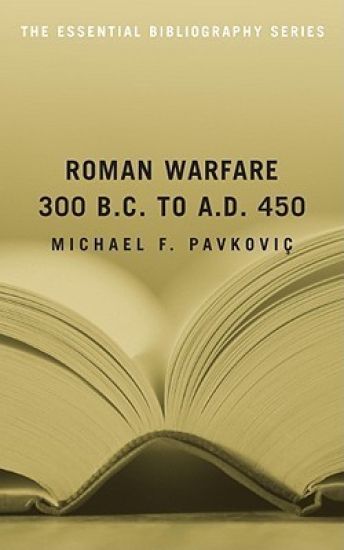
Roman Warfare, 300 B.C. to A.D. 450

Roman Warfare, 300 B.C. to A.D. 450

Michael F Pavkovic

Potomac Books Inc
1900
pokkari
The books in the Essential Bibliographies series include an essay by a noted scholar on the important historiographical issues and a pertinent bibliography for a particular period or theme in military history. They serve as research tools for librarians, researchers, and readers with a professional interest and as a starting point for pursuing further studies. This third volume traces major warfare during the later Roman Empire, from just before the first Punic War (264 B.C.) through the period just prior to the fall of Rome (A.D. 476).
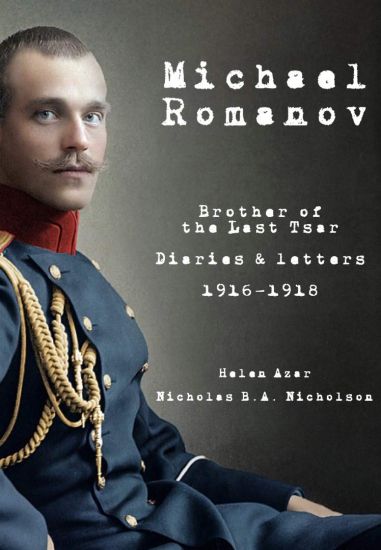
Michael Romanov: Brother of the Last Tsar, Diaries and Letters, 1916-1918

Michael Romanov: Brother of the Last Tsar, Diaries and Letters, 1916-1918

Helen Azar; Nicholas B. a. Nicholson

ACADEMICA PRESS
2020
nidottu
Grand Duke Michael Alexandrovich of Russia (1878-1918) was born the youngest son of Tsar Alexander III, ruler of the mightiest empire on earth. Upon the premature death of his elder brother Grand Duke George in 1899, Michael was thrust into the spotlight as the Heir-Tsesarevich of his older brother, Tsar Nicholas II, then the father of three girls. Even after the birth of an heir in 1904, Michael was pushed closer to the throne with each of the young boy's life-threatening bouts of hemophilia. By 1916, with World War I in full swing, Nicholas and and Empress Alexandra had become deeply unpopular not only in political circles but also with other members of the House of Romanov, who felt that the parlous times required drastic change. Michael found himself at the center of these events and was briefly even named Emperor as they unfolded. In Michael Romanov: Brother of the Last Tsar, translator Helen Azar and Romanov historian Nicholas B. A. Nicholson present for the first time in English Grand Duke Michael's annotated diaries and letters of 1916-1918. These newly available documents offer rare insight into the fall of the Russian Empire, the rise and fall of the Provisional Government that succeeded it, and the terrifying days of the Bolshevik Revolution, after which Michael found himself a prisoner doomed to meet his end in the remote city of Perm, at the edge of Siberia, just over a month before the former Tsar and his family were murdered in Ekaterinburg.