

Kirjahaku
Etsi kirjoja tekijän nimen, kirjan nimen tai ISBN:n perusteella.
1000 tulosta hakusanalla Michael D Butler

The economic boom of the 1990s created huge wealth for the bosses, but benefited workers hardly at all. At the same time, the bosses were able to take the political initiative and even the moral high ground, while workers were often divided against each other. This new book by leading labor analyst Michael D. Yates seeks to explain how this happened, and what can be done about it. Essential to both tasks is "naming the system"--the system that ensures that those who do the work do not benefit from the wealth they produce. Yates draws on recent data to show that the growing inequality--globally, and within the United States--is a necessary consequence of capitalism, and not an unfortunate side-effect that can be remedied by technical measures. To defend working people against ongoing attacks--on their working conditions, their living standards, and their future and that of their children--and to challenge inequality, it is necessary to understand capitalism as a system and for labor to challenge the political dominance of capitalist interests.Naming the System examines contemporary trends in employment and unemployment, in hours of work, and in the nature of jobs. It shows how working life is being reconfigured today, and how the effects of this are masked by mainstream economic theories. It uses numerous concrete examples to relate larger theoretical issues to everyday experience of the present-day economy. And it sets out the strategic options for organized labor in the current political context, in which the U.S.-led war on terrorism threatens to eclipse the anti-globalization movement.
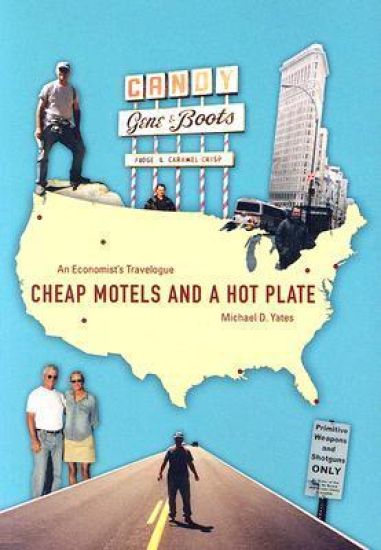
The road trip is a staple of modern American literature. But nowhere in American literature, until now, has a left-wing economist hit the road, observing and interpreting the extraordinary range and spectacle of U.S. life, bringing out its conflicts and contradictions with humor and insight. Disillusioned with academic life after thirty-two years teaching economics, Michael D. Yates took early retirement in 2001, with a pension account that had doubled during the dot.com frenzy of the late 1990s. He and his wife Karen sold their house, got rid of their belongings, and have moved around the country since then, often spending months at a time on the road. Michael and Karen spent the summer of 2001 in Yellowstone National Park, where Michael worked as a hotel front-desk clerk. They moved to Manhattan for a year, where he worked for Monthly Review. From there they went to Portland, Oregon, to explore the Pacific Northwest. After five months of travel in Summer and Fall 2004, they settled in Miami Beach. Ahead of the 2005 hurricane season, they went back on the road, settling this time in Colorado. "Cheap Motels and a Hotplate" is both an account of their adventures and a penetrating examination of work and inequality, race and class, alienation and environmental degradation in the small towns and big cities of the contemporary United States.
The road trip is a staple of modern American literature. But nowhere in American literature, until now, has a left-wing economist hit the road, observing and interpreting the extraordinary range and spectacle of U.S. life, bringing out its conflicts and contradictions with humor and insight. Disillusioned with academic life after thirty-two years teaching economics, Michael D. Yates took early retirement in 2001, with a pension account that had doubled during the dot.com frenzy of the late 1990s. He and his wife Karen sold their house, got rid of their belongings, and have moved around the country since then, often spending months at a time on the road. Michael and Karen spent the summer of 2001 in Yellowstone National Park, where Michael worked as a hotel front-desk clerk. They moved to Manhattan for a year, where he worked for Monthly Review. From there they went to Portland, Oregon, to explore the Pacific Northwest. After five months of travel in Summer and Fall 2004, they settled in Miami Beach. Ahead of the 2005 hurricane season, they went back on the road, settling this time in Colorado. "Cheap Motels and a Hotplate" is both an account of their adventures and a penetrating examination of work and inequality, race and class, alienation and environmental degradation in the small towns and big cities of the contemporary United States.

In this new edition of Why Unions Matter, Michael D. Yates shows why unions still matter. Unions mean better pay, benefits, and working conditions for their members; they force employers to treat employees with dignity and respect; and at their best, they provide a way for workers to make society both more democratic and egalitarian. Yates uses simple language, clear data, and engaging examples to show why workers need unions, how unions are formed, how they operate, how collective bargaining works, the role of unions in politics, and what unions have done to bring workers together across the divides of race, gender, religion, and sexual orientation. The new edition not onlyupdates the first, but also examines the record of the New Voice slate that took control of the AFL-CIO in 1995, the continuing decline in union membership and density, the Change to Win split in 2005, the growing importance of immigrant workers, the rise of worker centers, the impacts of and labor responses to globalization, and the need for labor to have an independent political voice. This is simply the best introduction to unions on the market.

In early 2011, the nation was stunned to watch Wisconsin's state capitol in Madison come under sudden and unexpected occupation by union members and their allies. The protests to defend collective bargaining rights were militant and practically unheard of in this era of declining union power. Nearly forty years of neoliberalism and the most severe economic crisis since the Great Depression have battered the labor movement, and workers have been largely complacent in the face of stagnant wages, slashed benefits and services, widening unemployment, and growing inequality. That is, until now. Under pressure from a union-busting governor and his supporters in the legislature, and inspired by the massive uprisings in Tunisia and Egypt, workers in Wisconsin shook the nation with their colossal display of solidarity and outrage. Their struggle is still ongoing, but there are lessons to be learned from the Wisconsin revolt. This timely book brings together some of the best labor journalists and scholars in the United States, many of whom were on the ground at the time, to examine the causes and impact of events, and suggest how the labor movement might proceed in this new era of union militancy.
“Michael Yates’s passion and respect for the class he came out of delivers a book that is especially accessible without retreating from the complexities and internal contradictions of working class life and organization—a book committed not only to defending workers, but also to building on their potentials to transform society.”—Sam Gindin, former chief economist, Canadian Auto Workers Union; Packer Visitor in Social Justice, Political Science Dept., York University, Toronto One of the horrors of the capitalist system is that slave labor, which was central to the formation and growth of capitalism itself, is still fully able to coexist alongside wage labor. But, as Karl Marx points out, it is the fact of being paid for one's work that validates capitalism as a viable socio-economic structure. Beneath this veil of “free commerce” – where workers are paid only for a portion of their workday, and buyers and sellers in the marketplace face each other as “equals” – lies a foundation of immense inequality. Yet workers have always rebelled. They've organized unions, struck, picketed, boycotted, formed political organizations and parties – sometimes they have actually won and improved their lives. But, Marx argued, because capitalism is the apotheosis of class society, it must be the last class society: it must, therefore, be destroyed. And only the working class, said Marx, is capable of creating that change. In his timely and innovative book, Michael D. Yates asks if the working class can, indeed, change the world. Deftly factoring in such contemporary elements as sharp changes in the rise of identity politics and the nature of work, itself, Yates asks if there can, in fact, be a thing called the working class? If so, how might it overcome inherent divisions of gender, race, ethnicity, religion, location – to become a cohesive and radical force for change? Forcefully and without illusions, Yates supports his arguments with relevant, clearly explained data, historical examples, and his own personal experiences. This book is a sophisticated and prescient understanding of the working class, and what all of us might do to change the world.
“Michael Yates’s passion and respect for the class he came out of delivers a book that is especially accessible without retreating from the complexities and internal contradictions of working class life and organization—a book committed not only to defending workers, but also to building on their potentials to transform society.”—Sam Gindin, former chief economist, Canadian Auto Workers Union; Packer Visitor in Social Justice, Political Science Dept., York University, Toronto One of the horrors of the capitalist system is that slave labor, which was central to the formation and growth of capitalism itself, is still fully able to coexist alongside wage labor. But, as Karl Marx points out, it is the fact of being paid for one's work that validates capitalism as a viable socio-economic structure. Beneath this veil of “free commerce” – where workers are paid only for a portion of their workday, and buyers and sellers in the marketplace face each other as “equals” – lies a foundation of immense inequality. Yet workers have always rebelled. They've organized unions, struck, picketed, boycotted, formed political organizations and parties – sometimes they have actually won and improved their lives. But, Marx argued, because capitalism is the apotheosis of class society, it must be the last class society: it must, therefore, be destroyed. And only the working class, said Marx, is capable of creating that change. In his timely and innovative book, Michael D. Yates asks if the working class can, indeed, change the world. Deftly factoring in such contemporary elements as sharp changes in the rise of identity politics and the nature of work, itself, Yates asks if there can, in fact, be a thing called the working class? If so, how might it overcome inherent divisions of gender, race, ethnicity, religion, location – to become a cohesive and radical force for change? Forcefully and without illusions, Yates supports his arguments with relevant, clearly explained data, historical examples, and his own personal experiences. This book is a sophisticated and prescient understanding of the working class, and what all of us might do to change the world.
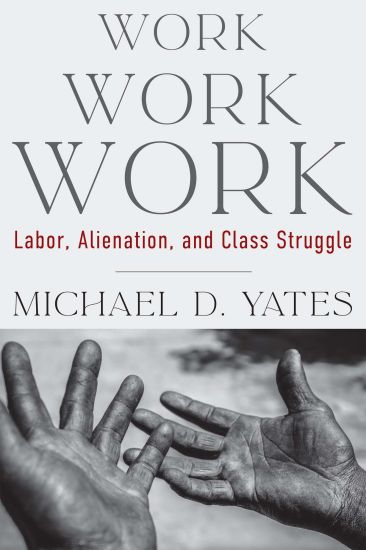
Explains the reality of labor markets and the nature and necessity of class struggle For most economists, labor is simply a commodity, bought and sold in markets like any other – and what happens after that is not their concern. Individual prospective workers offer their services to individual employers, each acting solely out of self-interest and facing each other as equals. The forces of demand and supply operate so that there is neither a shortage nor a surplus of labor, and, in theory, workers and bosses achieve their respective ends. Michael D. Yates, in Work Work Work: Labor, Alienation, and Class Struggle, offers a vastly different take on the nature of the labor market. This book reveals the raw truth: The labor market is in fact a mere veil over the exploitation of workers. Peek behind it, and we clearly see the extraction, by a small but powerful class of productive property-owning capitalists, of a surplus from a much larger and propertyless class of wage laborers. Work Work Work offers us a glimpse into the mechanisms critical to this subterfuge: In every workplace, capital implements a comprehensive set of control mechanisms to constrain those who toil from defending themselves against exploitation. These include everything from the herding of workers into factories to the extreme forms of surveillance utilized by today’s “captains of industry” like the Waltons family (of the Walmart empire) and Jeff Bezos. In these strikingly lucid and passionately written chapters, Yates explains the reality of labor markets, the nature of work in capitalist societies, and the nature and necessity of class struggle, which alone can bring exploitation – and the system of control that makes it possible – to a final end.

Explains the reality of labor markets and the nature and necessity of class struggle For most economists, labor is simply a commodity, bought and sold in markets like any other – and what happens after that is not their concern. Individual prospective workers offer their services to individual employers, each acting solely out of self-interest and facing each other as equals. The forces of demand and supply operate so that there is neither a shortage nor a surplus of labor, and, in theory, workers and bosses achieve their respective ends. Michael D. Yates, in Work Work Work: Labor, Alienation, and Class Struggle, offers a vastly different take on the nature of the labor market. This book reveals the raw truth: The labor market is in fact a mere veil over the exploitation of workers. Peek behind it, and we clearly see the extraction, by a small but powerful class of productive property-owning capitalists, of a surplus from a much larger and propertyless class of wage laborers. Work Work Work offers us a glimpse into the mechanisms critical to this subterfuge: In every workplace, capital implements a comprehensive set of control mechanisms to constrain those who toil from defending themselves against exploitation. These include everything from the herding of workers into factories to the extreme forms of surveillance utilized by today’s “captains of industry” like the Waltons family (of the Walmart empire) and Jeff Bezos. In these strikingly lucid and passionately written chapters, Yates explains the reality of labor markets, the nature of work in capitalist societies, and the nature and necessity of class struggle, which alone can bring exploitation – and the system of control that makes it possible – to a final end.

"Treating Depression with Hypnosis" focuses on the structuring and delivering of hypnotic interventions for major depression, with a substantial use of concepts and techniques from cognitive-behavioural and strategic approaches as a foundation.

Author Michael De Feo is a teacher and artist who achieved a certain amount of fame when his work was featured in The Art of Rebellion, the world's best-selling international survey of street art. But it was in his role as educator that De Feo came to the conclusion that the market was lacking in good art books for children and that's what inspired him to crate one himself. Alphabet City encourages both children and parents to pay attention to their everyday surroundings by placing De Feo's joyful images in the context of art in the streets. Witty and whimsical it is bound as a children's board and features high quality photographic reproductions throughout.

At the conclusion of World War II, Americans anxiously contemplated the return to peace. It was an uncertain time, rife with concerns about demobilization, inflation, strikes, and the return of a second Great Depression. Balanced against these challenges was the hope in a future of unparalleled opportunities for a generation raised in hard times and war. One of the remarkable untold stories of postwar America is the successful assimilation of sixteen million veterans back into civilian society after 1945. The G.I. generation returned home filled with the same sense of fear and hope that most citizens felt at the time. Their transition from conflict to normalcy is one of the greatest chapters in American history. ""The Greatest Generation Comes Home"" combines military and social history into a comprehensive narrative of the veteran's experience after World War II. It integrates early impressions of home in 1945 with later stories of medical recovery, education, work, politics, and entertainment, as well as moving accounts of the dislocation, alienation, and discomfort many faced. This book includes the experiences of not only the millions of veterans drawn from mainstream white America but also the women, African Americans, Latinos, and Asian Americans who served the nation. Perhaps most important, this book also examines the legacy bequeathed by these veterans to later generations who served in uniform on new battlefields around the world.

At the conclusion of World War II, Americans anxiously contemplated the return to peace. It was an uncertain time, rife with concerns about demobilization, inflation, strikes, and the return of a second Great Depression. Balanced against these challenges was the hope in a future of unparalleled opportunities for a generation raised in hard times and war. One of the remarkable untold stories of postwar America is the successful assimilation of sixteen million veterans back into civilian society after 1945. The G.I. generation returned home filled with the same sense of fear and hope that most citizens felt at the time. Their transition from conflict to normalcy is one of the greatest chapters in American history. ""The Greatest Generation Comes Home"" combines military and social history into a comprehensive narrative of the veteran's experience after World War II. It integrates early impressions of home in 1945 with later stories of medical recovery, education, work, politics, and entertainment, as well as moving accounts of the dislocation, alienation, and discomfort many faced. This book includes the experiences of not only the millions of veterans drawn from mainstream white America but also the women, African Americans, Latinos, and Asian Americans who served the nation. Perhaps most important, this book also examines the legacy bequeathed by these veterans to later generations who served in uniform on new battlefields around the world.

Island of the World is the story of a child born in 1933 into the turbulent world of the Balkans and tracing his life into the third millennium. The central character is Josip Lasta, the son of an impoverished school teacher in a remote village high in the mountains of the Bosnian interior. As the novel begins, World War II is underway and the entire region of Yugoslavia is torn by conflicting factions: German and Italian occupying armies, and the rebel forces that resist them--the fascist Ustashe, Serb nationalist Chetniks, and Communist Partisans. As events gather momentum, hell breaks loose, and the young and the innocent are caught in the path of great evils. Their only remaining strength is their religious faith and their families. For more than a century, the confused and highly inflammatory history of former Yugoslavia has been the subject of numerous books, many of them rife with revisionist history and propaganda. The peoples of the Balkans live on the border of three worlds: the Islamic, the orthodox Slavic East, and Catholic Europe, and as such they stand in the path of major world conflicts that are not only geo-political but fundamentally spiritual. This novel cuts to the core question: how does a person retain his identity, indeed his humanity, in absolutely dehumanizing situations? In the life of the central character, the author demonstrates that this will demand suffering and sacrifice, heroism and even holiness. When he is twelve years old, his entire world is destroyed, and so begins a lifelong Odyssey to find again the faith which the blows of evil have shattered. The plot takes the reader through Josip's youth, his young manhood, life under the Communist regime, hope and loss and unexpected blessings, the growth of his creative powers as a poet, and the ultimate test of his life. Ultimately this novel is about the crucifixion of a soul--and resurrection.

Become an expert flyer with 16 amazing airplane designs and fun aviation facts from the Smithsonian's National Air and Space Museum--for kids ages 8-12 Prepare for takeoff with the Smithsonian Book of Paper Airplanes, which includes 16 designs inspired by planes in the Smithsonian's collections with fully illustrated, easy-to-follow instructions. 48 tear out sheets--3 per airplane for triple the fun and to master the practiceInformation on ideal materials, folding basics, throwing techniques, modifications, and tricksPaper Airplane Pilot's Log to track flightsNational Air and Space Museum How Things Fly Champion CertificateCallout boxes with illuminating flight facts and activities to test the science behind paper airplanesTake a break from screens and experience the satisfaction of folding a paper airplane and watching it soar. Smithsonian Book of Paper Airplanes is creative and fun for the whole family

At last, former Under Secretary of Homeland Security Michael Brown—infamously praised by President George W. Bush for doing a "heckuva job" in the wake of Hurricane Katrina—tells his side of the response to one of the greatest natural disasters to occur in the United States. Without making excuses for anyone, least of all the President of the United States or himself, Brown describes in detail what ultimately turned out to be the largest federal response to a natural disaster in U.S. history.


This book provides an introduction to and history of the liturgical year, followed by a discussion of each of the major cycles. Each chapter includes questions for personal reflection or group discussion.

In this updated and revised second edition, authors Michael Tusiani and Gordon Shearer build upon the knowledge contained in their comprehensive and valuable reference LNG: A Nontechnical Guide.The book uses everyday language and real-world examples to help readers understand the complex LNG industry. It also provides the reader with insights into changes in the markets, technology advances and the commercial evolution of what remains as one of the most capital-intensive and formidable global industries.Features include:Explains the technologies utilized: liquefaction, shipping and regasification, onshore and floating.Covers existing and proposed worldwide LNG projects.Examines the economics and commercial structure of the LNG industry, including synopses of gas supply agreements, LNG sales contracts, and financing.Discusses shipping conventions and regulations.This book is an important resource for energy industry leaders, investment bankers, energy professionals, or anyone wanting to expand their knowledge of the LNG industry.