Kirjojen hintavertailu. Mukana 11 417 157 kirjaa ja 12 kauppaa.

Kirjahaku

Etsi kirjoja tekijän nimen, kirjan nimen tai ISBN:n perusteella.

1000 tulosta hakusanalla Michael a. Innes

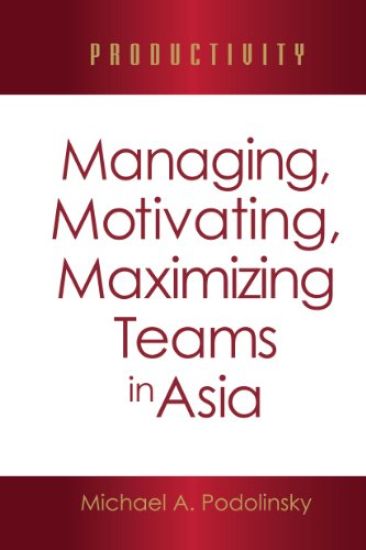
Productivity

Productivity

Michael A. Podolinsky

McGraw-Hill Education
2013
nidottu
Acquire new yet proven skills in managing and motivating teams in Asia: Compel cross-cultural teams to function as oneMotivate four generations to work in harmonyBuild upon unique personalities to boost productivityRefine communicationsHarness team powerDelegate strategically with an eye on individual development Teams in Asia require distinct motivators to gel and excel. This book contains secrets from top leaders in Asian business across many industries and the govenment. This book is not theory! It is packed with practical, easily understood and applied tips, tools, and techniques proven effective in Asia.
Frequently Prescribed Medications

Frequently Prescribed Medications

Michael A. Mancano; Jason C. Gallagher

Jones and Bartlett Publishers, Inc
2018
nidottu
Frequently Prescribed Medications: Drugs You Need To Know, Third Edition Is A Practical Study Tool Designed To Educate And Test Students About The Drugs That Are Most Commonly Used In Practice, As Well As A Helpful Reference On Drug Information For Health Professionals. This Comprehensive Resource Reviews Important Concepts Regarding The Use Of Specific Medications And Provides Clear And Succinct Information For The Drugs That Are Commonly Utilized In Clinical Practice, Ambulatory Practice, And Hospital Practice, Including Information On Prescription, Over-The-Counter, And Natural Products.
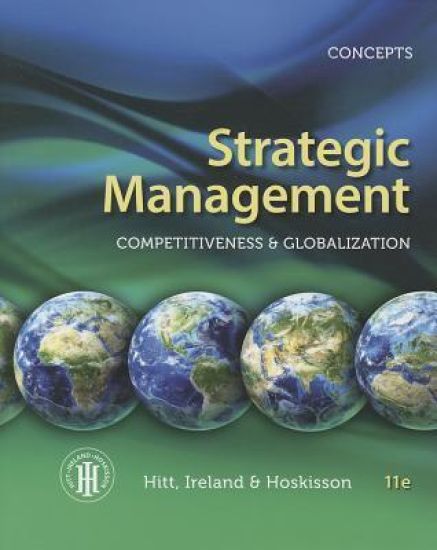
Strategic Management

Strategic Management

Michael A. Hitt; R. Duane Ireland; Robert E. Hoskisson

South-Western College Publishing
2014
pokkari
Examine strategic management with the market-leading text that sets the standard for the most intellectually rich, yet thoroughly practical, analysis of strategic management today. Written by highly respected experts Hitt, Ireland, and Hoskisson, STRATEGIC MANAGEMENT: COMPETITIVENESS AND GLOBALIZATION, CONCEPTS AND CASES, Eleventh Edition, combines the latest cutting-edge research and strategic management trends with ideas from some of today's most prominent scholars. This is the only text that integrates the classic industrial organization model with a resource-based view of the firm to give you a complete understanding of how today's businesses use strategic management to establish a sustained competitive advantage.A strong global focus and examples from more than 600 emerging and leading companies place ideas into context within an inviting, practical presentation. A wealth of learning features and more than 30 all-new compelling cases examine a broad range of critical issues confronting managers today. Engaging video cases, CengageNOW (TM) online learning tools, and a complete electronic business library help keep your study current and relevant. STRATEGIC MANAGEMENT: COMPETITIVENESS AND GLOBALIZATION provides the solid understanding you need to effectively apply strategic management tools and techniques for increased performance and tomorrow's competitive advantage.
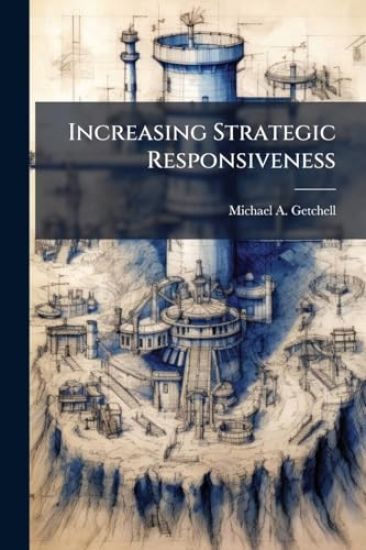
Increasing Strategic Responsiveness: Rotating US Army Corps Through Phases of the National Military Strategy
The purpose of this monograph is to answer the question: Can the Army increase its strategic responsiveness in order to narrow the current gap between Army capabilities and requirements? To arrive at an answer, this paper begins by examining complexity theory to provide the cognitive tools necessary to understand how systems interact with their environments. Chapter three examines the changes in the national security and military strategies in response to international and domestic factors over the last decade. It also assesses the impact these changes produced, an imbalance between Army requirements and capabilities. Utilizing Martin Van Creveld's rules for enhancing command performance, chapter four explores alternative proposals that aim to close the gap between requirements and capabilities by increasing strategic responsiveness. While investigating the problem and potential solutions, it became clear that versatility is the key to reducing this gap. Versatility, the capacity to shift capabilities to meet requirements, is achieved by separating the force in time and purpose. However, without rotation of forces between missions, the force becomes agile and not versatile. In particular, the paper recommends the Army divide its overarching requirement to fight and win the nation's war into the three domains of the 1997 National Military Strategy (NMS) and establish semi-independent forces capable of dealing with each of these domains separately. It postulates a model that rotates balanced corps between the domains of shape, prepare, and respond. By rotating the force between the domains, the Army builds a versatile general-purpose force, increases its stability, and reduces the effects of a demanding OPTEMPO. The combined effect is a force with the increased strategic responsiveness required to narrow the ever-shifting gap between capabilities and requirements. This work has been selected by scholars as being culturally important, and is part of the knowledge base of civilization as we know it. This work was reproduced from the original artifact, and remains as true to the original work as possible. Therefore, you will see the original copyright references, library stamps (as most of these works have been housed in our most important libraries around the world), and other notations in the work. This work is in the public domain in the United States of America, and possibly other nations. Within the United States, you may freely copy and distribute this work, as no entity (individual or corporate) has a copyright on the body of the work. As a reproduction of a historical artifact, this work may contain missing or blurred pages, poor pictures, errant marks, etc. Scholars believe, and we concur, that this work is important enough to be preserved, reproduced, and made generally available to the public. We appreciate your support of the preservation process, and thank you for being an important part of keeping this knowledge alive and relevant.
Is it in U.S. National Interests to Maintain Forward Deployed Military Forces in Asia?
Before World War II, the U.S. had only negligible involvement in Asia. However, the defeat of the Japanese, the need to provide assistance to former European colonies and the perceived need to prevent the spread of Communism, left the U.S. as the major power in the region militarily, diplomatically and economically. As the fear of Communist expansion increased in the region, the U.S. extended its containment policy from Europe to Asia and signed a series of security alliances with Asian nations in the early 1950s to enhance regional security and prevent the rise of a unified, Communist Sino-Soviet monolith. This policy of containment with respect to China only began to change in 1969 as President Richard M. Nixon's Administration initiated a rapprochement. President James E. Carter's Administration completed the process in 1979 by recognizing Mainland China as the legal government of China to include Taiwan. Further requirements to contain the Soviet Union dissolved in 1991 with its internal collapse. With the end of the Soviet Union, the U.S. began reducing American forces in the region by roughly eleven percent from 1991 to 1995. The intent was to begin transferring security responsibilities to U.S. Allies in the region. Only President William J. Clinton's promise in 1995 to maintain 100,000 military personnel in Asia prevented a further reduction of forces. However, today the U.S. is again continuing to shift the responsibility for Asia's security to its regional Allies, an example being Australia. In July 2000, U.S. Secretary of Defense William Cohen called on Australia to take the lead in formulating policies regarding instability...in the region. This is a result of the changing strategic balance following the collapse of the Soviet Union, the Asian economic crisis, and U.S. military constraints in manpower and budget. In light of a decade of change in Asia with the dissolution of the Soviet Union, military budget and manpower constraints, and the changing U.S. This work has been selected by scholars as being culturally important, and is part of the knowledge base of civilization as we know it. This work was reproduced from the original artifact, and remains as true to the original work as possible. Therefore, you will see the original copyright references, library stamps (as most of these works have been housed in our most important libraries around the world), and other notations in the work. This work is in the public domain in the United States of America, and possibly other nations. Within the United States, you may freely copy and distribute this work, as no entity (individual or corporate) has a copyright on the body of the work. As a reproduction of a historical artifact, this work may contain missing or blurred pages, poor pictures, errant marks, etc. Scholars believe, and we concur, that this work is important enough to be preserved, reproduced, and made generally available to the public. We appreciate your support of the preservation process, and thank you for being an important part of keeping this knowledge alive and relevant.