Kirjojen hintavertailu. Mukana 11 699 587 kirjaa ja 12 kauppaa.

Kirjahaku

Etsi kirjoja tekijän nimen, kirjan nimen tai ISBN:n perusteella.

1000 tulosta hakusanalla Mitchell J Rycus

Dr. John Mitchell

Dr. John Mitchell

Berkeley Dorothy Smith

The University of North Carolina Press
2011
nidottu
This is the first full-length biography of a man who was primarily a botanist but who is best known for his map of North America. He left a well-established medical practice in his native Virginia in 1746 to live in London where he became active in scientific, social, and political circles. One of the period's outstanding cartographical achievements, Mitchell's map served as the basis for the Treaty of 1783 and for the still-existing United States-Canadian border.A UNC Press Enduring Edition -- UNC Press Enduring Editions use the latest in digital technology to make available again books from our distinguished backlist that were previously out of print. These editions are published unaltered from the original, and are presented in affordable paperback formats, bringing readers both historical and cultural value.
Rhett Butler's People: The Authorized Novel Based on Margaret Mitchell's Gone with the Wind
Fully authorized by the Margaret Mitchell estate, Rhett Butler's People is the astonishing and long-awaited novel that parallels the Great American Novel, Gone With The Wind. Twelve years in the making, the publication of Rhett Butler's People marks a major and historic cultural event.Through the storytelling mastery of award-winning writer Donald McCaig, the life and times of the dashing Rhett Butler unfolds. Through Rhett's eyes we meet the people who shaped his larger than life personality as it sprang from Margaret Mitchell's unforgettable pages: Langston Butler, Rhett's unyielding father; Rosemary his steadfast sister; Tunis Bonneau, Rhett's best friend and a onetime slave; Belle Watling, the woman for whom Rhett cared long before he met Scarlett O'Hara at Twelve Oaks Plantation, on the fateful eve of the Civil War. Of course there is Scarlett. Katie Scarlett O'Hara, the headstrong, passionate woman whose life is inextricably entwined with Rhett's: more like him than she cares to admit; more in love with him than she'll ever know Brought to vivid and authentic life by the hand of a master, Rhett Butler's People fulfills the dreams of those whose imaginations have been indelibly marked by Gone With The Wind."
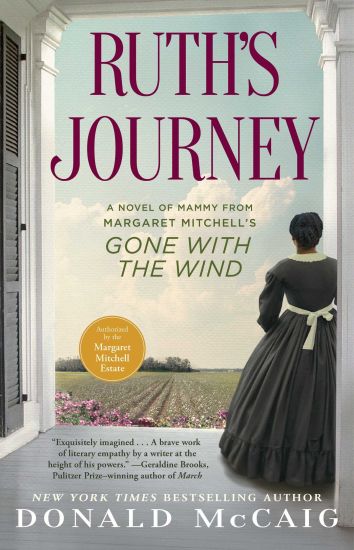
Ruth's Journey: A Novel of Mammy from Margaret Mitchell's Gone with the Wind
"Exquisitely imagined, deeply researched . . . brings to the foreground the most enigmatic and fascinating figure in Gone with the Wind. This is a brave work of literary empathy by a writer at the height of his powers, who demonstrates a magisterial understanding of the period, its clashing cultures, and its heartbreaking crises. " --Geraldine Brooks, author of MarchThe only authorized prequel to Margaret Mitchell's Gone with the Wind--the unforgettable story of Mammy. On a Caribbean island consumed by the flames of revolution, an infant girl falls under the care of two French migr s, Henri and Solange Fournier, who take the beautiful child they call Ruth to the bustling American city of Savannah. What follows is the sweeping tale of Ruth's life as shaped first by her strong-willed mistress, and then by Solange's daughter Ellen and Gerald O'Hara, the rough Irishman Ellen chooses to marry; the Butler family of Charleston and their unexpected connection to Mammy Ruth; and finally Scarlett O'Hara--the irrepressible Southern belle Mammy raises from birth. As we witness the lives of three generations of women, gifted storyteller Donald McCaig reveals a nuanced portrait of Mammy, at once a proud woman and a captive, a strict disciplinarian who has never experienced freedom herself. Through it all, Mammy endures, a rock in the river of time. Set against the backdrop of the South from the 1820s until the dawn of the Civil War, here is a remarkable story of fortitude, heartbreak, and indomitable will--and a tale that will forever illuminate your reading of Margaret Mitchell's Gone with the Wind.
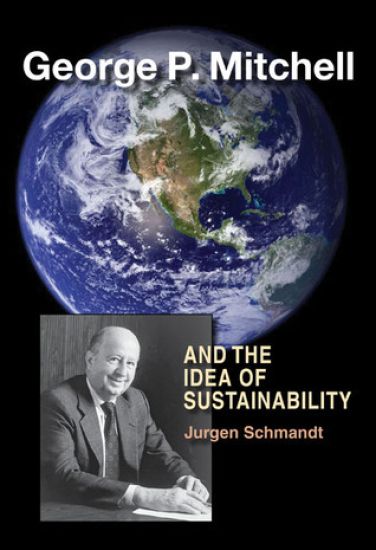
George P. Mitchell and the Idea of Sustainability

George P. Mitchell and the Idea of Sustainability

Jurgen Schmandt

Texas A M University Press
2010
sidottu
An energy tycoon, real estate developer, and philanthropist, George P. Mitchell is also an idealist, a big thinker who gave his time and fortune to the study of sustainability long before it became a household word. Jurgen Schmandt, who has worked for Mitchell for many years, explains and traces the idea of a sustainable society, from its origin in the eighteenth-century concept of the ""commons"" to its twentieth-century iteration in the 1987 United Nations report ""Our Common Future."" He then chronicles Mitchell’s commitment to this idea from the early 1960s, when the focus was on population growth, to today, when climate change and global warming dominate the debate. Mitchell advanced his belief that humankind could create ""a balance between economic and ecological well-being"" by organizing and hosting conferences, awarding prizes, supporting scholars and scientists, and funding research and publications. He did it at the Aspen Institute, at The Woodlands Conferences, at the National Academy of Sciences, at the Mitchell Center for Sustainable Development, and at the Houston Advanced Research Center. (Paradoxically, he did not always do it in his own energy company.) Documenting one important man’s engagement with one important idea, Schmandt has preserved a significant episode in the ongoing quest to create societies that are ""capable of reaching and then sustaining a decent quality of life for their citizens.
George P. Mitchell

George P. Mitchell

Loren C. Steffy

Texas A M University Press
2019
sidottu
Upon George Mitchell's death in 2013, The Economist proclaimed, "Few businesspeople have done as much to change the world as George Mitchell," a billionaire Texas oilman who defied the stereotypical swagger so identified with that industry. In George P. Mitchell: Fracking, Sustainability, and an Unorthodox Quest to Save the Planet, award-winning author Loren C. Steffy offers the first definitive biography of Mitchell, placing his life and legacy in a global context, from the significance of his discoveries to the lingering controversies they inspired. Mitchell will forever be known as "the father of fracking," but he didn't invent the drilling process; he perfected it and made it profitable, one of many varied ventures he pursued for years. Long before his company ever fracked a well, he pioneered sustainable development by creating The Woodlands, near Houston, one of the first and most successful master-planned communities. Its focus on environmental protection and livability redefined the American suburb. This apparent contradiction between his energy interests and environmental pursuits, which his son Todd dubbed "the Mitchell Paradox," was just one of many that defined Mitchell's life. Anyone who puts fuel in a tank or turns on a light switch has benefited from Mitchell's efforts. This compelling biography reveals Mitchell as a modern renaissance man who sought to make the world a better, more livable place, a man whose unbounded intellectual curiosity led him to support a wide range of interests in business, science, and philanthropy.
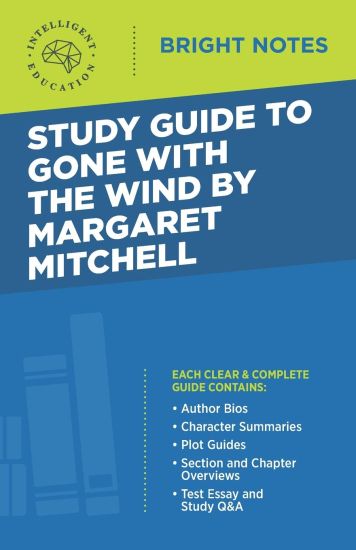
Study Guide to Gone with the Wind by Margaret Mitchell
A comprehensive study guide offering in-depth explanation, essay, and test prep for Margaret Mitchell's Gone with the Wind, a Pulitzer Prize winner, one of the bestselling novels of all time, and heralded by readers everywhere as The Great American Novel. As a novel of the Great Depression era, Gone with the Wind is a coming-of-age story of a spoiled daughter of a plantation owner set during the Civil War and Reconstruction Era. Moreover, Mitchell was hit by a taxi walking across the street with her husband and suffered severe head injuries, never regaining consciousness. Her death caused world-wide notice and expressions of regret, much of which centered on the theme of her having written only one book. This Bright Notes Study Guide explores the context and history of Mitchell's classic work, helping students to thoroughly explore the reasons it has stood the literary test of time. Each Bright Notes Study Guide contains: - Introductions to the Author and the Work - Character Summaries - Plot Guides - Section and Chapter Overviews - Test Essay and Study Q&As The Bright Notes Study Guide series offers an in-depth tour of more than 275 classic works of literature, exploring characters, critical commentary, historical background, plots, and themes. This set of study guides encourages readers to dig deeper in their understanding by including essay questions and answers as well as topics for further research.
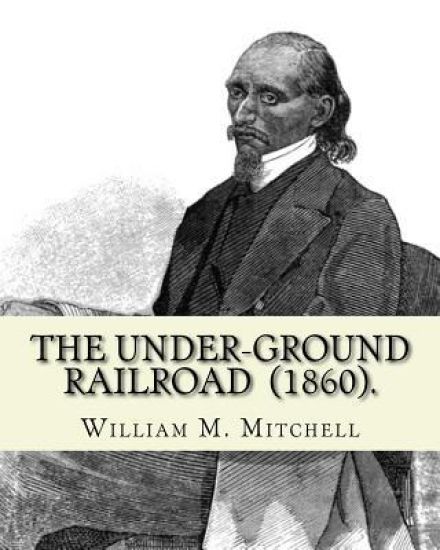
The Under-Ground Railroad (1860). By: William M. Mitchell: William M. Mitchell (c. 1826 - c. 1879) was an American writer, minister and abolitionist w
William M. Mitchell (c. 1826 - c. 1879) was an American writer, minister and abolitionist who worked on the Underground Railroad. He is said to be the only writer who wrote about the railroad while it was still illegal. Early life and career Mitchell was raised as an orphan in North Carolina. His birth date is about 1826. He was apprenticed to a plantation owner where he was obliged to help in administering their slaves. He became involved in the resistance to slavery in 1843 when he was among a crowd of people who intimidated some bounty hunters who were returning an escaped slave to his owners. The man regained his freedom when his captors fled. Mitchell later reported that the man, who had a wife and children, had been given away by the local white pastor who claimed a $100 bounty. Mitchell was an active supporter of the movement that was smuggling escaped slaves from the American South to Canada before the 1860s American Civil War. He said that he was most active when he was living in the city of Washington Court House in Fayette County, Ohio. His house was a safe house for John Mason who brought 265 escapees to Mitchell's home. Mitchell is said to be the only writer who wrote about the Underground Railroad while it was still illegal, 1] although others had described it at an earlier date. The British writer Harriet Martineau had mentioned the concept in 1837 and the British abolitionist Joseph Sturge wrote about it in 1841, but they did not name it. Mitchell's book took the name of the Underground Railroad into his book's title, although the phrase had been used before by James Stirling in 1857. 5] Mitchell's book was published in London in 1860. Mitchell's book garnered recommendations from leading abolitionists including the American activist William Howard Day and the British politician George Thompson. Mitchell was a minister in Toronto with the American Baptist Free Mission Society. He visited Britain in 1859 where he toured with the Reverend William Troy. The two of them both wrote books and they went on lecture tours of anti-slavery groups in Ireland, Scotland and England and gathered funds for their churches in Canada. Mitchell's book particularly thanked the Glasgow Emancipation Society who supported his work and his book. Despite the death of his daughter, Mitchell traveled again to Great Britain in 1863 to 1864 when a controversy erupted over his poor accounting and the potential mixing of his expenses with the hundreds of pounds (sterling) that he was meant to be sending back to Canada. Mitchell and his family are presumed to have returned to America. One record shows that he died before 1879 but there is no further detail