In the eleven kaleidoscopic stories that make up Bright Shards of Someplace Else, Monica McFawn traces the combustive, hilarious, and profound effects that occur when people misread the minds of others. The characters—an array of artists, scientists, songwriters, nannies, horse trainers, and poets—often try to pin down another’s point of view, only to find that their own worldview is far from fixed. The characters in McFawn’s stories long for and fear the encroachment of others. A young boy reduces his nanny’s phone bill with a call, then convinces her he can solve her other problems. A man who works at a butterfly-release business becomes dangerously obsessed with solving a famous mathematical proof. A poetry professor finds himself entangled in the investigation of a murdered student. In the final story, an aging lyricist reconnects with a renowned singer to write an album in the Appalachian Mountains, only to be interrupted by the appearance of his drug-addicted son and a mythical story of recovery. By turns exuberant and philosophically adroit, Bright Shards of Someplace Else reminds us of both the limits of empathy and its absolute necessity. Our misreadings of others may be unavoidable, but they themselves can be things of beauty, charm, and connection.
En este trabajo la autora estudia seis obras de contenido americano basadas en las guerras de Arauco y en la figura de uno de los primeros gobernadores de Chile, Garcia Hurtado de Mendoza. La primera parte analiza los textos que sirvieron de base creativa a los dramaturgos. La segunda consiste en el analisis textual de las obras teatrales. Este muestra el sutil proceso evolutivo a traves del cual el tratamiento teatral del hecho historico - Arauco y la Conquista - contribuyo a crear la -idea- de America en la Espana de la epoca, e indica, mediante la reelaboracion de personajes y motivos, la emergencia de figuras miticas del mundo nativo que son en la actualidad parte del patrimonio historico y cultural chileno."
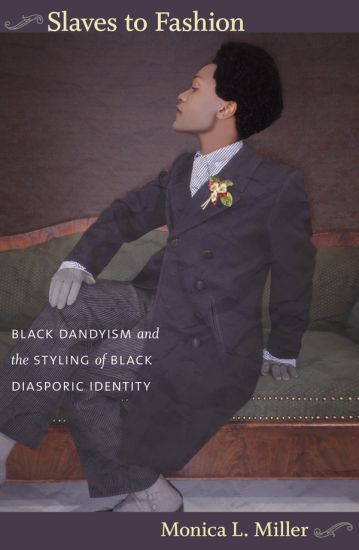
Slaves to Fashion is a pioneering cultural history of the black dandy, from his emergence in Enlightenment England to his contemporary incarnations in the cosmopolitan art worlds of London and New York. It is populated by sartorial impresarios such as Julius Soubise, a freed slave who sometimes wore diamond-buckled, red-heeled shoes as he circulated through the social scene of eighteenth-century London, and Yinka Shonibare, a prominent Afro-British artist who not only styles himself as a fop but also creates ironic commentaries on black dandyism in his work. Interpreting performances and representations of black dandyism in particular cultural settings and literary and visual texts, Monica L. Miller emphasizes the importance of sartorial style to black identity formation in the Atlantic diaspora. Dandyism was initially imposed on black men in eighteenth-century England, as the Atlantic slave trade and an emerging culture of conspicuous consumption generated a vogue in dandified black servants. “Luxury slaves” tweaked and reworked their uniforms, and were soon known for their sartorial novelty and sometimes flamboyant personalities. Tracing the history of the black dandy forward to contemporary celebrity incarnations such as Andre 3000, Miller explains how black people became arbiters of style and how they have historically used the dandy’s signature tools-clothing, gesture, and wit-to break down limiting identity markers and propose new ways of fashioning political and social possibility in the black Atlantic world. With an aplomb worthy of her iconographic subject, she considers the black dandy in relation to nineteenth-century American literature and drama, W. E. B. Du Bois’s reflections on black masculinity and cultural nationalism, the modernist aesthetics of the Harlem Renaissance, and representations of black cosmopolitanism in contemporary visual art.
Slaves to Fashion is a pioneering cultural history of the black dandy, from his emergence in Enlightenment England to his contemporary incarnations in the cosmopolitan art worlds of London and New York. It is populated by sartorial impresarios such as Julius Soubise, a freed slave who sometimes wore diamond-buckled, red-heeled shoes as he circulated through the social scene of eighteenth-century London, and Yinka Shonibare, a prominent Afro-British artist who not only styles himself as a fop but also creates ironic commentaries on black dandyism in his work. Interpreting performances and representations of black dandyism in particular cultural settings and literary and visual texts, Monica L. Miller emphasizes the importance of sartorial style to black identity formation in the Atlantic diaspora. Dandyism was initially imposed on black men in eighteenth-century England, as the Atlantic slave trade and an emerging culture of conspicuous consumption generated a vogue in dandified black servants. “Luxury slaves” tweaked and reworked their uniforms, and were soon known for their sartorial novelty and sometimes flamboyant personalities. Tracing the history of the black dandy forward to contemporary celebrity incarnations such as Andre 3000, Miller explains how black people became arbiters of style and how they have historically used the dandy’s signature tools-clothing, gesture, and wit-to break down limiting identity markers and propose new ways of fashioning political and social possibility in the black Atlantic world. With an aplomb worthy of her iconographic subject, she considers the black dandy in relation to nineteenth-century American literature and drama, W. E. B. Du Bois’s reflections on black masculinity and cultural nationalism, the modernist aesthetics of the Harlem Renaissance, and representations of black cosmopolitanism in contemporary visual art.
A fun story with maps and mazes shows children where their food comes from. Ruby and Ned gather eggs from their hens and ride their red truck to deliver the eggs--to the farmer's market, the restaurant, the school, the grocery story, and the bakery. The baker uses the eggs in her yummiest cookies--and gives them to Ruby and Ned Interactive: with 6 mazes and illustrations with fun details to "spy."Lots of learning fun: map skills, sequencing, STEM, communities, and more.Picture clues help children pick out important words.Female role model: Ruby drives a truck and is a farmer.Art style has the elegant charm of American folk art.
A fun story with maps and mazes shows children where their food comes from. Ruby and Ned gather eggs from their hens and ride their red truck to deliver the eggs--to the farmer's market, the restaurant, the school, the grocery story, and the bakery. The baker uses the eggs in her yummiest cookies--and gives them to Ruby and Ned Interactive: with 6 mazes and illustrations with fun details to "spy."Lots of learning fun: map skills, sequencing, STEM, communities, and more.Picture clues help children pick out important words.Female role model: Ruby drives a truck and is a farmer.Art style has the elegant charm of American folk art.
Chang-rae Lee’s Native Speaker, Kerri Sakamoto’s The Electrical Field, Don Lee’s Country of Origin, Mohsin Hamid’s The Reluctant Fundamentalist, Susan Choi’s A Person of Interest. These and a host of other Asian North American detection and mystery titles were published between 1995 and 2010. Together they reference more than a decade of Asian North America monitoring that includes internment, campaign financing, espionage, and post-9/11 surveillance. However, these works are less concerned with solving crimes than with creating literary responses to the subtle but persistent surveillance of raced subjects.Monica Chiu reveals how Asian North American novels’ fascination with mystery, detection, spying, and surveillance is a literary response to anxieties over race. According to Chiu, this allegiance to a genre that takes interruptions to social norms as its foundation speaks to a state of unease at a time of racial scrutiny.Scrutinized! is broadly about oversight and insight. The race policing of the past has been subsumed under post-racism—an oversight (in the popular nomenclature of race blindness) that is still, ironically, based on a persistent visual construction of race. Readers first revisit Oriental visions, or Asian stereotypes, and then encounter official documentation on major events, such as the Japanese American and Japanese Canadian internment. The former visions, which endure, and the latter documents, diplomatically forgotten, shape how Asian subjects were and are scrutinized and to what effect.
This is an intellectually lively book with genuine scholarly ambition. McLean outlines the main trends in university pedagogy within the context of academic practices (funding, curriculum development, audit, access etc.) and socio-economic developments. The author: shows how to relate 'macro' issues (e.g. globalization) to 'micro' issues (approaches to teaching); challenges the paradigm of education as a purely 'technical rational' process designed to contribute to economic growth; and argues that the process will not achieve its desired ends and ignores other, more emancipatory, values in education. Whilst supporting an 'evidence-informed' and research-led approach to developing pedagogy, McLean demonstrates that these conceptions need to include a role for action research and reflective practice.
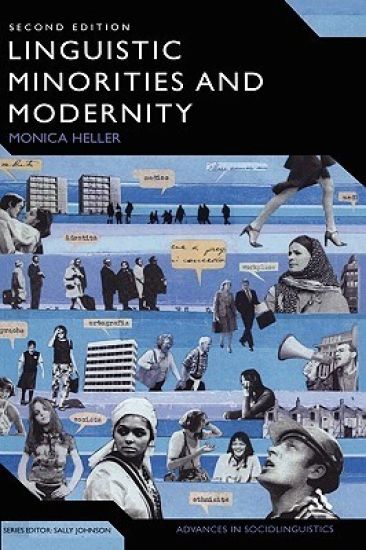
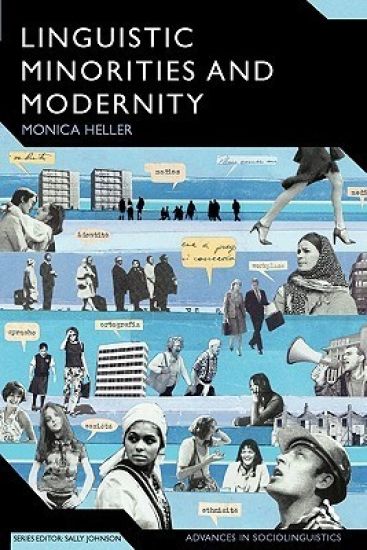
The subject of this book is linguistic minorities and social change, seen through the lens of a linguistic minority school, meeting the challenges of globalization. This is a core topic for sociolinguists, linguistic anthropologists, applied linguists and educators who are concerned about what multilingualism means in today's world. Through a careful examination of the language practices in the daily life of a minority language school, Monica Heller explores issues such as nationalism, language policy, bilingualism, identity, power, ideology, race, class, gender and sexuality, exploring their role in the increasing commodification of identity and language. "Linguistic Minorities and Modernity" has been revised throughout, and includes a new preface by the author.
The subject of this book is linguistic minorities, and how language is used by speakers of languages which are not the main language of communication. This is a core topic for sociolinguists, who examine how language is actually used within a given context. Globalization, migration, and the erosion of nationhood is creating far more linguistic minorities as society becomes increasingly pluralistic. One of the major sites of contact between languages is the school, and this book focuses on linguistic interaction within this educational context. Through a careful examination of the language practices in the daily life of a school, Monica Heller explores issues such as changing language policy, bilingualism, identity, power, ideology and gender from the point of view of the minority speaker. In so doing she provdies a fresh new insight into this important area of sociolinguistics. Linguistic Minorities and Modernity is written in an accessible and lively narrative style, and uses real-life examples and case studies to illustrate the discussions. The text has been revised throughout, and includes a new introduction by the author. The book is suitable for undergraduate and postgraduate students of sociolinguistics and linguistic anthropology.
This book, with a foreword by Arthur F. Kinney, covers the major issues of the stage history and translation in the negotiation between Romanian culture and Shakespeare, raising questions about what a Shakespeare play becomes when incorporated in a different and allegedly liminal culture. The study reflects the growing cross-fertilization of approaching Shakespeare in Romanian translations, productions, literary adaptations, and criticism, looking at the way in which Romania's collective cultural memory is constructed, re-examined, and embedded in the adoption of Shakespeare in certain periods. While it posits the problematics in the historical development of Shakespeare's presence in Romanian culture, the study gives a detailed history of the translations and productions of the plays, focusing on the most significant aspects of their literary, social, and political appropriation over the past two centuries. The author locates the arguments in a vista of cultural, social, and political issues that affected the local responses to Shakespeare. This monograph represents the cultural mediation of Romania in the context of "Shakespeare" understood as a construct shaping and created by various cultures. The description of Romanian cultural products and stage history examines how early translations from Shakespeare of production of plays grouped according to genre have contributed to the modeling of a theatrical selfhood that was linked to the European reception of the English poet. The survey of early versions of Shakespeare shows how Romanian translators interpreted the allusions in the text, while the cultural authority of the Shakespeare figure was perceived as a means of facilitating the country's exit from the status of a marginalized Balkan elsewhere. Romania, like other Eastern European stages, has exploited Shakespeare's canonical significance in the world civilization in order to leave its marginal status and assume the cultural, social, and political values of the other, mainly Western, European countries. The study posits that the plays have been located at the center of the Romanian consciousness. The communist authorities put Shakespeare to ideological uses, seeking to legitimize their control over Romania's past and present by reinscribing the bard's cultural influence in their political agenda. Concurrently, theaters and directors used Shakespeare with subversive purposes, producing dissident meanings in complicity with critics and audiences. In the 1990s and after, liberated from the straitjacket of doctrines, directors focused on Shakespeare's meaning for the Romanian theater, producing self-reflexive and highly sophisticated meta-theatrical versions for national and international audiences. This study reveals the crucial cultural functions the canonical Shakespeare figure of authority performs in modern Romania.
Predatory publishing is a complex problem that harms a broad array of stakeholders and concerns across the scholarly communications system. It shines a light on the inadequacies of scholarly assessment and related rewards systems, contributes to the marginalization of scholarship from less developed countries, and negatively impacts the acceptance of open access. To fix what is broken in scholarly communications, academic librarians must act as both teachers and advocates and partner with other stakeholders who have the agency to change how scholarship is produced, assessed, and rewarded. Predatory Publishing and Global Scholarly Communications is a unique and comprehensive exploration of predatory publishing in four parts. Background Characteristics and Research The Geopolitics of Scholarly Publishing Responses and Solutions It examines the history of predatory publishing and basics of scholarly assessment; identifies types of research misconduct and unethical scholarly behaviors; provides critical context to predatory publishing and scholarly communications beyond the Global North; and offers structural and pedagogical solutions and teaching materials for librarians to use in their work with authors, students, faculty, and other stakeholders. Predatory Publishing and Global Scholarly Communications gives powerful insight into predatory publishing across the world, inside and outside of the library community, and provides tools for understanding and teaching its impact and contributing to its improvement.
A vibrant look at the celebrated artist and designer KAWS.Multidisciplinary artist KAWS was first known for his work as a graffiti artist and his subersive approach to poular imagery on bus shelter and phone booth advertisements. This is the first comprehensive survey of the artist's body of work.
This revelatory book explores the contributions of Betsy James Wyeth (1921 2020), a multitalented maker of designed environments and interior spaces, preservationist, and creative partner to the beloved American artist Andrew Wyeth. Betsy herself created the world around her through imagery, decorative arts objects, documents, and paintings by Andrew and others, which were largely shaped by Betsy and the worlds she created. The volume features stunning photography of key sites such as Brinton s Mill and environments that define her creative vision. Scholars discuss her process and significant role in projects like the Shore House at Broad Cove Farm, the site of the formation of Betsy s refined and minimalist design sensibility. Personal reflections from her family shed light on Betsy s life and influence, with additional contributions that explore her publishing endeavors and support for the maritime economy. Through a wide range of fine and decorative art objects from the remarkable and largely unexhibited holdings of the Wyeth Foundation for American Art that pertain to Betsy s legacy, select loans, new photography, this book allows visitors to understand and explore her designed environments as never before.
Considers teleworking among LIS staff, as well as teleworkers as users of LIS services.Information and ideas about the types of information work that are suitable for teleworking. Management issues, case studies, Further reading and list of Internet resources.
In March 1944, eleven divisions of German troops marched into Hungary. Thousands of Jews were rounded up and deported to death camps. Desperately, they sought foreign diplomatic relations, false identity papers, and hiding places. Vali Racz R���¡cz was a successful singer and film actress, the darling of the Hungarian public. Since she was young, beautiful, and safely Aryan, the Nazis represented no particular threat to her, but she was horrified by the persecution of the Jews, many of whom were friends and mentors. Risking her own life, she turned her villa in Buda into a secret refuge. Monica Porter traces both the life of her remarkable and courageous mother and a fascinating period in Hungarian history. In September 1991, the Jewish people's highest expression of gratitude was conferred upon Vali Racz in Jerusalem: the title of 'Righteous among the Nations'.
This working paper maps the range of natural hazards and other risks to which people in Mexico and Central America are exposed and relates these to the complex social, economic, political and cultural factors that make some social sectors more critically vulnerable than others in emergencies. It also identifies the wide range of local capacities - organisational, social, governmental, and non-governmental - that can contribute to developing effective disaster-prevention and mitigation programmes, as well as emergency rehabilitation and reconstruction programmes.
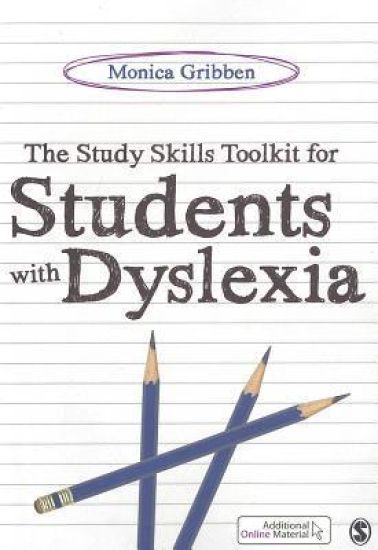
Packed with helpful advice, checklists and templates, this book will help you improve your study skills throughout your time at university. Written in a straightforward, no-nonsense style, the guidance can be broken down into manageable chunks. Issues covered include: procrastination planning your assignment understanding your essay question researching, writing and referencing your written work managing your own well-being. Drawing on years of experience running study skills workshops in higher education, Monica Gribben has written an accessible book for students with dyslexia that shows how to work through the challenges that studying presents. The companion website has podcasts, worksheets and electronic resources to support each chapter. SAGE Study Skills are essential study guides for students of all levels. From how to write great essays and succeeding at university, to writing your undergraduate dissertation and doing postgraduate research, SAGE Study Skills help you get the best from your time at university. Visit the SAGE Study Skills hub for tips, resources and videos on study success!
Packed with helpful advice, checklists and templates, this book will help you improve your study skills throughout your time at university. Written in a straightforward, no-nonsense style, the guidance can be broken down into manageable chunks. Issues covered include: procrastination planning your assignment understanding your essay question researching, writing and referencing your written work managing your own well-being. Drawing on years of experience running study skills workshops in higher education, Monica Gribben has written an accessible book for students with dyslexia that shows how to work through the challenges that studying presents. The companion website has podcasts, worksheets and electronic resources to support each chapter. SAGE Study Skills are essential study guides for students of all levels. From how to write great essays and succeeding at university, to writing your undergraduate dissertation and doing postgraduate research, SAGE Study Skills help you get the best from your time at university. Visit the SAGE Study Skills hub for tips, resources and videos on study success!