Kirjojen hintavertailu. Mukana 12 390 323 kirjaa ja 12 kauppaa.

Kirjahaku

Etsi kirjoja tekijän nimen, kirjan nimen tai ISBN:n perusteella.

1000 tulosta hakusanalla Monica Ramirez Basco

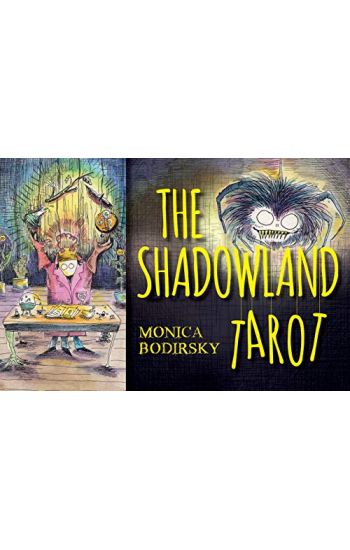
Shadowland Tarot

Shadowland Tarot

Monica Bodirsky

RED Feather
2020
muu
Shadows are said to be part of unlit corners of a space where creatures lurk and mystery dwells. They may also manifest on a personal or even global level to convey demons, fear, or anxieties. In a broader sense, shadows signify unresolved trauma and bring it to the forefront of our consciousness as aspects of ourselves that we can finally acknowledgethe skeletons, mummies, spiders, bats, crows, and ghosts we hide. This Tarot deck and accompanying guidebook provide you with the vital creative tools you need to access your shadows and reveal hidden truths. Alongside traditional Tarot symbolism and meanings, shadow aspects of our archetypal personalities are portrayed as 78 playful and quirky ink-and-watercolor creature cards that offer insight and guidance into our deepest selves. The book consists of a detailed introduction to shadows and shadow work, card meanings, reflection questions, and easy-to-follow spreads to help you discover, contemplate, and integrate previously unacknowledged aspects of your life and personality. For beginners as well as seasoned readers and shadow workers, discover imaginative solutions to everyday challenges as well as complex or concealed conditions. Is it time for you to stop hiding from your shadows?
Shadowland Lenormand

Shadowland Lenormand

Monica Bodirsky

Schiffer Publishing Ltd
2021
muu
Fear of what we can’t see has the ability to conjure images of hungry beasts ready to pounce from the shadows. Yet, it is within the shadows where hidden truth is revealed. Become acquainted with the shadow aspects of our archetypal personalities through the playful and quirky, ink-and-watercolor creatures that compose this 36-card Lenormand deck and accompanying guidebook. For beginners as well as seasoned professional Lenormand readers and shadow workers, this deck uses traditional Petit Lenormand symbols to provide imaginative solutions to everyday challenges. For creative seekers on a journey of self-discovery, this deck provides an effective tool to access hidden knowledge and empower you, including an introduction to Lenormand cartomancy, card meanings, reflections, and questions. It contains easy-to-follow spreads so you can discover, contemplate, and integrate previously unacknowledged aspects of your life and personality. Not for the faint of heart, this no-nonsense deck gets right to the point! It is a perfect companion to the Shadowland Tarot deck.
Between the Worlds

Between the Worlds

Monica Bodirsky

SCHIFFER PUBLISHING LTD
2022
muu
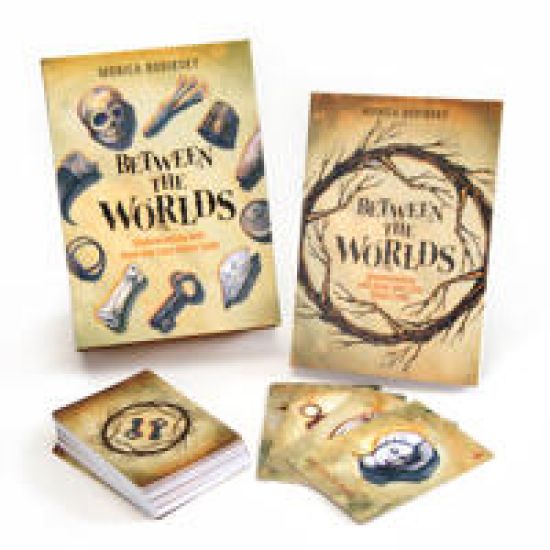
Start a conversation with ancient wisdom . . . In our everyday mundane life, stress creates fear, anxiety, and doubt that leaves us depleted yet still desperately searching beyond the corporeal for deeper meaning in our lives. Now the daring seeker on a journey of authenticity, self-discovery, and healing can deep-dive into the unknown with this ancient divination technique of bone-and-curio casting. This 46-card set of captivating and original watercolor and ink artwork symbols acts as a bridge between the worlds of the seen and unseen, providing you the vital creative tools needed to access personal, hidden truths and shadow work as well as gain access to information and traditional knowledge from the spirit realm. The accompanying book offers insight and guidance through a short work of fiction for each card, advice for upright as well as reversed cards, and reflection questions. The deck also includes an introduction to the art of casting and its worldwide historical significance, as well as many spreads and occult tables to equip you for reading quickly and effectively. Find your path to internal illumination and commune with the divine, inside and out.Card dimensions: 2 1/2" x 3 1/2"
The Awakening Tarot

The Awakening Tarot

Monica Bodirsky

SCHIFFER PUBLISHING LTD
2024
muu
Become an active, awake, and empowered participant in life. Designed to facilitate the process of spiritual awakening, The Awakening Tarot provides an innovative, elemental approach to help experience the sacred interconnectivity of all things. The deck and extensive guidebook expand consciousness by embodying the essence of the elements to integrate self-awareness with ancestral, spiritual, and environmental wisdom. Inspired by Earth-based spirituality, the deck is an effective tool for divination, self-development, and accessing hidden realms. It beckons the reader to become an empowered agent of change by awakening with the teachings of earth, air, fire, water, spirit, and the elemental guides. The cards contain 78 dreamlike ink and watercolor illustrations reminiscent of the fresh art of the ’70s. The book is filled with card insights for upright, reversed, and shadows, and key words and thought-provoking reflection questions addressing topics such as living a magical life, elemental exercises, and living sustainably. Awaken the true self and discover life’s purpose. Card dimensions: 2 5/8" x 4 3/4"
Politics and Education in Argentina, 1946-1962
This study focuses on the formal education system in Argentina during the 1940s, the 1950s, and the early 1960s. It analyzes the link between politics and education against the backdrop of changing social conditions in Argentina under the regimes of Peron, Lonardi and Aramburu (the Liberating Revolution), and Frondizi, by evaluating textbooks, official bulletins, childrens' periodicals, speeches, and personal interviews.
Politics and Education in Argentina, 1946-1962
This study focuses on the formal education system in Argentina during the 1940s, the 1950s, and the early 1960s. It analyzes the link between politics and education against the backdrop of changing social conditions in Argentina under the regimes of Peron, Lonardi and Aramburu (the Liberating Revolution), and Frondizi, by evaluating textbooks, official bulletins, childrens' periodicals, speeches, and personal interviews.
The Politics of Conflict

The Politics of Conflict

Monica Ingber

McGill-Queen's University Press
2015
sidottu
By looking at the problem of complicity in political violence from a social versus a legal perspective, The Politics of Conflict offers readers new insight into the ways in which violence operates. To do this, Monica Ingber applies Gilles Deleuze's analysis of the novellas of Leopold Sacher-Masoch, particularly Venus in Furs, to the politics of violence in Iraq. Specifically, Ingber develops the concept of transubstantiatory violence, to think through the relationship between social complicity and political violence. By assessing politics in Iraq through the lens of transubstantiatory violence, it becomes possible to see how social complicity validates what would be otherwise viewed as illegitimate forms of violence. This legitimization of violence is addressed through the problematization of the modern correlation of security, law, and the social contract by exploring three key areas of socio-politics: state-making and nation-building, political movements, and the popular militia. A serious study that makes important contributions to political science, political philosophy, and conflict studies, The Politics of Conflict demonstrates an alternative view of violence that is provocative in its ability to destabilize dominant understandings of regime violence and the counter-reactions of opposition movements.
The Politics of Conflict

The Politics of Conflict

Monica Ingber

McGill-Queen's University Press
2015
nidottu
By looking at the problem of complicity in political violence from a social versus a legal perspective, The Politics of Conflict offers readers new insight into the ways in which violence operates. To do this, Monica Ingber applies Gilles Deleuze's analysis of the novellas of Leopold Sacher-Masoch, particularly Venus in Furs, to the politics of violence in Iraq. Specifically, Ingber develops the concept of transubstantiatory violence, to think through the relationship between social complicity and political violence. By assessing politics in Iraq through the lens of transubstantiatory violence, it becomes possible to see how social complicity validates what would be otherwise viewed as illegitimate forms of violence. This legitimization of violence is addressed through the problematization of the modern correlation of security, law, and the social contract by exploring three key areas of socio-politics: state-making and nation-building, political movements, and the popular militia. A serious study that makes important contributions to political science, political philosophy, and conflict studies, The Politics of Conflict demonstrates an alternative view of violence that is provocative in its ability to destabilize dominant understandings of regime violence and the counter-reactions of opposition movements.
Les fondements de la culture, le pouvoir de l'art

Les fondements de la culture, le pouvoir de l'art

Monica Gattinger

McGill-Queen's University Press
2017
sidottu
The Canada Council for the Arts is the country's largest provider of grants for artists and arts organizations, benefiting not only writers, visual artists, performers, and musicians but Canadian culture as a whole. In The Roots of Culture, the Power of Art Monica Gattinger outlines the history of the Canada Council, the impetus for its foundation, and the ongoing debate about its goals and impact. Tracing the Council's gradual shift from focusing on artistic supply and building the roots of Canadian arts and culture in its early years to its expanded focus on the power of the arts in society over time, Gattinger describes how leaders have navigated core tensions inherent in the Council's activities. She examines the arguments for and against "art for art's sake" and pursuing broader social and economic aims through the arts, as well as the inherent political conflicts between serving the needs of the artistic community and the needs of Canadian society, between leadership and followership, between autonomy and collaboration, and between emerging and established artistic practices. Combining lively storytelling with insightful analysis, and beautifully produced with dozens of photos of the art, people, and events that have shaped the organization through the years, The Roots of Culture, the Power of Art is essential reading for those with an interest in Canadian arts and culture and cultural policy.
The Roots of Culture, the Power of Art

The Roots of Culture, the Power of Art

Monica Gattinger

McGill-Queen's University Press
2017
sidottu
The Canada Council for the Arts is the country's largest provider of grants for artists and arts organizations, benefiting not only writers, visual artists, performers, and musicians but Canadian culture as a whole. In The Roots of Culture, the Power of Art Monica Gattinger outlines the history of the Canada Council, the impetus for its foundation, and the ongoing debate about its goals and impact. Tracing the Council's gradual shift from focusing on artistic supply and building the roots of Canadian arts and culture in its early years to its expanded focus on the power of the arts in society over time, Gattinger describes how leaders have navigated core tensions inherent in the Council's activities. She examines the arguments for and against "art for art's sake" and pursuing broader social and economic aims through the arts, as well as the inherent political conflicts between serving the needs of the artistic community and the needs of Canadian society, between leadership and followership, between autonomy and collaboration, and between emerging and established artistic practices. Combining lively storytelling with insightful analysis, and beautifully produced with dozens of photos of the art, people, and events that have shaped the organization through the years, The Roots of Culture, the Power of Art is essential reading for those with an interest in Canadian arts and culture and cultural policy.
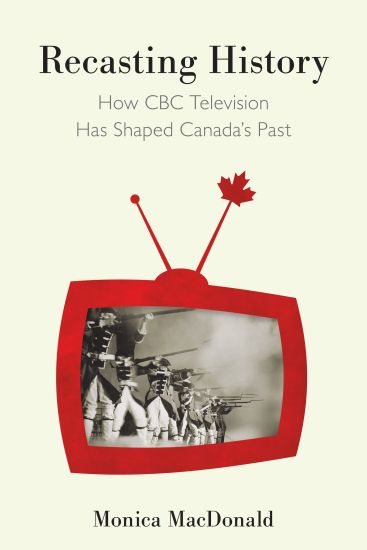
Recasting History

Recasting History

Monica MacDonald

McGill-Queen's University Press
2019
sidottu
Since 1952, CBC television has played a unique role as the primary mass media purveyor of Canadian history. Yet until now, there have been no comprehensive accounts of Canadian history on television. Monica MacDonald takes us behind the scenes of the major documentaries and docudramas broadcast on the CBC, including in Explorations (1956–64) and the series Images of Canada (1972–76), The National Dream (1974), The Valour and the Horror (1992), and Canada: A People's History (2000–02). Drawing on a wide range of sources, MacDonald explores how producers struggled to represent the Canadian past under a range of external and internal pressures. Despite dramatic shifts in the writing of history over this period, she determines that television themes and interpretations largely remained the same. The greater change was in the production and presentation, particularly in the role of professional historians, as journalists emerged not only as the new producers of Canadian history on CBC television, but also as the new content authorities. A critique of public history through the lens of political economy, Recasting History reveals the conflicts, compromises, and controversies that have shaped the CBC version of the Canadian past.
Recasting History

Recasting History

Monica MacDonald

McGill-Queen's University Press
2019
nidottu
Since 1952, CBC television has played a unique role as the primary mass media purveyor of Canadian history. Yet until now, there have been no comprehensive accounts of Canadian history on television. Monica MacDonald takes us behind the scenes of the major documentaries and docudramas broadcast on the CBC, including in Explorations (1956–64) and the series Images of Canada (1972–76), The National Dream (1974), The Valour and the Horror (1992), and Canada: A People's History (2000–02). Drawing on a wide range of sources, MacDonald explores how producers struggled to represent the Canadian past under a range of external and internal pressures. Despite dramatic shifts in the writing of history over this period, she determines that television themes and interpretations largely remained the same. The greater change was in the production and presentation, particularly in the role of professional historians, as journalists emerged not only as the new producers of Canadian history on CBC television, but also as the new content authorities. A critique of public history through the lens of political economy, Recasting History reveals the conflicts, compromises, and controversies that have shaped the CBC version of the Canadian past.
Career Imprints

Career Imprints

Monica C. Higgins; Edgar H. Schein

Jossey-Bass Inc.,U.S.
2005
nidottu
Based on her research of 800 biotechnology companies and 3,200 biotechnology executives, Harvard Business School professor Monica Higgins discovered that one firm–Baxter–was the breeding ground for today’s most successful biotechnology ventures. This phenomena of one organization spawning an industry has also been seen in the high-tech (Hewlett-Packard) and semiconductor industries (Fairchild). However, until now there has been no suitable explanation of why and how these organizations were able to create the next generation of industry leaders. Career Imprints shows why Baxter was so successful in spawning senior executives and offers an understanding of what it takes for an organization to produce leaders that will dominate an industry for years to come. In this important book, Higgins shows that an organization’s "career imprint"¾the result of company systems, structure, strategy, and culture¾that employees take with them throughout their careers is the key to creating great leaders. By understanding these factors, staff, human resource executives, and CEOs can analyze their own organization’s career imprint and develop leaders.
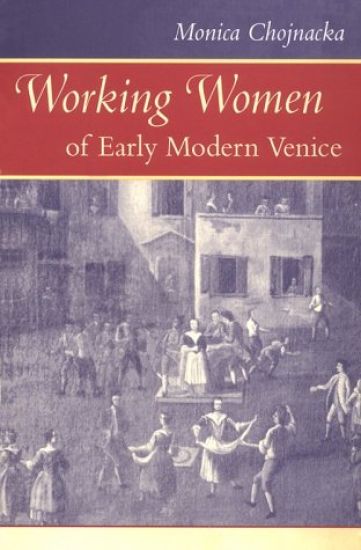
Working Women of Early Modern Venice

Working Women of Early Modern Venice

Monica Chojnacka

Johns Hopkins University Press
2001
sidottu
In this groundbreaking book, Monica Chojnacka argues that the women of early modern Venice occupied a more socially powerful space than traditionally believed. Rather than focusing exclusively on the women of noble or wealthy merchant families, Chojnacka explores the lives of women-unmarried, married, or widowed-who worked for a living and helped keep the city running through their labor, services, and products. Among Chojnacka's surprising findings is the degree to which these working women exercised control over their own lives. Many headed households and even owned their own homes; when necessary, they also took in and supported other women of their families. Some were self-employed, while others had jobs outside the home. They often moved freely about the city to conduct business, and they took legal action in the courts on their own behalf. On a daily basis, Venetian women worked, traveled, and contested obstacles in ways that made the city their own.
Chaucer's Knight's Tale

Chaucer's Knight's Tale

Monica E. McAlpine

University of Toronto Press
1991
sidottu
As the first of the Canterbury Tales, the Knight's Tale attracts special attention, particularly in relation to the overall structure of the work and to the other tales. It has been the subject of a vast body of comment by scholars and lay readers. Monica McAlpine provides access to this material in the first of the Chaucer Bibliographies series to deal with a narrative portion of that author's best-known work. McAlpine includes book-length and chapter-length studies, portions of books and chapters, articles and portions of articles, notes, substantive commentary in editions, study guides, and a few allusions previously unnoticed. Unpublished dissertations are included on a selective basis. Reviews that reflect scholarly debate on the Knight's Tale have also been annotated. The first section of the bibliography covers the various editions and translations of the work published between 1900 and 1985. The second includes backgrounds and general studies, and the third deals with the three major sources. The fourth section provides a chronologically ordered survey of material on the Knight in the General Prologue and the Links. The final section, also chronologically divided, discusses works on the Knight's Tale itself.
Companions of the Peace

Companions of the Peace

Monica Storrs

University of Toronto Press
1999
pokkari
In 1929 a cultured English gentlewoman arrived in the barely settled wilderness of northern British Columbia as an Anglican missionary, intending to assuage her sense of duty by staying for one year. She stayed for twenty-one. The years covered by Monica Storrs' journal entries (1931 - 1939) were at times unbearably hard, the depression compounding what was already a demanding existence. She and the group of women she lived with, the Companions of the Peace, were sent out as 'missionaries of empire.' As the journals progress, Storrs' droll British wit persists but her imperialistic attitude softens as her work draws her into the lives around her. Expanding on the initial mandate to start Sunday schools, foster contact with women, and perform church services, she became involved in assembling libraries, lending money for seed grain, financing medical assistance, and organizing theatrical performances and poetry contests. After her death even the non-British inhabitants of the Peace River district described her as 'one of us.' Helped by the judicious editing of historian Vera Fast, these penetrating journal entries make for an unusually absorbing read, with rare details for scholars of British imperialism, Canadian pioneering, and women's life writing, but with enough story and humour to engage any reader.
Mexico, La Patria

Mexico, La Patria

Monica A. Rankin

University of Nebraska Press
2010
pokkari
During the 1930s Mexico was undergoing a healing process after three decades of revolutionary turmoil and reform. In this climate, the coming of World War II became a major turning point in the legacy of the Mexican Revolution, offering the country a unique opportunity to unite against a common external enemy. The war also thrust the nation into an international forum as Germany and the United States launched propaganda campaigns to win over the Mexican people. In ¡México, la patria! Monica A. Rankin examines the pervasive domestic and foreign propaganda strategies in Mexico during World War II and their impact on Mexican culture, charting the evolution of these campaigns through popular culture, advertisements, art, and government publications throughout the war and beyond. In particular, Rankin shows how World War II allowed the wartime government of Ávila Camacho to justify an aggressive industrialization program following the Mexican Revolution. Finally, tracing how the American government's wartime propaganda laid the basis for a long-term effort to shape Mexican attitudes toward the country's neighbor to the north, ¡México, la patria! reveals the increasing influence of American culture on the development of Mexico's postwar identity.