Kirjojen hintavertailu. Mukana 11 342 296 kirjaa ja 12 kauppaa.

Kirjahaku

Etsi kirjoja tekijän nimen, kirjan nimen tai ISBN:n perusteella.

1000 tulosta hakusanalla Moser Oliver Perry

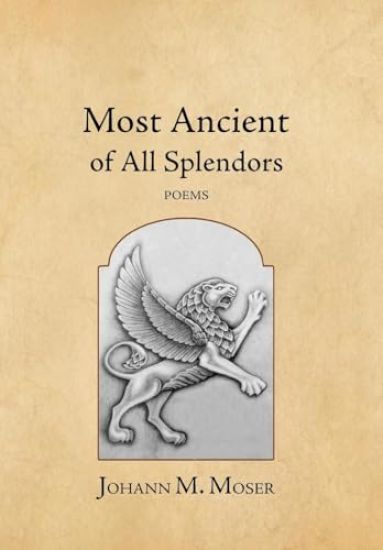
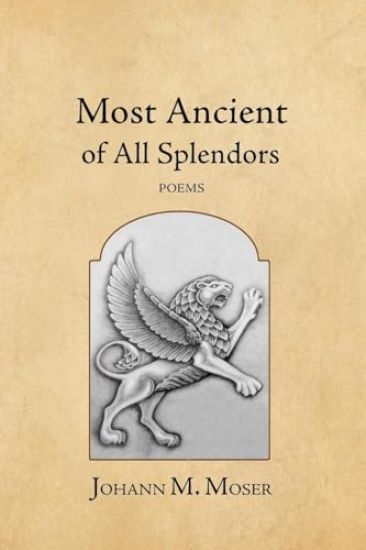
Most Ancient of All Splendors

Most Ancient of All Splendors

Johann M Moser

Diamond Ledge Press
2024
pokkari
As beautiful artifacts of speech, these poems are marked by a delightful radiance and beauty of form. Suffused with delight in the splendor of high culture, the divine, and the most sublime of human virtues, their finely crafted lines regale us with rich tapestries of history and the natural world.Although most are nourished by Western literary traditions (ranging from Greco-Roman antiquity through the Middle Ages and on to our own time), others have been crafted in accordance with the very best Near Eastern, classical Chinese, and even Sanskrit models.Many are grand, regal, and erudite; others are quieter, yet compelling in their tenderness and delicacy. All, however, cry out to be read aloud, to be heard, and to be treasured again and again.
Walking with Christiaan Huygens

Walking with Christiaan Huygens

Tijmen Jan Moser; Enders Anthony Robinson

Springer International Publishing AG
2024
sidottu
Dutch scientist Christiaan Huygens (1629-1695) left an indelible mark on the fields of mathematics, physics, astronomy, and geophysics. Despite his groundbreaking contributions, history has often overlooked his pivotal role. While two of the most famous achievements in physics are Newton’s theory of gravity and Einstein’s general theory of relativity, less well-known is that Huygens provided central elements to these theories. This book stands to correct that deficit. For example, we show how Huygens used symmetry arguments to derive conservation laws for momentum and for energy, and what Einstein later called the principle of equivalence to derive the formula for centrifugal force. In 1689, Huygens visited Newton. Together, they walked the streets of London. Newton had recently finished his masterpiece, Principia, expounding his laws of motion and the law of universal gravitation. Huygens had essentially completed his life’s work by then, building on Archimedes, Leonardo da Vinci, Galileo, Descartes, Fermat, Pascal and his own ingenuity. He had established fame as an instrument maker (telescope, pendulum clock, planetarium). He had invented the 31 tone system. He had pioneered the first principles of remote sensing. He had discovered the rings of Saturn. He had formulated the wave theory of light. What would walking with Christiaan reveal? This book gives the result in nine chapters, namely: spontaneous order, the speed of light, Huygens’ principle, the telescope, the pendulum clock, Huygens-Fresnel principle, special relativity, centrifugal force, and curvature. In addition, there is a chapter titled What Huygens could have written on diffraction, and a chapter titled Huygens and Geophysics. Mentally walking with Christiaan, browsing his collected works — a true treasure trove for puzzle enthusiasts — and rethinking his ideas creates a vivid impression of scientific life in the 17th century, an appreciation that it is remarkably similar to ours, and an understanding of Huygens' significant and lasting contributions to science.
Walking with Christiaan Huygens

Walking with Christiaan Huygens

Tijmen Jan Moser; Enders Anthony Robinson

Springer International Publishing AG
2025
nidottu
Dutch scientist Christiaan Huygens (1629-1695) left an indelible mark on the fields of mathematics, physics, astronomy, and geophysics. Despite his groundbreaking contributions, history has often overlooked his pivotal role. While two of the most famous achievements in physics are Newton’s theory of gravity and Einstein’s general theory of relativity, less well-known is that Huygens provided central elements to these theories. This book stands to correct that deficit. For example, we show how Huygens used symmetry arguments to derive conservation laws for momentum and for energy, and what Einstein later called the principle of equivalence to derive the formula for centrifugal force. In 1689, Huygens visited Newton. Together, they walked the streets of London. Newton had recently finished his masterpiece, Principia, expounding his laws of motion and the law of universal gravitation. Huygens had essentially completed his life’s work by then, building on Archimedes, Leonardo da Vinci, Galileo, Descartes, Fermat, Pascal and his own ingenuity. He had established fame as an instrument maker (telescope, pendulum clock, planetarium). He had invented the 31 tone system. He had pioneered the first principles of remote sensing. He had discovered the rings of Saturn. He had formulated the wave theory of light. What would walking with Christiaan reveal? This book gives the result in nine chapters, namely: spontaneous order, the speed of light, Huygens’ principle, the telescope, the pendulum clock, Huygens-Fresnel principle, special relativity, centrifugal force, and curvature. In addition, there is a chapter titled What Huygens could have written on diffraction, and a chapter titled Huygens and Geophysics. Mentally walking with Christiaan, browsing his collected works — a true treasure trove for puzzle enthusiasts — and rethinking his ideas creates a vivid impression of scientific life in the 17th century, an appreciation that it is remarkably similar to ours, and an understanding of Huygens' significant and lasting contributions to science.
Systems Engineering, Systems Thinking, and Learning

Systems Engineering, Systems Thinking, and Learning

Hubert Anton Moser

Springer International Publishing AG
2013
sidottu
This book focuses on systems engineering, systems thinking, and how that thinking can be learned in practice. It describes a novel analytical framework based on activity theory for understanding how systems thinking evolves and how it can be improved to support multidisciplinary teamwork in the context of system development and systems engineering. This method, developed using data collected over four years from three different small space systems engineering organizations, can be applied in a wide variety of work activities in the context of engineering design and beyond in order to monitor and analyze multidisciplinary interactions in working teams over time. In addition, the book presents a practical strategy called WAVES (Work Activity for a Evolution of Systems engineering and thinking), which fosters the practical learning of systems thinking with the aim of improving process development in different industries. The book offers an excellent resource for researchers and practitioners interested in systems thinking and in solutions to support its evolution. Beyond its contribution to a better understanding of systems engineering, systems thinking and how it can be learned in real-world contexts, it also introduce a suitable analysis framework that helps to bridge the gap between the latest social science research and engineering research.
Systems Engineering, Systems Thinking, and Learning

Systems Engineering, Systems Thinking, and Learning

Hubert Anton Moser

Springer International Publishing AG
2016
nidottu
This book focuses on systems engineering, systems thinking, and how that thinking can be learned in practice. It describes a novel analytical framework based on activity theory for understanding how systems thinking evolves and how it can be improved to support multidisciplinary teamwork in the context of system development and systems engineering. This method, developed using data collected over four years from three different small space systems engineering organizations, can be applied in a wide variety of work activities in the context of engineering design and beyond in order to monitor and analyze multidisciplinary interactions in working teams over time. In addition, the book presents a practical strategy called WAVES (Work Activity for a Evolution of Systems engineering and thinking), which fosters the practical learning of systems thinking with the aim of improving process development in different industries. The book offers an excellent resource for researchers and practitioners interested in systems thinking and in solutions to support its evolution. Beyond its contribution to a better understanding of systems engineering, systems thinking and how it can be learned in real-world contexts, it also introduce a suitable analysis framework that helps to bridge the gap between the latest social science research and engineering research.
Our English friend

Our English friend

Gustav Von Moser; Augustin Daly

Hansebooks
2017
pokkari
Our English friend - A comedy in 4 acts is an unchanged, high-quality reprint of the original edition of 1884. Hansebooks is editor of the literature on different topic areas such as research and science, travel and expeditions, cooking and nutrition, medicine, and other genres. As a publisher we focus on the preservation of historical literature. Many works of historical writers and scientists are available today as antiques only. Hansebooks newly publishes these books and contributes to the preservation of literature which has become rare and historical knowledge for the future.
The Passing Regiment

The Passing Regiment

Gustav Von Moser; Augustin Daly

Hansebooks
2017
pokkari
The Passing Regiment - A comedy of the day, in five acts is an unchanged, high-quality reprint of the original edition of 1884. Hansebooks is editor of the literature on different topic areas such as research and science, travel and expeditions, cooking and nutrition, medicine, and other genres. As a publisher we focus on the preservation of historical literature. Many works of historical writers and scientists are available today as antiques only. Hansebooks newly publishes these books and contributes to the preservation of literature which has become rare and historical knowledge for the future.