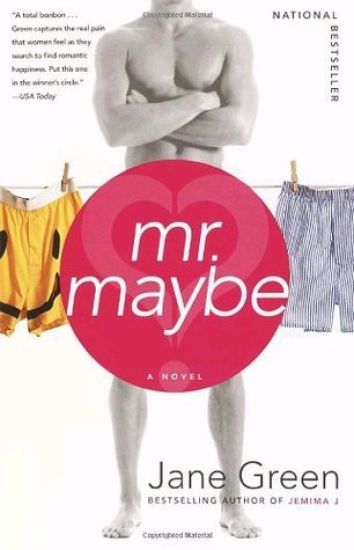
To Libby Mason, Mr. Right has always meant Mr. Rich. A twenty-seven-year-old publicist, she's barely able to afford her fashionable and fabulous lifestyle, and often has to foot the bill for dates with Struggling Writer Nick, a sexy but perpetually strapped-for-cash guy she's dating (no commitments-really). So when Ed, Britain's wealthiest but stodgiest bachelor, enters the picture, her idea of the fairy-tale romance is turned on its head. Libby soon finds herself weighing the advantages of Nick's sexual prowess and tender heart against Ed's luxurious lifestyle and unlimited retail therapy. But when the diamond shopping commences, Libby is forced to realize that the time for "maybe" is up. Taking romantic comedy to a hip, sparkling new level, Mr. Maybe is a classic tale of what happens to one girl when her heart and her head aren't looking for the same thing. With a laugh a minute and a heroine whose struggles in the dating jungle will remind you of your own, Mr. Maybe is a story that will leave you smitten.
The issues involved in these trials included the right of universities to discipline their professors, the degree of political control over the appointment and methodology of teachers, the preservation of factional advantage through such appointments, and the nature of the relationship between a state church and the public institutions responsible for educating its clergy. Skoczylas shows that the effect of the Enlightenment on Scottish Calvinism, which required adaptation to new developments in theology and pedagogy, was an important sub-text to the trials: the compromise reached at the end of the second led indirectly to the first secession of ultra-orthodox ministers from the Church of Scotland. More significantly, the Church became increasingly open to innovative thought so that enlightened ministers of the latter half of the century could debate matters forbidden to Simson. Mr Simson's Knotty Case breaks new ground, offering the first analysis of many ecclesiastical and political sources. Skoczylas shows that although Simson was in many ways a conservative man, despite his innovative pedagogy, the liberalizing effects of his cases thrust Scotland from the obscurity of Covenanting orthodoxy into the clarity of the Enlightenment.
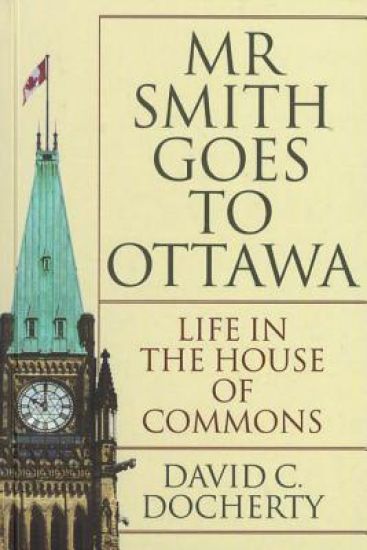
In Mr Smith Goes to Ottawa, the author compares the 34th(1988-93) and the 35th (1993-97) Parliaments. The former, the secondconsecutive Conservative-led majority government, could not appear moredifferent from the Liberal one which followed. Over two-thirds of itsmembers were rookies. More significantly, over one-third representedtwo new political parties - the Bloc Quebecois and the Reformparty. Yet, for all this change, Docherty shows that the new agendas of the35th Parliament have not translated into changes in the legislativebehaviour or socialization of new members. Unlike Jimmy Stewart inWashington, the majority of the men and women who go to Ottawa end upaccepting a limited policy role.
From the author of The Matzah Ball comes a pitch-perfect romcom following a third-generation Jewish matchmaker who unwittingly finds her own search for love thrust into the spotlight...The perfect Jewish husband should be: A doctor or lawyer (preferably a doctor) Baggage-free (no previous marriages, no children) And of course--he must be JewishAs the creator and CEO of the popular Jewish dating app J-Mate, matchmaker Dara Rabinowitz knows the formula for lasting love--at least, for everyone else. When it comes to her own love life, she's been idling indefinitely. Until her beloved bubbe shares Dara's checklist for "The Perfect Jewish Husband" on national television and charming news anchor Chris Steadfast proposes they turn Dara's search into must-see TV.As a non-Jewish single dad, Chris doesn't check any of Dara's boxes. But her hunt for Mr. Perfect is the ratings boost his show desperately needs. If only Chris could ignore his own pesky attraction to Dara--a task much easier said than done when Dara starts questioning if "perfect on paper" can compete with how hard she's falling for Chris..."A warm, heartfelt ode to self-acceptance, honesty, and tight-knit Jewish communities...a true pleasure to read."--Olivia Dade, author of Spoiler Alert, on The Matzah Ball
Celebrated film director Frank Capra was a central architect of the "feel good" movie genre now known as populism, which celebrates people, families, second chances, and other traditional American icons such as small town or pastoral life and baseball. Capra developed his own brand of populism by interweaving traditional values of the genre with a younger, more vulnerable hero starting with Mr. Deeds Goes to Town in 1936. The result, Capraesque populism, has had a significant influence on American pop culture in general and forms a small but important subgenre of baseball movie. This book examines eight of these Capraesque baseball films, starting with the all-important Pride of the Yankees (1942), which one admiring critic has called "Mr. Deeds Goes to Yankee Stadium." An introduction provides an overview of baseball and populism. Individual chapters are devoted to the populist legacy from Will Rogers (Capra's mentor) to Capra, The Pride of the Yankees, The Stratton Story, Angels in the Outfield, The Natural, Bull Durham, Field of Dreams, Frequency and The Rookie.
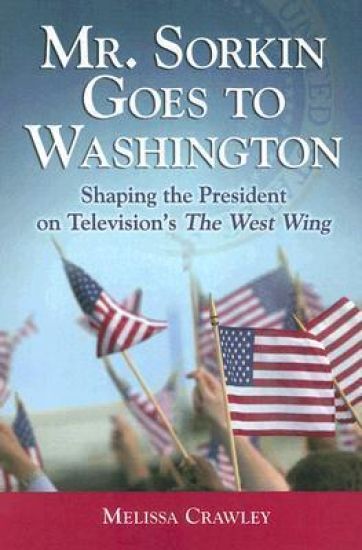
Before the unprecedented televised presidential debates of 1960, most Americans were able to relate to their leaders in little more than an historical context. In the era of televised elections, however, the media have allowed Americans to witness the paternal, moral and intellectual qualities of their president up close. Television has been so critical to this process of political socialization that, for many Americans, the televised image of the president is the president. As the acclaimed television drama The West Wing demonstrates, fictional representations of the presidency can also be significant civic forces. This book examines how film and television drama contribute to shaping the presidency and the way most Americans understand it, and particularly the processes of political education. The text discusses The West Wing's didactic potential, its representation of White House politics, and its depiction of race and gender, with commentary on how fictional representations of the presidency become important elements of American political consciousness.
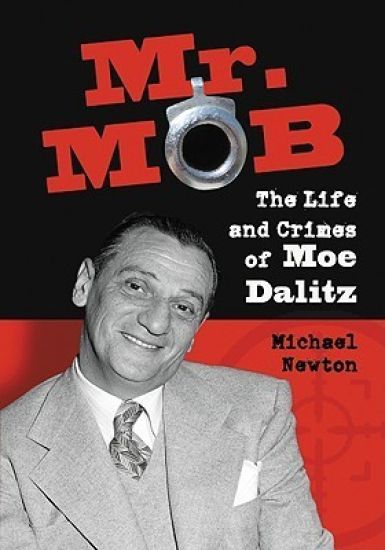
This biography tells the story of America's most secretive and most successful mobster, Morris 'Moe' Dalitz. As a major architect of the United States' national crime syndicate, Dalitz was active in various fields of organized crime from 1918 until his death, all while spinning a web of myth and mock-respectability around himself so dense that even now, two decades after his demise, most journalists mistake the legend for reality. He is remembered as the mobster who never spent a night in jail, or even went to trial, despite a life of crime that spanned over three-quarters of a century. From Prohibition-era bootlegging to the Reagan years, no other individual was present at so many pivotal events in gangland history. In short, it's impossible to fully understand the modern Mob without first knowing about Dalitz, his career, and the cunning publicity campaign that transformed his image from thug to that of a revered philanthropist. Based on years of research in Dalitz's hometown of Las Vegas, as well as interviews with attorneys, journalists, government officials, local law enforcement officers and federal agents, this exhaustive biography tells the true story of Dalitz's life and the syndicate that he and like-minded individuals built from scratch, seeing the promise of America and making it their own.
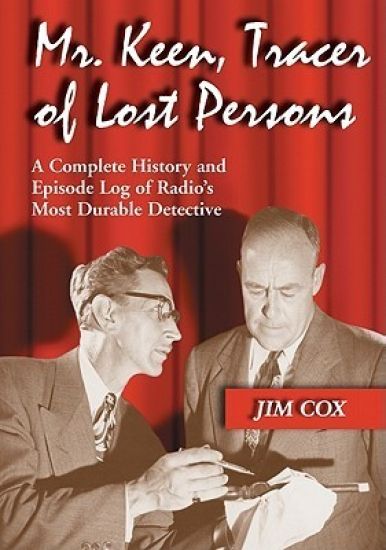
That "kindly old investigator," Mr. Keen, sought missing persons and unraveled crimes longer than any other fictional detective ever heard or seen on the air. For 18 years (1937-1955) and 1690 nationwide broadcasts, Keen and his faithful assistant Mike Clancy kept listeners coming back for more. The nearest competitor, Nick Carter, Master Detective, ran for 726 broadcasts. This definitive history recounts the actors and creators behind the series, the changes the show underwent, and the development of the Mr. Keen character. A complete episode guide details all of the program's 1,690 broadcasts.
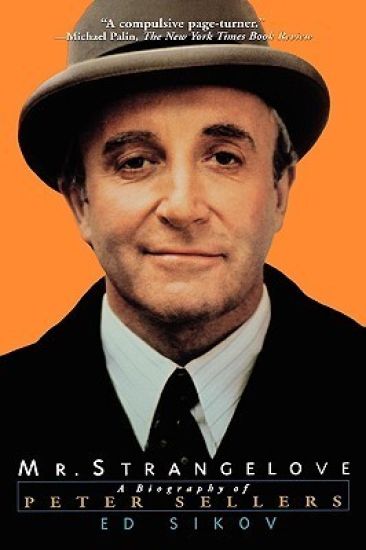
A lively portrait of the acclaimed actor sheds new light on the origins of Sellers's comedic style of acting, describing his lonely childhood, his service with the RAF, his relationships with costars and directors, his four failed marriages and short engagement to Liza Minnelli, and other aspects of his troubled and eccentric life. 30,000 first printing.
A lively portrait of the acclaimed actor sheds new light on the origins of Sellers's comedic style of acting, describing his lonely childhood, his service with the RAF, his relationships with costars and directors, his four failed marriages and short engagement to Liza Minnelli, and other aspects of his troubled and eccentric life. Reprint. 15,000 first printing.
From one of Australia's most acclaimed authors, a dazzling and deeply imagined exploration of ambition, natural marvels, and scientific discovery, and one of history's most significant crises of faith. As a boy of thirteen, Syms Covington leaves his home in Bedford and goes to sea, passing into manhood as he sails the world, surveying Patagonia, and losing his virginity in the Pampas. Aboard the HMS Beagle, he enters the service of Charles Darwin as an energetic and precocious fifteen-year-old, and in the course of their voyages together he shoots and collects hundreds of specimens for his "gent," specimens that become fundamental to the formulation of Darwin's theory of evolution. Now a crusty, eccentric, near-deaf old man, Covington has settled in Australia and is awaiting the arrival of the first copy of On the Origin of Species. Beset by guilt over participating in a work that will shake the human worldview to its foundations, he nonetheless wonders what part of himself might be reflected in Darwin's oeuvre. Mr. Darwin's Shooter captures its time with rare and dazzling skill, evoking an unforgettable--but forgotten--man at a watershed moment in history.
From the Booker Prize-winning author of Girl, Woman, Other, which has sold over 250,000 copies in Grove's editions, a groundbreaking, hilarious novel set in London following two older gay Caribbean men reckoning with being closeted in a rapidly changing world"Bernardine Evaristo can take any story from any time and turn it into something vibrating with life."--Ali SmithOne of Booker Prize winner Bernardine Evaristo's most highly celebrated novels, Mr. Loverman follows a man named Barrington Jedidiah Walker, who is seventy-four and leads a double life. Born and bred in Antigua, he has lived in Hackney, London, for years. Flamboyant and wise-cracking, with dapper taste in retro suits and a fondness for Shakespeare, Barrington is a husband, father, grandfather―and also secretly gay, lovers with his childhood friend, Morris.Barry's deeply religious and disappointed wife, Carmel, thinks he sleeps with other women rather than men. When their marriage goes into meltdown, Barry wants to divorce Carmel and live with Morris, but after a lifetime of fear and deception, will he manage to break away? With the wit and humanity that characterized Girl, Woman, Other, Mr. Loverman explodes cultural myths and shows the extent of what can happen when people fear the consequences of being true to themselves.
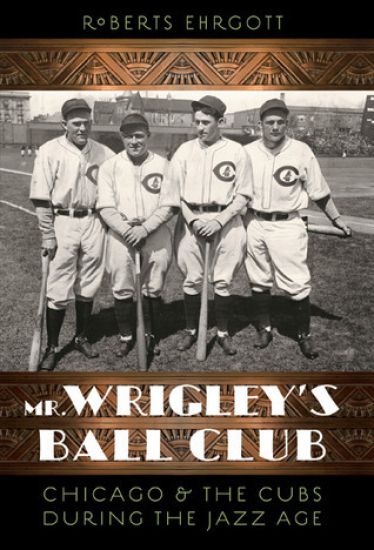
Chicago in the Roaring Twenties was a city of immigrants, mobsters, and flappers with one shared passion: the Chicago Cubs. It all began when the chewing-gum tycoon William Wrigley decided to build the world's greatest ball club in the nation's Second City. In this Jazz Age center, the maverick Wrigley exploited the revolutionary technology of broadcasting to attract eager throngs of women to his renovated ballpark.Mr. Wrigley's Ball Club transports us to this heady era of baseball history and introduces the team at its crazy heart—an amalgam of rakes, pranksters, schemers, and choirboys who take center stage in memorable successes, equally memorable disasters, and shadowy intrigue. Readers take front-row seats to meet Grover Cleveland Alexander, Rogers Hornsby, Joe McCarthy, Lewis "Hack" Wilson, Gabby Hartnett. The cast of characters also includes their colorful if less-extolled teammates and the Cubs' nemesis, Babe Ruth, who terminates the ambitions of Mr. Wrigley's ball club with one emphatic swing.
NEW YORK TIMES BESTSELLER - Beloved author Debbie Macomber celebrates the most wonderful time of the year in this heartwarming Christmas novel of romance, hope, and the comforts of home--coming soon as a Hallmark Channel original movie Harry Mills is a guardian angel on a mission: help twenty-four-year-old Addie Folsom get her life back on track--and, if the right moment strikes, help her find love. Posing as a teacher at a local college in Tacoma, Washington, Harry is up to the task, but not even he can predict the surprises that lay in store. After trying to make it on her own, Addie has returned home to Tacoma for the holidays, but this time she plans to stay for good, enrolling in the local community college to earn her degree. What she doesn't plan to do is run into Erich Simmons. Addie and her next-door neighbor, Erich, are like night and day. Growing up, he was popular and outgoing while she was rebellious and headstrong, and he never missed an opportunity to tease her. Now she intends to avoid him entirely, yet when they're suddenly forced to spend Christmas together, Addie braces for trouble. Perhaps it's the spirit of the season or the magic of mistletoe, but Addie and Erich soon find they have more in common than they thought--and that two people who seem so wrong for each other may actually be just right. With a little prompting from a certain angelic teacher, the two are in for a holiday miracle they'll never forget. Praise for Mr. Miracle "Macomber's Christmas novels are always something to cherish. Mr. Miracle is a sweet and innocent story that will lift your spirits during the holidays and throughout the year. Celebrating the comforts of home, family traditions, forgiveness and love, this is the perfect, quick Christmas read."--RT Book Reviews " Macomber] writes about romance, family and friendship with a gentle, humorous touch."--Tampa Bay Times "Macomber spins another sweet, warmhearted holiday tale that will be as comforting to her fans as hot chocolate on Christmas morning."--Kirkus Reviews "This gentle, inspiring romance will be a sought-after read."--Library Journal "Macomber cheerfully presents a holiday story that combines the winsomeness of a visiting angel (similar to Clarence from It's a Wonderful Life) with the more poignant soulfulness of A Christmas Carol to bring to life a memorable reading experience."--Bookreporter
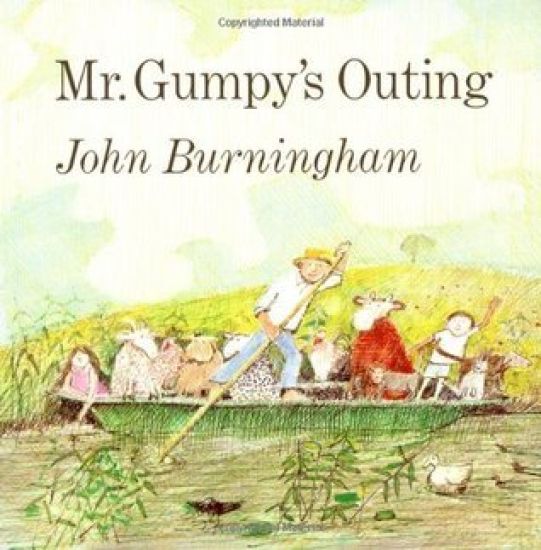
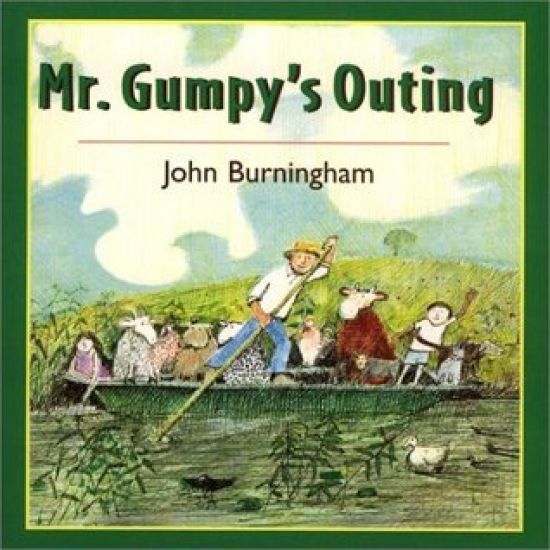
At last, a board book edition of this beloved preschool story. One sunny day Mr. Gumpy decides to take a ride in his small boat. It's a perfect idea for a lovely summer day, and soon he is joined by children, a rabbit, a cat, a pig, and a host of other friends. But when the goat kicks, the chickens flap, the dog teases the cat and the children squabble -- the boat tips into the water and everyone tumbles out. No one minds getting wet on such a nice day, though, especially since Mr. Gumpy invites everyone to his house for tea. A colorful new design and sturdy board book format bring this beloved classic to a whole new audience of children. Mr. Gumpy's Outing is the winner of the 1972 Boston Globe - Horn Book Award for Picture Books and a 1971 New York Times Book Review Best Illustrated Book of the Year.
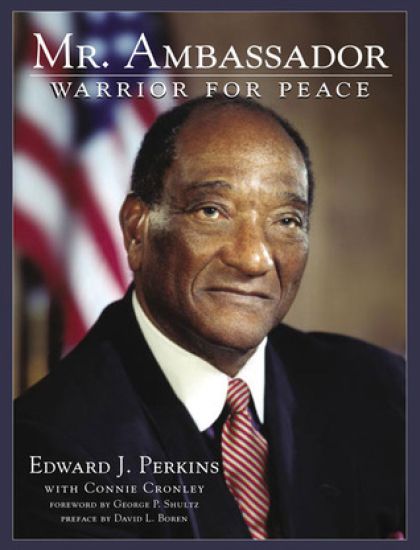
""Apartheid South Africa was on fire around me.""So begins the memoir of Career Foreign Service Officer Edward J. Perkins, the first black United States ambassador to South Africa. In 1986, President Ronald Reagan gave him the unparalleled assignment: dismantle apartheid without violence.As he fulfilled that assignment, Perkins was scourged by the American press, despised by the Afrikaner government, hissed at by white South African citizens, and initially boycotted by black South African revolutionaries, including Archbishop Desmond Tutu. His advice to President-elect George H. W. Bush helped modify American policy and hasten the release of Nelson Mandela and others from prison.Perkins's up-by-your-bootstraps life took him from a cotton farm in segregated Louisiana to the white elite Foreign Service, where he became the first black officer to ascend to the top position of director general.This is the story of how one man turned the page of history.
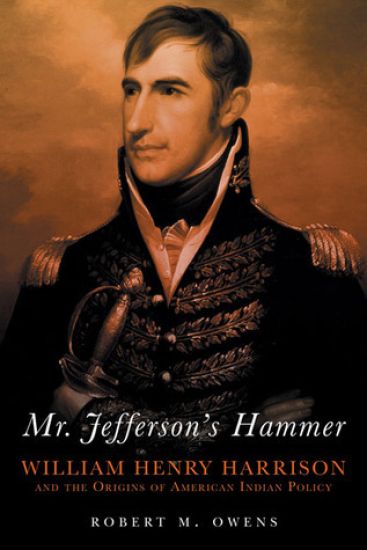
Often remembered as the president who died shortly after taking office, William Henry Harrison remains misunderstood by most Americans. Before becoming the ninth president of the United States in 1841, Harrison was instrumental in shaping the early years of westward expansion. Robert M. Owens now explores that era through the lens of Harrison's career, providing a new synthesis of his role in the political development of Indiana Territory and in shaping Indian policy in the Old Northwest.Owens traces Harrison's political career as secretary of the Northwest Territory, territorial delegate to Congress, and governor of Indiana Territory, as well as his military leadership and involvement with Indian relations. Thomas Jefferson, who was president during the first decade of the nineteenth century, found in Harrison the ideal agent to carry out his administration's ruthless campaign to extinguish Indian land titles.More than a study of the man, Mr. Jefferson's Hammer is a cultural biography of his fellow settlers, telling how this first generation of post-Revolutionary Americans realized their vision of progress and expansionism. It surveys the military, political, and social world of the early Ohio Valley and shows that Harrison's attitudes and behavior reflected his Virginia background and its eighteenth-century notions as much as his frontier milieu.To this day, we live with the echoes of Harrison's proclamations, the boundaries set by his treaties, and the ramifications of his actions. Mr. Jefferson's Hammer offers a much needed reappraisal of Harrison's impact on the nation's development and key lessons for understanding American sentiments in the early republic.