Kirjojen hintavertailu. Mukana 11 342 296 kirjaa ja 12 kauppaa.

Kirjahaku

Etsi kirjoja tekijän nimen, kirjan nimen tai ISBN:n perusteella.

1000 tulosta hakusanalla Naemi Fast

5-Minute Bible Studies for Women

5-Minute Bible Studies for Women

Naomi Schmidt

Northwestern Publishing House
2025
nidottu
Looking to get into God's Word but don't know where to start? 5-Minute Bible Studies: For Women makes the Bible accessible with brief but intentional moments to study Scripture--specifically, Christ-centered encouragement from the gospel of Luke. Written by women for women with any amount of Bible knowledge, these short devotions based on passages from Luke are rich with applications for daily life. Take five minutes each day to learn more about Jesus, his life, and his teachings--and what they all mean for you. Meditate on the reflection or application questions and follow the prayer prompts to let Scripture linger in your heart and mind throughout your day. Whether by yourself or with other Christian women, reading this book will be the best five minutes of truth you'll hear all day. It will also equip you to share these gospel truths with others
Ideas for Librarians Who Teach

Ideas for Librarians Who Teach

Naomi Lederer

Scarecrow Press
2005
nidottu
Containing nearly one thousand individual ideas and bits of advice for teaching, Ideas for Librarians Who Teach is tailored primarily to librarians, but most of the suggestions put forth can be applied to anyone who will be getting up in front of a group to teach (e.g. teachers, business trainers, workshop leaders, craft instructors). If someone has some knowledge or skill to share, this book will help him or her teach it with confidence. Chapters cover diverse topics that range from preparing for a session to looking over the classroom, and from dealing with questions to using visuals, Web pages, and handouts. There are suggestions for teaching audiences with different learning styles as well as teaching foreign students (and vice versa). Group learning ideas and practical suggestions for what to put on feedback forms are also included. Promoting library instruction, teaching via distance education, dealing with disruptive students, and coping with burnout are addressed with applicable recommendations. There is an extensive bibliography and recommended resources throughout for additional or more detailed descriptions of some of the ideas. Also, example syllabi and a workshop outline are provided as appendixes. Whether using this book as a base for a semester-long course or for a workshop on teaching, librarians who teach, or who are about to start teaching, will find this book very helpful. Every academic, public, school, and corporate library should have this book.
The Pinochet Effect

The Pinochet Effect

Naomi Roht-Arriaza

University of Pennsylvania Press
2006
pokkari
The 1998 arrest of General Augusto Pinochet in London and subsequent extradition proceedings sent an electrifying wave through the international community. This legal precedent for bringing a former head of state to trial outside his home country signaled that neither the immunity of a former head of state nor legal amnesties at home could shield participants in the crimes of military governments. It also allowed victims of torture and crimes against humanity to hope that their tormentors might be brought to justice. In this meticulously researched volume, Naomi Roht-Arriaza examines the implications of the litigation against members of the Chilean and Argentine military governments and traces their effects through similar cases in Latin American and Europe. Roht-Arriaza discusses the difficulties in bringing violators of human rights to justice at home, and considers the role of transitional justice in transnational prosecutions and investigations in the national courts of countries other than those where the crimes took place. She traces the roots of the landmark Pinochet case and follows its development and those of related cases, through Spain, the United Kingdom, elsewhere in Europe, and then through Chile, Argentina, Mexico, and the United States. She situates these transnational cases within the context of an emergent International Criminal Court, as well as the effectiveness of international law and of the lawyers, judges, and activists working together across continents to make a new legal paradigm a reality. Interviews and observations help to contextualize and dramatize these compelling cases. These cases have tremendous ramifications for the prospect of universal jurisdiction and will continue to resonate for years to come. Roht-Arriaza's deft navigation of these complicated legal proceedings elucidates the paradigm shift underlying this prosecution as well as the traction gained by advocacy networks promoting universal jurisdiction in recent decades.
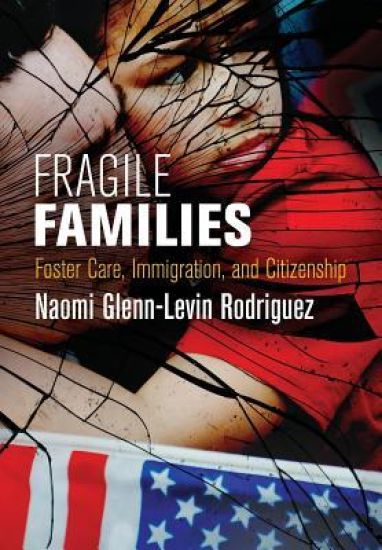
Fragile Families

Fragile Families

Naomi Glenn-Levin Rodriguez

University of Pennsylvania Press
2017
sidottu
In the past decade, debates over immigrant rights and family rights, and accompanying concerns over birthright citizenship, have taken center stage in popular media and mainstream political debates. These debates, however, frequently overlook the role of the public child welfare system in the United States-the agency charged with protecting children and maintaining the integrity of families. Based on research conducted in the San Diego-Tijuana region between 2008 and 2012, Fragile Families tells the stories of children, parents, social workers, and legal actors enmeshed in the child welfare system, and sheds light on the particular challenges faced by the children of detained and deported non-U.S. citizen parents who are simultaneously caught up in the immigration system in this border region. Many families come into contact with child welfare services because of the precariousness of their lives-unsafe housing, unstable employment, and the conditions of violence, drug use, and domestic violence made visible by the heightened police presence in impoverished communities. Naomi Glenn-Levin Rodriguez examines the character of child welfare decision-making processes and how discretionary decisions constitute the central avenue through which race, citizenship, and other cultural processes inflect child welfare practice in a manner that disproportionately impacts Latina/o families-both undocumented and U.S. citizens. Drawing on ethnographic fieldwork to look at how immigration enforcement and child welfare play central roles in the ongoing production of citizenship, race, and national belonging, Fragile Families focuses on the everyday experiences of Latina/o families whose lives are shaped at the nexus of child welfare services and immigration enforcement.
Plate Tectonics

Plate Tectonics

Naomi Oreskes

Westview Press Inc
2003
pokkari
Can anyone today imagine the earth without its puzzle-piece construction of plate tectonics? The very term, "plate tectonics," coined only thirty-five years ago, is now part of the vernacular, part of everyone's understanding of the way the earth works.The theory, research, data collection, and analysis that came together in the late 1960's to constitute plate tectonics is one of the great scientific breakthroughs of the 20th century. Scholarly books have been written about tectonics, but none by the key scientists-players themselves. In Plate Tectonics , editor Naomi Oreskes has assembled those scientists who played crucial roles in developing the theory to tell - for the first time, and in their own words - the stories of their involvement in the extraordinary confrimation of the theory.The book opens with an overview of the history of plate tectonics, including in-context definitions of the key terms that are discussed throughout the book. Oreskes explains how the forerunners of the theory, Wegener and du Toit, raised questions that were finally answered thirty years later, and how scientists working at the key academic institutions - Cambridge and Princeton Universities, Columbia University's Lamont Doherty Geological Observatory, and the University of California-San Diego's Scripps Institution of Oceanography - competed and collaborated until the theory coalesced.
Dirt and Disease

Dirt and Disease

Naomi Rogers

Rutgers University Press
1992
nidottu
"Will have an enthusiastic audience among historians of medicine who are familiar, for the most part, only with later twentieth-century efforts to combat polio." --Allan M. Brandt, University of North Carolina Dirt and Disease is a social, cultural, and medical history of the polio epidemic in the United States. Naomi Rogers focuses on the early years from 1900 to 1920, and continues the story to the present. She explores how scientists, physicians, patients, and their families explained the appearance and spread of polio and how they tried to cope with it. Rogers frames this study of polio within a set of larger questions about health and disease in twentieth-century American culture. In the early decades of this century, scientists sought to understand the nature of polio. They found that it was caused by a virus, and that it could often be diagnosed by analyzing spinal fluid. Although scientific information about polio was understood and accepted, it was not always definitive. This knowledge coexisted with traditional notions about disease and medicine. Polio struck wealthy and middle-class children as well as the poor. But experts and public health officials nonetheless blamed polio on a filthy urban environment, bad hygiene, and poverty. This allowed them to hold slum-dwelling immigrants responsible, and to believe that sanitary education and quarantines could lessen the spread of the disease. Even when experts acknowledged that polio struck the middle-class and native-born as well as immigrants, they tried to explain this away by blaming the fly for the spread of polio. Flies could land indiscriminately on the rich and the poor. In the 1930s, President Franklin Delano Roosevelt helped to recast the image of polio and to remove its stigma. No one could ignore the cross-spread of the disease. By the 1950s, the public was looking to science for prevention and therapy. But Rogers reminds us that the recent history of polio was more than the history of successful vaccines. She points to competing therapies, research tangents, and people who died from early vaccine trials.
Against the Unspeakable

Against the Unspeakable

Naomi Mandel

University of Virginia Press
2007
sidottu
In the wake of World War II, the Nazi genocide of European Jews has come to stand for ""the unspeakable,"" posing crucial challenges to the representation of suffering, the articulation of identity, and the practice of ethics in an increasingly multinational and multicultural world. In this book, Naomi Mandel argues against the ""unspeakable"" as any kind of inherent quality of such an event, insisting that the term is a rhetorical tactic strategically employed to further specific cultural and political agendas. While claiming to preserve the uniqueness, sanctity, and inviolability of human suffering, the author writes, the assumption that suffering is unspeakable works to silence and negate the suffering human body and finally enables us to forget our own vulnerability to suffering. Discussing a variety of texts such as Toni Morrison's ""Beloved"", Steven Spielberg's ""Schindler's List"", and William Styron's ""Confessions of Nat Turner"", Mandel asks: What does the evocation of the limits of language enable writers, authors, and critics to do? With the goal of reconciling language and corporeality and integrating experience into the economy of language, community, identity, and ethics, she shows how, when, and why the term ""unspeakable"" is used. Mandel draws on critical theory, literary analysis, and film studies to offer a paradigm of reading that will enable the crucial work on comparative atrocities and the representation of suffering to move beyond the impasse of ""unspeakability."" Her book will appeal to scholars in the study of trauma and genocide, anti-Semitism and racism, as well as in literary, cultural, and comparative ethnic studies.
Against the Unspeakable

Against the Unspeakable

Naomi Mandel

University of Virginia Press
2007
sidottu
In the wake of World War II, the Nazi genocide of European Jews has come to stand for ""the unspeakable,"" posing crucial challenges to the representation of suffering, the articulation of identity, and the practice of ethics in an increasingly multinational and multicultural world. In this book, Naomi Mandel argues against the ""unspeakable"" as any kind of inherent quality of such an event, insisting that the term is a rhetorical tactic strategically employed to further specific cultural and political agendas. While claiming to preserve the uniqueness, sanctity, and inviolability of human suffering, the author writes, the assumption that suffering is unspeakable works to silence and negate the suffering human body and finally enables us to forget our own vulnerability to suffering. Discussing a variety of texts such as Toni Morrison's ""Beloved"", Steven Spielberg's ""Schindler's List"", and William Styron's ""Confessions of Nat Turner"", Mandel asks: What does the evocation of the limits of language enable writers, authors, and critics to do? With the goal of reconciling language and corporeality and integrating experience into the economy of language, community, identity, and ethics, she shows how, when, and why the term ""unspeakable"" is used. Mandel draws on critical theory, literary analysis, and film studies to offer a paradigm of reading that will enable the crucial work on comparative atrocities and the representation of suffering to move beyond the impasse of ""unspeakability."" Her book will appeal to scholars in the study of trauma and genocide, anti-Semitism and racism, as well as in literary, cultural, and comparative ethnic studies.
Disappear Here

Disappear Here

Naomi Mandel

Ohio State University Press
2015
pokkari
Generation X, comprised of people born between 1960 and 1980, is a generation with no Great War or Depression to define it. Dismissed as apathetic slackers and detached losers, Xers have a striking disregard for the causes and isms that defined their Boomer parents. In Disappear Here: Violence after Generation X, Naomi Mandel argues that this characterization of Generation X can be traced back to changing experiences and representations of violence in the late twentieth century. Examining developments in media, philosophy, literature, and politics in the years Xers were coming of age, Mandel demonstrates that Generation X s unique attitude toward violence was formed by developments in home media, personal computing, and reality TV. This attitude, Mandel contends, is key to understanding our current world of media ubiquity, online activism, simulated sensation, and jihad. With chapters addressing both fictional and filmic representations of violence, Mandel studies the work of Bret Easton Ellis, Chuck Palahniuk, Claire Messud, Jess Walter, and Jonathan Safran Foer. A critical and conceptual tour de force, Disappear Here sets forth a new, and necessary, approach to violence, the real, and real violence for the twenty-first century. "
Making the "America of Art"

Making the "America of Art"

Naomi Z Sofer

OHIO STATE UNIVERSITY PRESS
2021
pokkari
By the end of the 19th century it had become possible for American women to identify themselves as serious Artists. This was a relatively new phenomenon, one that became possible only after American women writers had dismantled the conceptual frameworks that had authorized their artistic production since the early days of the Republic.Making the "America of Art" demonstrates that beginning in the 1850s, women writers challenged the terms of the Scottish Common Sense philosophy, which had made artistic endeavors acceptable in the new Republic by subordinating aesthetic motivation to moral and educational goals. Harriet Beecher Stowe and Augusta Jane Evans drew on Ruskin to argue for the creation of a religiously based national aesthetic. In the postbellum years Louisa May Alcott, Rebecca Harding Davis, Elizabeth Stuart Phelps, and Constance Fenimore Woolson continued the process in a series of writings that revolved around three central areas of concern: the place of the popular in the realm of high art; the role of the genius; and the legacy of the Civil War.Sofer significantly revises the history of 19th-century American women's authorship by detailing the gradual process that produced women writers wholly identified with literary high culture at the century's end. Sofer argues that, counter to conventional wisdom, American women writers produced a large body of theoretical writing on the central aesthetic questions of the day. Although the writers Sofer studies were finally unable to construct viable new models for women's artistic production, their attempts to do so are an essential piece of American literary history.
You Are My Joy and Pain

You Are My Joy and Pain

Naomi Long Madgett

Wayne State University Press
2020
nidottu
You Are My Joy and Pain is Naomi Long Madgett's latest and possibly most endearing poetry collection. Bill Harris, a 2011 Kresge Foundation Eminent Artist, said of the book, "Even with the evidence of over a half-century or more of first-rate poetic artistry by Madgett, this collection is a breath-arresting surprise and delight. Poem-by-poem and section-by-section amaze. Each poem in the collection is a master class in technique and in her ability to transpose an idea into a tightly composed example of the craft of poetry".You Are My Joy and Pain receives its name from the Billie Holiday song "Don't Explain" and is divided into three parts. The first part, "A Promise of Sun", contains fourteen poems relating to the hopeful and joyful beginning of a new relationship. The second part, "Trinity: A Dream Sequence", consists of twenty poems with religious imagery and encompasses both the beginning and the end of a relationship. The third part, "Stormy Weather", includes thirty-two poems that relate to the heartbreaking experience of a love gone wrong.These are not love poems in the abstract-the richness with which Madgett writes hints at the firsthand experience of a lifetime of loving. While several anthologies of love poems exist in the world, it is rare to find a single-author collection that so closely examines love in all of its messy and beautiful layers. Readers will identify with the hope and disappointment that Madgett presents in these poems.
7 Steps to Raising a Bilingual Child
The best time to learn a second language is as a child. During childhood, the brain is more receptive to language learning than at any other time in life. Aware that a second language can enrich their child's understanding of other cultures and bring future job opportunities in a world drawn ever closer by globalization, many parents today are motivated to raise their children bilingual. This book helps parents in both monolingual and multilingual families determine and achieve their bilingual goals for their child, whether those goals are understanding others, the ability to speak a second language, reading and/or writing in two languages, or some combination of all of these. The authors explain how the brain learns more than one language, explode common myths, address frequently asked questions, and reveal an array of resources available to families. Packed with insightful anecdotes and powerful strategies, this is a one-of-a-kind guidebook for those seeking to provide their children with a uniquely valuable experience.
Test Tube Families

Test Tube Families

Naomi R. Cahn

New York University Press
2009
sidottu
The birth of the first test tube baby in 1978 focused attention on the sweeping advances in assisted reproductive technology (ART), which is now a multi-billion-dollar business in the United States. Sperm and eggs are bought and sold in a market that has few barriers to its skyrocketing growth. While ART has been an invaluable gift to thousands of people, creating new families, the use of someone else's genetic material raises complex legal and public policy issues that touch on technological anxiety, eugenics, reproductive autonomy, identity, and family structure. How should the use of gametic material be regulated? Should recipients be able to choose the "best" sperm and eggs? Should a child ever be able to discover the identity of her gamete donor? Who can claim parental rights? Naomi R. Cahn explores these issues and many more in Test Tube Families, noting that although such questions are fundamental to the new reproductive technologies, there are few definitive answers currently provided by the law, ethics, or cultural norms. As a new generation of "donor kids" comes of age, Cahn calls for better regulation of ART, exhorting legal and policy-making communities to cease applying piecemeal laws and instead create legislation that sustains the fertility industry while simultaneously protecting the interests of donors, recipients, and the children that result from successful transfers.
What the Rabbis Said

What the Rabbis Said

Naomi W. Cohen

New York University Press
2008
sidottu
What the Rabbis Said examines a relatively unexplored facet of the rich social history of nineteenth-century American Jews. Based on sources that have heretofore been largely neglected, it traces the sermons and other public statements of rabbis, both Traditionalists and Reformers, on a host of matters that engaged the Jewish community before 1900. Reminding the reader of the complexities and diversity that characterized the religious congregations in nineteenth-century America, Cohen offers insight into the primary concerns of both the religious leaders and the laity—full acculturation to American society, modernization of the Jewish religious tradition, and insistence on the recognized equality of a non-Christian minority. She also discusses the evolution of denominationalism with the split between Traditionalism and Reform, the threat of antisemitism, the origins of American Zionism, and interreligious dialogue. The book concludes with a chapter on the professionalization of the rabbinate and the legacy bequeathed to the next century. On all those key issues rabbis spoke out individually or in debates with other rabbis. From the evidence presented, the congregational rabbi emerges as a pioneer, the leader of a congregation, as well as spokesman for the Jews in the larger society, forging an independence from his European counterparts, and laboring for the preservation of the Jewish faith and heritage in an unfamiliar environment.
Jews in Soviet Union

Jews in Soviet Union

Naomi Levine

New York University Press
1990
pokkari
The last five years have brought such extraordinary changes to Germany and Europe as to make the previous forty years of Cold War existence seem deceptively placid and well- ordered by comparison. The collapse of communist rule in East Germany in the midst of massive demonstrations against the Honecker regime in late 1989 were only the beginning. The monumental changes that have taken place since have affected all aspects of German identity, both inside and outside of the now-unified nation.This book tackles the question of just where the new Federal Republic of Germany stands after 45 years and where it appears to be headed. The central concern of this volume is the nation's evolving united--or disunited--sense of identity. This identity, in a constant state of flux, takes many forms: the striking differences between East and West German views; German pacifism and national pride; the role of Germany in the world; the reemergence of radical right groups; and opinions towards foreigners and the right of political asylum. Of central interest to scholars of German and European history and politics, this book is a thorough assessment of Germany in the post-wall era.
The New Kinship

The New Kinship

Naomi R. Cahn

New York University Press
2013
sidottu
No federal law in the United States requires that egg or sperm donors or recipients exchange any information with the offspring that result from the donation. Donors typically enter into contracts with fertility clinics or sperm banks which promise them anonymity. The parents may know the donor's hair color, height, IQ, college, and profession; they may even have heard the donor's voice. But they don't know the donor's name, medical history, or other information that might play a key role in a child's development. And, until recently, donor-conceived offspring typically didn't know that one of their biological parents was a donor. But the secrecy surrounding the use of donor eggs and sperm is changing. And as it does, increasing numbers of parents and donor-conceived offspring are searching for others who share the same biological heritage. When donors, recipients, and "donor kids" find each other, they create new forms of families that exist outside of the law. The New Kinship details how families are made and how bonds are created between families in the brave new world of reproductive technology. Naomi Cahn, a nationally-recognized expert on reproductive technology and the law, shows how these new kinship bonds dramatically exemplify the ongoing cultural change in how we think about family. The issues Cahn explores in this book will resonate with anyone—and everyone—who has struggled with questions of how to define themselves in connection with their own biological, legal, or social families.