Kirjojen hintavertailu. Mukana 12 094 108 kirjaa ja 12 kauppaa.

Kirjahaku

Etsi kirjoja tekijän nimen, kirjan nimen tai ISBN:n perusteella.

1000 tulosta hakusanalla Nathan B. Talbot

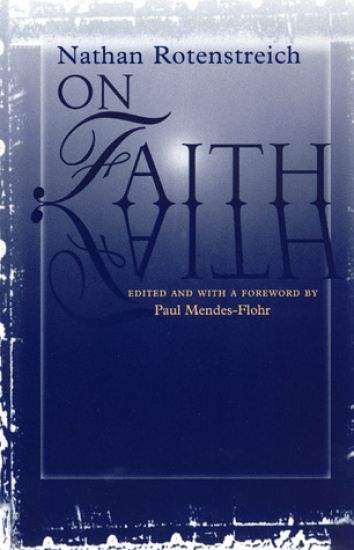
On Faith

On Faith

Nathan Rotenstreich

University of Chicago Press
1998
nidottu
This last work of Nathan Rotenstreich's attempts to detach the concept of faith from its religious underpinnings and consider it in its own right, as a human phenomenon and cognitive attitude. Faith, the author contends, should not be confused with its historical manifestations. By making faith a philosophical rather than a theological matter, he explores its essence as an awareness of how we relate within mundane reality to all that is beyond the human world. Arguing for the intentionality of faith, he shows how it structures a variety of relations that range from the experience of the holy to the nature of cults, traditional religion and the idea of servitude to God.
Radical American Partisanship

Radical American Partisanship

Nathan P. Kalmoe; Lilliana Mason

THE UNIVERSITY OF CHICAGO PRESS
2022
sidottu
Radical partisanship among ordinary Americans is rising, and it poses grave risks for the prospects of American democracy. Political violence is rising in the United States, with Republicans and Democrats divided along racial and ethnic lines that spurred massive bloodshed and democratic collapse earlier in the nation's history. The January 6, 2021 insurrection and the partisan responses that ensued are a vivid illustration of how deep these currents run. How did American politics become so divided that we cannot agree on how to categorize an attack on our own Capitol? For over four years, through a series of surveys and experiments, Nathan P. Kalmoe and Lilliana Mason have been studying radicalism among ordinary American partisans. In this groundbreaking book, they draw on new evidence-as well as insights from history, psychology, and political science-to put our present partisan fractiousness in context and to explain broad patterns of political and social change. Early chapters reveal the scope of the problem, who radical partisans are, and trends over time, while later chapters identify the conditions that partisans say justify violence and test how elections, political violence, and messages from leaders enflame or pacify radical views. Kalmoe and Mason find that ordinary partisanship is far more dangerous than pundits and scholars have recognized. However, these findings are not a forecast of inevitable doom; the current climate also brings opportunities to confront democratic threats head-on and to create a more inclusive politics. Timely and thought-provoking, Radical American Partisanship is vital reading for understanding our current political landscape.
Radical American Partisanship

Radical American Partisanship

Nathan P. Kalmoe; Lilliana Mason

THE UNIVERSITY OF CHICAGO PRESS
2022
nidottu
Radical partisanship among ordinary Americans is rising, and it poses grave risks for the prospects of American democracy. Political violence is rising in the United States, with Republicans and Democrats divided along racial and ethnic lines that spurred massive bloodshed and democratic collapse earlier in the nation's history. The January 6, 2021 insurrection and the partisan responses that ensued are a vivid illustration of how deep these currents run. How did American politics become so divided that we cannot agree on how to categorize an attack on our own Capitol? For over four years, through a series of surveys and experiments, Nathan P. Kalmoe and Lilliana Mason have been studying radicalism among ordinary American partisans. In this groundbreaking book, they draw on new evidence-as well as insights from history, psychology, and political science-to put our present partisan fractiousness in context and to explain broad patterns of political and social change. Early chapters reveal the scope of the problem, who radical partisans are, and trends over time, while later chapters identify the conditions that partisans say justify violence and test how elections, political violence, and messages from leaders enflame or pacify radical views. Kalmoe and Mason find that ordinary partisanship is far more dangerous than pundits and scholars have recognized. However, these findings are not a forecast of inevitable doom; the current climate also brings opportunities to confront democratic threats head-on and to create a more inclusive politics. Timely and thought-provoking, Radical American Partisanship is vital reading for understanding our current political landscape.
Action without Hope

Action without Hope

Nathan K. Hensley

THE UNIVERSITY OF CHICAGO PRESS
2025
sidottu
A study of how writers from the early phases of our prolonged climate emergency used aesthetic strategies to redefine the category of action. What does it feel like to live helplessly in a world that is coming undone? Nathan Hensley turns to Victorian literature to uncover a prehistory of this deeply contemporary sense of powerlessness. For many in nineteenth-century Britain, their world seemed so scarred by human rapacity that restoring it seemed beyond the powers of any one individual. Like George Eliot’s characters in Middlemarch or the doomed lovers of Wuthering Heights, observers of the gathering carbon economy felt themselves ensnared by interlocked and broken systems. In the face of damage so vast and apparently irreversible, what could possibly be done? To answer this question, Hensley shows that nineteenth-century writers and artists devised new ways to understand action—and hope. They rescaled action away from the grandly heroic and toward minor adjustments and collaborative interventions. They turned away from logical proofs and direct argumentation and instead called on aesthetic technologies like sonnets and fractured lyrics, watercolor sketches, and vast, multiplot novels, finding scope for action not at the level of the theme or the thesis but in gestures and details. Ranging from J. M. W. Turner’s painterly technique to Emily Brontë’s dreamlike fragments (and reading along the way works by Alfred, Lord Tennyson, H. G. Wells, Lewis Carroll, Gerard Manley Hopkins, William Berryman, Charlotte Brontë, George Eliot, and Christina Rossetti), Hensley’s study makes an important contribution to Victorian studies and the environmental humanities.
Action without Hope

Action without Hope

Nathan K. Hensley

THE UNIVERSITY OF CHICAGO PRESS
2025
nidottu
A study of how writers from the early phases of our prolonged climate emergency used aesthetic strategies to redefine the category of action. What does it feel like to live helplessly in a world that is coming undone? Nathan Hensley turns to Victorian literature to uncover a prehistory of this deeply contemporary sense of powerlessness. For many in nineteenth-century Britain, their world seemed so scarred by human rapacity that restoring it seemed beyond the powers of any one individual. Like George Eliot’s characters in Middlemarch or the doomed lovers of Wuthering Heights, observers of the gathering carbon economy felt themselves ensnared by interlocked and broken systems. In the face of damage so vast and apparently irreversible, what could possibly be done? To answer this question, Hensley shows that nineteenth-century writers and artists devised new ways to understand action—and hope. They rescaled action away from the grandly heroic and toward minor adjustments and collaborative interventions. They turned away from logical proofs and direct argumentation and instead called on aesthetic technologies like sonnets and fractured lyrics, watercolor sketches, and vast, multiplot novels, finding scope for action not at the level of the theme or the thesis but in gestures and details. Ranging from J. M. W. Turner’s painterly technique to Emily Brontë’s dreamlike fragments (and reading along the way works by Alfred, Lord Tennyson, H. G. Wells, Lewis Carroll, Gerard Manley Hopkins, William Berryman, Charlotte Brontë, George Eliot, and Christina Rossetti), Hensley’s study makes an important contribution to Victorian studies and the environmental humanities.
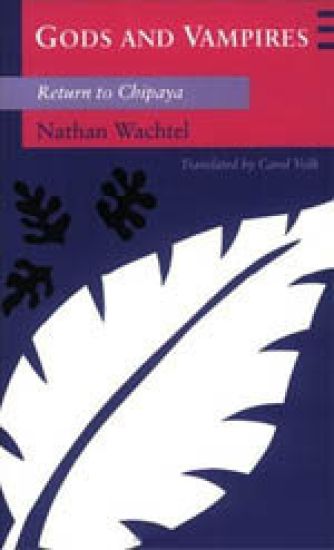
Gods and Vampires

Gods and Vampires

Nathan Wachtel

University of Chicago Press
1994
sidottu
When Nathan Wachtel, the historical anthropologist, returned to the village of Chipaya, the site of his extensive fieldwork in the Bolivian Andes, he learned a group of Uru Indians was being incarcerated and tortured for no apparent reason. Even more strangely, no one - not even his closest informant and friend - would speak about it. Wachtel discovered that a series of recent deaths and misfortunes in Chipaya had been attributed to the evil powers of the Urus, a group usually regarded with suspicion by the other ethnic groups. Those incarcerated were believed to be the chief sorcerers and vampires whose paganistic practices had brought death to Chipaya by upsetting the social order. Wachtel's investigation, told in "Gods and Vampires: Back to Chipaya", reveals much about relations between the Urus and the region's dominant ethnic groups and confronts some of the most trenchant issues in contemporary anthropology. His analysis shows that the Urus had become victims of the same set of ideals the Spanish had used, centuries before, to establish their hegemony in the region. Presented as a personal detective story, "Gods and Vampires" is Wachtel's latest work in a series studying the ongoing impact of the Spanish conquest on the Andean consciousness and social system. It should be of interest to scholars of anthropology, Latin American studies and Native American studies.
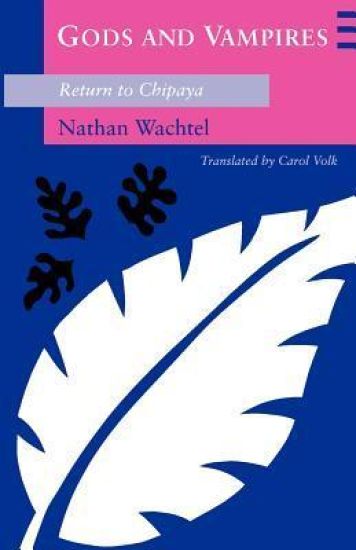
Gods and Vampires

Gods and Vampires

Nathan Wachtel

University of Chicago Press
1994
nidottu
When Nathan Wachtel, the historical anthropologist, returned to the village of Chipaya, the site of his extensive fieldwork in the Bolivian Andes, he learned a group of Uru Indians was being incarcerated and tortured for no apparent reason. Even more strangely, no one - not even his closest informant and friend - would speak about it. Wachtel discovered that a series of recent deaths and misfortunes in Chipaya had been attributed to the evil powers of the Urus, a group usually regarded with suspicion by the other ethnic groups. Those incarcerated were believed to be the chief sorcerers and vampires whose paganistic practices had brought death to Chipaya by upsetting the social order. Wachtel's investigation, told in "Gods and Vampires: Back to Chipaya", reveals much about relations between the Urus and the region's dominant ethnic groups and confronts some of the most trenchant issues in contemporary anthropology. His analysis shows that the Urus had become victims of the same set of ideals the Spanish had used, centuries before, to establish their hegemony in the region. Presented as a personal detective story, "Gods and Vampires" is Wachtel's latest work in a series studying the ongoing impact of the Spanish conquest on the Andean consciousness and social system. It should be of interest to scholars of anthropology, Latin American studies and Native American studies.
Zippy and His Super Hero

Zippy and His Super Hero

Nathan McTaggart; Keven McTaggart

Nathan McTaggart
2018
pokkari
What was your BEST CHRISTMAS EVER?For young Nathan, it was the year he followed his shelf elf, Zippy, back to the North Pole to surprise Santa.Together they had quite the adventure as they traveled to the South Pole to find Santa's Brother Nick.
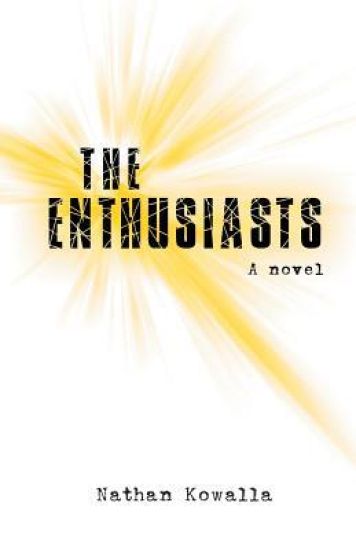
The Enthusiasts

The Enthusiasts

Nathan Kowalla

Tellwell Talent
2018
pokkari
When Humanity abandons faith.After Science discovers material emptiness.New Realities will emerge. A SOFT, WAVERING LIMBO encases the earth, yet many still don't see it. The masses feel protected under the rule of a supreme organization of commerce that preaches freedom, while its actions favor fortification and protection of its borders and monopolizing its influence through proprietary technologies. Emerson Myshkin is a bit of a rebel. A hacker with a cause he clings to The Tablet - full of humanity's forgotten knowledge - in search of encouragement that the arc of morality must bend toward justice for all. Humanity overcame all obstacles to live in perpetual peace and comfort only centuries ago, or so he believes, yet nothing could be further from his reality; living with a band ofsurvivalists in North Garrison in the year 2280.
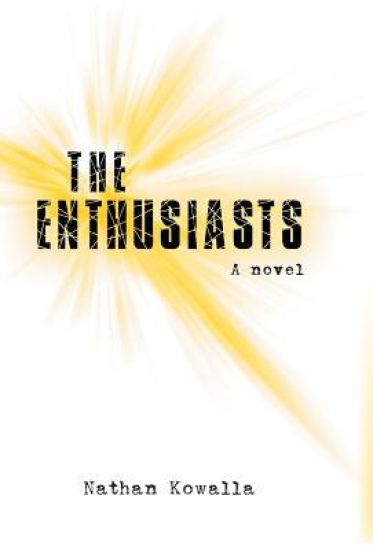
The Enthusiasts

The Enthusiasts

Nathan Kowalla

Tellwell Talent
2018
sidottu
When Humanity abandons faith.After Science discovers material emptiness.New Realities will emerge. A SOFT, WAVERING LIMBO encases the earth, yet many still don't see it. The masses feel protected under the rule of a supreme organization of commerce that preaches freedom, while its actions favor fortification and protection of its borders and monopolizing its influence through proprietary technologies. Emerson Myshkin is a bit of a rebel. A hacker with a cause he clings to The Tablet - full of humanity's forgotten knowledge - in search of encouragement that the arc of morality must bend toward justice for all. Humanity overcame all obstacles to live in perpetual peace and comfort only centuries ago, or so he believes, yet nothing could be further from his reality; living with a band ofsurvivalists in North Garrison in the year 2280.
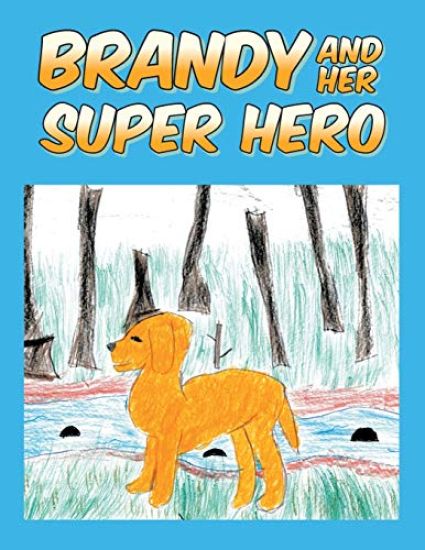
Brandy and Her Super Hero

Brandy and Her Super Hero

Nathan McTaggart

Nathan McTaggart
2019
pokkari
Natural disasters such as forest fires are devastating. Imagine if you were a pet and you were separated from your family during such a natural disaster. In this book, you will meet Brandy and follow her adventures as, with the help of her Super Heroes from around the world, she is reunited with her family.Part proceeds of the sale of this book will be donated to the Pacific Assistance Dogs Society and Firefighters Without Borders Canada.
Joseon Korean Swordsmanship From the Source Jedok Geom
General Li Rusong was a skilled swordsman on the battlefield who struck fear in the hearts of his enemies, and had a ferocious sword style that was so impressive it was taught to the Korean military from the 1590s. Joseon Crown Prince Sado had this form formally recorded in 1759, and from this historic record we can revive the ancient arts and teach truly historic martial arts in the modern day.Korean Swordsmanship from the Source: Jedok Geom deeply explores the history and swordsmanship of General Li's style and breaks it down into a practical guide that will turn a willing student into a competent swordsman.
Joseon Korean Swordsmanship From the Source Jedok Geom
General Li Rusong was a skilled swordsman on the battlefield who struck fear in the hearts of his enemies, and had a ferocious sword style that was so impressive it was taught to the Korean military from the 1590s. Joseon Crown Prince Sado had this form formally recorded in 1759, and from this historic record we can revive the ancient arts and teach truly historic martial arts in the modern day.Korean Swordsmanship from the Source: Jedok Geom deeply explores the history and swordsmanship of General Li's style and breaks it down into a practical guide that will turn a willing student into a competent swordsman.
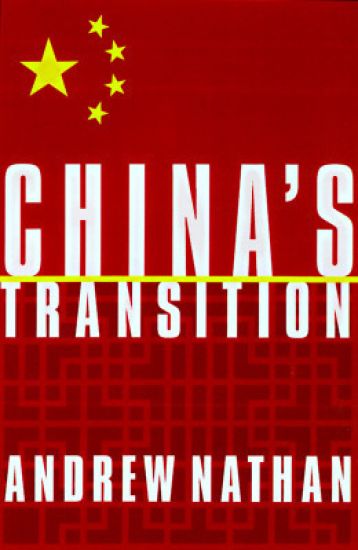
China’s Transition

China’s Transition

Nathan Andrew J.

Columbia University Press
1998
sidottu
With more than one billion people, China represents both an ocean of economic opportunity and a frustrating backwater of continuing brutal political repression. What are the prospects for democratic evolution in a nation with one of the world's poorest human rights records? How have other nations responded to China since the recent, dramatic opening of its economic system-and how should they respond in the future? These are some of the most important questions confronting both the United States and the international community. On democracy, human rights, and the move to integrate China into the international economy; on Mao Zedong's regime and the reform since his death; and on the Taiwan experiment and Hong Kong's reintegration with China, Nathan offers an accessible introduction to the intricate web of contemporary Chinese politics and China's changing place in the global system.
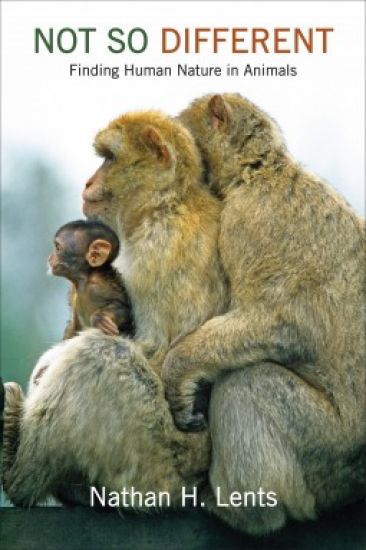
Not So Different

Not So Different

Nathan H. Lents

Columbia University Press
2016
sidottu
Animals fall in love, establish rules for fair play, exchange valued goods and services, hold "funerals" for fallen comrades, deploy sex as a weapon, and communicate with one another using rich vocabularies. Animals also get jealous and violent or greedy and callous and develop irrational phobias, just like us. Monkeys address inequality, wolves miss each other, elephants grieve for their dead, and prairie dogs name the humans they encounter. Human and animal behavior is not as different as once believed. In Not So Different, the biologist Nathan H. Lents argues that the same evolutionary forces of cooperation and competition have shaped both humans and animals. Identical emotional and instinctual drives govern our actions. By acknowledging this shared programming, the human experience no longer seems unique, but in that loss we gain a fuller appreciation of such phenomena as sibling rivalry and the biological basis of grief, helping us lead more grounded, moral lives among animals, our closest kin. Through a mix of colorful reporting and rigorous scientific research, Lents describes the exciting strides scientists have made in decoding animal behavior and bringing the evolutionary paths of humans and animals closer together. He marshals evidence from psychology, evolutionary biology, cognitive science, anthropology, and ethology to further advance this work and to drive home the truth that we are distinguished from animals only in degree, not in kind.
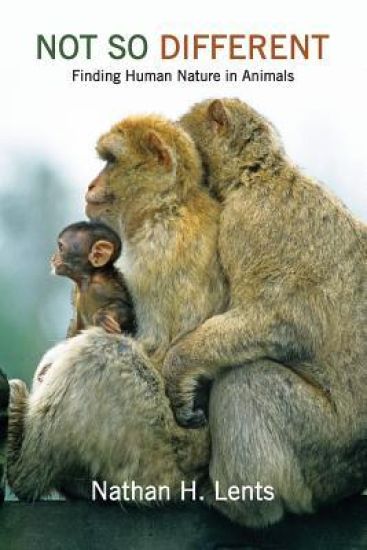
Not So Different

Not So Different

Nathan H. Lents

Columbia University Press
2017
pokkari
Animals fall in love, establish rules for fair play, exchange valued goods and services, hold "funerals" for fallen comrades, deploy sex as a weapon, and communicate with one another using rich vocabularies. Animals also get jealous and violent or greedy and callous and develop irrational phobias, just like us. Monkeys address inequality, wolves miss each other, elephants grieve for their dead, and prairie dogs name the humans they encounter. Human and animal behavior is not as different as once believed. In Not So Different, the biologist Nathan H. Lents argues that the same evolutionary forces of cooperation and competition have shaped both humans and animals. Identical emotional and instinctual drives govern our actions. By acknowledging this shared programming, the human experience no longer seems unique, but in that loss we gain a fuller appreciation of such phenomena as sibling rivalry and the biological basis of grief, helping us lead more grounded, moral lives among animals, our closest kin. Through a mix of colorful reporting and rigorous scientific research, Lents describes the exciting strides scientists have made in decoding animal behavior and bringing the evolutionary paths of humans and animals closer together. He marshals evidence from psychology, evolutionary biology, cognitive science, anthropology, and ethology to further advance this work and to drive home the truth that we are distinguished from animals only in degree, not in kind.
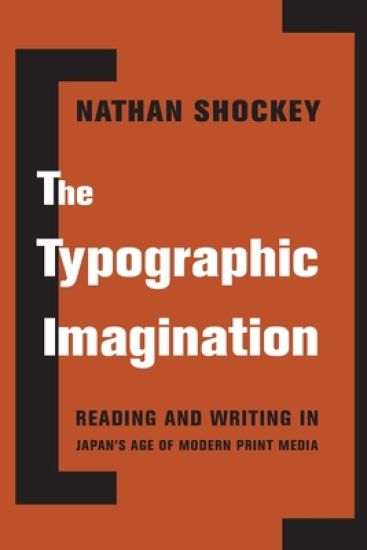
The Typographic Imagination

The Typographic Imagination

Nathan Shockey

Columbia University Press
2019
sidottu
In the early twentieth century, Japan was awash with typographic text and mass-produced print. Over the short span of a few decades, affordable books and magazines became a part of everyday life, and a new generation of writers and thinkers considered how their world could be reconstructed through the circulation of printed language as a mass-market commodity. The Typographic Imagination explores how this commercial print revolution transformed Japan’s media ecology and traces the possibilities and pitfalls of type as a force for radical social change.Nathan Shockey examines the emergence of new forms of reading, writing, and thinking in Japan from the last years of the nineteenth century through the first decades of the twentieth. Charting the relationships among prose, politics, and print capitalism, he considers the meanings and functions of print as a staple commodity and as a ubiquitous and material medium for discourse and thought. Drawing on extensive archival research, The Typographic Imagination brings into conversation a wide array of materials, including bookseller trade circulars, language reform debates, works of experimental fiction, photo gazetteers, socialist periodicals, Esperanto primers, declassified censorship documents, and printing press strike bulletins. Combining the rigorous close analysis of Japanese literary studies with transdisciplinary methodologies from media studies, book history, and intellectual history, The Typographic Imagination presents a multivalent vision of the rise of mass print media and the transformations of modern Japanese literature, language, and culture.
The Typographic Imagination

The Typographic Imagination

Nathan Shockey

Columbia University Press
2023
pokkari
In the early twentieth century, Japan was awash with typographic text and mass-produced print. Over the short span of a few decades, affordable books and magazines became a part of everyday life, and a new generation of writers and thinkers considered how their world could be reconstructed through the circulation of printed language as a mass-market commodity. The Typographic Imagination explores how this commercial print revolution transformed Japan’s media ecology and traces the possibilities and pitfalls of type as a force for radical social change.Nathan Shockey examines the emergence of new forms of reading, writing, and thinking in Japan from the last years of the nineteenth century through the first decades of the twentieth. Charting the relationships among prose, politics, and print capitalism, he considers the meanings and functions of print as a staple commodity and as a ubiquitous and material medium for discourse and thought. Drawing on extensive archival research, The Typographic Imagination brings into conversation a wide array of materials, including bookseller trade circulars, language reform debates, works of experimental fiction, photo gazetteers, socialist periodicals, Esperanto primers, declassified censorship documents, and printing press strike bulletins. Combining the rigorous close analysis of Japanese literary studies with transdisciplinary methodologies from media studies, book history, and intellectual history, The Typographic Imagination presents a multivalent vision of the rise of mass print media and the transformations of modern Japanese literature, language, and culture.
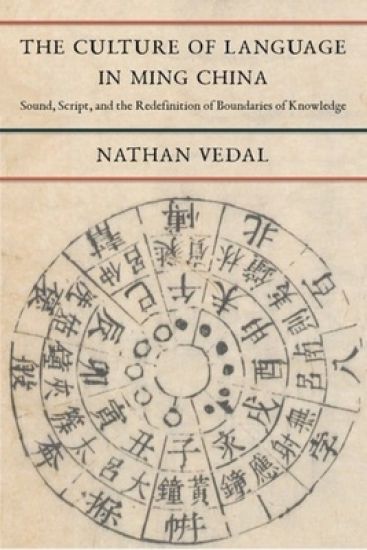
The Culture of Language in Ming China

The Culture of Language in Ming China

Nathan Vedal

Columbia University Press
2022
sidottu
Winner, 2023 Morris D. Forkosch Prize, Journal of the History of IdeasThe scholarly culture of Ming dynasty China (1368–1644) is often seen as prioritizing philosophy over concrete textual study. Nathan Vedal uncovers the preoccupation among Ming thinkers with specialized linguistic learning, a field typically associated with the intellectual revolution of the eighteenth century. He explores the collaboration of Confucian classicists and Buddhist monks, opera librettists and cosmological theorists, who joined forces in the pursuit of a universal theory of language.Drawing on a wide range of overlooked scholarly texts, literary commentaries, and pedagogical materials, Vedal examines how Ming scholars positioned the study of language within an interconnected nexus of learning. He argues that for sixteenth- and seventeenth-century thinkers, the boundaries among the worlds of classicism, literature, music, cosmology, and religion were far more fluid and porous than they became later. In the eighteenth century, Qing thinkers pared away these other fields from linguistic learning, creating a discipline focused on corroborating the linguistic features of ancient texts.Documenting a major transformation in knowledge production, this book provides a framework for rethinking global early modern intellectual developments. It offers a powerful alternative to the conventional understanding of late imperial Chinese intellectual history by focusing on the methods of scholarly practice and the boundaries by which contemporary thinkers defined their field of study.