Kirjojen hintavertailu. Mukana 11 627 573 kirjaa ja 12 kauppaa.

Kirjahaku

Etsi kirjoja tekijän nimen, kirjan nimen tai ISBN:n perusteella.

1000 tulosta hakusanalla Nathan Sommer

The Computer Boys Take Over

The Computer Boys Take Over

Nathan L. Ensmenger

MIT Press
2012
pokkari
The contentious history of the computer programmers who developed the software that made the computer revolution possible.This is a book about the computer revolution of the mid-twentieth century and the people who made it possible. Unlike most histories of computing, it is not a book about machines, inventors, or entrepreneurs. Instead, it tells the story of the vast but largely anonymous legions of computer specialists-programmers, systems analysts, and other software developers-who transformed the electronic computer from a scientific curiosity into the defining technology of the modern era. As the systems that they built became increasingly powerful and ubiquitous, these specialists became the focus of a series of critiques of the social and organizational impact of electronic computing. To many of their contemporaries, it seemed the "computer boys" were taking over, not just in the corporate setting, but also in government, politics, and society in general.In The Computer Boys Take Over, Nathan Ensmenger traces the rise to power of the computer expert in modern American society. His rich and nuanced portrayal of the men and women (a surprising number of the "computer boys" were, in fact, female) who built their careers around the novel technology of electronic computing explores issues of power, identity, and expertise that have only become more significant in our increasingly computerized society.In his recasting of the drama of the computer revolution through the eyes of its principle revolutionaries, Ensmenger reminds us that the computerization of modern society was not an inevitable process driven by impersonal technological or economic imperatives, but was rather a creative, contentious, and above all, fundamentally human development.
I Am Error

I Am Error

Nathan Altice

MIT Press
2017
pokkari
The complex material histories of the Nintendo Entertainment System platform, from code to silicon, focusing on its technical constraints and its expressive affordances. In the 1987 Nintendo Entertainment System videogame Zelda II: The Adventure of Link, a character famously declared: I AM ERROR. Puzzled players assumed that this cryptic mesage was a programming flaw, but it was actually a clumsy Japanese-English translation of "My Name is Error," a benign programmer's joke. In I AM ERROR Nathan Altice explores the complex material histories of the Nintendo Entertainment System (and its Japanese predecessor, the Family Computer), offering a detailed analysis of its programming and engineering, its expressive affordances, and its cultural significance.Nintendo games were rife with mistranslated texts, but, as Altice explains, Nintendo's translation challenges were not just linguistic but also material, with consequences beyond simple misinterpretation. Emphasizing the technical and material evolution of Nintendo's first cartridge-based platform, Altice describes the development of the Family Computer (or Famicom) and its computational architecture; the "translation" problems faced while adapting the Famicom for the U.S. videogame market as the redesigned Entertainment System; Nintendo's breakthrough console title Super Mario Bros. and its remarkable software innovations; the introduction of Nintendo's short-lived proprietary disk format and the design repercussions on The Legend of Zelda; Nintendo's efforts to extend their console's lifespan through cartridge augmentations; the Famicom's Audio Processing Unit (APU) and its importance for the chiptunes genre; and the emergence of software emulators and the new kinds of play they enabled.
Designing Constructionist Futures

Designing Constructionist Futures

Nathan Holbert

MIT Press
2020
nidottu
Constructionism, first introduced by Seymour Papert in 1980, is a framework for learning to understand something by making an artifact for and with other people. A core goal of constructionists is to respect learners as creators, to enable them to engage in making meaning for themselves through construction, and to do this by democratizing access to the world's most creative and powerful tools. In this volume, an international and diverse group of scholars examine, reconstruct, and evolve the constructionist paradigm in light of new technologies and theories. Taken together, their contributions show that constructionism has advanced in educational research and practice-and also that, in turn, researchers and practitioners can learn from constructionism how to foster learning in ways that respect learners' creativity and communities.The contributors examine how constructionist design can function within contexts ranging from school and home to virtual spaces; explore ways to support learners who have been under-resourced, overlooked, or oppressed; discuss learning by collaboration; and consider the implications of learning as a creative process of construction, exploring ways to support creative enterprises within the constraints of formal classrooms. Finally, leading visionaries imagine where constructionism, design, and research will go next
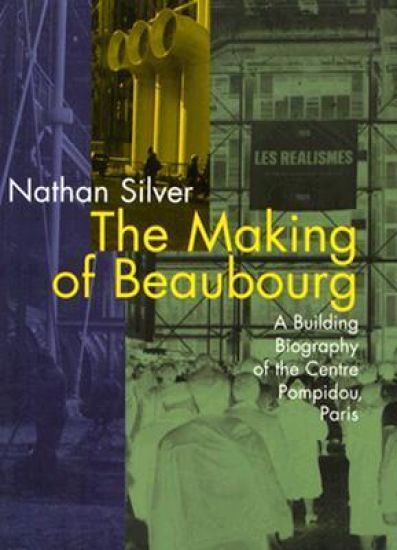
The Making of Beaubourg

The Making of Beaubourg

Nathan Silver

MIT Press
1997
pokkari
This is the story of how France's famed cultural icon, one of the most controversial and public buildings of the century, was designed and built. Nathan Silver's detailed account of the Centre Pompidou - still called Beaubourg by its designers, and by Parisians - takes the form of a "building biography." Not just a book about a building but also about the making of a building, this means of inquiry is a holistic reading of the intricate process of creating architecture in contemporary society that brings to light its human story, encompassing its stylistic, historical, technical and social aspects. Beaubourg was unlike anything that had ever been built. A realization of ideals and aspirations of an architectural generation, a rethinking of fundamental precepts of design and construction, it took nothing for granted, and it has since become one of the most popular tourist attractions in Europe - flaunting new principles with which other architects have had to come to terms. The text's discovery of this building is never separated from the process, politics, crises and controversies of its making.Based on interviews conducted at the time with all of the key players, Silver presents a behind-the-scenes narrative of design process and decision making that he weighs with bold critical scrutiny. Silver explores the saga of the designers' battles, over a period of five and a half years, to maintain control and build within budget. He starts from the beginning when the British/Italian/Anglo-Danish design team, including architects Richard Rogers and Renzo Piano and engineers Peter Rice and Ted Happold of Ove Arup, took a long-shot gamble on an international competition. Silver then details the design team's conception of a building with flexible plans and adjustable elevations, describes the development of a structural system as inventive as that of the Eiffel Tower and equally as public in its urban rhetoric, and concludes with the triumph of Beaubourg's popular and critical reception.
Net Loss

Net Loss

Nathan Newman

Pennsylvania State University Press
2002
sidottu
How has the Internet been changing our lives, and how did these changes come about? Nathan Newman seeks the answers to these questions by studying the emergence of the Internet economy in Silicon Valley and the transformation of power relations it has brought about in our new information age. Net Loss is his effort to understand why technological innovation and growth have been accompanied by increasing economic inequality and a sense of political powerlessness among large sectors of the population. Newman first tells the story of the federal government’s crucial role in the early development of the Internet, with the promotion of open computer standards and collaborative business practices that became the driving force of the Silicon Valley model. He then examines the complex dynamic of the process whereby regional economies have been changing as business alliances built around industries like the Internet replace the broader public investments that fueled regional growth in the past. A radical restructuring of once regionally focused industries like banking, electric utilities, and telephone companies is under way, with changes in federal regulation helping to undermine regional planning and the power of local community actors. The rise of global Internet commerce itself contributes to weakening the tax base of local governments, even as these governments increasingly use networked technology to market themselves and their citizens to global business, usually at the expense of all but their most elite residents. More optimistically, Newman sees an emerging countertrend of global use of the Internet by grassroots organizations, such as those in the antiglobalization movements, that may help to transcend this local powerlessness.
Net Loss

Net Loss

Nathan Newman

Pennsylvania State University Press
2002
pokkari
How has the Internet been changing our lives, and how did these changes come about? Nathan Newman seeks the answers to these questions by studying the emergence of the Internet economy in Silicon Valley and the transformation of power relations it has brought about in our new information age. Net Loss is his effort to understand why technological innovation and growth have been accompanied by increasing economic inequality and a sense of political powerlessness among large sectors of the population. Newman first tells the story of the federal government’s crucial role in the early development of the Internet, with the promotion of open computer standards and collaborative business practices that became the driving force of the Silicon Valley model. He then examines the complex dynamic of the process whereby regional economies have been changing as business alliances built around industries like the Internet replace the broader public investments that fueled regional growth in the past. A radical restructuring of once regionally focused industries like banking, electric utilities, and telephone companies is under way, with changes in federal regulation helping to undermine regional planning and the power of local community actors. The rise of global Internet commerce itself contributes to weakening the tax base of local governments, even as these governments increasingly use networked technology to market themselves and their citizens to global business, usually at the expense of all but their most elite residents. More optimistically, Newman sees an emerging countertrend of global use of the Internet by grassroots organizations, such as those in the antiglobalization movements, that may help to transcend this local powerlessness.
Reflections on Time and Politics

Reflections on Time and Politics

Nathan Widder

Pennsylvania State University Press
2008
sidottu
Recent philosophical debates have moved beyond proclamations of the “death of philosophy” and the “death of the subject” to consider more positively how philosophy can be practiced and the human self can be conceptualized today. Inspired by the writings of Nietzsche, Bergson, and Deleuze, rapid changes related to globalization, and advances in evolutionary biology and neuroscience, these debates have generated a renewed focus on time as an active force of change and novelty. Rejecting simple linear models of time, these strands of thought have provided creative alternatives to a traditional reliance on fixed boundaries and stable identities that has proven unable to grapple with the intense speeds and complexities of contemporary life. In this book, Nathan Widder contributes to these debates, but also goes significantly beyond them. Holding that current writings remain too focused on time’s movement, he examines more fundamentally time’s structure and its structural ungrounding, releasing time completely from its traditional subordination to movement and space. Doing this enables him to reformulate entirely the terms through which time and change are understood, leading to a radical alteration of our understandings of power, resistance, language, and the unconscious, and taking post-identity political philosophy and ethics in a new direction.Eighteen independent but interlinked reflections engage with ancient philosophy, mathematical theory, dialectics, psychoanalysis, archaeology, and genealogy. The book’s broad coverage and novel rereadings of key figures—including Aristotle, Bergson, Nietzsche, Foucault, and Deleuze—make this a unique rethinking of the nature of pluralism, multiplicity, and politics.
Reflections on Time and Politics

Reflections on Time and Politics

Nathan Widder

Pennsylvania State University Press
2010
pokkari
Recent philosophical debates have moved beyond proclamations of the ""death of philosophy"" and the ""death of the subject"" to consider more positively how philosophy can be practiced and the human self can be conceptualized today. Inspired by the writings of Nietzsche, Bergson, and Deleuze, rapid changes related to globalization, and advances in evolutionary biology and neuroscience, these debates have generated a renewed focus on time as an active force of change and novelty. Rejecting simple linear models of time, these strands of thought have provided creative alternatives to a traditional reliance on fixed boundaries and stable identities that has proven unable to grapple with the intense speeds and complexities of contemporary life. In this book, Nathan Widder contributes to these debates, but also goes significantly beyond them. Holding that current writings remain too focused on time's movement, he examines more fundamentally time's structure and its structural ungrounding, releasing time completely from its traditional subordination to movement and space. Doing this enables him to reformulate entirely the terms through which time and change are understood, leading to a radical alteration of our understandings of power, resistance, language, and the unconscious, and taking post-identity political philosophy and ethics in a new direction. Eighteen independent but interlinked reflections engage with ancient philosophy, mathematical theory, dialectics, psychoanalysis, archaeology, and genealogy. The book's broad coverage and novel rereadings of key figures including Aristotle, Bergson, Nietzsche, Foucault, and Deleuze make this a unique rethinking of the nature of pluralism, multiplicity, and politics.
Political Activists in America

Political Activists in America

Nathan Teske

Pennsylvania State University Press
2009
pokkari
Through vivid portrayals of political activists, Political Activists in America offers a fresh analysis of why people become involved in politics. Based on interviews with environmental, social justice, and pro-life activists, the book argues, contrary to both popular opinion and the main approaches of political science, that active involvement in politics can be deeply fulfilling to the individual. The identity construction approach is the core of the book's argument and shows how activists value political involvement for themselves. The book argues against approaches that see politics as an inherently costly or unpleasant activity. In contrast, the identity construction approach sees political activism as enabling activists to become people whom they would otherwise have been unable to become. The construction of identity for all activists is both about morality and about what one wants for oneself, and hence it illustrates shortcomings in approaches that divide motivations into either the "self-interested" or the "altruistic."
Sign of Pathology

Sign of Pathology

Nathan Stormer

Pennsylvania State University Press
2015
sidottu
Much of the political polarization that grips the United States is rooted in the so-called culture wars, and no topic defines this conflict better than the often contentious and sometimes violent debate over abortion rights. In Sign of Pathology, Nathan Stormer reframes our understanding of this conflict by examining the medical literature on abortion from the 1800s to the 1960s. Often framed as an argument over a right to choose versus a right to life, our current understanding of this conflict is as a contest over who has the better position on reproductive biology. Against this view, Sign of Pathology argues that, as it became a medical problem, abortion also became a template, more generally, for struggling with how to live—far exceeding discussions of the merits of providing abortions or how to care for patients. Abortion practices (and all the legal, moral, and ideological entanglements thereof) have rested firmly at the center of debate over many fundamental institutions and concepts—namely, the individual, the family, the state, human rights, and, indeed, the human. Medical rhetoric, then, was decisive in cultivating abortion as a mode of cultural critique, even weaponizing it for discursive conflict on these important subjects, although the goal of the medical practice of abortion has never been to establish this kind of struggle. Stormer argues that the medical discourse of abortion physicians transformed the state of abortion into an indicator that the culture was ill, attacking itself during and through pregnancy in a wrongheaded attempt to cope with reproduction.
Sign of Pathology

Sign of Pathology

Nathan Stormer

Pennsylvania State University Press
2016
pokkari
Much of the political polarization that grips the United States is rooted in the so-called culture wars, and no topic defines this conflict better than the often contentious and sometimes violent debate over abortion rights. In Sign of Pathology, Nathan Stormer reframes our understanding of this conflict by examining the medical literature on abortion from the 1800s to the 1960s. Often framed as an argument over a right to choose versus a right to life, our current understanding of this conflict is as a contest over who has the better position on reproductive biology. Against this view, Sign of Pathology argues that, as it became a medical problem, abortion also became a template, more generally, for struggling with how to live—far exceeding discussions of the merits of providing abortions or how to care for patients. Abortion practices (and all the legal, moral, and ideological entanglements thereof) have rested firmly at the center of debate over many fundamental institutions and concepts—namely, the individual, the family, the state, human rights, and, indeed, the human. Medical rhetoric, then, was decisive in cultivating abortion as a mode of cultural critique, even weaponizing it for discursive conflict on these important subjects, although the goal of the medical practice of abortion has never been to establish this kind of struggle. Stormer argues that the medical discourse of abortion physicians transformed the state of abortion into an indicator that the culture was ill, attacking itself during and through pregnancy in a wrongheaded attempt to cope with reproduction.
Dewey for a New Age of Fascism

Dewey for a New Age of Fascism

Nathan Crick

Pennsylvania State University Press
2019
sidottu
During the rise of fascism in the early twentieth century, American philosopher and educational reformer John Dewey argued that the greatest threat to democracy was not a political regime or even an aggressive foreign power but rather a set of dispositions or attitudes. Though not fascist in and of themselves, these habits of thought—rugged individualism and ideological nationalism—lay the foundation for fascism. In this study, Nathan Crick uses Dewey’s social thought and philosophy of education to provide insight into and resources for transforming our present-day politics.Through a close reading of Dewey’s political writings and educational theory, Crick elaborates Dewey’s vision of democratic social life and the education required for its foundation. He shows that for Dewey, communication is essential to cultivating sympathy, intelligence, and creativity—habits of thought that form the core of democratic culture. Crick then lays out a broad curriculum of logic, aesthetics, and rhetoric for inculcating these habits in the classroom, arguing that if we are to meet the challenge of fascism, we must teach these new arts as if our civilization depends on it—because in our new age of politics, it does.Comprehensive and pragmatic, this book presents an experimental model of education that can be applied across the humanities curriculum. It will be of interest to teachers of writing, composition, and rhetoric as well as scholars and students of communication studies, pedagogy, and political theory.
Dewey for a New Age of Fascism

Dewey for a New Age of Fascism

Nathan Crick

Pennsylvania State University Press
2020
pokkari
During the rise of fascism in the early twentieth century, American philosopher and educational reformer John Dewey argued that the greatest threat to democracy was not a political regime or even an aggressive foreign power but rather a set of dispositions or attitudes. Though not fascist in and of themselves, these habits of thought—rugged individualism and ideological nationalism—lay the foundation for fascism. In this study, Nathan Crick uses Dewey’s social thought and philosophy of education to provide insight into and resources for transforming our present-day politics.Through a close reading of Dewey’s political writings and educational theory, Crick elaborates Dewey’s vision of democratic social life and the education required for its foundation. He shows that for Dewey, communication is essential to cultivating sympathy, intelligence, and creativity—habits of thought that form the core of democratic culture. Crick then lays out a broad curriculum of logic, aesthetics, and rhetoric for inculcating these habits in the classroom, arguing that if we are to meet the challenge of fascism, we must teach these new arts as if our civilization depends on it—because in our new age of politics, it does.Comprehensive and pragmatic, this book presents an experimental model of education that can be applied across the humanities curriculum. It will be of interest to teachers of writing, composition, and rhetoric as well as scholars and students of communication studies, pedagogy, and political theory.
Engaging Iran

Engaging Iran

Nathan Gonzalez

Praeger Publishers Inc
2007
sidottu
Iran is poised to re-emerge as the powerhouse of the Middle East in the 21st century. Already taking on massive export and energy diversification projects and working to acquire a nuclear weapons arsenal, Iran is likely to attain the stature of regional power in the coming years, thanks in no small measure to the vacuum created by the chaos in Iraq, which for many years served as a counterweight to Iran in the region. Gonzalez illuminates the path toward a new approach to engagement with Iran. Only then can the United States reap the benefits of a new Middle East.But is a nuclear-armed Iran a direct strategic threat to the United States? While post-revolutionary politics have harnessed anti-Americanism as a matter of policy, Gonzalez argues that this is only a sign of a larger enterprise of democratization; a trajectory of independence, as the author calls it. This trajectory has led Iran to release itself from the shackles of foreign power intervention and has put it closer to home-grown democracy than any other nation in the Muslim Middle East. This promise of democracy, set in the wider scope of Iranian Shi'i jurisprudence and practice, is set to elevate the largest segment of Iranian society—its educated and pro-American youth—to the forefront of Iranian politics.The Middle East is in crisis, and within every crisis lies opportunity. America must not repeat the myopic mistakes of the past. A far-sighted and grand-strategic approach to engagement with Iran promises to open doors to regional stability and political development. Only then can America, as the global superpower, reap the benefits of a new Middle East, with the Islamic Republic of Iran at the helm.
Joseph Goldberg

Joseph Goldberg

Nathan Kernan; Regina Hackett

University of Washington Press
2007
sidottu
For nearly four decades, Joseph Goldberg has produced paintings of great intelligence and sumptuous beauty. Raised near Spokane, Washington, he returned to live and work in the open, semi-arid spaces of eastern Washington after building a Seattle reputation as an abstract artist working with geometric shapes in the unusual technique of encaustic painting.In the late 1960s and early 1970s, Goldberg's paintings were deceptively simple arrangements of geometric motifs in watercolor on paper or oil on linen. By the mid-1970s, he began to make paintings of a more complex nature, sometimes in nonrectangular forms, but still expressing a reductive sensibility. By the early 1980s, Goldberg had fully embraced his signature medium of encaustic-a demanding and difficult method of fusing intense colors of dry pigments with layers of wax, fired by heat into a lustrous surface. The paintings of the 1980s pursued a variety of motifs abstracted from architecture and landscape, including a series of irregular, banner-like works of shapes within similar shapes. At the same time, Goldberg was producing paintings and drawings of the highly varied Washington landscape and of his travels through the Southwest and Europe. As his work progressed through the 1990s, this expansive vision of the natural world embraced an increasingly larger scope of imagery.Goldberg's development as an artist has been enriched by his travels through ancient Roman ruins and the Greek revival manors of rural Sussex, England, as well as by his studies of Hopi, Anasazi, Navajo, and Zuni civilizations. This history emerges in the form of representational architectural details, landscape impressions, and cultural references. His more recent work is focused on Eastern Washington and its landscape of dramatic gorges, prominent ridges, and desolate fields of sage and sand. The paintings since 2000 have often returned to the severity of his earliest work, now filtered through the artist's keen sense of the art that came before him and of the grandeur of nature surrounding him. Whether painting the space between stars in the dark skies of Eastern Washington or the expansive white ground between rural detritus abandoned at the edges of a snow-covered field, Goldberg has imbued his paintings with mystery and meaning.An essay by New York-based poet Nathan Kernan examines Goldberg's oeuvre and explores the role of poetry in the artist's life and work. In her interview with Goldberg, Seattle Post-Intelligencer critic Regina Hackett considers more personal aspects of the artist's life.A Thomas T. Wilson Book
The Democratization of American Christianity

The Democratization of American Christianity

Nathan O. Hatch

Yale University Press
1991
pokkari
A provocative reassessment of religion and culture in the early days of the American republic "The so-called Second Great Awakening was the shaping epoch of American Protestantism, and this book is the most important study of it ever published."—James Turner, Journal of Interdisciplinary History Winner of the John Hope Franklin Publication Prize, the Society for Historians of the Early American Republic book prize, and the Albert C. Outler Prize In this provocative reassessment of religion and culture in the early days of the American republic, Nathan O. Hatch argues that during this period American Christianity was democratized and common people became powerful actors on the religious scene. Hatch examines five distinct traditions or mass movements that emerged early in the nineteenth century—the Christian movement, Methodism, the Baptist movement, the black churches, and the Mormons—showing how all offered compelling visions of individual potential and collective aspiration to the unschooled and unsophisticated. "The most powerful, informed, and complex suggestion yet made about the religious, political, and psychic 'opening' of American life from Jefferson to Jackson. . . . Hatch's reconstruction of his five religious mass movements will add popular religious culture to denominationalism, church and state, and theology as primary dimensions of American religious history."—Robert M. Calhoon, William and Mary Quarterly "Hatch's revisionist work asks us to put the religion of the early republic in a radically new perspective. . . . He has written one of the finest books on American religious history to appear in many years."—James H. Moorhead, Theology Today
After 9/11

After 9/11

Nathan Lyons

Yale University Press
2003
sidottu
In response to the tragic events of September 11, photographer Nathan Lyons—known for his honest and often questioning depictions of American culture—has created a poignant portfolio of images. Photographing in small towns and large cities, Lyons has captured the extreme and often confusing variety of responses—from deep reverence to blatant commercialization—manifested by ordinary Americans. One will marvel, for instance, at the myriad uses of the American flag. This provocative sequence of images with multiple messages is powerfully coherent and strangely disturbing. In the tradition of Robert Frank’s The Americans, these photographs will engage audiences to question the responses to this horrific event in the context of our complicated society, along with memorializing the tragic loss of so many innocent lives. Distributed for the Yale University Art Gallery
Hitler's Compromises

Hitler's Compromises

Nathan Stoltzfus

Yale University Press
2016
sidottu
A comprehensive and eye-opening examination of Hitler’s regime, revealing the numerous strategic compromises he made in order to manage dissent History has focused on Hitler’s use of charisma and terror, asserting that the dictator made few concessions to maintain power. Nathan Stoltzfus, the award-winning author of Resistance of Heart: Intermarriage and the Rosenstrasse Protest in Germany, challenges this notion, assessing the surprisingly frequent tactical compromises Hitler made in order to preempt hostility and win the German people’s complete fealty. As part of his strategy to secure a “1,000-year Reich,” Hitler sought to convince the German people to believe in Nazism so they would perpetuate it permanently and actively shun those who were out of step with society. When widespread public dissent occurred at home—which most often happened when policies conflicted with popular traditions or encroached on private life—Hitler made careful calculations and acted strategically to maintain his popular image. Extending from the 1920s to the regime’s collapse, this revealing history makes a powerful and original argument that will inspire a major rethinking of Hitler’s rule.
Educating the Emotions

Educating the Emotions

Nathan M. Szajnberg

Kluwer Academic / Plenum Publishers
1992
sidottu
A Festschrift comprising seven contributions on autonomy and integration; psychoanalysis and the classroom; residential treatment of children and youth a history of milieu; orthodoxy and heresy in the history of psychoanalysis; Bettelheim's contribution to anthropology; the acculturation of a psycho
Crooked

Crooked

Nathan Masters

Hachette Books
2023
sidottu
Many tales from the Jazz Age reek of crime and corruption. But perhaps the era's greatest political fiasco-one that resulted in a nationwide scandal, a public reckoning at the department of justice, the rise of J. Edgar Hoover, and an Oscar-winning film-has long been lost to the annals of history. In Crooked, Nathan Masters restores this story of murderers, con artists, secret lovers, spies, bootleggers, and corrupt politicians to its full, page-turning glory.Newly elected to the Senate on a promise to root out corruption, Burton "Boxcar Burt" Wheeler sets his sights on exposing Harry Daugherty, President Warren G. Harding's attorney general and the pup-pet master behind the nascent FBI. The famously corrupt Daugherty is known for doing whatever it takes to keep his boss in power, whether it be taking kickbacks from bootleggers or bribes for drilling rights. But when his constant companion and trusted fixer, Jess Smith, is found dead of a gunshot wound in the apartment the two men shared, Daugherty is suddenly thrust into the spotlight, exposing the rot consuming the Harding administration to a shocked public.Determined to uncover the truth in the ensuing investigation, Wheeler takes the prosecutorial reins and subpoenas a rogue's gallery of witnesses-ex-cons, bootleggers, disgraced government officials-all seek-ing to expose the attorney general's treachery and solve the riddle of Jess Smith's suspicious death. But with the muckraking senator hot on his trail, Daugherty turns to his greatest weapon, the budding Bureau of Investigation, whose eager second-in-command, J. Edgar Hoover, sees opportunity amidst the chaos.Packed with political intrigue, salacious scandal, and no shortage of lessons for our modern era of political discord, Nathan Masters's thrilling historical narrative shows how this intricate web of inconceivable crookedness set the stage for the next century of American political scandals.