Kirjojen hintavertailu. Mukana 11 627 373 kirjaa ja 12 kauppaa.

Kirjahaku

Etsi kirjoja tekijän nimen, kirjan nimen tai ISBN:n perusteella.

1000 tulosta hakusanalla Nawar Mohamed

Sociology For Dummies

Sociology For Dummies

Nasar Meer; Jay Gabler

John Wiley Sons Inc
2011
nidottu
Sociology For Dummies helps you understand the complex field of sociology, serving as the ideal study guide both when you're deciding to take a class as well as when you are already participating in a course. Avoiding jargon, Sociology For Dummies will get you up to speed on this widely studied topic in no time. Sociology For Dummies, UK Edition: Provides a general overview of what sociology is as well as an in-depth look at some of the major concepts and theories. Offers examples of how sociology can be applied and its importance to everyday life Features an in-depth look at social movements and political sociology Helps you discover how to conduct sociological research Offers advice and tips for thinking about the world in an objective way
Diary of a Child Called Souad

Diary of a Child Called Souad

Nawal El Saadawi

Palgrave Macmillan
2016
sidottu
Diary of a Child Called Souad is Nawal El Saadawi's first autobiography, written at the age of ten in the form of fiction as she explores her early awakening to the world around her. Now known for her bold spirit and probing mind, El Saadawi in this novel uncovers through a child's eyes the hypocritical values and traditions carried on by family, education, religion, and society. With amazing courage she weaves a tale of the fear, guilt, and repressive compliance forced upon her as a woman and upon her generation as the price to be paid for leading a civilized existence. Struggling to come to terms with taboos concerning her maturing body, the young Nawal's writing reveals the makings of a revolutionary spirit and relentlessly analytical mind. A must read for devotees of El Saadawi's writing to witness an early record of the maturing of her thoughts and the shaping of her ideas.
Diary of a Child Called Souad

Diary of a Child Called Souad

Nawal El Saadawi

Palgrave Macmillan
2016
nidottu
Diary of a Child Called Souad is Nawal El Saadawi's first autobiography, written at the age of ten in the form of fiction as she explores her early awakening to the world around her. Now known for her bold spirit and probing mind, El Saadawi in this novel uncovers through a child's eyes the hypocritical values and traditions carried on by family, education, religion, and society. With amazing courage she weaves a tale of the fear, guilt, and repressive compliance forced upon her as a woman and upon her generation as the price to be paid for leading a civilized existence. Struggling to come to terms with taboos concerning her maturing body, the young Nawal's writing reveals the makings of a revolutionary spirit and relentlessly analytical mind. A must read for devotees of El Saadawi's writing to witness an early record of the maturing of her thoughts and the shaping of her ideas.
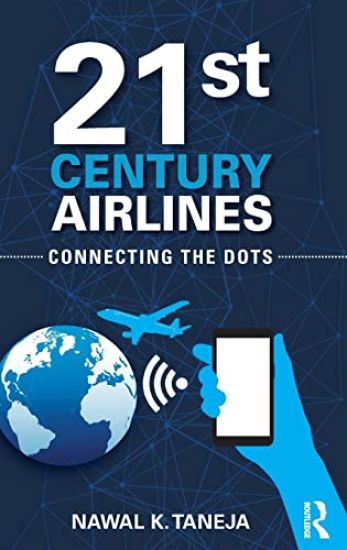
21st Century Airlines

21st Century Airlines

Nawal K. Taneja

Routledge
2017
sidottu
In 21st Century Airlines: Connecting the Dots, Nawal Taneja addresses the challenges and opportunities facing the airline industry as it tries to innovate and create products and services that are radically different by ‘connecting the dots’ at four key levels: recognizing the implications of global events, improving cross-functional collaboration within the organization, working more closely with the travel chain, and providing much higher engagements with connectors within the social networks.The book synthesizes insights gained from the experience of non-traditional businesses, such as Uber, that have no physical assets and that focus on scalability through platforms, as well as traditional businesses, such as Mercedes-Benz, that are transitioning from operators of physical assets to adapt to the on-demand and sharing economies. These insights show pragmatically that digitizing airline businesses would require digital mind-sets, digital technologies, digital strategies, and digital workplaces to explore new frontiers in value for both customers and airlines. Moreover, forward-thinking airlines need to consider working with bimodal organizational structures, in which one group optimizes current business models (network, fleet, and schedule planning, as well as revenue management) while a second group explores innovative ways to add digital features to physical products to provide a consistent experience throughout the journey.The book is written for all senior-level practitioners of airlines and related businesses worldwide, as well as senior-level government policymakers.
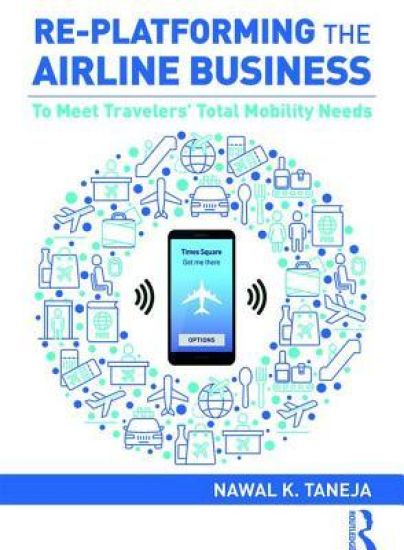
Re-platforming the Airline Business

Re-platforming the Airline Business

Nawal K. Taneja

Routledge
2019
sidottu
Airline business models continue to be shaped by powerful forces relating to customers, complexities and regulators. However, at the same time, there are emerging technologies that can help airlines cater to the needs of their changing customer bases and manage the complexities of the business. In his previous books, Nawal Taneja has deliberated on these forces and how the airline industry is poised for disruptive change that could come from within or outside of the industry. He also discussed the point that the airline planning systems and process in use are neither contemporary nor sufficiently integrated to meet the changing needs of customers who now are looking for outcomes, not products. In Re-platforming the Airline Business: To Meet Travelers' Total Mobility Needs, Taneja not only reiterates the need for transformation of the airline business but provides a map of the transformational process. This book proposes that different sectors of the aviation industry, particularly airlines and airports, should consider using not just a wide array of technologies (Artificial Intelligence, biometrics, blockchain, and the Internet of Things), but also specifically-designed customer-centric platforms to make informed decisions and to develop and implement transformative strategies to meet travelers’ total mobility needs. These technologies and platforms can enable airlines and airports to achieve scale and scope as well as agility and flexibility (through strategic partnerships) to offer intelligently aggregated travel-related services right now. Subsequently, they will enable various members in the travel chain to provide solutions to travelers’ global mobility requirements, effectively and with better experiences.
Simpli-Flying

Simpli-Flying

Nawal K. Taneja

Routledge
2019
nidottu
The airline industry is in a state of radical restructuring as its markets and key stakeholders (customers, airline labour and management groups, governments, and the financial community) adjust to the new aviation realities. Airline executives can be forgiven for being overwhelmed by technology proliferation, zestful new paradigm airlines, September 2001, business cycles, Iraq, SARS, and animal diseases. The leadership challenge for all carriers is now to select and execute appropriate business models, thinking both 'inside' and 'outside' the 'box', to turn conventional wisdom upside down to achieve dramatic increases in productivity. Some legacy carriers still need to create an effective strategy for much larger cycles that encompass major discontinuities. Burdened by past decisions, they are forced to fight with one hand tied behind their back to 'convert volume to value', to survive and prosper. Some new airlines have been at the forefront of shaping change, developing a vision of the mass-market, assessing the customer value of their core processes, and using a 'back-to-basics' business approach. Both groups should take a sideways glance at what works in other industries and implement those insights into actions.
Fasten Your Seatbelt: The Passenger is Flying the Plane
Fasten Your Seatbelt: The Passenger is Flying the Plane is the fourth in a series written at the encouragement of practitioners in the global airline industry. Core customers are beginning to seize control of the direction of the industry from airline management. Customers are doing so due to deep dissatisfaction with what is being offered by traditional carriers across all areas, including network, product, price, customer service and the distribution system. New airlines have clearly focused business designs with the discipline to reject non-valued products or services. In the US, new airlines score higher in customer satisfaction, offering lower fares and making larger operating profits. This book is about customer behaviour and how to address it. It provides detailed but easy-to-read practical discussion of the changes required on the part of airline management not only to think boldly, but also to execute courageously and relentlessly, ground-breaking strategies to fly ahead of their customers. As with previous books written by Nawal Taneja, the primary audience continues to be senior level practitioners within the global airline industry - in both traditional carrier and low complexity carrier segments. The approach is impartial, candid and pragmatic, based on what is happening in the actual market place rather than theoretical business models.
Looking Beyond the Runway

Looking Beyond the Runway

Nawal K. Taneja

Ashgate Publishing Limited
2010
sidottu
The global airline industry, facing significant changes and discontinuity is prompted and forced to deal with a "new normal." Who would have imagined a few years ago that: - a significant percentage of consumers in the US now prefer to fly low-cost airlines instead of full-service airlines because they perceive the product to be better, - airlines would generate up to a third of their total income from non-ticket revenue, - many low-cost airlines would add complexity to their original simple business models through the development of code-share agreements, the use of global distribution systems, and travel agents to distribute their seats, - Jetstar, a low-cost subsidiary of Qantas, would grow faster and be more profitable than its parent, - a survey carried out by Ryanair would show that 42 percent of passengers would be willing to stand on short (one hour) flights if they could pay 50 percent less than seated passengers, - passengers could pay as little as US$2,000 for a transatlantic Business Class ticket on top-brand airlines, - Lufthansa would have ownership in airlines based in Austria, Belgium, Italy, Switzerland, Turkey, the UK, and the US, and that it would continue to pursue equity ownership in airlines based in Poland and Scandinavia, or - the Japanese and Canadian governments would struggle to find different ways to bail out their heretofore flag carriers? To deal with this upcoming "new normal", airlines have to go beyond their short-term circumstantial strategies - they need strategic renewal of their ageing business model. In this candidly-written book, Nawal Taneja explains what will separate the winners from the losers. He maintains the leaders will be the airlines that: (1) exploit this crisis-driven change to their best advantage, (2) learn to work around the airline-inherent constraints that prevent them from running their businesses just like other businesses, (3) learn from successes and failures of other global enterprises, (4) sharpen their business intelligence, analytics, and strategic agility, and (5) proactively explore the "pockets of growth" in this emerging-markets century. To help airline executives become informed of new competitive games, the author analyzes numerous business sectors such as auto, hospitality, retail, technology, and entertainment. For example, relevant lessons can be learned from the strategic mistakes made by the US automakers. Likewise, emergent and compelling insights can be gained in superior customer experience from Ritz Carlton and Zappos, and in value-creating innovation from Cirque du Soleil and Zipcar. The book also features a multitiude of forewords from airlines and related businesses to provide readers with multiple perspectives on the changing landscape in the global airline industry. Nawal Taneja is a career analyst of the global airline industry with wide-ranging experience in the aviation industry, academia, and public policy. Encouraged by industry executives, he has written five other books for practitioners in the global airline industry, including FASTEN YOUR SEATBELT: The Passenger is Flying the Plane and Flying Ahead of the Airplane.
The Passenger Has Gone Digital and Mobile

The Passenger Has Gone Digital and Mobile

Nawal K. Taneja

Ashgate Publishing Limited
2011
sidottu
Technology is changing expectations in the airline industry. Passengers want to be in control, and they expect airlines to become solution providers and aggregators of value, to provide them with personalized services. Airline employees expect to be given the tools to do their jobs and to meet passenger expectations. Airline executives expect to make returns that are reasonable and relatively stable through business cycles. All of these expectations can be met by airlines through the effective and efficient leveraging of information and technology, to shift from being operations- and product-centric to becoming customer-centric and dramatically improving the overall passenger travel experience throughout the travel cycle. In this new book by world-renowned airline expert Nawal K. Taneja, the 7th in a series with Ashgate, the author explores and explains the game-changing opportunities presented to the industry by new-generation information and technology. He shows how information and technology can now drive, not just enable, an airline's strategy to become truly customer-centric at a personalized level, while at the same time enabling the operator to reduce costs, enhance revenues, reduce risks and become much more flexible and agile by better managing complexity.
The Failure of the Muslim Brotherhood in the Arab World
This book is an indispensable resource for anyone looking to understand the Muslim Brotherhood; Qatar's role in promoting the group; and the ideological, social, and religious factors that have led to its ultimate failure.The book begins by looking at the birth of the Muslim Brotherhood (MB) in 1928 in Egypt. It then traces its ideology and expansion via the various affiliate organizations in the Arab world as well as its international presence up to the present day. Throughout this historical analysis, evidence is presented linking the MB again and again to political violence and a lack of a coherent policy. The book weaves into this history the influence of Qatari support, a clarification of the division between true Salafism and the MB's radical ideology, an explanation of how Jamal Khashoggi was a living metaphor for this misunderstanding, and the role the MB has played in various revolutionary movements throughout the Middle East. The book concludes with a current geopolitical outlook on the MB itself and the Arab world in which it resides. The book is extensively sourced with first-hand primary source quotes from numerous exclusive personal interviews conducted by the author, with both experts on the subject and officials in the region.
The Cruel Optimism of Racial Justice

The Cruel Optimism of Racial Justice

Nasar Meer

Bristol University Press
2022
nidottu
What can we learn from successes and failures in the pursuit of racial justice in the UK and elsewhere in the Global North? A dominant view of racial justice has long been linked to a ‘cruel optimism’ which normalises social and political outcomes that sustain racial injustice, despite successive governments wielding the means to address it. Researchers, activists and minoritised groups continually identify the drivers of these outcomes, but have grown accustomed to persevering despite strong resistance to change. Looking at numerous examples across anti-racist movements and key developments in nationhood/nationalism, institutional racism, migration, white supremacy and the disparities of COVID-19, Nasar Meer argues for the need to move on from perpetual crisis in racial justice to a turning point that might herald a change to deep-seated systems of racism.
Fundamentals of Search and Rescue

Fundamentals of Search and Rescue

NASAR

Jones and Bartlett Publishers, Inc
2018
nidottu
Fundamentals of Search and Rescue (FUNSAR), Second Edition is a comprehensive resource for new and experienced search and rescue (SAR) personnel. Providing an overview of all aspects of search and rescue procedures and equipment, FUNSAR teaches the essential techniques employed by nearly all successful search and rescue personnel. FUNSAR offers an in-depth and practical approach to search and rescue and is recommended for all emergency responders.The Second Edition has been fully updated to meet the needs of today's SAR personnel, highlighting the most current equipment and technology and focusing on proven and effective search and rescue techniques. All areas of search and rescue are covered, from choosing the best clothing and footwear for the environment, to packing light and improvising, to tracking and locating subjects. Ideal for both paid and volunteer professionals, this essential resource combines dynamic features with the latest and most comprehensive content.Dynamic Features•Search and Rescue Tips reinforce key information for conducting SAR operations•Safety Tips alert SAR personnel to both expected and potentially unanticipated hazards•Listed resources provide suggestions for further study of each chapter's topics•Full-color photos and illustrations support and help clarify the textComprehensive Content•Guidelines to ensure SAR personnel are both physically and mentally prepared for search and rescue•Important legal and ethical considerations for search and rescue•A wide variety of SAR equipment, clothing, and technology, and when each should be used•Survival and improvisational methods in various environments•Tracking methods and navigation tools
Designing Future-Oriented Airline Businesses
Designing Future-Oriented Airline Businesses is the eighth Ashgate book by Nawal K. Taneja to address the ongoing challenges and opportunities facing all generations of airlines. Firstly, it challenges and encourages airline managements to take a deeper dive into new ways of doing business. Secondly, it provides a framework for identifying and developing strategies and capabilities, as well as executing them efficiently and effectively, to change the focus from cost reduction to revenue enhancement and from competitive advantage to comparative advantage. Based on the author’s own extensive experience and ongoing work in the global airline industry, as well as through a synthesis of leading business practices both inside and outside of the industry, Designing Future-Oriented Airline Businesses sets out to demystify numerous concepts being discussed within the airline industry and to facilitate managements to identify and articulate the boundaries of their business models. It provides material from which managements can set about answering the key questions, especially with respect to strategies, capabilities and execution, and pursue an effective redesign of their business. As with the author’s previous books, the primary audience is senior-level practitioners of differing generations of airlines worldwide as well as related businesses. The material presented continues to be at a pragmatic level, not an academic exercise, to lead managements to ask themselves and their teams some critical thought-provoking questions.
Airline Industry

Airline Industry

Nawal K. Taneja

Routledge
2016
sidottu
Many business sectors have been, and are being, forced to compete with new competitors-disrupters of some sort-who have found new ways to create and deliver new value for customers often through the use of technology that is coupled with a new underlying production or business model, and/or a broad array of partners, including, in some cases, customers themselves. Think about the disruption created by Apple by the introduction of the iPod and iTunes, and by Netflix within the entertainment sectors using partners within the ecosystem; think of Uber that didn’t build an app around the taxi business but rather built a mobility business around the app to improve customer experience. Airline Industry considers whether the airline industry is poised for disruptive innovations from inside or outside of the industry. Although airlines have a long history of continuous improvements and innovation, few of their innovations can be classified as disruptive innovations. The few disruptive innovations that did emerge were facilitated, for example by new technology (jet aircraft) and government policy (deregulation). Now there are new forces in play-customers who expect to receive products that are more personalized and experience-based throughout the entire journey, new customer interfaces (via social media), advanced information systems and analytics, financially powerful airlines based in emerging nations, and the rise of unencumbered entrepreneurs who think differently as well as platform-focused integrators.