Kirjojen hintavertailu. Mukana 11 699 587 kirjaa ja 12 kauppaa.

Kirjahaku

Etsi kirjoja tekijän nimen, kirjan nimen tai ISBN:n perusteella.

1000 tulosta hakusanalla Neil R Oliver

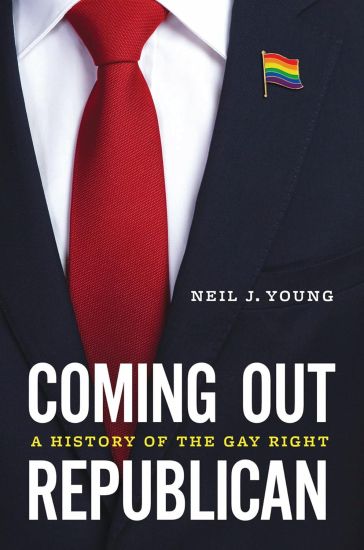
Coming Out Republican

Coming Out Republican

Neil J. Young

THE UNIVERSITY OF CHICAGO PRESS
2024
sidottu
A revelatory and comprehensive history of the gay Right from incisive political commentator Neil J. Young.? One of the most maligned, misunderstood, and even mocked constituencies in American politics, gay Republicans regularly face condemnation from both the LGBTQ+ community and their own political party. Yet they’ve been active and influential for decades. Gay conservatives were instrumental, for example, in ending “Don’t Ask, Don’t Tell” and securing the legalization of same-sex marriage—but they also helped lay the groundwork for the rise of Donald Trump. In Coming Out Republican, political historian and commentator Neil J. Young provides the first comprehensive history of the gay Right. From the 1950s up to the present day, Young excavates the multifarious origins, motivations, and evolutions of LGBTQ+ people who found their way to the institutions and networks of modern conservatism. Many on the gay Right have championed conservative values—like free markets, a strong national defense, and individual liberty—and believed that the Republican Party therefore offered LGBTQ+ people the best pathway to freedom. Meanwhile, that same party has actively and repeatedly demonized them. With his precise and provocative voice, Young details the complicated dynamics of being in—and yet never fully accepted into—the Republican Party.Coming Out Republican provides striking insight into who LGBTQ+ conservatives are, what they want, and why many of them continue to align with a party whose rank and file largely seem to hate them. As the Republican Party renews its assaults on LGBTQ+ rights, understanding the significant history of the gay Right has never been more critical.

Defining Nature's Limits

Defining Nature's Limits

Neil Tarrant

THE UNIVERSITY OF CHICAGO PRESS
2022
sidottu
A look at the history of censorship, science, and magic from the Middle Ages to the post-Reformation era. Neil Tarrant challenges conventional thinking by looking at the longer history of censorship, considering a five-hundred-year continuity of goals and methods stretching from the late eleventh century to well into the sixteenth. Unlike earlier studies, Defining Nature's Limits engages the history of both learned and popular magic. Tarrant explains how the church developed a program that sought to codify what was proper belief through confession, inquisition, and punishment and prosecuted what they considered superstition or heresy that stretched beyond the boundaries of religion. These efforts were continued by the Roman Inquisition, established in 1542. Although it was designed primarily to combat Protestantism, from the outset the new institution investigated both practitioners of "illicit" magic and inquiries into natural philosophy, delegitimizing certain practices and thus shaping the development of early modern science. Describing the dynamics of censorship that continued well into the post-Reformation era, Defining Nature's Limits is revisionist history that will interest scholars of the history science, the history of magic, and the history of the church alike.
The Roots of Polarization

The Roots of Polarization

Neil A. O'Brian

THE UNIVERSITY OF CHICAGO PRESS
2024
sidottu
A deeply researched account of how battles over civil rights in the 1960s shaped today’s partisan culture wars. In the late twentieth century, gay rights, immigration, gun control, and abortion debates all burst onto the political scene, scrambling the parties and polarizing the electorate. Neil A. O’Brian traces the origins of today’s political divide on these issues to the 1960s when Democrats and Republicans split over civil rights. It was this partisan polarization over race, he argues, that subsequently shaped partisan fault lines on other culture war issues that persist to this day. Using public opinion data dating to the 1930s, O’Brian shows that attitudes about civil rights were already linked with a range of other culture war beliefs decades before the parties split on these issues—and much earlier than previous scholarship realized. Challenging a common understanding of partisan polarization as an elite-led phenomenon, The Roots of Polarization argues politicians and interest groups, jockeying for power in the changing party system, seized on these preexisting connections in the mass public to build the parties’ contemporary coalitions.
The Roots of Polarization

The Roots of Polarization

Neil A. O'Brian

THE UNIVERSITY OF CHICAGO PRESS
2024
nidottu
A deeply researched account of how battles over civil rights in the 1960s shaped today’s partisan culture wars. In the late twentieth century, gay rights, immigration, gun control, and abortion debates all burst onto the political scene, scrambling the parties and polarizing the electorate. Neil A. O’Brian traces the origins of today’s political divide on these issues to the 1960s when Democrats and Republicans split over civil rights. It was this partisan polarization over race, he argues, that subsequently shaped partisan fault lines on other culture war issues that persist to this day. Using public opinion data dating to the 1930s, O’Brian shows that attitudes about civil rights were already linked with a range of other culture war beliefs decades before the parties split on these issues—and much earlier than previous scholarship realized. Challenging a common understanding of partisan polarization as an elite-led phenomenon, The Roots of Polarization argues politicians and interest groups, jockeying for power in the changing party system, seized on these preexisting connections in the mass public to build the parties’ contemporary coalitions.
The Symphony Concert in Nazi Germany

The Symphony Concert in Nazi Germany

Neil Gregor

THE UNIVERSITY OF CHICAGO PRESS
2025
sidottu
A new history of how the musical worlds of German towns and cities were transformed during the Nazi era. In the years after the Nazis came to power in January 1933 and through the war years all aspects of life in Germany changed. However, despite the social and political upheaval, gentile citizens were able to continue leisure activities such as attending concerts. In this book, historian Neil Gregor surveys the classical concert scene in Nazi Germany from the perspective of the audience, rather than institutions or performers. Gregor delves into the cultural lives of ordinary Germans under conditions of dictatorship. Did the ways in which Germans heard music in the period change? Did a Nazi way of listening emerge? For audiences, Gregor shows, changes to the concert experience were small and often took place around the edges. This, combined with the preserved idea of the concert hall as a space of imagined civility and cultivation, led many concertgoers and music lovers to claim after the war that their field and their practice had been innocent-a place to retreat from the vicious violence and racism of the Nazi regime. Drawing on untapped archival sources, The Symphony Concert in Nazi Germany reveals that the true history was one of disruption but also of near effortless adaptation. Through countless small acts, the symphony concert was reframed within the languages of strident nationalism, racism, and militarism to ensure its place inside the cultural cosmos of National Socialist Germany.
Sons, Daughters, and Sidewalk Psychotics

Sons, Daughters, and Sidewalk Psychotics

Neil Gong

THE UNIVERSITY OF CHICAGO PRESS
2025
nidottu
Sociologist Neil Gong explains why mental health treatment in Los Angeles rarely succeeds, for the rich, the poor, and everyone in between. In 2022, Los Angeles became the US county with the largest population of unhoused people, drawing a stark contrast with the wealth on display in its opulent neighborhoods. In Sons, Daughters, and Sidewalk Psychotics, sociologist Neil Gong traces the divide between the haves and have-nots in the psychiatric treatment systems that shape the life trajectories of people living with serious mental illness. In the decades since the United States closed its mental hospitals in favor of non-institutional treatment, two drastically different forms of community psychiatric services have developed: public safety-net clinics focused on keeping patients housed and out of jail, and elite private care trying to push clients toward respectable futures. In Downtown Los Angeles, many people in psychiatric crisis only receive help after experiencing homelessness or arrests. Public providers engage in guerrilla social work to secure them housing and safety, but these programs are rarely able to deliver true rehabilitation for psychological distress and addiction. Patients are free to refuse treatment or use illegal drugs—so long as they do so away from public view. Across town in West LA or Malibu, wealthy people diagnosed with serious mental illness attend luxurious treatment centers. Programs may offer yoga and organic meals alongside personalized therapeutic treatments, but patients can feel trapped, as their families pay exorbitantly to surveil and “fix” them. Meanwhile, middle-class families—stymied by private insurers, unable to afford elite providers, and yet not poor enough to qualify for social services—struggle to find care at all. Gong’s findings raise uncomfortable questions about urban policy, family dynamics, and what it means to respect individual freedom. His comparative approach reminds us that every “sidewalk psychotic” is also a beloved relative and that the kinds of policies we support likely depend on whether we see those with mental illness as a public social problem or as somebody’s kin. At a time when many voters merely want streets cleared of “problem people,” Gong’s book helps us imagine a fundamentally different psychiatric system—one that will meet the needs of patients, families, and society at large.
Theater of the Mind

Theater of the Mind

Neil Verma

University of Chicago Press
2012
sidottu
For generations, fans and critics have characterized classic American radio drama as a "theater of the mind". This book examines that characterization by recasting the radio play as an aesthetic object within its unique historical context. In "Theater of the Mind", Neil Verma applies an array of critical methods to more than six thousand recordings to produce a vivid new account of radio drama from the Depression to the Cold War. In this sweeping exploration of dramatic conventions, Verma investigates legendary dramas by the likes of Norman Corwin, Lucille Fletcher, and Wyllis Cooper on key programs ranging from The Columbia Workshop, The Mercury Theatre on the Air, and Cavalcade of America to Lights Out!, Suspense, and Dragnet to reveal how these programs promoted and evolved a series of models of the imagination. With close readings of individual sound effects and charts of broad trends among formats, Verma not only gives us a new account of the most flourishing form of genre fiction in the mid-twentieth century but also presents a powerful case for the central place of the aesthetics of sound in the history of modern experience.
Theater of the Mind

Theater of the Mind

Neil Verma

University of Chicago Press
2012
nidottu
For generations, fans and critics have characterized classic American radio drama as a "theater of the mind". This book examines that characterization by recasting the radio play as an aesthetic object within its unique historical context. In "Theater of the Mind", Neil Verma applies an array of critical methods to more than six thousand recordings to produce a vivid new account of radio drama from the Depression to the Cold War. In this sweeping exploration of dramatic conventions, Verma investigates legendary dramas by the likes of Norman Corwin, Lucille Fletcher, and Wyllis Cooper on key programs ranging from The Columbia Workshop, The Mercury Theatre on the Air, and Cavalcade of America to Lights Out!, Suspense, and Dragnet to reveal how these programs promoted and evolved a series of models of the imagination. With close readings of individual sound effects and charts of broad trends among formats, Verma not only gives us a new account of the most flourishing form of genre fiction in the mid-twentieth century but also presents a powerful case for the central place of the aesthetics of sound in the history of modern experience.
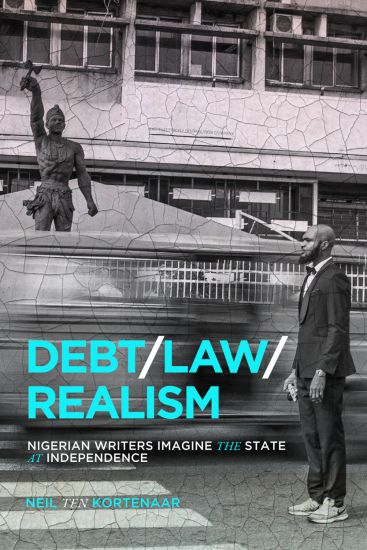
Debt, Law, Realism

Debt, Law, Realism

Neil ten Kortenaar

McGill-Queen's University Press
2021
sidottu
In the decade before and after independence, Nigerians not only adopted the novel but reinvented the genre. Nigerian novels imagined the new state, with its ideals of the rule of law, state sovereignty, and a centralized administration.Debt, Law, Realism argues that Nigerian novels were not written for a Western audience, as often stated, but to teach fellow citizens how to envision the state. The first Nigerian novels were overwhelmingly realist because realism was a way to convey the understanding shared by all subject to the rule of law. Debt was an important theme used to illustrate the social trust needed to live with strangers. But the novelists felt an ambivalence towards the state, which had been imposed by colonial military might. Even as they embraced the ideal of the rule of law, they kept alive a memory of other ways of governing themselves. Many of the first novelists – including Chinua Achebe – were Igbos, a people who had been historically stateless, and for whom justice had been a matter of interpersonal relations, consensus, and reciprocity, rather than a citizen’s subordination to a higher authority.Debt, Law, Realism reads African novels as political philosophy, offering important lessons about the foundations of social trust, the principle of succession, and the nature of sovereignty, authority, and law.
Debt, Law, Realism

Debt, Law, Realism

Neil ten Kortenaar

McGill-Queen's University Press
2021
nidottu
In the decade before and after independence, Nigerians not only adopted the novel but reinvented the genre. Nigerian novels imagined the new state, with its ideals of the rule of law, state sovereignty, and a centralized administration.Debt, Law, Realism argues that Nigerian novels were not written for a Western audience, as often stated, but to teach fellow citizens how to envision the state. The first Nigerian novels were overwhelmingly realist because realism was a way to convey the understanding shared by all subject to the rule of law. Debt was an important theme used to illustrate the social trust needed to live with strangers. But the novelists felt an ambivalence towards the state, which had been imposed by colonial military might. Even as they embraced the ideal of the rule of law, they kept alive a memory of other ways of governing themselves. Many of the first novelists – including Chinua Achebe – were Igbos, a people who had been historically stateless, and for whom justice had been a matter of interpersonal relations, consensus, and reciprocity, rather than a citizen’s subordination to a higher authority.Debt, Law, Realism reads African novels as political philosophy, offering important lessons about the foundations of social trust, the principle of succession, and the nature of sovereignty, authority, and law.
The Urbanization of Forced Displacement

The Urbanization of Forced Displacement

Neil James Wilson Crawford

McGill-Queen's University Press
2021
sidottu
Displacement in the twenty-first century is urbanized. The United Nations Refugee Agency (UNHCR), the world’s largest humanitarian organization and the main body charged with assisting displaced people globally, estimates that over 60 per cent of refugees now live in urban areas, a proportion that only increases in the case of internally displaced people and asylum seekers.Though cities and local authorities have become essential participants in the protection of refugees, only three decades ago they were considered to sit firmly beyond UNHCR’s remit, with urban refugees typically characterized as aberrations. In The Urbanization of Forced Displacement Neil James Wilson Crawford examines the organization’s response to the growing number of refugees migrating to urban areas. Introducing a broader study of policy-making in international organizations, Crawford addresses how and why UNHCR changed its policy and practice in response to shifting trends in displacement. Citing over 400 primary UN documents, Crawford provides an in-depth study of the internal and external pressures faced by UNHCR – pressures from above, below, and within – that explain why it has radically transformed its position from the 1990s onward.UNHCR and global refugee policies have come to play an increasingly important role in the governance of global displacement. The Urbanization of Forced Displacement sheds new light on how the organization works and how it conceives its role in global politics today.
The Urbanization of Forced Displacement

The Urbanization of Forced Displacement

Neil James Wilson Crawford

McGill-Queen's University Press
2021
nidottu
Displacement in the twenty-first century is urbanized. The United Nations Refugee Agency (UNHCR), the world’s largest humanitarian organization and the main body charged with assisting displaced people globally, estimates that over 60 per cent of refugees now live in urban areas, a proportion that only increases in the case of internally displaced people and asylum seekers.Though cities and local authorities have become essential participants in the protection of refugees, only three decades ago they were considered to sit firmly beyond UNHCR’s remit, with urban refugees typically characterized as aberrations. In The Urbanization of Forced Displacement Neil James Wilson Crawford examines the organization’s response to the growing number of refugees migrating to urban areas. Introducing a broader study of policy-making in international organizations, Crawford addresses how and why UNHCR changed its policy and practice in response to shifting trends in displacement. Citing over 400 primary UN documents, Crawford provides an in-depth study of the internal and external pressures faced by UNHCR – pressures from above, below, and within – that explain why it has radically transformed its position from the 1990s onward.UNHCR and global refugee policies have come to play an increasingly important role in the governance of global displacement. The Urbanization of Forced Displacement sheds new light on how the organization works and how it conceives its role in global politics today.
Unbecoming

Unbecoming

Neil Surkan

McGill-Queen's University Press
2021
nidottu
Subtler, subtler, beat our hearts / down aisles of cluttered glitz.Unbecoming, Neil Surkan's sophomore collection, clings to hope while the world deteriorates, transforms, and grows less hospitable from moment to moment. Interplaying tenderness with dogged perseverance, these poems tumble through vignettes of degraded landscapes, ebbing spiritual communities, faltering men, and precarious friendships.Yet, in the face of such despair, responsibility and optimism bolster one another – exuberance, amazement, and compassion persist despite the worsening of the wounded Earth. Multifaceted and inventive, this collection of poems vaults from intimation to excoriation, where grief, desire, bewilderment, and protest all crackle and meld. As the world "appears, exceeds, and un- / becomes too quickly for certainty, / just enough for love," the poems in Unbecoming face the horizon with wary eyes and refuse to turn away.
Empties

Empties

Neil Surkan

MCGILL-QUEEN'S UNIVERSITY PRESS
2026
nidottu
(one can make / while being unmade) In a powerful interplay of striking descriptions with tender intimations, Empties, Neil Surkan's third poetry collection, reckons with fatherhood in a depleted and collapsing environment: Is it possible to nurture new shoots while the fires close in? Feelings of emptiness, acts of emptying, and physical empties coalesce in these vivid and timely poems. Through a queer lens, Surkan's speaker scrutinizes masculinity and fatherhood as he confronts the necessary emptiness that comes with becoming someone's ancestor. Arrays of drained and discarded entities – empty bottles, broken pots and cups – summon a world, husked and untenably extracted, that teeters toward collapse, but even those empty spaces are receptacles for fleeting moments of vulnerability and tenderness. At its core, Empties explores the conditions of life on the verge of hopelessness. It finds, among shadows of doom and despair, unlikely but nonetheless inevitable reasons to hope. These are poems that teach endurance "in the face of all that won't / be saved" while still finding much in the world "to cherish / as it brinks." In direness, there is also awe: one mustn't forget, Surkan reminds us, that only empty bottles can sing.