The poetry produced by the British poets of the 17th and 18th centuries is considered to be among the best ever written. But many general readers feel intimidated by the language or structure of the poetry, and so tend to shy away from enjoying these poets and their works. Nelson takes readers on a tour of the major works and figures of 17th- and 18th-century British poetry, explaining major themes, devices, styles, language, rhythm, sound, tone, imagery, form, and meaning. Beginning each chapter with a sketch of the poet's life and career, the author then looks at five or six representative works, helping readers understand and appreciate the beauty of poetry itself.From Donne and Jonson, to Pope, Swift, and Burns, the book offers excerpts of the poetry these artists crafted, and carefully examines the various attributes that have helped to establish them as some of the greatest of all time. Writing in clear, accessible language, Nelson also introduces general poetry terms to the novice, providing examples and explanations where necessary. Readers will no longer feel intimidated by difficult poetry. Instead, they will walk away with the tools they need to read, understand, and appreciate these titans of British letters.
Methamphetamine, made easily in clandestine labs from over-the-counter ingredients, can cause depression, rapid tooth decay, psychosis, sensations of flesh crawling with bugs, paranoia, skin lesions, and kidney damage. Still, use has spread nationwide. In this work, two experts on methamphetamine addiction and recovery explain why this drug has such a physical, psychological, and social draw for addicts, despite all the damage it causes. Vignettes from addicts take us inside the subculture of meth users. Authors Taylor and Covey explain why this drug and its addiction is different from other illicit drugs and why, therefore, the treatment needs to be specifically tailored in order to be effective. Stephan Jenkins, singer for the band Third Eye Blind, says methamphetamine makes you feel bright and shiny, but it also makes you pathetically and relentlessly self-destructive, so much so that you will do unconscionable things to feel bright and shiny again. This drug, made easily in clandestine labs from over-the-counter ingredients, can also cause depression, rapid tooth decay, psychosis, sensations of flesh crawling with bugs, paranoia, skin lesions, and kidney damage. Still, use has spread nationwide from California to Maine, with known addictions now highest in the West, Midwest, and South. Treatment admissions for methamphetamine addictions have increased more than fivefold in the last decade, with a federal report in 2006 showing 136,000 known cases. Meth is particularly addictive to women because it causes rapid weight loss. The results, as shown in recent cover stories in Newsweek, National Geographic, and USA Today, are pain for far more than the abuser. Meth addiction also ravages life for spouses, children, and other family members, as well as communities. In this work, two experts on methamphetamine addiction and recovery explain why this drug has such a physical, psychological, and social draw for addicts despite all the damage it causes. Vignettes from addicts let us see inside the subculture of meth users. Authors Taylor and Covey explain why this drug and its addiction is different from other illicit drugs, and therefore why the treatment needs to be specifically tailored in order to be effective. This book, focused only on the addiction avenues and paths to recovery, is a perfect companion to Covey's earlier book, The Metehamphetamine Crisis (Praeger, 2006), which details the emergence and history of this drug use in the United States, as well as the social and community effects, and criminal justice approaches, successes, and failures to date. This book at hand will appeal to meth abusers, their families, and professionals trying to aid recovery from this new scourge, including substance abuse treatment providers, health professionals, psychologists, school personnel, and criminal justice staff.
Hispanic theatre flourished in the United States from the mid-nineteenth century until the beginning of the Second World War-a fact that few theatre historians know. A History of Hispanic Theatre in the United States: Origins to 1940 is the very first study of this rich tradition, filled with details about plays, authors, artists, companies, houses, directors, and theatrical circuits.Sixteen years of research in public and private archives in the United States, Mexico, Spain, and Puerto Rico inform this study. In addition, Kanellos located former performers and playwrights, forgotten scripts, and old photographs to bring the life and vitality of live theatre to his text. He organizes the book around the cities where Hispanic theatre was particularly active, including Los Angeles, San Antonio, New York, and Tampa, as well as cities on the touring circuit, such as Laredo, El Paso, Tucson, and San Francisco.Kanellos charts the major achievements of Hispanic theatre in each city-playwriting in Los Angeles, vaudeville and tent theatre in San Antonio, Cuban/Spanish theatre in Tampa, and pan-Hispanism in New York-as well as the individual careers of several actors, writers, and directors. And he uncovers many gaps in the record-reminders that despite its popularity, Hispanic theatre was often undervalued and unrecorded.
Immigration has been one of the basic realities of life for Latino communities in the United States since the nineteenth century. It is one of the most important themes in Hispanic literature, and it has given rise to a specific type of literature while also defining what it means to be Hispanic in the United States. Immigrant literature uses predominantly the language of the homeland; it serves a population united by that language, irrespective of national origin; and it solidifies and furthers national identity. The literature of immigration reflects the reasons for emigrating, records-both orally and in writing-the trials and tribulations of immigration, and facilitates adjustment to the new society while maintaining links with the old society.Based on an archive assembled over the past two decades by author NicolÁs Kanellos's Recovering the U. S. Hispanic Literary Heritage project, this comprehensive study is one of the first to define this body of work. Written and recorded by people from Mexico, Cuba, Puerto Rico, the Caribbean, and Central and South America, the texts presented here reflect the dualities that have characterized the Hispanic immigrant experience in the United States since the mid-nineteenth century, set always against a longing for homeland.
The death of the Italian Jesuit Matteo Ricci in China in 1610 was the occasion for demonstrations of European rituals appropriate for a Catholic priest and also of Chinese rituals appropriate to the country hosting the Jesuit community. Rather than burying Ricci immediately in a plain coffin near the church, according to their European practice, the Jesuits followed Chinese custom and kept Ricci's body for nearly a year in an air-tight Chinese-style coffin and asked the emperor for burial ground outside the city walls. Moreover, at Ricci's funeral itself, on their own initiative the Chinese performed their funerary rituals, thus starting a long and complex cultural dialogue in which they took the lead during the next century.The Interweaving of Rituals explores the role of ritual - specifically rites related to death and funerals - in cross-cultural exchange, demonstrating a gradual interweaving of Chinese and European ritual practices at all levels of interaction in seventeenth-century China. This includes the interplay of traditional and new rituals by a Christian community of commoners, the grafting of Christian funerals onto established Chinese practices, and the sponsorship of funeral processions for Jesuit officials by the emperor. Through careful observation of the details of funerary practice, Nicolas Standaert illustrates the mechanics of two-way cultural interaction. His thoughtful analysis of the ritual exchange between two very different cultural traditions is especially relevant in today's world of global ethnic and religious tension. His insights will be of interest to a broad range of scholars, from historians to anthropologists to theologians.
The death of the Italian Jesuit Matteo Ricci in China in 1610 was the occasion for demonstrations of European rituals appropriate for a Catholic priest and also of Chinese rituals appropriate to the country hosting the Jesuit community. Rather than burying Ricci immediately in a plain coffin near the church, according to their European practice, the Jesuits followed Chinese custom and kept Ricci's body for nearly a year in an air-tight Chinese-style coffin and asked the emperor for burial ground outside the city walls. Moreover, at Ricci's funeral itself, on their own initiative the Chinese performed their funerary rituals, thus starting a long and complex cultural dialogue in which they took the lead during the next century.The Interweaving of Rituals explores the role of ritual - specifically rites related to death and funerals - in cross-cultural exchange, demonstrating a gradual interweaving of Chinese and European ritual practices at all levels of interaction in seventeenth-century China. This includes the interplay of traditional and new rituals by a Christian community of commoners, the grafting of Christian funerals onto established Chinese practices, and the sponsorship of funeral processions for Jesuit officials by the emperor. Through careful observation of the details of funerary practice, Nicolas Standaert illustrates the mechanics of two-way cultural interaction. His thoughtful analysis of the ritual exchange between two very different cultural traditions is especially relevant in today's world of global ethnic and religious tension. His insights will be of interest to a broad range of scholars, from historians to anthropologists to theologians.
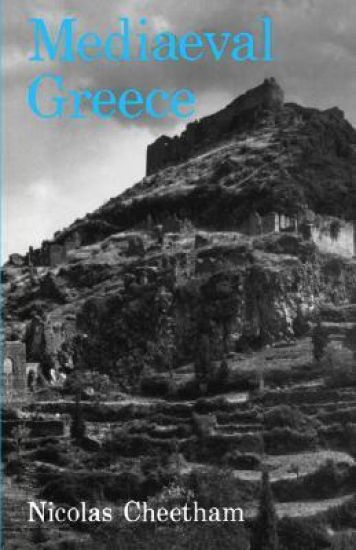
The history of Greece between the collapse of the Roman Empire and the birth of the modern Greek state is for most people an historical blank. Specialist studies are not lacking, but unlike the other Mediterranean lands that have been the subject of many recent books, there has been no general history of mediaeval Greece published in English since 1908. This book is an attempt to fill the gap. The history of Greece in this period offers a long series of human dramas played out among clashes and contrasts between races, cultures, and religions; between Greeks and Slavs; between Frenchmen, Italians, Catalans, and Turks; between the Orthodox, the Catholic, and the Moslem faiths; between the old order and audacious intruders. Western knights jousted among the ruins of antiquity, and Venetian and Turkish galleys fought each other throughout the Aegean. After an introductory account of the Dark Age invasions of Goths and Slavs and of the survival and reestablishment of the Greek identity under Byzantine rule, Nicolas Cheetham discusses the Frankish domination of Greece after the Fourth Crusade (1204) when Frenchmen and Italians divided Greece between them and set up rival feudal dynasties. The book describes how princes from Champagne, dukes from Burgundy, Catalan adventurers, and Florentine bankers ruled in the Peloponnese and at Athens, and how the Greeks led by Palaeologus and Cantacuzeno from Byzantium reconquered the country, only to lose it again to the Turks. This book illuminates a long but hitherto little known period in the history of one of Europe’s most intensively studied countries.
French poet and critic Nicolas Boileau-Despréaux (1636-1711) was by turns venerated (in the eighteenth century) and reviled (in the nineteenth century) as the lawgiver of French classicism. Today critics see his achievement as more varied and complex than the label of classicism generally allows. This selection of Boileau’s poems, translated with spirit and carefully annotated by Burton Raffel, brings the work of Boileau to English-speaking readers for the first time in a generation. Much admired for his wit and ingenuity, Boileau perceived the role of the satirist as the scourge of bad writing and delighted in the notion of “l’ami du vrai,” the brash truth-teller and enemy of humbug, inflation, and equivocation. Raffel’s translations, vigorous and engaging, preserve the meaning of Boileau’s poems and invite today’s reader to enjoy the poet’s astute perceptions. Julia Prest’s insightful introduction to the volume provides an overview of Boileau’s life and achievement.
This book promises to be a very useful reference work, covering material that has heretofore been hard to find. . . . . useful in academic libraries and large public libraries. Reference Books BulletinThis dictionary provides an exhaustive reference guide to representative figures in Hispanic literature within the geographic, political, and cultural boundaries of the United States. While concentrating on contemporary writers who have made or promise to make a lasting contribution to multiethnic letters in this country, it is designed to make accessible to the English-language reader a literary world that has until now been articulated primarily in Spanish. Focusing mainly on Puerto Rican and Cuban writers, each entry summarizes the importance of the subject and indicates the literary genres and themes cultivated. There is a brief biography of each author, an analysis of major works and themes, and a survey of the criticism of the author's works.The first and most comprehensive volume on the subject, this extraordinarily detailed sourcebook is a compilation of bio-bibliographical essays on leading Hispanic novelists, poets, and dramatists, and includes secondary bibliographies for each entry as well as a general bibliography on Hispanic literature. Especially highlighted are such authors as Nuyorican Miguel Pinero, winner of the New York Drama Critics Circle Award for Best American Play; Chilean novelist, critic, and editor Fernando Alegria; the Cuban-American chronicler of life in Miami's exile community, Roberto Fernandez, and others. Kanellos' work answers a definite need for comprehensive biographical and critical information on these writers, and it will be a significant addition to academic and public libraries, and to research in Spanish, English, bilingual education, and ethnic studies.
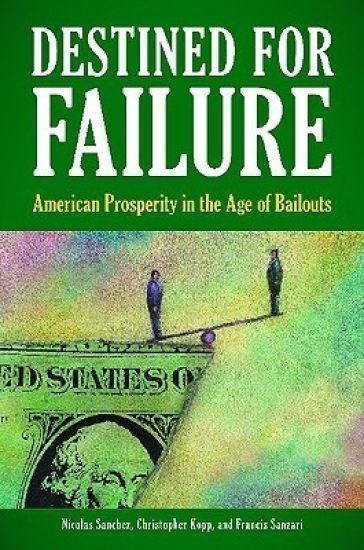
This book provides a historical background of the American business cycle, challenges the validity of conventional Keynesian ideology, and presents a bold, alternative theory of how production leads to wealth in our modern economy.The United States is mired in the aftermath of booming economic prosperity, resembling the trouble recently experienced by the Japanese economy due partially to similar Keynesian bailouts and subsidies. Now more than two years into the current financial crisis, Americans are starting to wonder if we can ever escape the consequences of past mistakes. If our "recovery" plan continues along the previous paths that generated economic bubbles and unemployment, then we are destined for failure.Destined for Failure: American Prosperity in the Age of Bailouts provides a conceptual framework previously available only to those with formal university training. It explains the effects of government regulation, political interference in the housing and job markets, misallocation of resources in health and education, moral hazard, environmental constraints, and excessive taxation. The authors provide insight into their view of Keynesian economics as an outdated, detrimental ideology, and take the Bush and Obama administrations to task for budget deficits and cronyistic subsidies and bailouts.The senior author is a distinguished economist who supplemented his in-depth knowledge with contributions from two of his brightest undergraduate studentsSeven graphical representations and three data tables highlight key informationIndex provides the reader with easy access to specific topics throughout the text More than 20 case studies apply the general theory of the book to real-world examples, each concluding with specific policy proposals
"Audacious, addictive, highly entertaining-unforgettable!" -James PattersonEighteen-year-old aspiring comic Joey Rossi just found out his boyfriend has been cheating on him for the past ten months. But what did he expect? Joey was born with an addiction to toxic jerks-something he inherited from his lovably messy, wisecracking, Italian-American spitfire of a mom (and best friend): 34-year-old Gia Rossi.When Gia's latest non-relationship goes up in flames only a day later, the pair's Bayonne, New Jersey apartment can barely contain their rage. In a misguided attempt at revenge, Joey and Gia inadvertently commit a series of crimes and flee the state, running to the only good man either of them has ever known-Gia's ex, Marco. As they hide out from the law at Marco's secluded lake house, Joey and Gia must confront all the bad habits and mistakes they've made that have led them to this moment-and find a way to take responsibility for what they've done.
People with mental illness are often painfully familiar with overt prejudice or more subtle forms of mistreatment. The stigma and discrimination associated with their disorders can have effects in several areas of life: in social interactions, in work and healthcare settings, in the legal system and the media. Many withdraw due to shame and do not seek help. In turn, stigma can prove to be a more serious problem than the disorder itself. Yet too little is done to reduce stigma and its impact. The Stigma of Mental Illness: Strategies Against Discrimination and Social Exclusion offers up the knowledge necessary to understand and fight against stigma and discrimination. It will be invaluable to all health professionals, social workers, healthcare managers and policy makers with an involvement or interest in mental illness. Broad coverage of the forms and consequences of stigma Specific treatment of stigma in relation to diagnoses such as dementia and autism Perspectives and strategies of a service user and a relative Up-to-date concepts regarding exclusion and discrimination Practical strategies for service users, relatives, healthcare professionals and policy makers
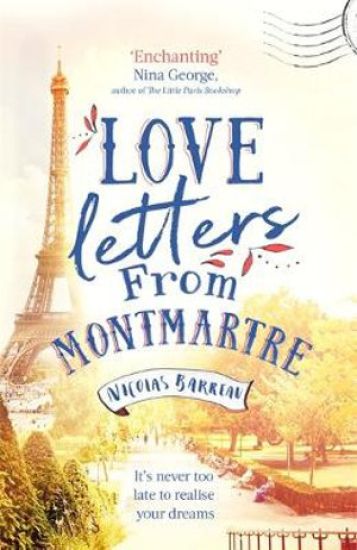
'Enchanting. Reading Barreau is like having me-time with your best friend' NINA GEORGE, author of The Little Paris Bookshop'Heart-breaking . . . touching and magical until the very last page' ELLE ___________Julien Azoulay is famous around the world for his beautiful romance novels. But last year, he stopped believing in love. When his beloved wife Hélène died, leaving him alone to raise his young son, Julien lost his faith in the happier side of life - and with it his ability to write. But Hélène was clever. Before she died, she made Julien promise to write her one letter for each year of her life . . . and now, in this moment, in the most famous cemetery in Paris, Julien stands with his painful first letter in his hand. Here, even though Julien wouldn't believe it, something wonderful is going to happen . . . Come with us down the narrow streets, past the cosy red bistro on Rue Gabrielle, all the way to Montmartre cemetery with its beautiful stone angels, and discover the truth we all hope to find: that love is real, that miracles can happen and - most of all - that it's never too late to rediscover your dreams. LOVE LETTERS FROM MONTMARTRE is an ode to love, Paris and friendship. A love letter to readers and to anyone who believes in the healing power of the written word.**An ELLE Book of the Month**____________Find out why readers are falling in love with Nicolas Barreau 'A genuine pleasure. A perfect gift for a Francophile, or just anyone else who is looking for a charming good time' Library Journal'The book itself carries the heart of Paris within its pages' RT Book Reviews'Enchanting . . . romantic' Booklist'Rarely has the French metropolis been described in more poetic terms' Freundin'Beaucoup de charme!' Ellen Sussman, bestselling author of French Lessons'A wonderful gift, a magical book' SAT 1'Dream-like, beautiful' taz'A book to warm your heart' Rheinische Post
This short writing is intended for actual and future language learners, and revolves around concise chapters approaching various topics and steps of language learning. The author eagerly hopes that this short writing can help learners in their finding of these keys of learning. For doing so, he has endeavoured to pen this writing with as much universality as he could muster so as to be applied to almost any language and learner.
Handmade Electronic Music: The Art of Hardware Hacking provides a long-needed, practical, and engaging introduction to the craft of making—as well as creatively cannibalizing—electronic circuits for artistic purposes. With a sense of adventure and no prior knowledge, the reader can subvert the intentions designed into devices such as radios and toys to discover a new sonic world. You will also learn how to make contact microphones, pickups for electromagnetic fields, oscillators, distortion boxes, mixers, and unusual signal processors cheaply and quickly. At a time when computers dominate music production, this book offers a rare glimpse into the core technology of early live electronic music, as well as more recent developments at the hands of emerging artists.This revised and expanded third edition has been updated throughout to reflect recent developments in technology and DIY approaches. New to this edition are chapters contributed by a diverse group of practitioners, addressing the latest developments in technology and creative trends, as well as an extensive companion website that provides media examples, tutorials, and further reading. This edition features:Over 50 new hands-on projects.New chapters and features on topics including soft circuitry, video hacking, neural networks, radio transmitters, Arduino, Raspberry Pi, data hacking, printing your own circuit boards, and the international DIY communityA new companion website at www.HandmadeElectronicMusic.com, containing video tutorials, video clips, audio tracks, resource files, and additional chapters with deeper dives into technical concepts and hardware hacking scenes around the worldWith a hands-on, experimental spirit, Nicolas Collins demystifies the process of crafting your own instruments and enables musicians, composers, artists, and anyone interested in music technology to draw on the creative potential of hardware hacking.
Handmade Electronic Music: The Art of Hardware Hacking provides a long-needed, practical, and engaging introduction to the craft of making—as well as creatively cannibalizing—electronic circuits for artistic purposes. With a sense of adventure and no prior knowledge, the reader can subvert the intentions designed into devices such as radios and toys to discover a new sonic world. You will also learn how to make contact microphones, pickups for electromagnetic fields, oscillators, distortion boxes, mixers, and unusual signal processors cheaply and quickly. At a time when computers dominate music production, this book offers a rare glimpse into the core technology of early live electronic music, as well as more recent developments at the hands of emerging artists.This revised and expanded third edition has been updated throughout to reflect recent developments in technology and DIY approaches. New to this edition are chapters contributed by a diverse group of practitioners, addressing the latest developments in technology and creative trends, as well as an extensive companion website that provides media examples, tutorials, and further reading. This edition features:Over 50 new hands-on projects.New chapters and features on topics including soft circuitry, video hacking, neural networks, radio transmitters, Arduino, Raspberry Pi, data hacking, printing your own circuit boards, and the international DIY communityA new companion website at www.HandmadeElectronicMusic.com, containing video tutorials, video clips, audio tracks, resource files, and additional chapters with deeper dives into technical concepts and hardware hacking scenes around the worldWith a hands-on, experimental spirit, Nicolas Collins demystifies the process of crafting your own instruments and enables musicians, composers, artists, and anyone interested in music technology to draw on the creative potential of hardware hacking.
Maps are tools used to understand space, discover territories, communicate information, and explain the results of geographical analysis. This practical handbook is about thematic cartography. With more than 120 colorful amazing illustrations, numerous boxed texts, definitions, and helpful tools, this step-by-step introduction to cartography is both the art of understanding the world and a powerful tool for explaining it. Through many hands-on tests, the reader will learn how to produce an interesting and communicative map applied to any spatial theme. Written by experienced scholars and experts in cartography, this book is an excellent resource for undergraduate students and non-cartographers interested in designing, understanding, and interpreting maps. It includes practical exercises explained in the form of a game and provides a concise, accessible, and current address of cartographic principles, allowing readers to go deeper into cartographic design. It can be read from beginning to end like an essay or just by dipping into it for information as needed.