Kirjojen hintavertailu. Mukana 11 699 587 kirjaa ja 12 kauppaa.

Kirjahaku

Etsi kirjoja tekijän nimen, kirjan nimen tai ISBN:n perusteella.

1000 tulosta hakusanalla Nicole Eismann

Black Blood Brothers

Black Blood Brothers

Nicole Von Germeten; Stephen W. Angell; Anthony B. Pinn

University Press of Florida
2006
sidottu
Celebrating the African contribution to Mexican culture, this book shows how religious brotherhoods in New Spain both preserved a distinctive African identity and helped facilitate Afro-Mexican integration into colonial society. Called confraternities, these groups provided social connections, charity, and status for Africans and their descendants for over two centuries. Often organized by African women and dedicated to popular European and African saints, the confraternities enjoyed prestige in the Baroque religious milieu of 17th-century New Spain. One group, founded by Africans called Zapes, preserved their ethnic identity for decades even after they were enslaved and brought to the Americas. Despite ongoing legal divisions and racial hierarchies, by the end of the colonial era many descendants from African slaves had achieved a degree of status that enabled them to move up the social ladder in Hispanic society. Von Germeten reveals details of the organization and practices of more than 60 Afro-Mexican brotherhoods and examines changes in the social, family, and religious lives of their members. She presents the stories of individual Africans and their descendants - including many African women and the famous Baroque artist Juan Correa - almost entirely from evidence they themselves generated. Moving the historical focus away from negative stereotypes that have persisted for almost 500 years, this study is the first in English to deal with Afro-Mexican religious organizations.
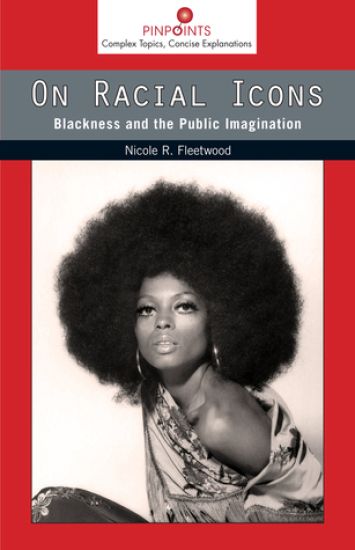
On Racial Icons

On Racial Icons

Nicole R. Fleetwood

Rutgers University Press
2015
nidottu
What meaning does the American public attach to images of key black political, social, and cultural figures? Considering photography’s role as a means of documenting historical progress, what is the representational currency of these images? How do racial icons “signify”? Nicole R. Fleetwood’s answers to these questions will change the way you think about the next photograph that you see depicting a racial event, black celebrity, or public figure. In On Racial Icons, Fleetwood focuses a sustained look on photography in documenting black public life, exploring the ways in which iconic images function as celebrations of national and racial progress at times or as a gauge of collective racial wounds in moments of crisis. Offering an overview of photography’s ability to capture shifting race relations, Fleetwood spotlights in each chapter a different set of iconic images in key sectors of public life. She considers flash points of racialized violence in photographs of Trayvon Martin and Emmett Till; the political, aesthetic, and cultural shifts marked by the rise of pop stars such as Diana Ross; and the power and precarity of such black sports icons as Serena Williams and LeBron James; and she does not miss Barack Obama and his family along the way. On Racial Icons is an eye-opener in every sense of the phrase. Images from the book. (http://rutgerspress.rutgers.edu/pages/Fleetwood.aspx)
When Women Rule the Court

When Women Rule the Court

Nicole Willms

Rutgers University Press
2017
nidottu
Winner of the 2018 North American Society for the Sociology of Sport Book Award For nearly one hundred years, basketball has been an important part of Japanese American life. Women’s basketball holds a special place in the contemporary scene of highly organized and expansive Japanese American leagues in California, in part because these leagues have produced numerous talented female players. Using data from interviews and observations, Nicole Willms explores the interplay of social forces and community dynamics that have shaped this unique context of female athletic empowerment. As Japanese American women have excelled in mainstream basketball, they have emerged as local stars who have passed on the torch by becoming role models and building networks for others.
When Women Rule the Court

When Women Rule the Court

Nicole Willms

Rutgers University Press
2017
sidottu
Winner of the 2018 North American Society for the Sociology of Sport Book Award For nearly one hundred years, basketball has been an important part of Japanese American life. Women’s basketball holds a special place in the contemporary scene of highly organized and expansive Japanese American leagues in California, in part because these leagues have produced numerous talented female players. Using data from interviews and observations, Nicole Willms explores the interplay of social forces and community dynamics that have shaped this unique context of female athletic empowerment. As Japanese American women have excelled in mainstream basketball, they have emerged as local stars who have passed on the torch by becoming role models and building networks for others.
Sustainability

Sustainability

Nicole Walker

Ohio State University Press
2018
pokkari
In Sustainability: A Love Story, Nicole Walker questions what it means to live sustainably while still being able to have Internet and eat bacon. After all, who wants to listen to a short, blond woman who is mostly a hypocrite anyway-who eats cows, drives a gasoline-powered car, who owns no solar panels-tsk-tsking them? Armed with research and a bright irony that playfully addresses the devastation of the world around us, Walker delves deep into scarcity and abundance, reflecting on matters that range from her uneasy relationship with bats to the fragility of human life, from adolescent lies to what recycling can reveal about our not so moderate drinking habits. With laugh-out-loud sad-funny moments, and a stark humor, Walker appeals to our innate sense of personal commitment to sustaining our world, and our commitment to sustaining our marriages, our families, our lives, ourselves. This book is for the burnt-out environmentalist, the lazy environmentalist, the would-be environmentalist. It's for those who believe the planet is dying. For those who believe they are dying. And for those who question what it means to live and love sustainably, and maybe even with hope.
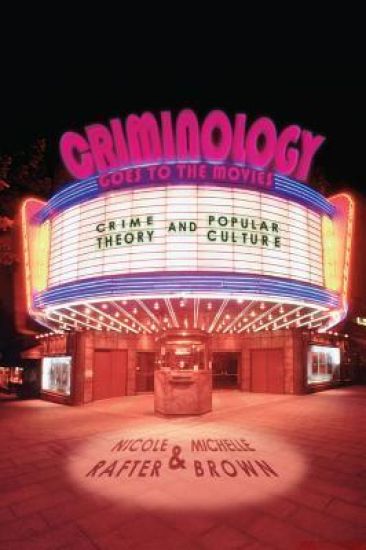
Criminology Goes to the Movies

Criminology Goes to the Movies

Nicole Rafter; Michelle Brown

New York University Press
2011
sidottu
Investigating cinema under the magnifying glass From a look at classics like Psycho and Double Indemnity to recent films like Traffic and Thelma & Louise, Nicole Rafter and Michelle Brown show that criminological theory is produced not only in the academy, through scholarly research, but also in popular culture, through film. Criminology Goes to the Movies connects with ways in which students are already thinking criminologically through engagements with popular culture, encouraging them to use the everyday world as a vehicle for theorizing and understanding both crime and perceptions of criminality. The first work to bring a systematic and sophisticated criminological perspective to bear on crime films, Rafter and Brown's book provides a fresh way of looking at cinema, using the concepts and analytical tools of criminology to uncover previously unnoticed meanings in film, ultimately making the study of criminological theory more engaging and effective for students while simultaneously demonstrating how theories of crime circulate in our mass-mediated worlds. The result is an illuminating new way of seeing movies and a delightful way of learning about criminology.
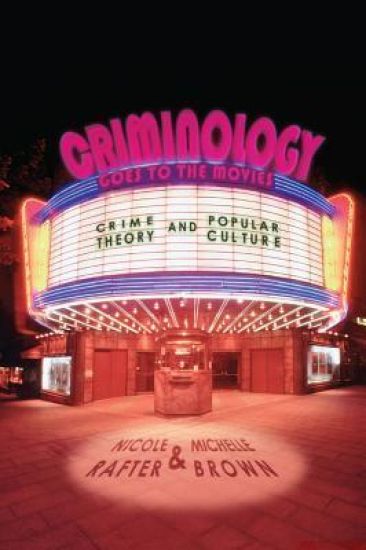
Criminology Goes to the Movies

Criminology Goes to the Movies

Nicole Rafter; Michelle Brown

New York University Press
2011
pokkari
Investigating cinema under the magnifying glass From a look at classics like Psycho and Double Indemnity to recent films like Traffic and Thelma & Louise, Nicole Rafter and Michelle Brown show that criminological theory is produced not only in the academy, through scholarly research, but also in popular culture, through film. Criminology Goes to the Movies connects with ways in which students are already thinking criminologically through engagements with popular culture, encouraging them to use the everyday world as a vehicle for theorizing and understanding both crime and perceptions of criminality. The first work to bring a systematic and sophisticated criminological perspective to bear on crime films, Rafter and Brown's book provides a fresh way of looking at cinema, using the concepts and analytical tools of criminology to uncover previously unnoticed meanings in film, ultimately making the study of criminological theory more engaging and effective for students while simultaneously demonstrating how theories of crime circulate in our mass-mediated worlds. The result is an illuminating new way of seeing movies and a delightful way of learning about criminology.
Always Get the Name of the Dog

Always Get the Name of the Dog

Nicole Kraft

CRC Press Inc
2018
sidottu
Always Get the Name of the Dog is a guide to journalistic interviewing, written by a journalist, for journalists. It features advice from some of the best writers and reporters in the business, and takes a comprehensive view of media interviewing across multiple platforms, while emphasizing active learning to give readers actionable steps to become great media interviewers. Through real scenarios and examples, this text takes future journalists through the steps of the interview, from research to source identification to question development and beyond. Whether you are a journalism student or an experienced reporter looking to sharpen your skills, this text can help make sure you get all you need from every interview you conduct.
Always Get the Name of the Dog

Always Get the Name of the Dog

Nicole Kraft

CRC Press Inc
2018
nidottu
Always Get the Name of the Dog is a guide to journalistic interviewing, written by a journalist, for journalists. It features advice from some of the best writers and reporters in the business, and takes a comprehensive view of media interviewing across multiple platforms, while emphasizing active learning to give readers actionable steps to become great media interviewers. Through real scenarios and examples, this text takes future journalists through the steps of the interview, from research to source identification to question development and beyond. Whether you are a journalism student or an experienced reporter looking to sharpen your skills, this text can help make sure you get all you need from every interview you conduct.
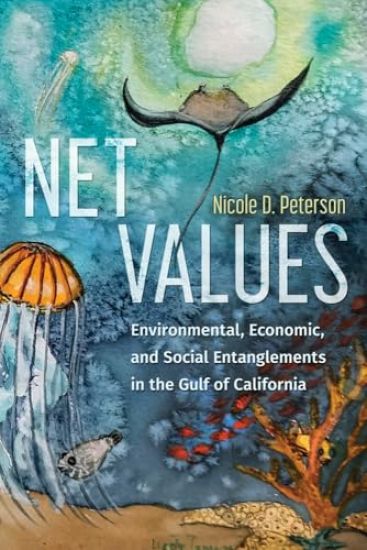
Net Values

Net Values

Nicole D. Peterson

University of Arizona Press
2025
nidottu
In Loreto, Baja California Sur, Mexico, artisanal fishing families and staff of Loreto Bay National Park face an array of choices as tourism, environmental concerns, and economic precarity challenge livelihoods and natural resource availability. In Net Values, Nicole D. Peterson offers a critical examination of how the idea of “choice” is understood, and what it means for policies, planning, and programs to ignore the social, political, economic, and cultural contexts surrounding these choices. Anchored by more than twenty years of research, Peterson provides insight into the fishing community of Loreto and reveals an important role in decision-making that diverges from previous studies. She argues that decisions about fishing, natural resource management, and other aspects of life are influenced by context, values, and expectations in ways that go beyond the typical psychological or cognitive theories of choice. Instead, Net Values highlights the ways that choices are constrained and enabled by values and expectations of cultures, histories, relationships, and experiences, both personal and shared. Peterson answers questions such as “why do the fishermen fish?” or “what is the marine park staff doing?” These decisions and choices are related to the larger implication addressed by this book: that in order to make effective policies around natural resource management and other issues, we must understand how those potential policies interact with the decision processes already underway. Divided into five chapters, Net Values is rich in ethnographic detail, drawing from real people to inform the narratives, chapters, and theoretical elaboration. Peterson’s interactions with fishers such as Don Javier and his family and friends support the ideas offered around choice, values, and strategies, connecting ideas to real experiences.
Net Values

Net Values

Nicole D. Peterson

University of Arizona Press
2025
sidottu
In Loreto, Baja California Sur, Mexico, artisanal fishing families and staff of Loreto Bay National Park face an array of choices as tourism, environmental concerns, and economic precarity challenge livelihoods and natural resource availability. In Net Values, Nicole D. Peterson offers a critical examination of how the idea of “choice” is understood, and what it means for policies, planning, and programs to ignore the social, political, economic, and cultural contexts surrounding these choices. Anchored by more than twenty years of research, Peterson provides insight into the fishing community of Loreto and reveals an important role in decision-making that diverges from previous studies. She argues that decisions about fishing, natural resource management, and other aspects of life are influenced by context, values, and expectations in ways that go beyond the typical psychological or cognitive theories of choice. Instead, Net Values highlights the ways that choices are constrained and enabled by values and expectations of cultures, histories, relationships, and experiences, both personal and shared. Peterson answers questions such as “why do the fishermen fish?” or “what is the marine park staff doing?” These decisions and choices are related to the larger implication addressed by this book: that in order to make effective policies around natural resource management and other issues, we must understand how those potential policies interact with the decision processes already underway. Divided into five chapters, Net Values is rich in ethnographic detail, drawing from real people to inform the narratives, chapters, and theoretical elaboration. Peterson’s interactions with fishers such as Don Javier and his family and friends support the ideas offered around choice, values, and strategies, connecting ideas to real experiences.
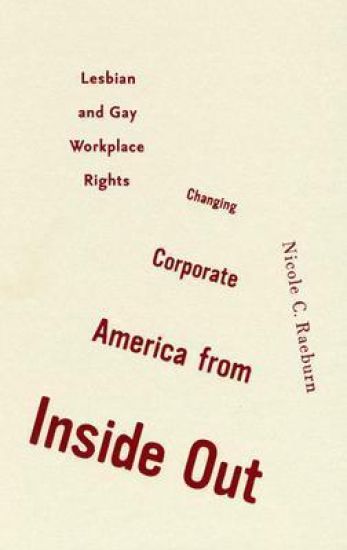
Changing Corporate America from Inside Out

Changing Corporate America from Inside Out

Nicole C. Raeburn

University of Minnesota Press
2004
sidottu
A long-overdue study of the workplace movement, Raeburn's analysis focuses on the mobilization of lesbian, gay, and bisexual employee networks over the past fifteen years to win domestic partner benefits in Fortune 1000 companies. Drawing on surveys of nearly one hundred corporations with and without gay networks, intensive interviews with human resources executives and gay employee activists, as well as a number of case studies, Raeburn reveals the impact of the larger social and political environment on corporations' openness to gay-inclusive policies, the effects of industry and corporate characteristics on companies' willingness to adopt such policies, and what strategies have been most effective in transforming corporate policies and practices to support equitable benefits for all workers.
Changing Corporate America from Inside Out

Changing Corporate America from Inside Out

Nicole C. Raeburn

University of Minnesota Press
2004
nidottu
Provides a detailed study of how gays, lesbians, and bisexuals have been working within corporate culture to secure equitable benefits for domestic partners, drawing on interviews with human resources executives, gay employees, and activists to reveal the social and political factors that promote gay-inclusive policies. Simultaneous.
Animal Capital

Animal Capital

Nicole Shukin

University of Minnesota Press
2009
sidottu
Illuminates the profound contingency of market life on animal figures and fleshThe juxtaposition of biopolitical critique and animal studies-two subjects seldom theorized together-signals the double-edged intervention of Animal Capital. Nicole Shukin pursues a resolutely materialist engagement with the “question of the animal,” challenging the philosophical idealism that has dogged the question by tracing how the politics of capital and of animal life impinge on one another in market cultures of the twentieth and early twenty-first centuries.Shukin argues that an analysis of capital’s incarnations in animal figures and flesh is pivotal to extending the examination of biopower beyond its effects on humans. “Rendering” refers simultaneously to cultural technologies and economies of mimesis and to the carnal business of boiling down and recycling animal remains. Rendering’s accommodation of these discrepant logics, she contends, suggests a rubric for the critical task of tracking the biopolitical conditions and contradictions of animal capital across the spaces of culture and economy.From the animal capital of abattoirs and automobiles, films and mobile phones, to pandemic fear of species-leaping diseases such as avian influenza and mad cow, Shukin makes startling linkages between visceral and virtual currencies in animal life, illuminating entanglements of species, race, and labor in the conditions of capitalism. In reckoning with the violent histories and intensifying contradictions of animal rendering, Animal Capital raises provocative and pressing questions about the cultural politics of nature.
Animal Capital

Animal Capital

Nicole Shukin

University of Minnesota Press
2009
nidottu
Illuminates the profound contingency of market life on animal figures and fleshThe juxtaposition of biopolitical critique and animal studies-two subjects seldom theorized together-signals the double-edged intervention of Animal Capital. Nicole Shukin pursues a resolutely materialist engagement with the “question of the animal,” challenging the philosophical idealism that has dogged the question by tracing how the politics of capital and of animal life impinge on one another in market cultures of the twentieth and early twenty-first centuries.Shukin argues that an analysis of capital’s incarnations in animal figures and flesh is pivotal to extending the examination of biopower beyond its effects on humans. “Rendering” refers simultaneously to cultural technologies and economies of mimesis and to the carnal business of boiling down and recycling animal remains. Rendering’s accommodation of these discrepant logics, she contends, suggests a rubric for the critical task of tracking the biopolitical conditions and contradictions of animal capital across the spaces of culture and economy.From the animal capital of abattoirs and automobiles, films and mobile phones, to pandemic fear of species-leaping diseases such as avian influenza and mad cow, Shukin makes startling linkages between visceral and virtual currencies in animal life, illuminating entanglements of species, race, and labor in the conditions of capitalism. In reckoning with the violent histories and intensifying contradictions of animal rendering, Animal Capital raises provocative and pressing questions about the cultural politics of nature.
A Curriculum of Fear

A Curriculum of Fear

Nicole Nguyen

University of Minnesota Press
2016
nidottu
Welcome to Milton High School, where fear is a teacher’s best tool and every student is a soldier in the war on terror. A struggling public school outside the nation’s capital, Milton sat squarely at the center of two trends: growing fear of resurgent terrorism and mounting pressure to run schools as job training sites. In response, the school established a specialized Homeland Security program. A Curriculum of Fear takes us into Milton for a day-to-day look at how such a program works, what it means to students and staff, and what it says about the militarization of U.S. public schools and, more broadly, the state of public education in this country. Nicole Nguyen guides us through a curriculum of national security–themed classes, electives, and internships designed through public-private partnerships with major defense contractors like Northrop Grumman and federal agencies like the NSA. She introduces us to students in the process of becoming a corps of “diverse workers” for the national security industry, learning to be “vigilant” citizens; and she shows us the everyday realities of a program intended to improve the school, revitalize the community, and eliminate the achievement gap. With reference to critical work on school militarization, neoliberal school reform, the impact of the global war on terror on everyday life, and the political uses of fear, A Curriculum of Fear maps the contexts that gave rise to Milton’s Homeland Security program and its popularity. Ultimately, as the first ethnography of such a program, the book provides a disturbing close encounter with the new normal imposed by the global war on terror-a school at once under siege and actively preparing for the siege itself.
Forever You

Forever You

Nicole Lataif

Pauline Books Media
2012
sidottu
Awaken young children ages 4-8 to the joy and mystery of being human and help them build the foundations of their Christian faith Simply structured sentences, engaging text, analogies that children can easily relate to, and whimsical illustrations create a view that embraces the whole human person--body and soul. The soul's lifelong presence, spiritual nature, relationship to the body, substance and origin, link to humanity, sacredness, service-directed purpose, and immortality are explored in the context of John Paul II's Theology of the Body.
Le Texte Visualise

Le Texte Visualise

Nicole Marie Mosher

Peter Lang Publishing Inc
1990
sidottu
Cet ouvrage propose une nouvelle approche de la poesie visuelle depuis la periode alexandrine jusqu'aux Calligrammes d'Apollinaire. La relation entre le contenu et le dessin visuel est etudiee sur la base du modele des Calligrammes d'Apollinaire. N. Mosher en examine les dimensions metaphoriques et metonymiques tout en considerant les rapports du texte visualise avec la vie sociale, culturelle ou litteraire.
L'Espace Fictionnel dans la Mise en Scene de Claude Ollier

L'Espace Fictionnel dans la Mise en Scene de Claude Ollier

Nicole Aas-Rouxparis

Peter Lang Publishing Inc
1990
sidottu
Cette monographie sur La Mise en scene de Claude Ollier (1922-) suit le heros pas a pas dans son odyssee initiatique a travers l'espace de la fiction. L'etude minutieuse des composantes spatiales et temporelles du roman revele dans le miroitement generalise du texte la mise en scene d'un univers psychique a structure mythique par le frayage de l'ecriture. L'espace-but d'Imlil devient alors le theatre ou les phantasmes du heros sont mis en acte dans une dramatisation symbolique en trois actes. Sa progression harmonique en amont a travers les couches de la memoire permet l'effraction de l'espace hallucinatoire et secret d'une medina interdite dans un declic mysterieux d'ou jaillit la vision globale et instantanee - origine de la creation et de la destruction de l'edifice fictionnel.
Le Monde de Boris Vian et le Grotesque Litteraire

Le Monde de Boris Vian et le Grotesque Litteraire

Nicole Buffard-O'Shea

Peter Lang Publishing Inc
1993
sidottu
Cette etude se concentre sur le caractere grotesque de l'oeuvre abondante et variee creee par Boris Vian (1920-1959). Au cours d'une analyse textuelle detaillee, il ressort que personnages humains, animaux, objets et decors vianesques sont interchangeables a la maniere des elements qui peuplent les grotesques picturaux de la Renaissance. Ce monde imaginaire est base sur une structure semblable a celle du carnaval, tel que le concoit Bakhtine, ou l'on assiste a un renversement systematique du haut vers le bas et a une predominance des elements corporels topographiquement bas. L'exces et l'exageration s'averent etre des elements essentiels de l'oeuvre de Vian et ils permettent de l'associer au grotesque medieval, joyeux, et au grotesque contemporain, plus serieux.