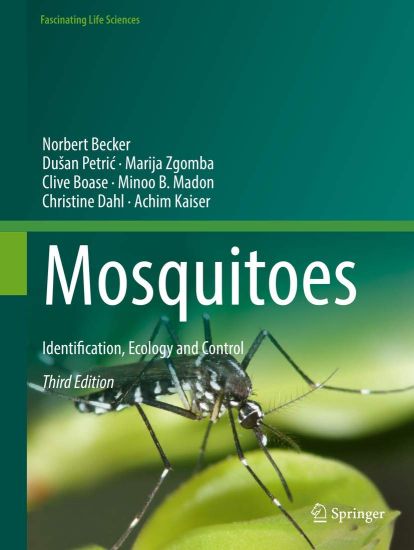
“Mosquitoes – Identification, Ecology and Control” presents a wealth of information on the bionomics, systematics, ecology, research techniques and control of both nuisance and disease vector mosquitoes. It provides practical guidance and important information in an easily readable style, suitable for anyone involved with, or interested in mosquitoes and their management.In this new edition, 102 European species including the most important invasive species and more than 100 globally important vector and nuisance species are described. Most of them, including all European species, are presented in the fully illustrated identification keys, followed by a detailed description of the morphology, biology, distribution and medical importance of each species, including over 700 detailed drawings.“Mosquitoes – Identification, Ecology and Control” includes:· systematics and biology· medical significance· research techniques· morphological characteristics used for identification of larvae and adults· illustrated identification keys for larval and adult mosquito genera· morphology, ecology, and distribution of the species identified in the keys· biological, genetic, physical and chemical control of mosquitoes “Mosquitoes – Identification, Ecology and Control” is a valuable tool for vector ecologists, medical entomologists, students and all those involved with mosquito systematics, biology, ecology, and control world-wide. Society as a whole benefit from the implementation of carefully designed and sustainable programs for the management of mosquitoes, and the diseases they transmit. The third edition of this successful publication has been comprehensively updated and expanded, to provide the foundation of a more enlightened and informed approach to mosquito management.
Country risk has been a key notion for economists, financiers, and investors. Norbert Gaillard defines this notion as “any macroeconomic, microeconomic, financial, social, political, institutional, judiciary, climatic, technological, or sanitary risk that affects (or could affect) an investor in a foreign country. Damages may materialize in several ways: financial losses; threat to the safety of the investing company’s employees, clients, or consumers; reputational damage; or loss of a market or supply source.”Chapter 1 introduces the key concepts. Chapter 2 investigates how country risk has evolved and manifested since the advent of the Pax Britannica in 1816. It describes the international political and economic environment and identifies the main obstacles to foreign investment. Chapter 3 documents the numerous forms that country risk may take and provides illustrations of them. Seven broad components of country risk are scrutinized in turn: international political risks; domestic political and institutional risks; jurisdiction risks; macroeconomic risks; microeconomic risks; sanitary, health, industrial, and environmental risks; and natural and climate risks. Chapter 4 focuses on sovereign risk. It presents the rating methodologies used by four raters; next, it measures and compares their performance (i.e., their ability to forecast sovereign defaults). Chapter 5 studies the risks likely to affect exporters, importers, foreign creditors of corporate entities, foreign shareholders, and foreign direct investors. It presents the rating methodologies used by seven raters and measures their track records in terms of anticipating eight types of shocks that reflect the main components of country risk analyzed in Chapter 3.This book will be most relevant to graduate students in economics as well as professional economists and international investors.
Country risk has been a key notion for economists, financiers, and investors. Norbert Gaillard defines this notion as “any macroeconomic, microeconomic, financial, social, political, institutional, judiciary, climatic, technological, or sanitary risk that affects (or could affect) an investor in a foreign country. Damages may materialize in several ways: financial losses; threat to the safety of the investing company’s employees, clients, or consumers; reputational damage; or loss of a market or supply source.”Chapter 1 introduces the key concepts. Chapter 2 investigates how country risk has evolved and manifested since the advent of the Pax Britannica in 1816. It describes the international political and economic environment and identifies the main obstacles to foreign investment. Chapter 3 documents the numerous forms that country risk may take and provides illustrations of them. Seven broad components of country risk are scrutinized in turn: international political risks; domestic political and institutional risks; jurisdiction risks; macroeconomic risks; microeconomic risks; sanitary, health, industrial, and environmental risks; and natural and climate risks. Chapter 4 focuses on sovereign risk. It presents the rating methodologies used by four raters; next, it measures and compares their performance (i.e., their ability to forecast sovereign defaults). Chapter 5 studies the risks likely to affect exporters, importers, foreign creditors of corporate entities, foreign shareholders, and foreign direct investors. It presents the rating methodologies used by seven raters and measures their track records in terms of anticipating eight types of shocks that reflect the main components of country risk analyzed in Chapter 3.This book will be most relevant to graduate students in economics as well as professional economists and international investors.
This book sheds new light on transrational approaches to peace research and highlights elicitive approaches to facilitation. Rather than encouraging researchers, teachers and practitioners to control and suppress their own positionality, the book argues that they can see themselves as a potential (re)source that can be creatively tapped for their work. Using dance as a central metaphor, it seeks to reposition research and facilitation as a truly experiential process where the entirety of human experiences and epistemologies can be brought into interplay, opening up new sources of knowledge. Providing a cutting-edge theoretical framework and based on his practical experience, the author demonstrates that facilitation and research are not just cognitive, but can also be(come) embodied, emotional, intuitive, relational and spiritual. By proposing a systematic, methodological framework for research and facilitation, the book offers practical guidance for peace practitioners, facilitators and researchers interested in working through all dimensions of their being and engaging with conflict transformation in a holistic way.
This book sheds new light on transrational approaches to peace research and highlights elicitive approaches to facilitation. Rather than encouraging researchers, teachers and practitioners to control and suppress their own positionality, the book argues that they can see themselves as a potential (re)source that can be creatively tapped for their work. Using dance as a central metaphor, it seeks to reposition research and facilitation as a truly experiential process where the entirety of human experiences and epistemologies can be brought into interplay, opening up new sources of knowledge. Providing a cutting-edge theoretical framework and based on his practical experience, the author demonstrates that facilitation and research are not just cognitive, but can also be(come) embodied, emotional, intuitive, relational and spiritual. By proposing a systematic, methodological framework for research and facilitation, the book offers practical guidance for peace practitioners, facilitators and researchers interested in working through all dimensions of their being and engaging with conflict transformation in a holistic way.
This book provides an introduction to the main geometric structures that are carried by compact surfaces, with an emphasis on the classical theory of Riemann surfaces. It first covers the prerequisites, including the basics of differential forms, the Poincaré Lemma, the Morse Lemma, the classification of compact connected oriented surfaces, Stokes’ Theorem, fixed point theorems and rigidity theorems. There is also a novel presentation of planar hyperbolic geometry. Moving on to more advanced concepts, it covers topics such as Riemannian metrics, the isometric torsion-free connection on vector fields, the Ansatz of Koszul, the Gauss–Bonnet Theorem, and integrability. These concepts are then used for the study of Riemann surfaces. One of the focal points is the Uniformization Theorem for compact surfaces, an elementary proof of which is given via a property of the energy functional. Among numerous other results, there is also a proof of Chow’s Theorem on compact holomorphic submanifolds in complex projective spaces. Based on lecture courses given by the author, the book will be accessible to undergraduates and graduates interested in the analytic theory of Riemann surfaces.
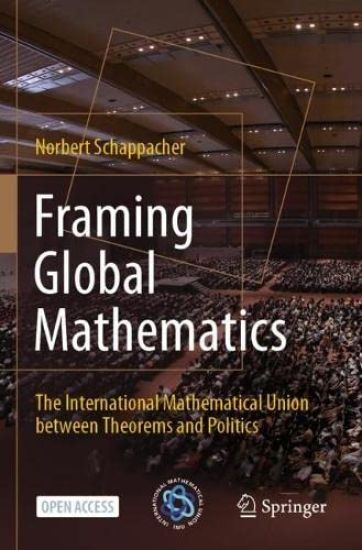
This open access book is about the shaping of international relations in mathematics over the last two hundred years. It focusses on institutions and organizations that were created to frame the international dimension of mathematical research. Today, striking evidence of globalized mathematics is provided by countless international meetings and the worldwide repository ArXiv. The text follows the sinuous path that was taken to reach this state, from the long nineteenth century, through the two wars, to the present day. International cooperation in mathematics was well established by 1900, centered in Europe. The first International Mathematical Union, IMU, founded in 1920 and disbanded in 1932, reflected above all the trauma of WW I. Since 1950 the current IMU has played an increasing role in defining mathematical excellence, as is shown both in the historical narrative and by analyzing data about the International Congresses of Mathematicians. For each of the three periods discussed, interactions are explored between world politics, the advancement of scientific infrastructures, and the inner evolution of mathematics. Readers will thus take a new look at the place of mathematics in world culture, and how international organizations can make a difference. Aimed at mathematicians, historians of science, scientists, and the scientifically inclined general public, the book will be valuable to anyone interested in the history of science on an international level.
This open access book is about the shaping of international relations in mathematics over the last two hundred years. It focusses on institutions and organizations that were created to frame the international dimension of mathematical research. Today, striking evidence of globalized mathematics is provided by countless international meetings and the worldwide repository ArXiv. The text follows the sinuous path that was taken to reach this state, from the long nineteenth century, through the two wars, to the present day. International cooperation in mathematics was well established by 1900, centered in Europe. The first International Mathematical Union, IMU, founded in 1920 and disbanded in 1932, reflected above all the trauma of WW I. Since 1950 the current IMU has played an increasing role in defining mathematical excellence, as is shown both in the historical narrative and by analyzing data about the International Congresses of Mathematicians. For each of the three periods discussed, interactions are explored between world politics, the advancement of scientific infrastructures, and the inner evolution of mathematics. Readers will thus take a new look at the place of mathematics in world culture, and how international organizations can make a difference. Aimed at mathematicians, historians of science, scientists, and the scientifically inclined general public, the book will be valuable to anyone interested in the history of science on an international level.
This book provides a coherent description of foundational matters concerning statistical inference and shows how statistics can help us make inductive inferences about a broader context, based only on a limited dataset such as a random sample drawn from a larger population. By relating those basics to the methodological debate about inferential errors associated with p-values and statistical significance testing, readers are provided with a clear grasp of what statistical inference presupposes, and what it can and cannot do. To facilitate intuition, the representations throughout the book are as non-technical as possible.The central inspiration behind the text comes from the scientific debate about good statistical practices and the replication crisis. Calls for statistical reform include an unprecedented methodological warning from the American Statistical Association in 2016, a special issue “Statistical Inference in the 21st Century:A World Beyond p The American Statistician in 2019, and a widely supported call to “Retire statistical significance” in Nature in 2019.The book elucidates the probabilistic foundations and the potential of sample-based inferences, including random data generation, effect size estimation, and the assessment of estimation uncertainty caused by random error. Based on a thorough understanding of those basics, it then describes the p-value concept and the null-hypothesis-significance-testing ritual, and finally points out the ensuing inferential errors. This provides readers with the competence to avoid ill-guided statistical routines and misinterpretations of statistical quantities in the future.Intended for readers with an interest in understanding the role of statistical inference, the book provides a prudent assessment of the knowledge gain that can be obtained from a particular setof data under consideration of the uncertainty caused by random error. More particularly, it offers an accessible resource for graduate students as well as statistical practitioners who have a basic knowledge of statistics. Last but not least, it is aimed at scientists with a genuine methodological interest in the above-mentioned reform debate.
This second edition of "The Geometry of Special Relativity - a Concise Course" offers more than just corrections and enhancements. It includes a new chapter on four-velocities and boosts as points and straight lines of hyperbolic geometry. Quantum properties of relativistic particles are derived from the unitary representations of the Poincaré group. Notably, the massless representation is related to the concept of a Hopf bundle. Scattering theory is developed analogously to the non-relativistic case, relying on proper symmetry postulates. Chapters on quantum fields, reflections of charge, space, and time, and the necessary gauge symmetry of quantized vector fields complete the foundation for evaluating Feynman graphs. An extended appendix covers more than a dozen additional topics. The first half of this edition refines the first edition, using simple diagrams to explain time dilation, length contraction, and Lorentz transformations based on the invariance of the speed of light. The text derives key results of relativistic physics and resolves apparent paradoxes. Following a presentation of the action principle, Noether's theorem, and relativistic mechanics, the book covers the covariant formulation of electrodynamics and classical field theory. The groups of rotations and Lorentz transformations are also examined as a transition to relativistic quantum physics. This text is aimed at graduate students of physics and mathematics seeking an advanced introduction to special relativity and related topics. Its presentation of quantum physics aims to inspire fellow researchers.
Glyphosate is probably the best herbicide ever, making it the most widely used worldwide. In Europe, a permit to use glyphosate till 2033 was granted in December 2023, notwithstanding controversies about its effect on environmental health. Evidence is piling up demonstrating the toxic effects of glyphosate at every level of the animal kingdom, from the unicellular micro-organisms up to the top of the hierarchical chain, including humans. The mechanism of the toxicity for plants is well known, and gradually, the biological targets, structures and molecules causing the toxicity in creatures other than plants become visible. The discussion focused on the carcinogenic character of glyphosate, in particular after the declaration of IARC in 2015 that glyphosate was “probably carcinogenic to humans”, i.e. class 2A according to their classification rules. In recent years, it became evident that carcinogenicity is possibly not the main toxic phenomenon but the effect at the level of the enteric microbiome, also in humans, and the link to neuronal diseases such as Parkinson's is gaining importance. Taken together, glyphosate is not an innocent molecule that chemical companies want us to believe. A steady, gradual, time-limited and well-controlled ban on glyphosate is deemed necessary, even with a reluctant, conservative interpretation of the precautionary principle. This book is about all this. Much attention is paid to the toxicity with both biological and medical data as backing information. The book leads the reader through 10 chapters from the fundamental molecular properties of glyphosate to considerations about the different toxic elements, such as carcinogenicity, neurological diseases, enteric microbiome problems, etc. Most chapters consist of two parts: the first is a common, low-scientific explanation and interpretation of the subject. Part 2 is a full scientific discussion that includes the appropriate peer-reviewed references and requires basic knowledge of the item. The controversies on human health are discussed in detail, particularly on the methodology applied by the decision-making bodies on whether or not the use of glyphosate should continue. The effect of a ban on agriculture, economics and human well-being needs careful consideration. The subject cannot be treated in depth without some ethical and philosophical reflections beyond glyphosate or pesticides, including historical examples of other molecules from which lessons need to be drawn, as is supposed to happen. We have witnessed the debacle of asbestos, the devastating effects of smoking cigarettes, the appearance and disappearance of DDT, the problem of bisphenols, etc. The question is whether we are witnessing a similar or comparable situation nowadays with glyphosate.