Kirjojen hintavertailu. Mukana 12 515 786 kirjaa ja 12 kauppaa.

Kirjahaku

Etsi kirjoja tekijän nimen, kirjan nimen tai ISBN:n perusteella.

1000 tulosta hakusanalla Oral Sumner Coad

The Oral Art and Literature of the Kazakhs of Russian Central Asia
""The Oral Art And Literature Of The Kazakhs Of Russian Central Asia"" is a comprehensive exploration of the oral traditions and literary heritage of the Kazakh people, a nomadic ethnic group living in the vast steppes of Central Asia. The book, written by Thomas G. Winner, delves into the rich cultural and historical aspects of the Kazakh oral tradition, including epic poetry, legends, myths, and folktales. It also examines the role of the bards or storytellers, known as akyns, in preserving and transmitting this oral heritage from generation to generation. The book provides a detailed analysis of the structure, themes, and symbolism of the Kazakh epic poems, which are considered masterpieces of oral literature. The author also discusses the impact of Soviet-era policies on the Kazakh oral tradition and the efforts made by Kazakh scholars to revive and preserve this valuable cultural heritage. Overall, ""The Oral Art And Literature Of The Kazakhs Of Russian Central Asia"" is an insightful and informative study of the Kazakh oral tradition, offering a unique glimpse into the rich cultural legacy of this fascinating people.This scarce antiquarian book is a facsimile reprint of the old original and may contain some imperfections such as library marks and notations. Because we believe this work is culturally important, we have made it available as part of our commitment for protecting, preserving, and promoting the world's literature in affordable, high quality, modern editions, that are true to their original work.
Minor Oral Surgery

Minor Oral Surgery

John Jacob Posner

Literary Licensing, LLC
2013
sidottu
Minor Oral Surgery is a comprehensive guide to performing minor surgical procedures in the oral cavity. Written by John Jacob Posner, a renowned oral and maxillofacial surgeon, the book covers a wide range of topics related to minor oral surgery, including the anatomy of the oral cavity, patient assessment and preparation, local anesthesia techniques, surgical instruments, postoperative care, and more.The book is divided into six sections, each covering a different aspect of minor oral surgery. The first section provides an overview of the basic principles of oral surgery, including patient evaluation, surgical planning, and anesthesia. The second section focuses on surgical techniques, including incisions, suturing, and the use of surgical instruments.The third section covers specific surgical procedures, including extractions, impactions, and biopsies. The fourth section discusses complications and their management, while the fifth section covers postoperative care and follow-up. The final section of the book is dedicated to the management of medically compromised patients.Throughout the book, Posner provides detailed instructions and illustrations to guide the reader through each step of the surgical procedure. He also includes helpful tips and tricks based on his years of experience as an oral and maxillofacial surgeon.Overall, Minor Oral Surgery is an essential resource for dental students, oral surgery residents, and practicing dentists who want to expand their knowledge and skills in the field of minor oral surgery.This scarce antiquarian book is a facsimile reprint of the old original and may contain some imperfections such as library marks and notations. Because we believe this work is culturally important, we have made it available as part of our commitment for protecting, preserving, and promoting the world's literature in affordable, high quality, modern editions, that are true to their original work.
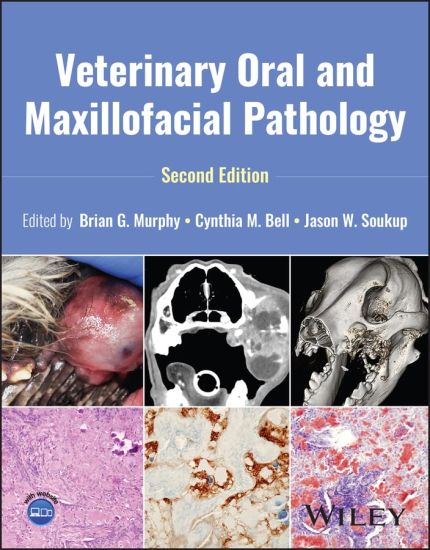
Veterinary Oral and Maxillofacial Pathology

Veterinary Oral and Maxillofacial Pathology

Brian G. Murphy; Cynthia M. Bell; Jason W. Soukup

JOHN WILEY SONS INC
2025
sidottu
Comprehensive reference on diagnostic oral pathology in animals with clinical correlates Veterinary Oral and Maxillofacial Pathology, Second Edition is a comprehensive reference to diagnostic pathology in the oral and maxillofacial region in animals, focusing on information most useful for diagnosis and patient management in clinical practice. The book features high-quality images, including clinical photographs, radiographs and other imaging modalities, gross pathology, histopathology, special stains, immunohistology, ultrastructure, molecular diagnostics, and numerous diagrams. The work focuses on dogs, cats and horses but also offers comparative information for rodent, ruminant, reptile, and exotic patients. The Second Edition adds new chapters focused on oral medicine of small animals and oral and maxillofacial disease of horses, with expanded and improved images and updates throughout. A companion website presents video clips of narrated scanned slides. This edition features multiple authors who are subject matter specialists in oral medicine, viral disease, dermatopathology, and equine dentistry. Veterinary Oral and Maxillofacial Pathology covers all aspects of oral pathology, including: ? Odontogenesis and histological features of normal oral tissues, including oral mucosa, tonsils, lips, teeth, incisive papilla and ducts, salivary glands and jaw bones ? Diagnostic utility of differential diagnoses, the considerable ambiguity and morphologic overlap of some oral lesions, and the ever-evolving state of lesion classification ? Taxonomic controversies, with pros and cons of different viewpoints to allow readers to make their own decisions Veterinary Oral and Maxillofacial Pathology is a one-of-a-kind reference for veterinary pathologists, veterinary dentists, resident trainees, interns, students, and veterinary practitioners.
Somali Oral Poetry and the Failed She-Camel Nation State

Somali Oral Poetry and the Failed She-Camel Nation State

Ali Mumin Ahad

Peter Lang Publishing Inc
2015
sidottu
Somali Oral Poetry and the Failed She-Camel Nation State: A Critical Discourse Analysis of the Deelley Poetry Debate (1979–1980) examines the most expressive medium in Somali culture and politics, that is, oral poetry, in its ideological and discursive dimension. Oral poetry has a formidable impact on Somali society and its internal dynamics. Somali Oral Poetry is the first critical discourse analysis of the connection between oral poetry and politics in Somalia. The book brings out contradictions and conflicts between the ways of thinking of a society structured in clans and a rightful claim for nationhood and the state of law. In addition, it highlights the difficulty the society finds in renouncing clan mentality that requires loyalty to the clan rather than to the State. The present volume illuminates, through the critical analysis of the Deelley poetry debate, the circumstances and issues that preceded the civil war in Somalia. Therefore, the book is of particular interest for its original explanation and understanding of the extraordinary subsequent failure of the State in Somalia.
Ethnic Oral History Materials in Yunnan

Ethnic Oral History Materials in Yunnan

Zidan Chen

PETER LANG PUBLISHING INC
2022
sidottu
Through case studies of pilot conservation projects launched by the Yunnan Provincial Archives in recent years, this book comprehensively and systematically discusses issues in the conservation of ethnic oral history material and the development of ethnic oral history resources. After an overview of ethnic oral history material in general, the book gives an introduction to the oral history material of the Bai, Hani, Lisu, Wa, Zhuang, and Qiang ethnic groups; discusses theoretical research and work practices related to ethnic oral history; elaborates upon the methods for managing and integrating ethnic oral history archives; reviews the history, current state, and existing issues of work related to ethnic oral materials; summarizes experiences gained from international collaboration in the conservation of ethnic oral materials; and reflects upon issues such as the development of ethnic oral history resources and the establishment of oral history resource systems in multi-ethnic border regions. As the result of research on the management of specialized archives and work related to oral archives, this book contributes towards the establishment of ethnic oral archival science as an academic discipline and enriching the knowledge structure of oral history and the science of managing oral archives.
Improving Oral Health for the Elderly

Improving Oral Health for the Elderly

J.C. Takamura

Springer-Verlag New York Inc.
2010
nidottu
This excellent new work confronts two important oral health policy concerns in the United States: the disparities in the oral disease burden and the inability of certain segments of the population to access oral health care. The book examines in depth this crucial yet frequently overlooked indicator of seniors' quality of life. It provides an invaluable set of recommendations to the clinical, research, and administrative communities that will serve the elderly population.
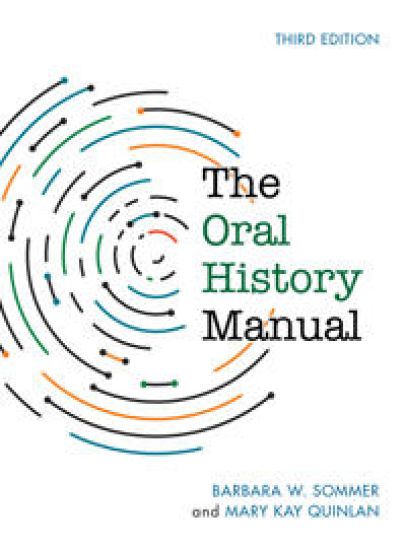
The Oral History Manual

The Oral History Manual

Barbara W. Sommer; Mary Kay Quinlan

Rowman Littlefield
2018
sidottu
The Oral History Manual is designed to help anyone interested in doing oral history research to think like an oral historian. Recognizing that oral history is a research methodology, the authors define oral history and then discuss the methodology in the context of the oral history life cycle – the guiding steps that take a practitioner from idea through access/use. They examine how to articulate the purpose of an interview, determine legal and ethical parameters, identify narrators and interviewers, choose equipment, develop budgets and record-keeping systems, prepare for and record interviews, care for interview materials, and use the interview information. In this third edition, in addition to new information on methodology, memory, technology, and legal options incorporated into each chapter, a completely new chapter provides guidelines on how to analyze interview content for effective use of oral history interview information. The Oral History Manual provides an updated and expanded road map and a solid introduction to oral history for all oral history practitioners, from students to community and public historians.
The Oral History Manual

The Oral History Manual

Barbara W. Sommer; Mary Kay Quinlan

Rowman Littlefield
2018
nidottu
The Oral History Manual is designed to help anyone interested in doing oral history research to think like an oral historian. Recognizing that oral history is a research methodology, the authors define oral history and then discuss the methodology in the context of the oral history life cycle – the guiding steps that take a practitioner from idea through access/use. They examine how to articulate the purpose of an interview, determine legal and ethical parameters, identify narrators and interviewers, choose equipment, develop budgets and record-keeping systems, prepare for and record interviews, care for interview materials, and use the interview information. In this third edition, in addition to new information on methodology, memory, technology, and legal options incorporated into each chapter, a completely new chapter provides guidelines on how to analyze interview content for effective use of oral history interview information. The Oral History Manual provides an updated and expanded road map and a solid introduction to oral history for all oral history practitioners, from students to community and public historians.
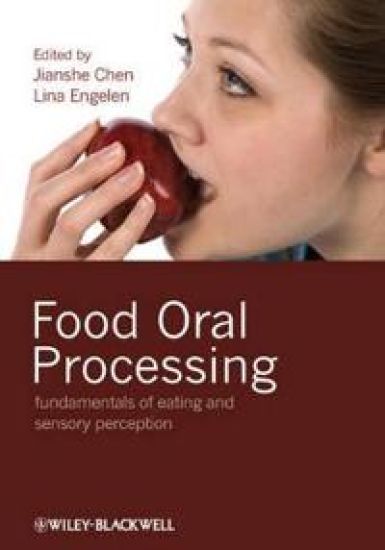
Food Oral Processing

Food Oral Processing

Jianshe Chen; Lina Engelen

Wiley-Blackwell (an imprint of John Wiley Sons Ltd)
2012
sidottu
This volume provides an overview of the latest research findings on the physics, physiology, and psychology of food oral consumption, as well as the experimental techniques available for food oral studies. Coverage includes the main physical and physiological functionalities of the mouth; the location and functionalities of various oral receptors; the main sequences of eating and drinking, and the concomitant food disintegration and destabilisation. Chapters also explain oral processing and its relation to flavour release and texture perception, and there is an introduction to the principles of food rheology as they relate to eating. Food Oral Processing is directed at food scientists and technologists in industry and academia, especially those involved in sensory science and new product development. It will also be of interest to oral physiologists, oral biologists and dentists. The book will be a useful reference for undergraduate and postgraduate students of these disciplines.
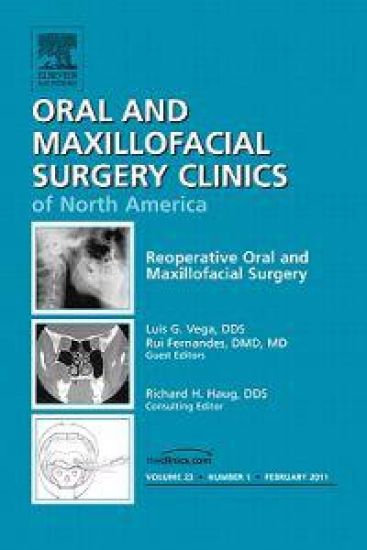
Reoperative Oral and Maxillofacial Surgery, An Issue of Oral and Maxillofacial Surgery Clinics
Guest Editors Rui Fernandes and Luis Vega present a comprehensive look at reoperative oral and maxillofacial surgery. The issue will cover failed bone grafts for dental implants, failed dental implants, reoperative orbital trauma, reoperative midface trauma, reoperative mandibular trauma, reoperative soft tissue trauma, reoperative orthognathic surgery, reoperative rhinoplasty, reoperative face and neck lift, reoperative TMJ surgery, reoperative midface reconstruction, reoperative mandibular reconstruction, salvage surgery in head and neck oncology, reoperative cleft lip/palate surgery, and reoperative obstructive sleep apnea surgery.
An Oral History of Neuropsychopharmacology The First Fifty Years Peer Interviews: Volume 1: Starting Up
THE SERIES The 10 volumes in this series record a fifty year history of neuropsychopharmacology related by 213 pioneer clinical, academic, industrial and basic scientists in videotaped interviews, conducted by 66 colleagues between 1994 and 2008. These volumes include a preface by the series editor placing its contents in an historical context and linking each volume to the next. Each volume is dedicated to a former President of the ACNP and edited by a distinguished historian or Fellow of the College who provides an introduction to its themes and a biography of each scientist's career. The series provides insights into a half century of discovery and innovation with its rewards and disappointments, progress and setbacks, including future expectations and hopes for the field as a whole and the ACNP as an organization. IN THIS VOLUME Volume I, "Starting Up" is dedicated to Heinz Lehmann, President, 1965 and edited by Edward Shorter, a distinguished historian and professor of the history of medicine and psychiatry. ¬The 22 pioneers, all men and predominantly Americans, include trialists, pharmacologists and clinical scientists. From 1952 to the mid 1960s the earliest clinical trials of the first psychotropic drugs took place in the V.A., private practice and State hospitals. ¬Thousands of people with untreated mental illness benefited for the first time. Psychoanalysis dominated academia, the pharmaceutical industry had barely awakened to the potential for treatment of mental illness and clinical pharmacology was an infant discipline. But the NIH and NIMH expanded dramatically, funded by an enthusiastic Congress and the FDA was empowered to insist on drug efficacy as well as safety. Basic scientists began to make the first linkages between serendipitous clinical efficacy and putative neurochemical mechanisms of action.