Collins Big Cat supports every primary child on their reading journey from phonics to fluency. Top authors and illustrators have created fiction and non-fiction books that children love to read. Book banded for guided and independent reading, there are reading notes in the back, comprehensive teaching and assessment support and ebooks available. Come on a scientific safari and explore the amazing ways animals communicate with each other, from grunting gorillas and whale calls to copy-cat birds and smelly snakes. Emerald/Band 15 books provide a widening range of genres including science fiction and biography, prompting more ways to respond to texts. Ideas for reading in the back of the book provide practical support and stimulating activities.
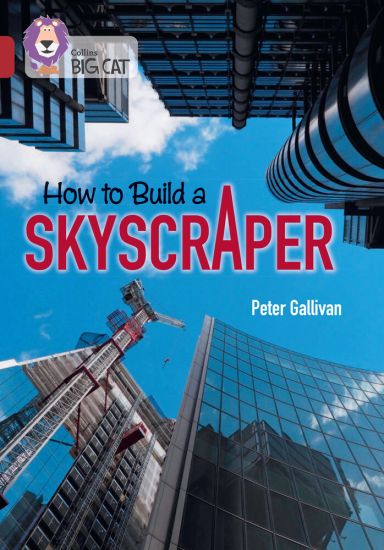
Collins Big Cat supports every primary child on their reading journey from phonics to fluency. Top authors and illustrators have created fiction and non-fiction books that children love to read. Book banded for guided and independent reading, there are reading notes in the back, comprehensive teaching and assessment support and ebooks available. Skyscrapers tower over our cities, but how are they built and what are they made of? Explore these fascinating buildings and discover some surprising facts about how they’re made. Ruby/Band 14 books give increasing opportunities for children to develop their skills of inference and deduction. Ideas for reading in the back of the book provide practical support and stimulating activities.
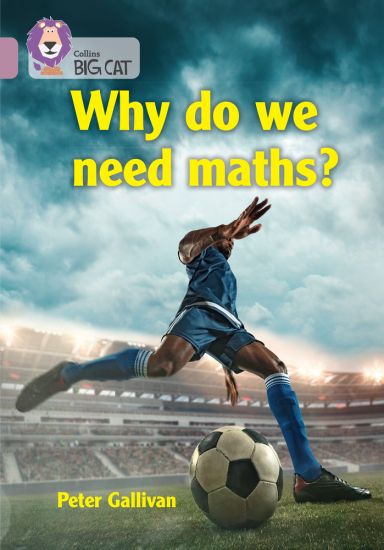
Collins Big Cat supports every primary child on their reading journey from phonics to fluency. Top authors and illustrators have created fiction and non-fiction books that children love to read. Book banded for guided and independent reading, there are reading notes in the back, comprehensive teaching and assessment support and ebooks available. From volcano eruptions to building bridges, preventing diseases to playing football, maths is all around us. Come on a journey to discover the incredible ways maths is used in the world! Pearl/Band 18 books offer fluent readers a complex, substantial text with challenging themes to facilitate sustained comprehension, bridging the gap between a reading programme and longer chapter books. Ideas for reading in the back of the book provide practical support and stimulating activities.
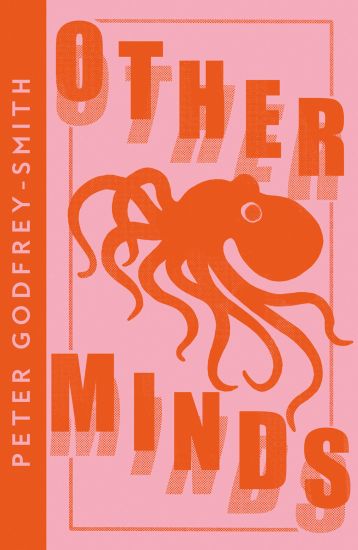
Introducing the Collins Modern Classics, a series featuring some of the most significant books of recent times, books that shed light on the human experience – classics which will endure for generations to come. What if intelligent life on earth not only evolved on land, but also in the sea? Other Minds is a bold new story of how nature became aware of itself – a story that largely occurs in the ocean, where animals first appeared. Tracking the mind’s fitful development over millennia, Other Minds explores the incredible evolutionary journey of the cephalopods. What kind of intelligence do they possess? And how did the octopus, a solitary creature with little social life, become so smart? Heralded as the ‘scuba-diving philosopher’ when Other Minds first published, Peter Godfrey-Smith explores the underwater world and the concept of sentience to trace the question of inner life back to its roots. By comparing human beings with our most remarkable animal relatives, Other Minds casts crucial new light on the octopus mind – and on our own.
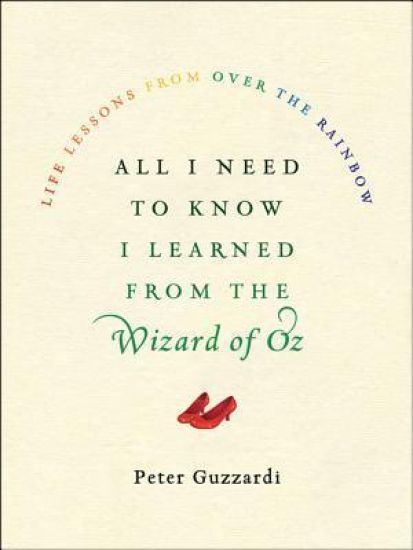
In the bestselling tradition of Everything I Need to Know I Learned in Kindergarten, a wise and inspiring collection of life lessons drawn from one of the most beloved movies of all time: The Wizard of OzAfter a lifetime in book publishing, Peter Guzzardi had edited a remarkable group of diverse authors, from Stephen Hawking to Deepak Chopra, from Carol Burnett to Douglas Adams, from Byron Katie to Geneen Roth. Yet everything he’d learned from working with them felt oddly familiar. One day it suddenly became clear: all that wisdom had its roots in a film he’d watched as a child, “The Wizard of Oz.” That revelation led to this book. It’s a jewel box of insights drawn from Dorothy’s heroic journey from helpless in Kansas to powerful in Oz, then back to Kansas, transformed by what she found along the way. In Emeralds of Oz: Life Lessons From Over the Rainbow, we discover what the most-watched film in history has to teach us. With that knowledge we become free to embark on our own journey, having activated the power to direct our lives that we possessed all along.
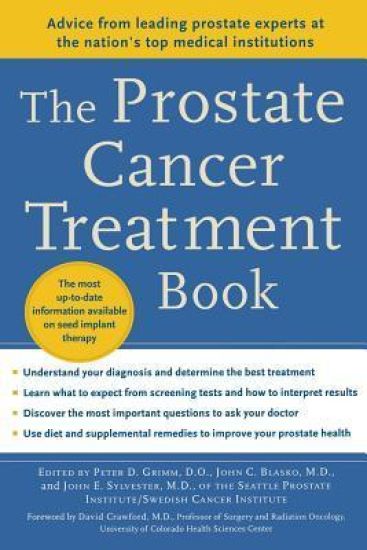
A source of comfort, encouragement, and priceless information, "The Prostate Cancer Treatment Book" offers you complete answers to all your questions about conquering prostate cancer. It brings together the insights and expertise of twenty-one of the nation's top prostate cancer specialists from the Mayo Clinic, Memorial Sloan Kettering, Cornell University, the Seattle Prostate Institute, and other leading treatment centers. And it shares inspiring real-life accounts from men who have beaten prostate cancer.
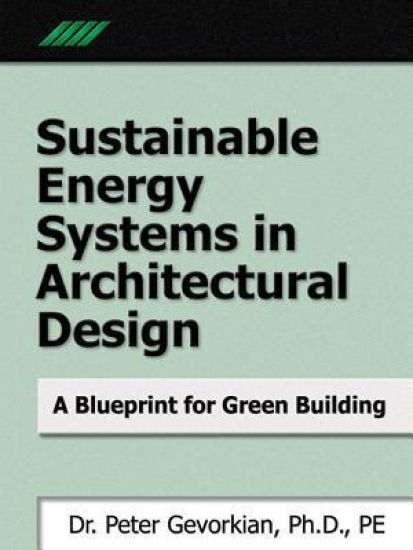
Publisher's Note: Products purchased from Third Party sellers are not guaranteed by the publisher for quality, authenticity, or access to any online entitlements included with the product.Expertly design and install all types of renewable energy systemsThis is the only comprehensive, practical resource for understanding, designing, and installing all major types of renewable energy systems. Find workable solutions for a variety of building types, including commercial, public and residential structures.Technical concepts and data are presented in plain jargon-free language with clear, concise bulleted textPacked with charts, tables and diagrams
Publisher's Note: Products purchased from Third Party sellers are not guaranteed by the publisher for quality, authenticity, or access to any online entitlements included with the product.The only complete design resource for sustainable energy systems geared towards engineersThis highly visual resource goes beyond theory and provides solid, hands-on mechanical and electrical engineering information on the design and installation of sustainable energy systems. You will find everything you need -- including real-world case studies -- to develop the most energy efficient systems possible for a wide variety of projects.
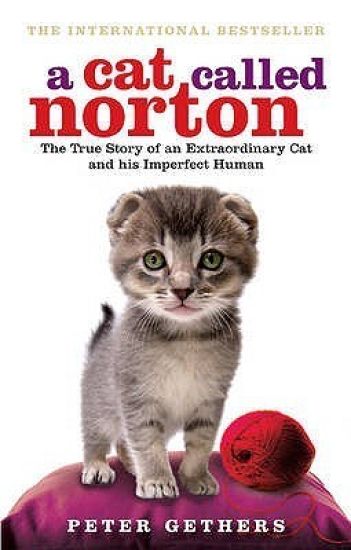
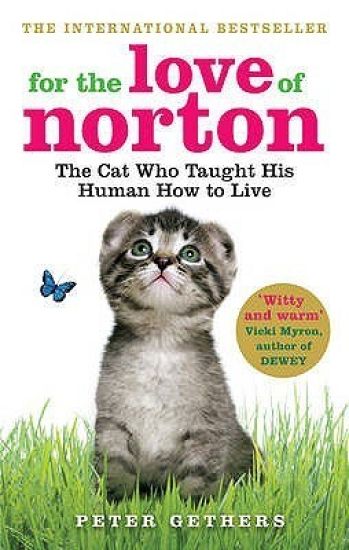
Peter was a confirmed loner and cat hater, until he was given a small, grey (and impeccably handsome) kitten with folded ears by his then girlfriend. Trotting along beside him down the street, having his own chair in restaurants or sitting on Peter's lap on plane journeys, Norton made his presence felt and Peter was a loner no more.
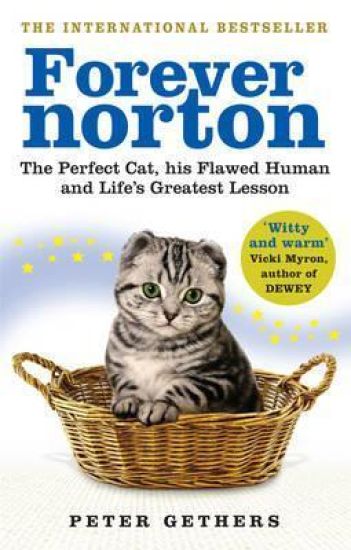
'The wonderful thing about having a relationship with a cat is that it can bring you to something truly extraordinary and life-changing'There comes a time in every cat's life when his schedule slows down, and he struggles with aches and pains.
There are only three things a cat needs for a fine life - good food, a comfortable bed, and universal praise and love. Luckily - after converting his human, Peter, from cat hater to cat lover - Norton has plenty of all three.
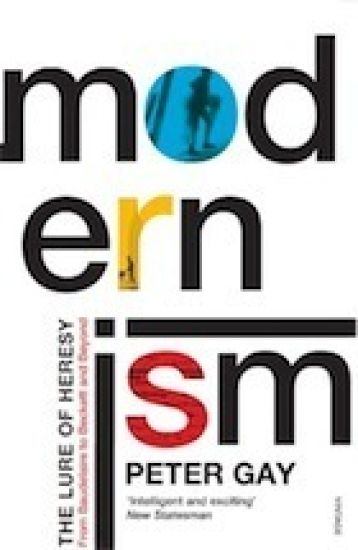
In his most ambitious endeavour since Freud, acclaimed cultural historian Peter Gay traces and explores the rise of Modernism in the arts, the cultural movement that heralded and shaped the modern world, dominating western high culture for over a century.
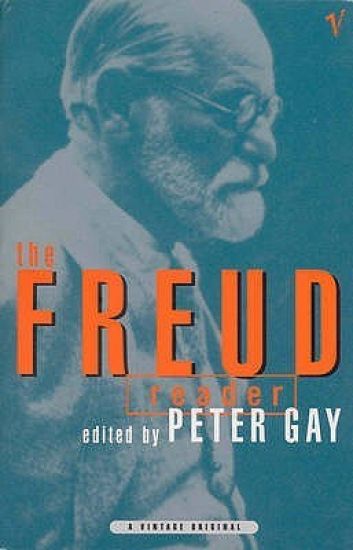
It contains fifty-one key texts, spanning Freud's entire career from early case histories through his work on dreams, essays on sexuality, and on to his late writings, including Civilisation and Its Discontents. Peter Gay, a leading scholar of Freud, has put together this selection to provide a full portrait of Freud's thought.
This book covers our current understanding of the role of mesenchymal stem cells (MSCs) and other mesenchymal progenitors in skeletal regeneration, encompassing bone, cartilage and whole joint regeneration. The expansion reflects developments in the field to include data on the use of MSCs in drug development, growth factors, scaffolds and biomechanical manipulations for skeletal trauma and diseases, including osteoporosis and arthritis. Written for an audience of clinicians and young researchers who are exposed to MSCs in their work, this work summarizes recent findings pertaining to the definition and characterization of MSCs in skeletal tissues and discusses the mechanisms of their actions in regeneration of bone in vivo. The authors describe recent findings pertaining to the efficacy of MSC therapies in animal models and in human clinical trials and bring together literature showing that the ways MSCs are extracted, expanded and implanted can considerably affect bone formation outcomes. Finally, it presents the latest knowledge on the nature of native MSCs in skeletal tissues, which provide a platform for novel in situ tissue regeneration approaches for systemic bone disease such as osteoporosis.
Misleading DNA Evidence: A Guide for Scientists, Judges, and Lawyers presents the reasons miscarriages of justice can occur when dealing with DNA, what the role of the forensic scientist is throughout the process, and how judges and lawyers can educate themselves about all of the possibilities to consider when dealing with cases that involve DNA evidence. DNA has become the gold standard by which a person can be placed at the scene of a crime, and the past decade has seen great advances in this powerful crime solving tool. But the statistics that analysts can attach to DNA evidence often vary, and in some cases the statistical weight assigned to that match, can vary enormously. The numbers provided to juries often overstate the evidence, and can result in a wrongful conviction. In addition to statistics, the way the evidence is collected, stored and analyzed can also result in a wrongful conviction due to contamination. This book reviews high-profile and somewhat contentious cases to illustrate these points, including the death of Meredith Kercher. It examines crucial topics such as characterization of errors and determination of error rates, reporting DNA profiles and the source and sub-source levels, and the essentials of statement writing. It is a concise, readable resource that will help not only scientists, but legal professionals with limited scientific backgrounds, to understand the intricacies of DNA use in the justice system.
Dentine Hypersensitivity: Developing a Person-Centred Approach to Oral Health provides a detailed and integrated account of interdisciplinary research into dentine hypersensitivity. The monograph will be of interest to all those working on person centred oral health related research because it provides not only an account of the findings of a series of studies into dentine hypersensitivity drawing on the research traditions of epidemiology, sociology psychology, and dental public health but an integrated study of the benefits of exploring a single oral condition from this range of disciplines.
Carbon analogs of carbohydrates, dubbed C-glycosides, have remained an important and interesting class of mimetics, be it in natural product synthesis, for pharmacological applications, as conformational probes, or for biological studies. C-Furanosides: Synthesis and Stereochemistry provides a much-needed overview of synthetic and stereochemical principles for C-furanosides: analogs of a 5-membered ring carbohydrate glycoside (furanoside), in which the anomeric oxygen has been replaced with a carbon. While our understanding of conformational behavior and of stereoselective synthesis in 6-membered ring compounds is quite good, our ability to predict the conformation of 5-membered ring compounds, or to predict the stereochemical outcome of a given reaction, remains anecdotal. Through a comprehensive review of literature approaches to the different C-furanoside stereoisomers, as well as an interpretation of the outcome in terms of a reasonable number of stereochemical models, C-Furanosides: Synthesis and Stereochemistry enables the reader to determine the best approach to a particular C-glycoside compound, and also hopes to provide a certain level of rationalization and predictability for the synthesis of new systems.
The Friedman-Lucas Transition in Macroeconomics: A Structuralist Approach considers how and to what extent monetarist and new classical theories of the business-cycle can be regarded as approximately true descriptions of a cycle’s causal structure or whether they can be no more than useful predictive instruments. This book will be of interest to upper-division undergraduates, graduate students, researchers and professionals concerned with practical, theoretical and historical aspects of macroeconomics and business-cycle modeling.
As scientific and engineering projects grow larger and more complex, it is increasingly likely that those projects will be written in C++. With embedded hardware growing more powerful, much of its software is moving to C++, too. Mastering C++ gives you strong skills for programming at nearly every level, from “close to the hardware” to the highest-level abstractions. In short, C++ is a language that scientific and technical practitioners need to know. Peter Gottschling’s Discovering Modern C++ is an intensive introduction that guides you smoothly to sophisticated approaches based on advanced features. Gottschling introduces key concepts using examples from many technical problem domains, drawing on his extensive experience training professionals and teaching C++ to students of physics, math, and engineering. This book is designed to help you get started rapidly and then master increasingly robust features, from lambdas to expression templates. You’ll also learn how to take advantage of the powerful libraries available to C++ programmers: both the Standard Template Library (STL) and scientific libraries for arithmetic, linear algebra, differential equations, and graphs. Throughout, Gottschling demonstrates how to write clear and expressive software using object orientation, generics, metaprogramming, and procedural techniques. By the time you’re finished, you’ll have mastered all the abstractions you need to write C++ programs with exceptional quality and performance.
The Practical Guide to Optimizing Product Value through Better Teamwork with Scrum “Professional Scrum is hard, not because the ideas are hard, but because it requires persistence, focus, and dedication to not let the day-to-day realities get in the way. In this book, Peter, Uwe, and Kurt have provided a collection of materials to help the Scrum Team deliver value and feel happy doing it.” --Dave West, CEO and Product Owner, Scrum.org Teams and individuals find the rules of the Scrum Framework to be easy to describe but challenging to implement. The Professional Scrum Team helps you bring the Scrum Framework rules to life in your everyday work, optimizing both team and individual performance and creating more value. Three leading Scrum experts bring together proven practices based on decades of real-life experience participating in, leading, and supporting Scrum Teams. They introduce a team as it starts out with Scrum and follow it as it gains hard-won practical experience, gradually mastering the intense collaboration that Scrum demands. As you share the team's experience--facing and overcoming realistic challenges--you'll discover better ways to work together, enhance your practices, leverage tools, continuously improve, and deliver functionality in ever-shorter cycles. Understand how Scrum Teams work, collaborate, and promote transparencyExplore common problems that lead less experienced Scrum Teams to give upFind your Scrum Team's best approach to solving complex adaptive problemsIntegrate DevOps practices with Scrum to improve effectivenessProductively and professionally resolve conflicts that arise from close collaborationHelp your organization learn how to improve its results by better supporting its Scrum TeamsThis guide is for anyone who works with Scrum Teams or wants to become more effective as a Scrum Team member or leader. Register your book for convenient access to downloads, updates, and/or corrections as they become available. See inside book for details.