Kirjahaku
Etsi kirjoja tekijän nimen, kirjan nimen tai ISBN:n perusteella.
1000 tulosta hakusanalla Peter J. Perry
Seeking to train readers to ""hear all that is being said"" within a written text, Peter Leithart advocates a hermeneutics of the letter that is not rigidly literalist and looks to learn to read--not just the Bible, but everything--from Jesus and Paul. Thus Deep Exegesis explores the nature of reading itself--taking clues from Jesus and Paul on the meaning of meaning, the functions of language, and proper modes of interpretation. By looking (and listening) closely, and by including passages from the Bible and other literary sources, Leithart aims to do for the text what Jesus did for the blind man in John 9: to make new by opening eyes. The book is a powerful invitation to enter the depths of a text.
Gratitude is often understood as etiquette rather than ethics, an emotion rather than politics. It was not always so. From Seneca to Shakespeare, gratitude was a public virtue. The circle of benefaction and return of service worked to make society strong. But at the beginning of the modern era, European thinkers began to imagine a political economy freed from the burdens of gratitude. Though this rethinking was part of a larger process of secularization, it was also a distorted byproduct of an impulse ultimately rooted in the teachings of Jesus and the apostle Paul. Christians believed that God stood at the center of the circle of gratitude. God was the object of thanksgiving and God gave graciously. Thus, Christians taught that grace cancelled the oppressive debts of a purely political gratitude. Gratitude: An Intellectual History examines changing conceptions of gratitude from Homer to the present. In so doing, Peter J. Leithart highlights the profound cultural impact of early Christian ""ingratitude,"" the release of humankind from the bonds of social and political reciprocity by a benevolent God who gave - and who continues to give - graciously.
Secrets of God's Power Revealed God confirmed Smith Wigglesworth's ministry through powerful signs and wonders. These included the restoration of hearing and sight, the creative formation of missing limbs, the disappearance of cancerous growth
Cognitive-Behavioral Therapy in Groups
Peter J. Bieling; Randi E. McCabe; Martin M. Antony; Jessica L. Stewart; Arthur Freeman
Guilford Publications
2009
nidottu
This book has been replaced by Cognitive-Behavioral Therapy in Groups, Second Edition, ISBN 978-1-4625-4984-9.
Documentary Filmmaking for Archaeologists
Peter J Pepe; Joseph W Zarzynski
Left Coast Press Inc
2012
sidottu
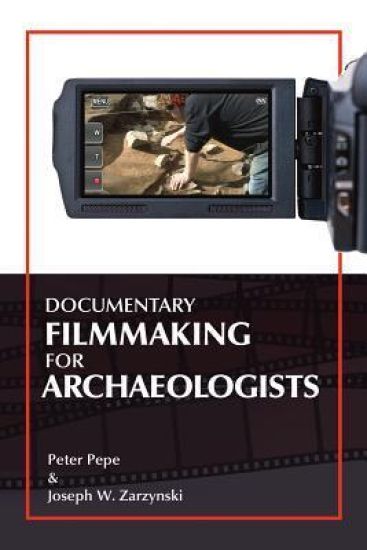
Documentary filmmaker Peter Pepe and historical archaeologist Joseph W. Zarzynski provide a concise guide to filmmaking designed to help archaeologists navigate the unfamiliar world of documentary film. They offer a step-by-step description of the process of making a documentary, everything from initial pitches to production companies to final cuts in the editing. Using examples from their own award-winning documentaries, they focus on the needs of the archaeologist: Where do you fit in the project? What is expected of you? How can you help your documentarian partner? The authors provide guidance on finding funding, establishing budgets, writing scripts, interviewing, and numerous other tasks required to produce and distribute a film. Whether you intend to sell a special to National Geographic or churn out a brief clip to run at the local museum, read this book before you start.
Documentary Filmmaking for Archaeologists
Peter J Pepe; Joseph W Zarzynski
Left Coast Press Inc
2012
nidottu
Documentary filmmaker Peter Pepe and historical archaeologist Joseph W. Zarzynski provide a concise guide to filmmaking designed to help archaeologists navigate the unfamiliar world of documentary film. They offer a step-by-step description of the process of making a documentary, everything from initial pitches to production companies to final cuts in the editing. Using examples from their own award-winning documentaries, they focus on the needs of the archaeologist: Where do you fit in the project? What is expected of you? How can you help your documentarian partner? The authors provide guidance on finding funding, establishing budgets, writing scripts, interviewing, and numerous other tasks required to produce and distribute a film. Whether you intend to sell a special to National Geographic or churn out a brief clip to run at the local museum, read this book before you start.
Rabbit (Un)Redeemed: The Drama of Belief in John Updikes Fiction offers a selective reading of this prolific authors oeuvre, concentrating on Updikes career-spanning reoccupation with issues of faith and doubt. In Baileys reading, at the heart of Updike's work is the tension between affirming the continuance of the 'heady wine of religious consolation' and the deepening anxiety that the best that humanity can hope for is 'the bleak fare of more endurance.' Focusing on a trio of Olinger stories, the Rabbit Angstrom tetralogy, In the beauty of the Lilies, and Rabbit Remembered, Bailey locates the dialectical situation at the center of Updike's literary career in his conflicted sense of himself as a Christian novelist and Howellsian realist. Bailey's thematically centered study reveals a substantial stylistic component in Updike's dilemma of belief; therefore, a significant objective of this study involves illuminating the author's conflict between creating an eschatologically inspired mimesis reflective of a 'knowing eye' behind appearances of reality, or settling for a historically based realism that, in Howellsian fashion, can do nothing more spiritually meaningful than to record (and thus literally preserve) that which is an will one day be no more. Rabbit Angstrom is Updike's most significant fictional creation, Bailey contends, because his impulses toward religious skepticism are so inadequately possessed of the intellectual and literary buffers that provide Updike and some of his other protagonists with temporary forms of solace or compensation. Rabbit's deepening skepticism that 'goodness lies inside, there is nothing outside' finds it corollary in the evolution delineated in Updike's work, transforming it from the 'song of joy' in affirmation of creation the 'The Blessed Man of Boston' narrator David Kern invokes, to the chronological reconstruction of history as attempted compensation for a relinquished belief in times spiritual significance in In the Beauty of th
Peter J. Marchand's Life in the Cold, remains the one book that offers a comprehensive picture of the interactions of plants and animals-including humans-with their cold-weather environment. Focusing on the problems of "winter-active" organisms, Marchand illuminates the many challenges of sustaining life in places that demand extraordinary adaptations. The fourth edition of this classic text includes a new chapter on climate change and its effects on plants and animals wintering in the North.
American foreign policy since World War II has actively sought to reshape both domestic and international orders, hoping to hasten the coming of the “end of history” in a peaceful democratic utopia. While the end of the Cold War heightened optimism that this goal was near, American foreign policymakers still face dramatic challenges. In War, Welfare & Democracy, Peter Munson argues that the problems we face today stem from common roots-the modern state system’s struggle to cope with the pressures of market development and sociopolitical modernization. America’s policies seek to treat challenges as varied as insurgency, organized crime, fiscal crises, immigration pressures, authoritarianism, and violations of human rights with a schizophrenic mix of realpolitik and idealism. The ideologies that inform this policy outlook were born during the Great Depression and two world wars and honed during the early years of the Cold War. Although the world has long since changed, American policy has failed to adjust. The crisis of the world’s leading welfare states compounds this inflexibility. By addressing the inequality of wealth, security, and stability brought on by dramatic economic change and modernization, Munson describes how America can lead in reforming the welfare state paradigm and adjust its antiquated policies to best manage the transformation we must face.
Higher Education and Employability
Peter J. Stokes; Louis Soares
Harvard Educational Publishing Group
2015
nidottu
Higher Education and Employability makes a crucial contribution to the current reassessment of higher education in the United States by focusing on how colleges and universities can collaborate with businesses in order to serve the educational andprofessional interests of their students. Drawing on his extensive experience with universities and the business world, Peter J. Stokes argues that the need for closer alignment between the two sectors has never been more critical—and that the opportunitiesfor partnership have never been greater.This book includes a series of trenchant case studies of particular universities that have developed ambitious collaborative programs—New York University, Northeastern University, and the Georgia Institute of Technology. Incisive and practical, this book surveys the full range of current partnerships between businesses and higher education and points to opportunities that will best serve students now and in the future.
Higher Education and Employability
Peter J. Stokes; Louis Soares
Harvard Educational Publishing Group
2015
sidottu
Higher Education and Employability makes a crucial contribution to the current reassessment of higher education in the United States by focusing on how colleges and universities can collaborate with businesses in order to serve the educational andprofessional interests of their students. Drawing on his extensive experience with universities and the business world, Peter J. Stokes argues that the need for closer alignment between the two sectors has never been more critical—and that the opportunitiesfor partnership have never been greater.This book includes a series of trenchant case studies of particular universities that have developed ambitious collaborative programs—New York University, Northeastern University, and the Georgia Institute of Technology. Incisive and practical, this book surveys the full range of current partnerships between businesses and higher education and points to opportunities that will best serve students now and in the future.
A NOVEL SET IN THE UNIVERSE OF INTERFACE ZERO FROM GUNMETAL GAMES
The Great Hypostyle Hall in the Temple of Amun at Karnak
Peter J. Brand; Rosa Erika Feleg; William J. Murnane
Oriental Institute of the University of Chicago
2019
sidottu
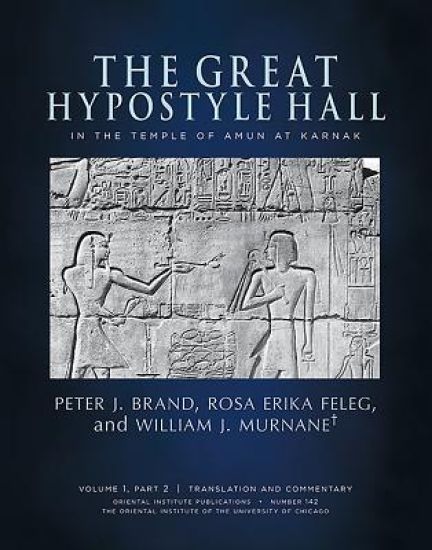
Standing at the heart of Karnak Temple, the Great Hypostyle Hall is a forest of 134 giant sandstone columns enclosed by massive walls. Sety I built the Great Hypostyle Hall ca. 1300 BCE and decorated the northern wing with exquisite bas reliefs. After his death, his successor Ramesses II completed the southern wing mostly in sunk relief. This volume provides full translation, epigraphic analysis, and photographic documentation of the elaborate wall reliefs inside the Hall. This vast trove of ritual art and texts attest to the richness and vitality of Egyptian civilization at the height of its imperial power. The present volume builds upon and serves as a companion to an earlier volume of drawings of the wall scenes made by Harold H. Nelson in the 1950s and edited for publication by William J. Murnane in 1981. Volume 1, Part 2 452pp; Volume 1, Part 3 (figures and plates) 328pp.
Do-It-Yourself Projects for Bowhunters
Peter J. Fiduccia; Leo Somma
Skyhorse Publishing
2013
pokkari
Do-It-Yourself Projects for Bowhunters is a detailed reference book including dozens of useful woodworking, antler, bone, and hide projects that are practical for camp and home. This guide also features articles, diagrams, and illustrations on field dressing, skinning, and quartering deer as well as information on planting successful food plots to attract game to your property. Among the many projects included are instructions for making antler knife handles, an archery workbench, game poles, tree stands, storage sheds, an archer’s bookcase, bow and arrow practice holders, bow and arrow wall racks, a bowhunter’s storage box, and more. Expand your hunting knowledge with complete steps to field dress a deer, quickly remove the hide of a deer, and quarter a deer.Projects include:Arrowhead Game PlaqueArcher’s Picture FramePremier Tree StandBoot Storage BenchPaper Tuning StandReusable Practice TargetAnd more!This is the ultimate D-I-Y project book for any avid bowhunter or archer.
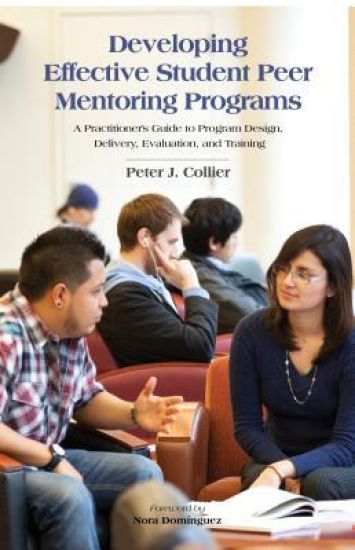
Developing Effective Student Peer Mentoring Programs
Peter J. Collier
Stylus Publishing
2015
sidottu
At a time when college completion is a major issue, and there is particular concern about the retention of underserved student populations, peer mentoring programs offer one solution to promoting student success. This is a comprehensive resource for creating, refining and sustaining effective student peer mentoring programs. While providing a blueprint for successfully designing programs for a wide range of audiences – from freshmen to doctoral students – it also offers specific guidance on developing programs targeting three large groups of under-served students: first-generation students, international students and student veterans.This guidebook is divided into two main sections. The opening section begins by reviewing the issue of degree non-completion, as well as college adjustment challenges that all students and those in each of the targeted groups face. Subsequent chapters in section one explore models of traditional and non-traditional student transition, persistence and belonging, address what peer mentoring can realistically achieve, and present a rubric for categorizing college student peer-mentoring programs. The final chapter in section one provides a detailed framework for assessing students’ adjustment issues to determine which ones peer mentoring programs can appropriately address. Section two of the guidebook shifts from the theoretical to the practical by covering the nuts and bolts of developing a college student peer-mentoring program. The initial chapter in section two covers a range of design issues including establishing a program timeline, developing a budget, securing funding, getting commitments from stakeholders, hiring staff, recruiting mentors and mentees, and developing policies and procedures. Subsequent chapters analyze the strengths and limitations of different program delivery options, from paired and group face-to-face mentoring to their e-mentoring equivalents; offer guidance on the creation of program content and resources for mentors and mentees, and provide mentor training exercises and curricular guidelines. Section two concludes by outlining processes for evaluating programs, including setting goals, collecting appropriate data, and methods of analysis; and by offering advice on sustaining and institutionalizing programs. Each chapter opens with a case study illustrating its principal points. This book is primarily intended as a resource for student affairs professionals and program coordinators who are developing new peer-mentoring programs or considering refining existing ones. It may also serve as a text in courses designed to train future peer mentors and leaders.
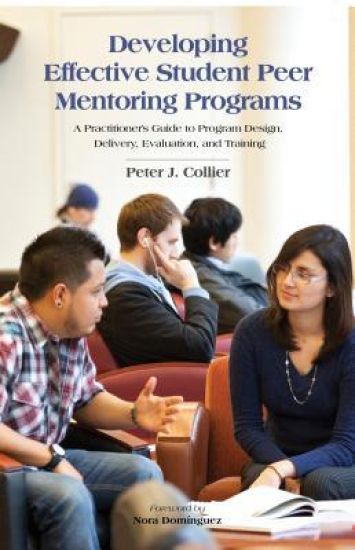
Developing Effective Student Peer Mentoring Programs
Peter J. Collier
Stylus Publishing
2015
nidottu
At a time when college completion is a major issue, and there is particular concern about the retention of underserved student populations, peer mentoring programs offer one solution to promoting student success. This is a comprehensive resource for creating, refining and sustaining effective student peer mentoring programs. While providing a blueprint for successfully designing programs for a wide range of audiences – from freshmen to doctoral students – it also offers specific guidance on developing programs targeting three large groups of under-served students: first-generation students, international students and student veterans.This guidebook is divided into two main sections. The opening section begins by reviewing the issue of degree non-completion, as well as college adjustment challenges that all students and those in each of the targeted groups face. Subsequent chapters in section one explore models of traditional and non-traditional student transition, persistence and belonging, address what peer mentoring can realistically achieve, and present a rubric for categorizing college student peer-mentoring programs. The final chapter in section one provides a detailed framework for assessing students’ adjustment issues to determine which ones peer mentoring programs can appropriately address. Section two of the guidebook shifts from the theoretical to the practical by covering the nuts and bolts of developing a college student peer-mentoring program. The initial chapter in section two covers a range of design issues including establishing a program timeline, developing a budget, securing funding, getting commitments from stakeholders, hiring staff, recruiting mentors and mentees, and developing policies and procedures. Subsequent chapters analyze the strengths and limitations of different program delivery options, from paired and group face-to-face mentoring to their e-mentoring equivalents; offer guidance on the creation of program content and resources for mentors and mentees, and provide mentor training exercises and curricular guidelines. Section two concludes by outlining processes for evaluating programs, including setting goals, collecting appropriate data, and methods of analysis; and by offering advice on sustaining and institutionalizing programs. Each chapter opens with a case study illustrating its principal points. This book is primarily intended as a resource for student affairs professionals and program coordinators who are developing new peer-mentoring programs or considering refining existing ones. It may also serve as a text in courses designed to train future peer mentors and leaders.