

Kirjahaku
Etsi kirjoja tekijän nimen, kirjan nimen tai ISBN:n perusteella.
1000 tulosta hakusanalla Phil Tufnell
Shrink Your Handicap: A Revolutionary Program from an Acclaimed Psychiatrist and a Top 100 Golf Instructor
Phil Lee; Jeff Warne
Grand Central Publishing
2002
nidottu
Now available in paperback Don't you wish golf on the course was as easy as golf on the practice range? Don't you wish you could bring your range game to the course? Now you can, thanks to a golf psychiatrist and a top golf teacher. You can drive off the tee the way you do on the range--you can also putt under pressure just as accurately as you putt on your carpet. You can hit out of the sand in a tight match the same way you hit over land. Shrink Your Handicap solves your golf problems with the help of Phil Lee, behavioral psychiatrist, and Jeff Warne, a Golf magazine Top 100 instructor, who together have formed a unique collaboration that shows readers how to overcome the mental obstacles that keep them from playing their best . . . every day.

Japanese Family and Society
Phil Barker; Suzanne K Steinmetz; Teruhito Sako
Routledge Member of the Taylor and Francis Group
2007
sidottu
An accurate, thought provoking translation of original work from sociologist pioneer Tongo TakebeToday's sociology education emphasizes multiculturalism, yet most of the views originate from Judeo-Christian perspectives that can limit insight and understanding. Japanese Family and Society: Words from Tongo Takebe, A Meiji Era Sociologist presents a carefully edited, accurate translation by Teruhito Sako of original work from the early Japanese sociologist Tongo Takebe. His unique viewpoint sheds light on both Eastern and Western perspectives used to describe societal development and a classification system of knowledge. This easily understandable source retains the essences of this classical Japanese social theorist's work while giving an excellent overview of Eastern and Western social theory and philosophy and discussion of major scientific advances from the earliest eras until 1900. Japanese Family and Society is a translation of Takebe’s General Sociology: Introduction (1904, Volume 1) and an excerpt from General Sociology: Social Statistics (1909, Volume 3). In Volume 1, Takebe reviews the accomplishments of major Eastern and Western scholars. Systematically, Takebe discusses the major scientific advances in physics, chemistry, biology, astronomy, history, economics, philosophy, anthropology, political science, and sociology to develop criteria for a classification system of knowledge. In the excerpt from Volume 3, Takebe discusses family relationships. In these translations, Takebe focuses on the strengths and weaknesses of both Eastern and Western viewpoints of societal development in which he demonstrates the advantages of combining these perspectives. Topics in Japanese Family and Society include: a brief history of Japanese society early Japanese sociologists a biography of Tongo Takebe theoretical introduction to sociology, sociology’s problems, and methodology historical introduction to the sociological ideas in Japan, China, Indian thought, Ancient Greece, Medieval Europe, and the Modern era the rise of socialism major accomplishments in various disciplines family organization, including marital relationships, parent-child relationships, sibling relationships, and others much more Japanese Family and Society can be used as a text or supplemental text for upper level undergraduate courses in social theory, sociology, philosophy, history, and social science.

Japanese Family and Society
Phil Barker; Suzanne K Steinmetz; Teruhito Sako
Routledge Member of the Taylor and Francis Group
2007
nidottu
An accurate, thought provoking translation of original work from sociologist pioneer Tongo TakebeToday's sociology education emphasizes multiculturalism, yet most of the views originate from Judeo-Christian perspectives that can limit insight and understanding. Japanese Family and Society: Words from Tongo Takebe, A Meiji Era Sociologist presents a carefully edited, accurate translation by Teruhito Sako of original work from the early Japanese sociologist Tongo Takebe. His unique viewpoint sheds light on both Eastern and Western perspectives used to describe societal development and a classification system of knowledge. This easily understandable source retains the essences of this classical Japanese social theorist's work while giving an excellent overview of Eastern and Western social theory and philosophy and discussion of major scientific advances from the earliest eras until 1900. Japanese Family and Society is a translation of Takebe’s General Sociology: Introduction (1904, Volume 1) and an excerpt from General Sociology: Social Statistics (1909, Volume 3). In Volume 1, Takebe reviews the accomplishments of major Eastern and Western scholars. Systematically, Takebe discusses the major scientific advances in physics, chemistry, biology, astronomy, history, economics, philosophy, anthropology, political science, and sociology to develop criteria for a classification system of knowledge. In the excerpt from Volume 3, Takebe discusses family relationships. In these translations, Takebe focuses on the strengths and weaknesses of both Eastern and Western viewpoints of societal development in which he demonstrates the advantages of combining these perspectives. Topics in Japanese Family and Society include: a brief history of Japanese society early Japanese sociologists a biography of Tongo Takebe theoretical introduction to sociology, sociology’s problems, and methodology historical introduction to the sociological ideas in Japan, China, Indian thought, Ancient Greece, Medieval Europe, and the Modern era the rise of socialism major accomplishments in various disciplines family organization, including marital relationships, parent-child relationships, sibling relationships, and others much more Japanese Family and Society can be used as a text or supplemental text for upper level undergraduate courses in social theory, sociology, philosophy, history, and social science.
Unique – Telling Your Story in the Age of Brands and Social Media
Phil Cooke
Baker Academic, Div of Baker Publishing Group
2012
nidottu
Today's culture is more connected than any time in history, but all of this connectivity comes with a price. We live in a world that's become cluttered, distracted, and disrupted by social media, with the average person receiving as many as 5,000 messages a day in one form or another. If you're a pastor, nonprofit leader, artist, filmmaker, entrepreneur, or creative professional in this hyper-connected, highly distracted world, how do you get your unique idea, project, or vision on the radar of the people who need to respond?In Unique, Phil Cooke, a highly respected media producer and consultant, addresses both the challenges and the opportunities of branding and social media in the 21st century. If you have a vision or message to share with the world, Unique provides a blueprint to cut through the clutter, communicate your story, and impact your audience.
Before smartphones, back even before the Internet and personal computer, a misfit group of technophiles, blind teenagers, hippies, and outlaws figured out how to hack the world's largest machine: the telephone system. Starting with Alexander Graham Bell's revolutionary "harmonic telegraph," by the middle of the twentieth century the phone system had grown into something extraordinary, a web of cutting-edge switching machines and human operators that linked together millions of people like never before. But the network had a billion-dollar flaw, and once people discovered it, things would never be the same. Exploding the Phone tells this story in full for the first time. It traces the birth of long-distance communication and the telephone, the rise of AT&T's monopoly, the creation of the sophisticated machines that made it all work, and the discovery of Ma Bell's Achilles' heel. Phil Lapsley expertly weaves together the clandestine underground of "phone phreaks" who turned the network into their electronic playground, the mobsters who exploited its flaws to avoid the feds, the explosion of telephone hacking in the counterculture, and the war between the phreaks, the phone company, and the FBI. The product of extensive original research, Exploding the Phone is a ground-breaking, captivating book.
La Fee Verte (or "The Green Fairy") has intoxicated artists, poets, and writers ever since the late eighteenth century. Stories abound of absinthe's druglike sensations of mood lift and inspiration due to the presence of wormwood, its infamous "special" ingredient, which ultimately leads to delirium, homicidal mania, and death. Opening with the sensational 1905 Absinthe Murders, Phil Baker offers a cultural history of absinthe, from its modest origins as an herbal tonic through its luxuriantly morbid heyday in the late nineteenth century. Chronicling a fascinatingly lurid cast of historical characters who often died young, the absinthe scrapbook includes Paul Verlaine, Arthur Rimbaud, Charles Baudelaire, Oscar Wilde, Ernest Dowson, Aleister Crowley, Arthur Machen, August Strindberg, Alfred Jarry, Vincent van Gogh, Henri de Toulouse-Lautrec, Alphonse Allais, Ernest Hemingway, and Pablo Picasso. Along with discussing the rituals and modus operandi of absinthe drinking, Baker reveals the recently discovered pharmacology of how real absinthe actually works on the nervous system, and he tests the various real and fake absinthe products that are available overseas. The Book of Absinthe is a witty, erudite primer to the world's most notorious drink.
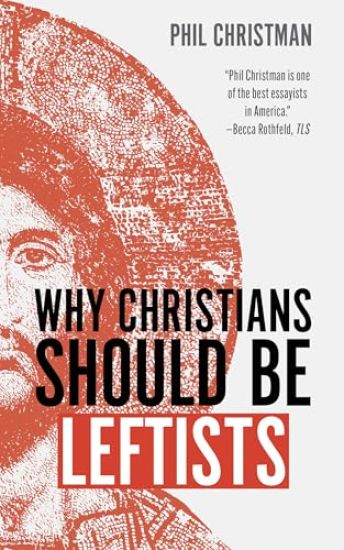
Why Christians Should Be Leftists
Phil Christman
William B. Eerdmans Publishing Company
2025
sidottu
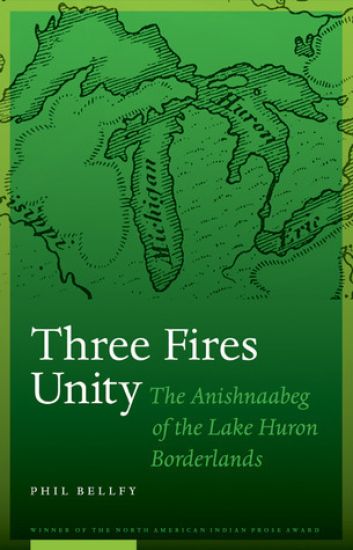
The Lake Huron area of the Upper Great Lakes region, an area spreading across vast parts of the United States and Canada, has been inhabited by the Anishnaabeg for millennia. Since their first contact with Europeans around 1600, the Anishnaabeg have interacted with-and struggled against-changing and shifting European empires and the emerging nation-states that have replaced them. Through their cultural strength, diplomatic acumen, and a remarkable knack for adapting to change, the Anishnaabeg of the Lake Huron Borderlands have reemerged as a strong and vital people, fully in charge of their destiny in the twenty-first century. Winner of the North American Indian Prose Award, this first comprehensive cross-border history of the Anishnaabeg provides an engaging account of four hundred years of their life in the Lake Huron area, showing how they have been affected by European contact and trade. Three Fires Unity examines how shifting European politics and, later, the imposition of the Canada–United States border running through their homeland, affected them and continue to do so today. In looking at the cultural, social, and political aspects of this borderland contact, Phil Bellfy sheds light on how the Anishnaabeg were able to survive and even thrive over the centuries in this intensely contested region.

A Stanford University Press classic.

Forty years of collaboration in research and writing with Roger G. Barker have uniquely qualified the author to revise Barker's classic Ecological Psychology: Concepts and Methods for Studying the Environment of Human Behavior (1968). The author's primary goal has been to provide an up-to-date and comprehensive description of behavior setting theory and method with sufficient detail and illustration to guide new research applications. Barker's presentation of theory and method has been preserved except where changes were required to reflect the advances reported in Barker and Schoggen's Qualities of Community Life (1973). The lengthy report in Ecological Psychology of empirical findings from the study of behavior settings the town of Midwest has been replaced by extensive summaries of the currently available reports of research applications of behavior setting theory. Four new chapters have been added: a chapter be economist Karl A. Fox on the use of behavior settings in social system accounting, an article by Barker on behavior settings that have figured prominently in his career, a chapter that discusses behavior settings in relation to a number of other concepts in social science and the field of environment and behavior, and a final chapter on the need for an eco-behavioral science taken from two papers by Barker.

In asymmetric interstate conflicts, great powers have the capability to coerce weak states by threatening their survival—but not vice versa. It is therefore the great power that decides whether to escalate a conflict into a crisis by adopting a coercive strategy. In practice, however, the coercive strategies of the U.S. have frequently failed. In Coercion, Survival and War Phil Haun chronicles 30 asymmetric interstate crises involving the US from 1918 to 2003. The U.S. chose coercive strategies in 23 of these cases, but coercion failed half of the time: most often because the more powerful U.S. made demands that threatened the very survival of the weak state, causing it to resist as long as it had the means to do so. It is an unfortunate paradox Haun notes that, where the U.S. may prefer brute force to coercion, these power asymmetries may well lead it to first attempt coercive strategies that are expected to fail in order to justify the war it desires. He concludes that, when coercion is preferred to brute force there are clear limits as to what can be demanded. In such cases, he suggests, U.S. policymakers can improve the chances of success by matching appropriate threats to demands, by including other great powers in the coercive process, and by reducing a weak state leader's reputational costs by giving him or her face-saving options.
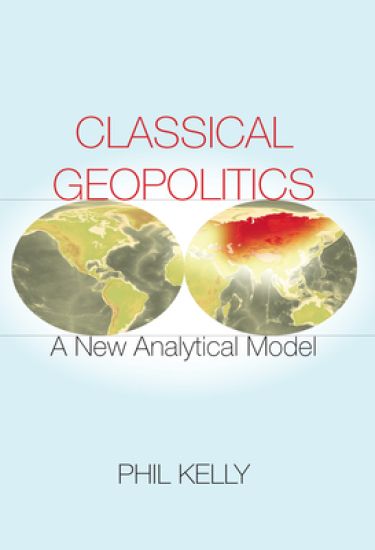
Geopolitics is the study of how the projection of power (ideological, cultural, economic, or military) is effected and affected by the geographic and political landscape in which it operates. Despite the real world relevance of geopolitics, a common understanding of what classical geopolitics is and how it works still lies beyond the reach of both researchers and practitioners. In Classical Geopolitics, Phil Kelly attempts to build a common theoretical model, incorporating a host of variables that reflect the complexity of the modern geopolitical stage. He then analyzes thirteen pivotal but widely differing historical events stretching from the Peloponnesian War to World War II, from the fall of the British and Soviet empires to the contemporary diplomacy of South America. Through this analysis, Kelly tests the efficacy of his model as a comprehensive geopolitical analytical tool that can be used across a broad spectrum of geopolitical contexts and events.
Geopolitics is the study of how the projection of power (ideological, cultural, economic, or military) is effected and affected by the geographic and political landscape in which it operates. Despite the real world relevance of geopolitics, a common understanding of what classical geopolitics is and how it works still lies beyond the reach of both researchers and practitioners. In Classical Geopolitics, Phil Kelly attempts to build a common theoretical model, incorporating a host of variables that reflect the complexity of the modern geopolitical stage. He then analyzes thirteen pivotal but widely differing historical events stretching from the Peloponnesian War to World War II, from the fall of the British and Soviet empires to the contemporary diplomacy of South America. Through this analysis, Kelly tests the efficacy of his model as a comprehensive geopolitical analytical tool that can be used across a broad spectrum of geopolitical contexts and events.


The new edition of this popular handbook has been updated to reflect advance in climbing equipment, technique, and safety. It is packed with clear, concise instruction on mountain hazards, climbing movement, equipment, safety systems, leading, descending, glacier travel, and rescue, with a separate chapter on style and ethics. Easy-to-read line drawings illustrate key points, including equipment use, roping, and mountaineering knots.

Phil Gioia grew up an army brat during the decades after World War II. Drawn to the military, he attended the Virginia Military Institute, then was commissioned in the U.S. Army, where he completed Jump School and Ranger School. Not even a year after college graduation, he landed in Vietnam in early 1968—in the first weeks of the Tet offensive, which marked a major escalation of the war. Commanding a company in the 82nd Airborne Division, Gioia led his paratroopers into the city of Hue for intense fighting—danger was always just around the corner —and the grisly discovery of mass graves. Wounded, he was sent home in May but returned with the 1st Cavalry Division a year later, this time leading a rucksack company of light infantry. Inserted into far-flung landing zones, Gioia and his men patrolled the jungles and rubber plantations along the Cambodian border, looking for a furtive enemy who preferred ambushes to set-piece battles and nighttime raids to daylight attacks.Danger Close! recounts the Vietnam War from the unique boots-on-the-ground perspective of a young officer who served two tours in two different divisions. He tells his story thoughtfully, straightforwardly, and always vividly, from the raw emotions of unearthing massacred human beings to the terrors of fighting in the dark, with red and green tracers slicing the air. Hard to put down and hard to forget, Danger Close! will remind readers of the best Vietnam memoirs, like Guns Up! and Baptism.

After becoming involved in a fatal shooting accident in his home, a New England boy on the verge of adulthood suddenly finds himself at the center of the storm dividing his town between antagonistic older residents and the newcomers gentrifying the region, caught between himself, his family, the local police, his girlfriend, and a reactionary vigilante group in his school. A first novel. Reader's Guide included. Reprint. 30,000 first printing.
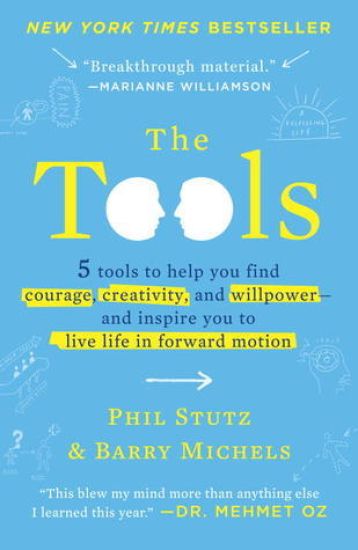
The Tools: 5 Tools to Help You Find Courage, Creativity, and Willpower--And Inspire You to Live Life in Forward Motion
Phil Stutz; Barry Michels
Random House
2013
nidottu
NEW YORK TIMES BESTSELLER - Change can begin right now. Learn to bring about dynamic personal growth using five uniquely effective tools--from psychotherapist Barry Michels and psychiatrist Phil Stutz, subject of the Netflix documentary Stutz. "These tools are emotional game changers. They do nothing less than deliver you to your best and most powerful self."--Kathy Freston, author of Quantum Wellness How long does therapy take? The Tools offers a solution to the biggest complaint patients have about therapy: the interminable wait for change to begin. The traditional therapeutic model sets its sights on the past, but psychiatrist Phil Stutz and psychotherapist Barry Michels employ an arsenal of techniques--"the tools"--that allow patients to use their problems as levers that access the power of the unconscious and propel them into action. Suddenly, through this transformative approach, obstacles become new chances--to find courage, embrace discipline, develop self-expression, deepen creativity. A dynamic, results-oriented practice, The Tools aims to deliver relief from persistent problems and restore control and hope right away. Every day presents challenges--big and small--that the tools transform into opportunities to bring about bold and dramatic change in your life. Stutz and Michels teach you how to: - Get Unstuck Master the things you are avoiding and live in forward motion.- Control Anger Free yourself from out-of-control rage and never-ending grudges.- Express Yourself Learn the secret of true confidence and find your authentic voice.- Combat Anxiety Stop obsessive worrying and negative thinking.- Find Discipline Activate willpower and make the most of every minute. With The Tools, Stutz and Michels allow you to realize the full range of your potential. Their goal is nothing less than for your life to become exceptional--exceptional in its resiliency, in its experience of real happiness, and in its understanding of the human spirit.

"Silver" Winner of the 2008 Foreword Magazine Book of the Year Award, Religion Category Before he began his recent travels, it seemed to Phil Zuckerman as if humans all over the globe were "getting religion"—praising deities, performing holy rites, and soberly defending the world from sin. But most residents of Denmark and Sweden, he found, don't worship any god at all, don't pray, and don't give much credence to religious dogma of any kind. Instead of being bastions of sin and corruption, however, as the Christian Right has suggested a godless society would be, these countries are filled with residents who score at the very top of the "happiness index" and enjoy their healthy societies, which boast some of the lowest rates of violent crime in the world (along with some of the lowest levels of corruption), excellent educational systems, strong economies, well-supported arts, free health care, egalitarian social policies, outstanding bike paths, and great beer. Zuckerman formally interviewed nearly 150 Danes and Swedes of all ages and educational backgrounds over the course of fourteen months. He was particularly interested in the worldviews of people who live their lives without religious orientation. How do they think about and cope with death? Are they worried about an afterlife? What he found is that nearly all of his interviewees live their lives without much fear of the Grim Reaper or worries about the hereafter. This led him to wonder how and why it is that certain societies are non-religious in a world that seems to be marked by increasing religiosity. Drawing on prominent sociological theories and his own extensive research, Zuckerman ventures some interesting answers. This fascinating approach directly counters the claims of outspoken, conservative American Christians who argue that a society without God would be hell on earth. It is crucial, Zuckerman believes, for Americans to know that "society without God is not only possible, but it can be quite civil and pleasant."