This book is a research guide and bibliography of Parliamentary material, including the Old Scottish Parliament and the Old Irish Parliament, relating to patents and inventions from the early seventeenth century to 1976. It chronicles the entire history of a purely British patent law before the coming into force of the European Patent Convention under the Patents Act 1977. It provides a comprehensive record of every Act, Bill, Parliamentary paper, report, petition and recorded debate or Parliamentary question on patent law during the period.The work will be an essential resource for scholars and researchers in intellectual property law, the history of technology, and legal and economic history.
Named after Lapindo Brantas, a gas exploration company that was drilling at the eruption site, the Lapindo mudflow initially burst in 2006 and continues to flow today, becoming the most expensive disaster in Indonesia’s history.Using this environmental incident in Indonesia as a case study, this book explores representations of disaster in scientific reports, public discourse, literature, and other cultural forms, observing the impact of these portrayals on the ways people both understand and respond to complicated environmental disasters. The author argues that power is expressed and contested in every representation of a disaster and its stakeholders. This book develops terminologies and perspectives that not only probe the social and ecological conditions that make disaster possible but also foster more effective and equitable strategies for adapting to a world fraught with hazards.Interdisciplinary in nature, this book makes a significant contribution to the fields of green cultural studies, disaster studies, science and technology studies and studies of political ecology in Southeast Asia.
At the outset of World War II, Denmark did not resist German occupation. Deeply ashamed of his nation's leaders, fifteen-year-old Knud Pedersen resolved with his brother and a handful of schoolmates to take action against the Nazis if the adults would not. Naming their secret club after the fiery British leader, the young patriots in the Churchill Club committed countless acts of sabotage, infuriating the Germans, who eventually had the boys tracked down and arrested. But their efforts were not in vain: the boys' exploits and eventual imprisonment helped spark a full-blown Danish resistance. Interweaving his own narrative with the recollections of Knud himself, here is Phil Hoose's inspiring story of these young war heroes.
For more than four hundred years, the personal essay has been one of the richest and most vibrant of all literary forms. Distinguished from the detached formal essay by its friendly, conversational tone, its loose structure, and its drive toward candor and self-disclosure, the personal essay seizes on the minutiae of daily life-vanities, fashions, foibles, oddballs, seasonal rituals, love and disappointment, the pleasures of solitude, reading, taking a walk -- to offer insight into the human condition and the great social and political issues of the day. The Art of the Personal Essay is the first anthology to celebrate this fertile genre. By presenting more than seventy-five personal essays, including influential forerunners from ancient Greece, Rome, and the Far East, masterpieces from the dawn of the personal essay in the sixteenth century, and a wealth of the finest personal essays from the last four centuries, editor Phillip Lopate, himself an acclaimed essayist, displays the tradition of the personal essay in all its historical grandeur, depth, and diversity. "A wonderful book. The most charming smorgasbord imaginable of essays from around the world." -- Diane Cole, USA Today. "Without a doubt, this is the most nourishing essay collection I've read in years." -- Susan Burmeister-Brown, Portland Oregonian. "A labor of deeply felt love and keenly honed scholarship by an essay authority who knows his territory down to his bones." -- Christian Science Monitor. "The best available [essay anthology] no matter how crowded the field." -- Chicago Tribune. "The striking thing is how much Lopate has managed to pack in, and how high a standard he has managed to maintain." -- John Gross, New York Newsday. "Packed with personality and beguiling first-person prose... of reminders of the perils and pleasures of the craft." -- The Wall Street Journal.
Phillip Lopate's richest and most ambitious book yet--the final volume of a trilogy that began with Bachelorhood and Against Joie de Vivre--Portrait of My Body is a powerful memoir in the form of interconnected personal essays. One of America's foremost essayists, who helped focus attention on the form in his acclaimed anthology The Art of the Personal Essay, Lopate demonstrates here just how far a writer can go in the direction of honesty and risk taking. In thirteen essays, Lopate explores the resources and limits of the self, its many disguises, excuses, and unmaskings, with his characteristic wry humor and insight. From the title essay, a hilarious physical self-exam, to the haunting portrait of his ex-colleague Donald Barthelme, to the bittersweet account of his long-delayed surrender to marriage, "On Leaving Bachelorhood," Lopate wrestles with finding the proper balance between detachment and empathy, doubt and conviction. In other essays, he celebrates his love of film and city life, and reflects on his religious identity as a Jew. A wrenchingly vivid, unforgettable portrait of the author's eccentric, solipsistic, aged father, a self-proclaimed failure, is the centerpiece of a suite of essays about father-figures and resisted mentors. The book ends with the author's own introduction to fatherhood, as witness to the birth of his daughter. A book that will engage readers with its conversational eloquence, skeptical intelligence, candor, and mischief, Portrait of My Body is a captivating work of literary nonfiction.
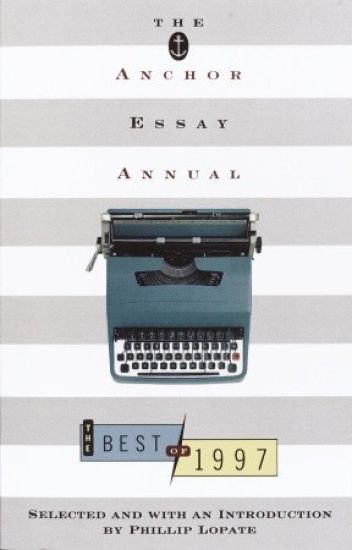
Anchor Books proudly launches an annual essay series. Acclaimed essayist Phillip Lopate has selected the most surprising, important, and exquisite pieces published during the last twelve months. Bringing together materials from both periodicals and books, The Anchor Essay Annual 1997 also includes essays never before published, as well as translations from abroad. The result is as rich and unique as it is cosmopolitan. In her brilliantly frank "Revelation", Mary Gaitskill recounts the religious epiphany that changed her life. Hilton Als explores the "Negressity" of his soul in "My Pin-Up". In his dazzling "The Laying Off of Desire", Jean Baudrillard sets forth a flamboyant dissection of human sexuality. Hubert Butler ruminates on the stunted life of his handicapped grandchild in "Little K." We relive the glories and disappointments of the Borscht Belt in Vivian Gornick's evocative group portrait, "The Catskills Remembered". And we ride a rollercoaster of cultural insight in Daniel Harris's "A Psychosexual History of the Homosexual Body". A a whole, this superb collection is a heady cocktail indeed. All of this exciting new work is placed in context with an illuminating introduction from Phillip Lopate, "the house authority on the genre and its greatest practitioner" (Washington Times). With generous selections from over twenty-five writers from around the world, The Anchor Essay Annual 1997 is the first in what is sure to become a series widely anticipated and highly acclaimed, every October, for years to come.
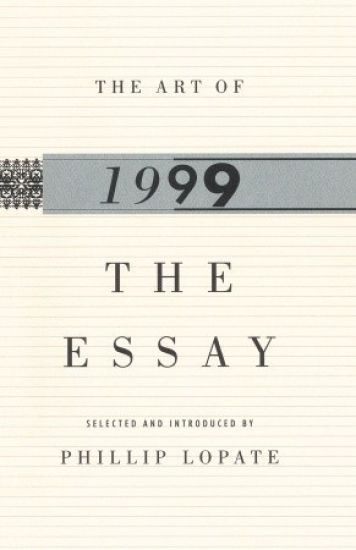
Now in its third year, this annual collection presents the most notable, influential, and surprising essays published in the last twelve months in either books or periodicals throughout the English-speaking world. Selected with consummate taste and a catholic openness to style and subject matter by famed essayist, critic, and editor, Phillip Lopate, the 1999 edition demonstrates that the form continues its renaissance as an unrivaled vehicle of intelligence and sensibility. For this edition, Lopate has paired his tewnty-eight selections by topic, which offers suprising parallels and divergences in points of view. Andre Dubus and Tom Beller on apprentice work as a form of true experience; Richard Rorty and George Packer on the quixotic and often self-defeating character of the American left; Siri Hustvedt and Wayne Koestenbaum on the verities of erotic experience; Bliss Broyard and M. G. Stephens on their fathers; Marcus Laffey and Charles Bowden on violence, crime, and police work; Susan Sontag and Martha Nussbaum on the necessity and consolation of art--these are just some of the peerless practitioners of the essay featured in this superb collection. All of this exciting new work is placed in context by an equally superb introductory essay by Lopate. A special feature of this 1999 edition is an appendix in which literary and intellectual notables nominate their selections of the best and most influential essays and essayists of the century. This prestigious Anchor annual is more than ever an unequaled showcase for an indispensable and ever-changing literary form.
Phillip Lopate has been obsessed with movies from the start. As an undergraduate at Columbia, he organized the school's first film society. Later, he even tried his own hand at filmmaking. But it was not until his ascent as a major essayist that Lopate found his truest and most lasting contribution to the medium. And, over the past twenty-five years, tackling subjects ranging from Visconti to Jerry Lewis, from the first New York Film Festival to the thirty-second, Phillip Lopate has made film his most cherished subject. Here, in one place, are the very best of these essays, a joy for anyone who loves movies.
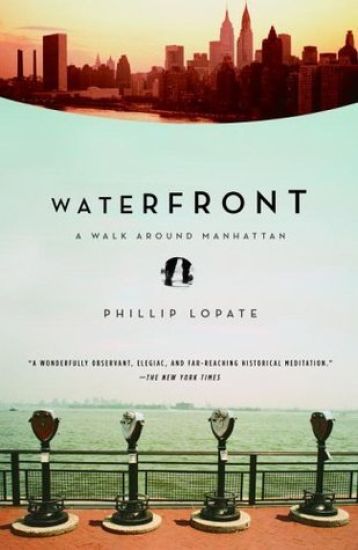
East Side, West Side, from the Little Red Lighthouse to Battery Park City, the wonders of Manhattan's waterfront are both celebrated and secret-hidden in plain sight. In his brilliant exploration of this defining yet neglected shoreline, personal essayist Philip Lopate also recovers a part of the city's soul. A native New Yorker, Lopate has embraced Manhattan by walking every inch of its perimeter, telling stories on the way of pirates (Captain Kidd) and power brokers (Robert Moses), the lowly shipworm and Typhoid Mary, public housing in Harlem and the building of the Brooklyn Bridge. He evokes the magic of the once bustling old port from Melville's and Whitman's day to the era of the longshoremen in On the Waterfront, while appraising today's developers and environmental activists, and probing new plans for parks and pleasure domes with river views. Whether escorting us into unfamiliar, hazardous crannies or along a Beaux Arts esplanade, Waterfront is a grand literary ramble and defense of urban life by one of our most perceptive observers.
This text is intended to provide a strong theoretical background in testing hypotheses and decision theory for those who will be practicing in the real worldorwhowillbeparticipatinginthetrainingofreal-worldstatisticiansand biostatisticians. In previous editions of this text, my rhetoric was somewhat tentative. I was saying, in e?ect, “Gee guys, permutation methods provide a practical real-world alternative to asymptotic parametric approximations. Why not give them a try?” But today, the theory, the software, and the hardware have come together. Distribution-free permutation procedures are the primary method for testing hypotheses. Parametric procedures and the bootstrap are to be reserved for the few situations in which they may be applicable. Four factors have forced this change: 1. Desire by workers in applied ?elds to use the most powerful statistic for their applications. Such workers may not be aware of the fundamental lemma of Neyman and Pearson, but they know that the statistic they wanttouse—acomplexscoreoraratioofscores,doesnothaveanalready well-tabulated distribution. 2. Pressure from regulatory agencies for the use of methods that yield exact signi?cance levels, not approximations. 3. A growing recognition that most real-world data are drawn from mixtures of populations. 4. A growing recognition that missing data is inevitable, balanced designs the exception. Thus, it seems natural that the theory of testing hypothesis and the more general decision theory in which it is embedded should be introduced via the permutation tests. On the other hand, certain relatively robust param- ric tests such as Student’s t continue to play an essential role in statistical practice.
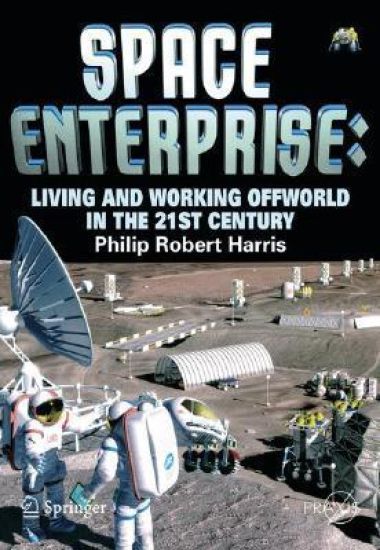
In Space Enterprise - Living and Working Offworld, Dr Philip Harris provides the vision and rationale as to why humanity is leaving its cradle, Earth, to use space resources, as well as pursuing lunar industrialization and establishing offworld settlements. As a management/space psychologist, Dr. Harris presents a behavioral science perspective on space exploration and enterprise. In this his 45th book, Phil has completely revised and updated the two previous editions of this classic, placing new emphasis on the need for more synergy and participation by the private sector. He not only provides a critical review of what is happening in the global space community, but offers specific strategies for lunar economic development. The author analyzes the human factors in contemporary and future space developments, especially relative to the deployment of people aloft. This user-friendly volume offers numerous photographs, diagrams, exhibits, and case studies.
Emil Otto Hoppé was born in Munich in 1878 but lived in London from 1900 until his death in 1972. He was an early and important modernist whose seminal views of the United States in the 1920s rival those of his peers: Paul Strand, Edward Steichen, Alfred Stieglitz, and Walker Evans. His work shows us an America as only an outsider could: brave, new, and grand in scale but with a hint of trouble brewing in the gaps between its multicultural and economic diversities. Much of Hoppé's work was locked away in English and German archives for the second half of the twentieth century, resulting in an eclipse of his reputation. Only recently has his work been reassembled, and now we can see his intimate and intelligent view of the world at defining moments in its history.
In 1909, the business of spying was hoisted from the domain of a few European descendents to the highest reaches of British government with the formation of Britain's SIS. Acting in response to a totally fraudulent fear--the German spy scare that preceded World War I--the British soon had a lot of company as Germany, Russia, France, and other powers large and small joined the mad rush toward information and espionage. Not far behind came the biggest of them all, first with the OSS and then with the CIA, fueled by paranoia and by more money than any new bureaucracy had ever seen. Bigger than State by '48, was the CIA's slogan on its founding in 1947. And it was.Now intelligence is a very big business with a very rich history, told here with a depth and verve never before brought to the subject, by a master historian. All of the legends and their immensely readable stories and here--Sorge, Donovan, Philby, Mata Hari, Golitsyn, Angleton, Penkovsky--and behind them a large question: did any act of these spies and their masters make any difference at all in the course of history?
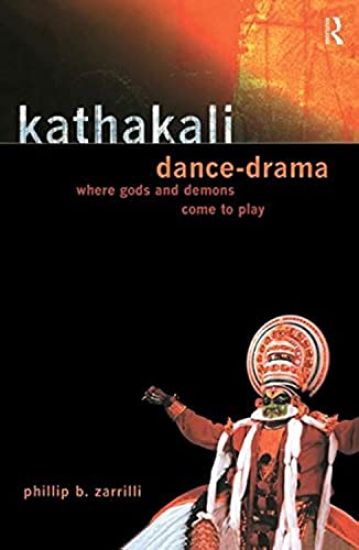
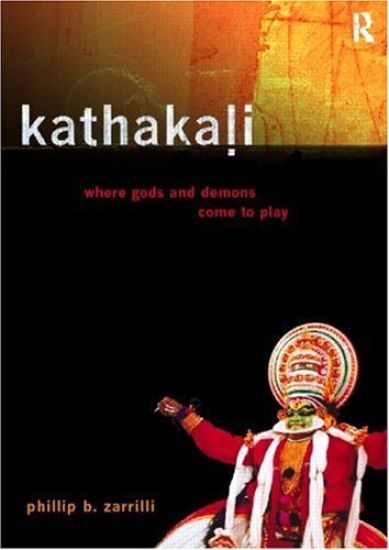
Kathakali Dance-Drama provides a comprehensive introduction to the distinctive and colourful dance-drama of Kerala in South-West India for the first time. This landmark volume: * explores Kathakali's reception as it reaches new audiences both in India and the west * includes two cases of controversial of Kathakali experiments * explores the implications for Kathakali of Keralan politics During these performances heroes, heroines, gods and demons tell their stories of traditional Indian epics. The four Kathakali plays included in this anthology, translated from actual performances into English are: * The Flower of Good Fortune * The Killing of Kirmmira * The Progeny of Krishna * King Rugmamgada's Law Each play has an introduction and detailed commentary and is illustrated by stunning photographs taken during performances. An introduction to Kathakali stage conventions, make-up, music, acting, and training is also provided, making this an ideal volume for both the specialist and non-specialist reader.
Time offers a comprehensive history of the philosophy of time in western philosophy from the Greeks through to the twentieth century.In the first half of the book, Philip Turetzky explores theories in ancient and modern philosophy chronologically: from Aristotle to Nietzsche. In the latter half, Turetzky describes the philosophy of time in three twentieth-century philosophical traditions:* analytic philosophy including philosophers such as McTaggart and Mellor* phenomenology Husserl and Heidegger* a distaff tradition which Turetzky identifies as including Bergson and Deleuze.
Time offers a comprehensive history of the philosophy of time in western philosophy from the Greeks through to the twentieth century.In the first half of the book, Philip Turetzky explores theories in ancient and modern philosophy chronologically: from Aristotle to Nietzsche. In the latter half, Turetzky describes the philosophy of time in three twentieth-century philosophical traditions:* analytic philosophy including philosophers such as McTaggart and Mellor* phenomenology Husserl and Heidegger* a distaff tradition which Turetzky identifies as including Bergson and Deleuze.
This groundbreaking Encyclopedia is the very first fully-refereed A-Z compendium of the main principles, concepts, problems, institutions, schools and policies associated with political economy. Based on developments in political economy since the 1960s, it is designed to provide a comprehensive introduction to the field as well as being an authoritative reference work. Undergraduates taking courses in political economy or graduate students coming to the field for the first time will rely on this work as a key point of reference and for direction in their further reading. This lucid work compares for the first time the disparate theories of political economy (e.g, Marxist, Feminist, Sraffian etc.) and emphasizes the application of their principles to real world problems such as inflation, unemployment, development and financial instability. The extensive international team of consultants and contributors has produced a monumental work with truly global perspective.
Kathakali Dance-Drama provides a comprehensive introduction to the distinctive and colourful dance-drama of Kerala in South-West India for the first time. This landmark volume: * explores Kathakali's reception as it reaches new audiences both in India and the west * includes two cases of controversial of Kathakali experiments * explores the implications for Kathakali of Keralan politics During these performances heroes, heroines, gods and demons tell their stories of traditional Indian epics. The four Kathakali plays included in this anthology, translated from actual performances into English are: * The Flower of Good Fortune * The Killing of Kirmmira * The Progeny of Krishna * King Rugmamgada's Law Each play has an introduction and detailed commentary and is illustrated by stunning photographs taken during performances. An introduction to Kathakali stage conventions, make-up, music, acting, and training is also provided, making this an ideal volume for both the specialist and non-specialist reader.