

Kirjahaku
Etsi kirjoja tekijän nimen, kirjan nimen tai ISBN:n perusteella.
1000 tulosta hakusanalla Phillips Russell

Giving us a new sense of Dickinson’s ways of being in her world, this book traces the perceptions of that world in the poetry and contributes to our pleasure in the performance of a virtuoso. Elizabeth Philips shows the imaginative uses the poet made of her own life but also the verifiable use of her responses to others—personal friends and relatives, historical and literary figures, and “nature’s people”—in the play of language that registered her insights. The book is not a biography; it considers, instead, evidence of the poet’s character and her character as a poet. Dickinson emerges as less self-enclosed and enigmatic than she is frequently assumed to be. Phillips is among those who reject the view of the poet as a psychologically disabled, perhaps mad woman who withdrew into herself because of some devastating emotional experience, presumably love that went wrong. She questions the common desire to connect the texts with a trauma for which the center is missing. While Dickinson pursued the vocation of a poet, she was actively engaged in much else that required stamina and resourcefulness. A woman in a 19th-century household, for instance, was not a woman of leisure; Dickinson bore a heavy share of domestic duties and familial responsibilities throughout most of her life. The crisis she experienced during the early 1860s, in a cluster of responses to the Civil War, coincided with the onset of her difficulties with her eyes. Suffering from exotropia and photophobia, she never fully recovered and gradually withdrew into the less severe light of the house in Amherst. She continued to care for those close to her and to write both letters and verse. From the perspective of Dickinson’s maturity and resilience, we also see her gift for depicting and dramatizing episodes in a manner that gives the illusion of their being autobiographical whether they are or not. Dickinson was, however, an actress who changed roles and points of view as readily as she experimented with poetic genres. Analyses of her various personae (or “supposed persons”) for dramatic monologues in the Browning tradition—which enabled the poet to represent a range of experiences different form her own—serve to dispel much of the confusion that has surrounded her in the last century. Rather than searching for an illusive absent center, Phillips scrutinizes in a most revealing way the poet’s reading, appropriation, and command of materials from the Brontës, George Eliot, Hawthorne, the Brownings, Shakespeare, and the Southey for personae that introduce us to a Dickinson heretofore hardly glimpsed. A central vision of the study is the poet as a biographer of souls.
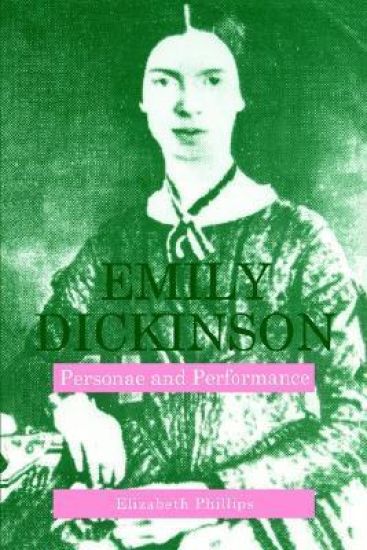
Giving us a new sense of Dickinson’s ways of being in her world, this book traces the perceptions of that world in the poetry and contributes to our pleasure in the performance of a virtuoso. Elizabeth Philips shows the imaginative uses the poet made of her own life but also the verifiable use of her responses to others—personal friends and relatives, historical and literary figures, and “nature’s people”—in the play of language that registered her insights. The book is not a biography; it considers, instead, evidence of the poet’s character and her character as a poet. Dickinson emerges as less self-enclosed and enigmatic than she is frequently assumed to be. Phillips is among those who reject the view of the poet as a psychologically disabled, perhaps mad woman who withdrew into herself because of some devastating emotional experience, presumably love that went wrong. She questions the common desire to connect the texts with a trauma for which the center is missing. While Dickinson pursued the vocation of a poet, she was actively engaged in much else that required stamina and resourcefulness. A woman in a 19th-century household, for instance, was not a woman of leisure; Dickinson bore a heavy share of domestic duties and familial responsibilities throughout most of her life. The crisis she experienced during the early 1860s, in a cluster of responses to the Civil War, coincided with the onset of her difficulties with her eyes. Suffering from exotropia and photophobia, she never fully recovered and gradually withdrew into the less severe light of the house in Amherst. She continued to care for those close to her and to write both letters and verse. From the perspective of Dickinson’s maturity and resilience, we also see her gift for depicting and dramatizing episodes in a manner that gives the illusion of their being autobiographical whether they are or not. Dickinson was, however, an actress who changed roles and points of view as readily as she experimented with poetic genres. Analyses of her various personae (or “supposed persons”) for dramatic monologues in the Browning tradition—which enabled the poet to represent a range of experiences different form her own—serve to dispel much of the confusion that has surrounded her in the last century. Rather than searching for an illusive absent center, Phillips scrutinizes in a most revealing way the poet’s reading, appropriation, and command of materials from the Brontës, George Eliot, Hawthorne, the Brownings, Shakespeare, and the Southey for personae that introduce us to a Dickinson heretofore hardly glimpsed. A central vision of the study is the poet as a biographer of souls.
Germany and the Transnational Building Blocks for Post-National Community
Donald Phillips
Praeger Publishers Inc
2000
sidottu
Phillips assesses prospects for post-national social coherence transcending the traditional nation-state, with a focus on events in Germany. European institutional integration has been seen as a stabilizing alternative to the nation-state system, a system that resulted in two devastating world wars. However, economic interests appear to have been more effective instruments of transnational integration in Europe. Further, until 1989, part of this alternative vision was a divided Germany.He explicitly links a focus upon the Federal Republic, central to post-Cold War Europe's future, with a study of private business, perhaps the most indispensable agent of Germany's post-1945 rehabilitation. Business support has been imperative to European integration. Nonetheless, if the European Union is attractive to members or potential members only for economic reasons, then no matter how wealthy its constituent parts may be, potential harmful effects of interstate competition will continue to pose a threat to social coherence of the EU, the Continent, and the world beyond. With the aid of analysis of companies largely perceived as being German, but which are increasingly transnational, Phillips shows how interdependent business needs may overcome nationalist and institutional conceptions in the transnational integration processes. For scholars, researchers, and policy makers involved with European integration, international relations, and German Studies.
Exceptional communities possessing a definitive sense of place, the cities and towns presented in this book have created or re-created a style, ambience, or character that transcends the ordinary and is used as the basis for community economic development. Adapting the idea of concept marketing, these communities have found a niche or specialty to create community recognition and serve as a basis for garnering external investment, tourism, and other revenue-generating events. This book examines the use of popular and corporate culture, retail establishments, historical tradition, and surrealism in community concept marketing and profiles examples of communities from a diverse array of contexts and geographical settings.Bellows Falls, VT, for instance, a once-depressed former milltown has transformed itself to a vibrant community through an arts integrated development strategy, while Austin, MN, the home of Hormel Foods, has drawn on the town's corporate culture with the opening of a new SPAM Museum. Manchester, VT, taking a retail approach, has become a designer outlet mecca, and Walnut, IA, the state's Antique City. Cape May, NJ, has restored its historic properties and successfully marketed itself as a seaside resort, while Holland, MI, exemplifies the surreal approach, marketing itself as a Dutch town. Considering these and other uniquely marketed communities, this book examines the elements necessary for a successful concept marketing strategy to community economic development.

Post-National Patriotism and the Feasibility of Post-National Community in United Germany
Donald Phillips
Praeger Publishers Inc
2000
sidottu
With a focus on united Germany and the post-1989 German unification process, Phillips outlines the necessity and feasibility of a concept of post-national patriotism. Specifying the example of racist violence, Dr. Phillips argues that a substantial measure of Germany's social consensus can only be extended to heterogeneous Europe if there is a greater recognition of heterogeneous Germany, not only by Germans, but by non-Germans as well. He shows that the consensual structures of German-based transnational business may play a leading role in the development of a sense of post-national patriotism.Phillips argues that state solutions to issues of immigration and integration are not in themselves adequate, and that these may be supplemented by private-sector institutions taking on responsibility. Business opposition to racist violence in unified Germany has neither succeeded substantially in eliminating racism in Germany, nor achieved a significant reduction in non-Germans' prejudices about Germans. However, he argues that an accentuation of German business practices of codetermination worldwide could go a long way to changing prejudices about Germans and prejudices in Germany, as well as serving the interests of German-based business. Greater processes of dialogue, also involving the private sector, could help correct problems of group definition and intercultural understanding, promoting shared civic identification instead of civic demarcation. This is an important analysis for scholars and researchers involved with the society and politics of Germany, international relations and business, and European integration.
Goldwin Smith (1823-1910) was a celebrated, transatlantic writer on current events, politics, religion, history, and literature. While he made his academic mark teaching at Oxford, Cornell, and later as a resident guru at Toronto, his facile pen earned him a far greater reputation with general readers throughout the English-speaking world. Determined to rouse concern over issues that he deemed to be important to the advancement of humanity, Smith was deemed the controversialist by the Dictionary of National Biography. A study of his life and his writings provides new insight into liberalism, anti-semitism, the role of the journalist, and other aspects of life in late 19th century North America and Britain. As a public intellectual, Goldwin Smith spoke out on a variety of issues, frequently provoking intense debate. Phillips argues that the core of Smith's thought and the driving force behind his role as a controversialist lay in his moral philosophy, which provided a sense of direction to Smith's many and sometimes disparate writings and activities. This study will also probe the serious dilemma posed by Smith's path to agnosticism in the last decades of his life. By moving to a position of virtual unbelief, Smith risked damage not only to his carefully-crafted public persona, but also to a life's work as an impassioned moralist.
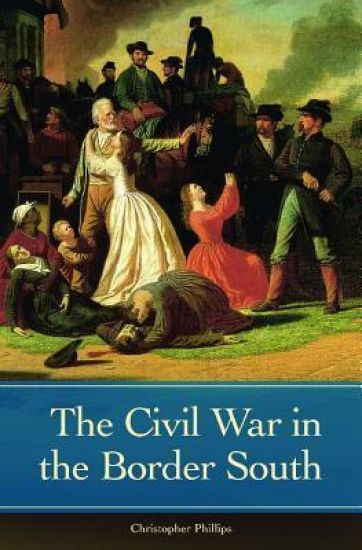
The border states during the Civil War have long been ignored or misunderstood in general histories. This book corrects that oversight, explaining how many border state residents used wartime realities to redefine their politics and culture as "Southern."By studying the characteristics of those positioned along this fault line during the Civil War, the centrality of the war issue of slavery, which border residents long eschewed as being divisive, became apparent. This book explains how the process of Southernization occurred during and after the Civil War—a phenomenon largely unexplained by historians.Beyond the broader, more traditional narrative of the clash of arms, within these border slave states raged an inner civil war that shaped the military and political outcomes of the war as well as these states' cultural landscapes. Author Christopher Phillips describes how the Civil War experience in the border states served to form new loyalties and communities of identity that both deeply divided these states and distorted the meaning of the war for postwar generations.
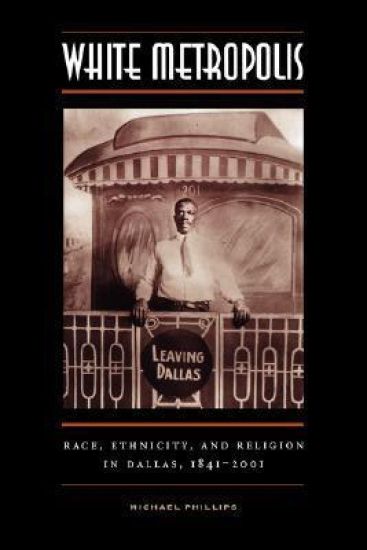
Winner, T. R. Fehrenbach Award, Texas Historical Commission, 2007From the nineteenth century until today, the power brokers of Dallas have always portrayed their city as a progressive, pro-business, racially harmonious community that has avoided the racial, ethnic, and class strife that roiled other Southern cities. But does this image of Dallas match the historical reality? In this book, Michael Phillips delves deeply into Dallas's racial and religious past and uncovers a complicated history of resistance, collaboration, and assimilation between the city's African American, Mexican American, and Jewish communities and its white power elite.Exploring more than 150 years of Dallas history, Phillips reveals how white business leaders created both a white racial identity and a Southwestern regional identity that excluded African Americans from power and required Mexican Americans and Jews to adopt Anglo-Saxon norms to achieve what limited positions of power they held. He also demonstrates how the concept of whiteness kept these groups from allying with each other, and with working- and middle-class whites, to build a greater power base and end elite control of the city. Comparing the Dallas racial experience with that of Houston and Atlanta, Phillips identifies how Dallas fits into regional patterns of race relations and illuminates the unique forces that have kept its racial history hidden until the publication of this book.

With the invention of compressed air in the 1840s, human divers could enter previously inaccessible deep water environments and engineers could design underwater mines and monumental bridges that had never been possible before. But a painful, sometimes fatal illness—decompression sickness, or the bends—mysteriously afflicted many of those who used compressed air. This book is a wide-ranging history of the wonders compressed air brought about and the suffering its unknown hazards inflicted. John L. Phillips explores the intertwining roles of science, technology, engineering, medicine, and politics in the invention of compressed air, the recognition and identification of decompression sickness, and the hundred-year-long process of learning to understand and treat the bends.The book begins with an overview of the biology and chemistry of respiration and a discussion of the steam engine that could generate compressed air. Drawing on previously unpublished letters, diaries, and notes, Phillips tells the story of early uses of compressed air, first observations of decompression sickness, growing awareness of the bends during construction of the Brooklyn Bridge, and efforts to understand the pathophysiology of the illness. He then considers employee health and safety issues, the science of diving today, and human limits to exploring the ocean deeps. In the history of compressed air and its illnesses, Phillips finds important lessons for dealing with other diseases yet to be confronted in the modern world.

From the prizewinning Jewish Lives series, a strikingly original biography of Sigmund Freud, the father of psychoanalysis "Adam Phillips is, I believe, one of the most engaging writers in the world on analysis and the analytic movement . . . Phillips’s own love of the beauty and power of psychoanalysis here serves both him and the reader wonderfully well."—Vivian Gornick, New York Times Book ReviewBecoming Freud is the story of the young Sigmund Freud (1856-1939)—Freud up until the age of fifty—that incorporates all of Freud’s many misgivings about the art of biography. Freud invented a psychological treatment that involved the telling and revising of life stories, but he was himself skeptical of the writing of such stories. In this biography, Adam Phillips, whom the New Yorker calls “Britain’s foremost psychoanalytical writer,” emphasizes the largely and inevitably undocumented story of Freud’s earliest years as the oldest—and favored—son of Jewish immigrants from Eastern Europe and suggests that the psychoanalysis Freud invented was, among many other things, a psychology of the immigrant—increasingly, of course, everybody’s status in the modern world. Psychoanalysis was also Freud’s way of coming to terms with the fate of the Jews in Europe in the late nineteenth and early twentieth centuries. So as well as incorporating the writings of Freud and his contemporaries, Becoming Freud also uses the work of historians of the Jews in Europe in this significant period in their lives, a period of unprecedented political freedom and mounting persecution. Phillips concludes by speculating what psychoanalysis might have become if Freud had died in 1906, before the emergence of a psychoanalytic movement over which he had to preside. About Jewish Lives: Jewish Lives is a prizewinning series of interpretative biography designed to explore the many facets of Jewish identity. Individual volumes illuminate the imprint of Jewish figures upon literature, religion, philosophy, politics, cultural and economic life, and the arts and sciences. Subjects are paired with authors to elicit lively, deeply informed books that explore the range and depth of the Jewish experience from antiquity to the present. In 2014, the Jewish Book Council named Jewish Lives the winner of its Jewish Book of the Year Award, the first series ever to receive this award. More praise for Jewish Lives: "Excellent" –New York Times "Exemplary" –Wall St. Journal "Distinguished" –New Yorker "Superb" –The Guardian
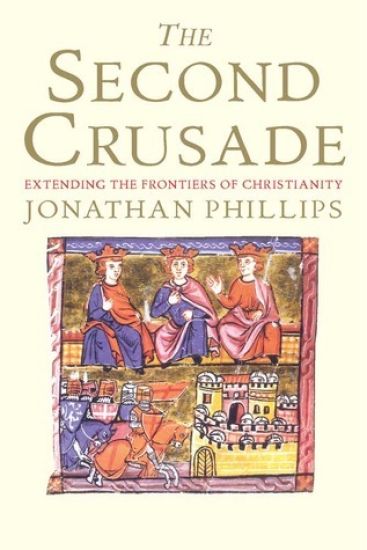
The first complete account of Catholic Europe's onslaught on "unbelievers" in the 12th century The Second Crusade (1145-1149) was an extraordinarily bold attempt to overcome unbelievers on no less than three fronts. Crusader armies set out to defeat Muslims in the Holy Land and in Iberia as well as pagans in northeastern Europe. But, to the shock and dismay of a society raised on the triumphant legacy of the First Crusade, only in Iberia did they achieve any success. This book, the first in 140 years devoted to the Second Crusade, fills a major gap in our understanding of the Crusades and their importance in medieval European history. Historian Jonathan Phillips draws on the latest developments in Crusade studies to cast new light on the origins, planning, and execution of the Second Crusade, some of its more radical intentions, and its unprecedented ambition. With original insights into the legacy of the First Crusade and the roles of Pope Eugenius III and King Conrad III of Germany, Phillips offers the definitive work on this neglected Crusade that, despite its failed objectives, exerted a profound impact across Europe and the eastern Mediterranean.
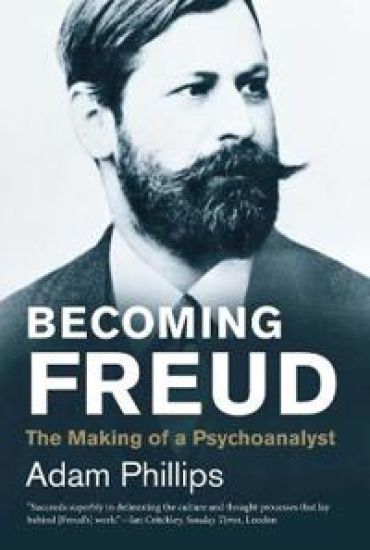
From one of the world’s foremost authorities on Sigmund Freud comes a strikingly original biography of the father of psychoanalysisBecoming Freud is the story of the young Freud—Freud up until the age of fifty—that incorporates all of Freud’s many misgivings about the art of biography. Freud invented a psychological treatment that involved the telling and revising of life stories, but he was himself skeptical of the writing of such stories. In this biography, Adam Phillips, whom the New Yorker calls “Britain’s foremost psychoanalytical writer,” emphasizes the largely and inevitably undocumented story of Freud’s earliest years as the oldest—and favored—son of Jewish immigrants from Eastern Europe and suggests that the psychoanalysis Freud invented was, among many other things, a psychology of the immigrant—increasingly, of course, everybody’s status in the modern world. Psychoanalysis was also Freud’s way of coming to terms with the fate of the Jews in Europe in the late nineteenth and early twentieth centuries. So as well as incorporating the writings of Freud and his contemporaries, Becoming Freud also uses the work of historians of the Jews in Europe in this significant period in their lives, a period of unprecedented political freedom and mounting persecution. Phillips concludes by speculating what psychoanalysis might have become if Freud had died in 1906, before the emergence of a psychoanalytic movement over which he had to preside.

An unprecedented analysis of the crucial but underexplored roles the United States and other nations have played in shaping Syria’s ongoing civil war“One of the best informed and non-partisan accounts of the Syrian tragedy yet published.”—Patrick Cockburn, Independent Syria’s brutal, long-lasting civil war is widely viewed as a domestic contest that began in 2011 and only later drew foreign nations into the fray. But in this book Christopher Phillips shows the crucial roles that were played by the United States, Russia, Iran, Saudi Arabia, Turkey, and Qatar in Syria’s war right from the start. Phillips untangles the international influences on the tragic conflict and illuminates the West’s strategy against ISIS, the decline of U.S. power in the region, and much more. Originally published in 2016, the book has been updated with two new chapters.
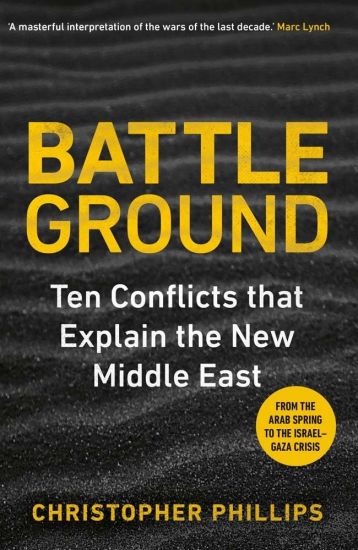
The essential guide to geopolitics in the modern Middle East The Middle East is in crisis. The shocking events of the war in Gaza have rocked the entire region. More than a decade ago, the Arab Spring had raised hopes of a new beginning but instead ushered in a series of civil wars, coups, and even harsher autocracies. Tensions were exacerbated by the meddling of outsiders, as regional and global powers sought to further their interests. The United States, for so long the dominant actor, had stepped back, leaving a vacuum behind it to be fought over. Christopher Phillips explores geopolitical rivalries in the region, and the major external powers vying for influence: Russia, China, the EU, and the US. Moving through ten key flashpoints, from Syria to Palestine, Phillips argues that the United States’ overextension after the Cold War, and retreat in the 2010s, has imbalanced the region. Today, the Middle East remains blighted by conflicts of unprecedented violence and a post-American scramble for power – leaving its fate in the balance.
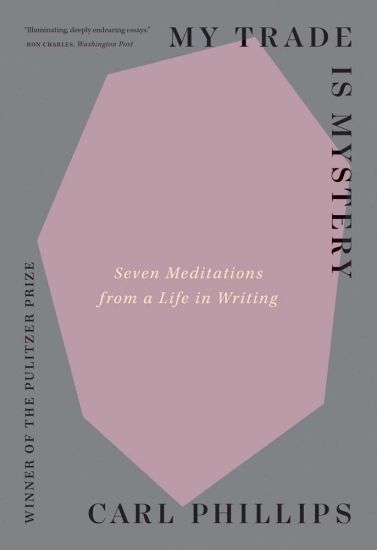
An invaluable companion for any writer seeking to make the writing life a more complex and cooperative venture “Illuminating, deeply endearing essays.”—Ron Charles, Washington Post “A lovely, loving letter to aspiring writers.”—Diego Báez, Booklist In these intimate and eloquent meditations, the award-winning poet Carl Phillips shares lessons he has learned about the writing life, an “apprenticeship to what can never fully be mastered.” Drawing on forty years of teaching and mentoring emerging writers, he weaves his experiences as a poet with the necessary survival skills, including ambition, stamina, silence, politics, practice, audience, and community. In the tradition of Anne Lamott’s Bird by Bird, Rainer Maria Rilke’s Letters to a Young Poet, and Marcus Aurelius’s Meditations, this is an invaluable companion for writers at every stage of their journey. Phillips’s book serves as a partner in speculation and an invitation to embrace mystery.

The essential guide to geopolitics in the modern Middle East The Middle East is in crisis. The shocking events of the war in Gaza have rocked the entire region. More than a decade ago, the Arab Spring had raised hopes of a new beginning but instead ushered in a series of civil wars, coups, and even harsher autocracies. Tensions were exacerbated by the meddling of outsiders, as regional and global powers sought to further their interests. The United States, for so long the dominant actor, had stepped back, leaving a vacuum behind it to be fought over. Christopher Phillips explores geopolitical rivalries in the region, and the major external powers vying for influence: Russia, China, the EU, and the US. Moving through ten key flashpoints, from Syria to Palestine, Phillips argues that the United States’ overextension after the Cold War, and retreat in the 2010s, has imbalanced the region. Today, the Middle East remains blighted by conflicts of unprecedented violence and a post-American scramble for power – leaving its fate in the balance.

We Were Here: A History of Black People and Alternative Music
Stephanie Phillips
DA CAPO
2026
sidottu
A long-overdue corrective to the history of rock 'n' roll and alternative music, repopulating it with the extraordinary Black artists and influential figures who steered its course The history of rock and roll and alternative music is often told in bold, sweeping, isolated moments that are removed from the context of their time. Upon closer inspection, however, it becomes clear that the stories we tell center primarily on the achievements of white men like Elvis Presley, The Ramones, Nirvana, and David Bowie. White men who were the stars, white men who supposedly changed the game, white men who seemingly were at the forefront of every musical innovation in the 20th and 21st centuries. These rock and roll retellings perpetuate the belief that white men were the most important people to wield a guitar, strut on stage, or pound out a pummeling drumbeat. What is missing in these stories is everything in between--the people, the places, and the scenes that connect the dots--and you can't tell the history of any music scene, let alone alternative music, without the Black community. In We Were Here: A History of Black People and Alternative Music, author, journalist, and musician Stephanie Phillips, the singer and guitarist of British post punk band Big Joanie, presents readers with a revised history of rock and roll and alternative music, repopulating it with the extraordinary Black artists and influential figures who truly steered its course. From the genre's earliest moments, Black musicians--like gospel entertainer Sister Rosetta Tharpe in the 1930s-40s and rock and roll legend Chuck Berry in the 1950s--have consistently pushed musical boundaries that forever impacted the music that followed. Throughout the decades, numerous Black entertainers continued to add their take on rock and alternative genres, expanding and building on what was already there to create what we know as alternative music today: look no further than the electric fire of Jimi Hendrix's guitar licks in the '60s, the kaleidoscopic melee of hardcore and reggae that was Bad Brains in the late '70s, and the funkadelic swagger of Living Colour in the '80s. Despite their groundbreaking contributions, why have Black musicians been so neglected from the historical canon? Is alternative music still seen as a white genre, and how are Black musicians and fans making space for themselves in the music scenes they love? This book tells the story of Black artists performing in alternative genres from punk to rock and roll, indie to new wave, alongside their Black fans. Through brand new interviews and meticulous research, Phillips documents the history of Black people's influence on these genres, highlighting the key players, assessing the legacy of their work, and drawing attention to those who have been obscured from history. Where rock magazines and music books previously omitted or misunderstood the stories of Black artists and fans, this book centers their voices and attempts to right the wrongs of the past. Along the way, Phillips infuses her own coming-of-age story as a Black female musician in the punk scene, alongside a cultural analysis of rock and alternative music history.
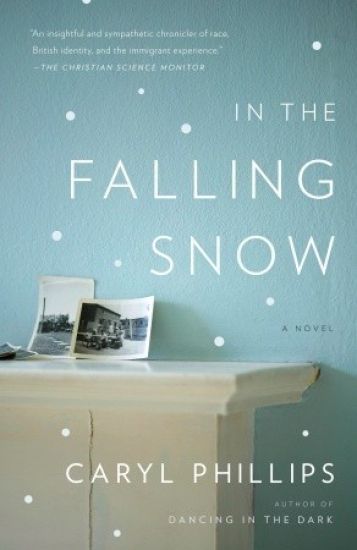
From one of our most admired fiction writers: the searing story of breakdown and recovery in the life of one man and of a society moving from one idea of itself to another. Keith--born in England in the early 1960s to immigrant West Indian parents but primarily raised by his white stepmother--is a social worker heading a Race Equality unit in London whose life has come undone. He is separated from his wife of twenty years, kept at arm's length by his teenage son, estranged from his father, and accused of harassment by a coworker. And beneath it all, he has a desperate feeling that his work--even in fact his life--is no longer relevant. Deeply moving in its portrayal of the vagaries of family love and bold in its scrutiny of the personal politics of race, this is Caryl Phillips's most powerful novel yet.
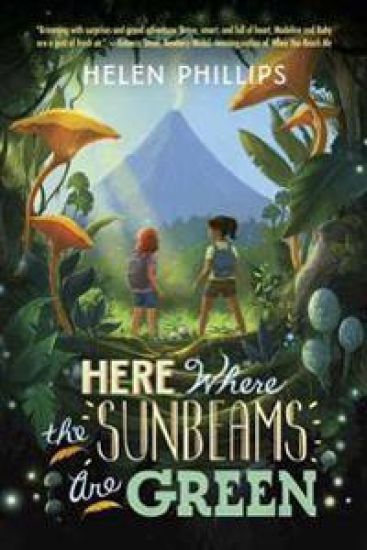
Rebecca Stead, Newbery Medal-winning author of When You Reach Me, said this book is "brimming with surprises and grand adventure. Brave, smart, and full of heart, Madeline and Ruby are a gust of fresh air." Mad's dad is the Bird Guy. He'll go anywhere to study birds. So when he's offered a bird-tracking job in Central America, his bags are packed and he's jungle bound. But going bird tracking in the jungle and disappearing completely are very different things, and when the Very Strange and Incredibly Creepy Letter arrives, Mad can't shake the terrible feeling that her father is in trouble. Roo, Mad's younger sister, is convinced that the letter is a coded message. And their mom is worried, because the letter doesn't sound like Dad at all. But Mad is sure it's a sign of something sinister. The only way to get to the bottom of it is to go to Lava Bird Volcano and find their dad themselves. Though they never could have imagined what they're about to discover. From new talent Helen Phillips, Here Where the Sunbeams Are Green is the story of what can happen when two sisters make some unusual friends, trust in each other, and bravely face a jungle of trouble all to bring their family back together.