

Kirjahaku
Etsi kirjoja tekijän nimen, kirjan nimen tai ISBN:n perusteella.
1000 tulosta hakusanalla R. B. Austin
Wit, Wisdom, Eloquence and Great Speeches of Col. R. G. Ingersoll
Robert Green Ingersoll; J. B. (EDT) McClure
Kessinger Pub
2007
sidottu

When Death Comes Knocking: A woman's death-defying struggle following a horrific home invasion. Story featured on TV's Forensic Files(R)
Tony E. Windsor; B. Kaye Robinson
Kayton Publishing
2011
nidottu
Louis A. Gentile et al., Appellants, V. Paul B. Altermatt et al. U.S. Supreme Court Transcript of Record with Supporting Pleadings
Harold J Geragosian; Ralph G Elliot; Carl R Ajello
Gale Ecco, U.S. Supreme Court Records
2011
pokkari

Can you break the code of the book? and work out the answer of the secret of the: of the book?. Book B
Q. U. E. S. T. I. O. N. M. a. R. K.
Createspace Independent Publishing Platform
2016
nidottu



WELL I ALWAYS LOVED MY LESBIAN LIFE I NEVER FELT ANYTHING WAS WRONG WITH IT OR ME-UNTIL I FELT SOMETHING LATER AFTER 45 YEARS CHANGE IS HARD YOU CANT DO IT GOD HAS TO


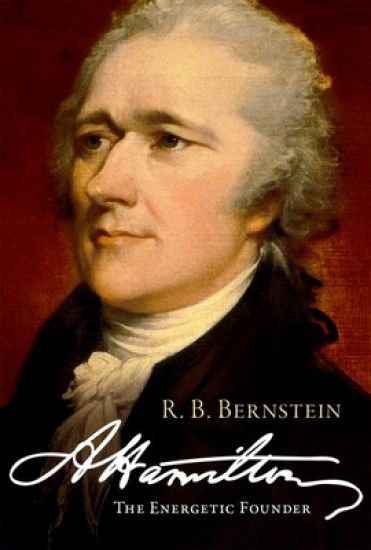
In Hamilton: The Energetic Founder, R. B. Bernstein provides a thorough history that reveals Hamilton's status as one of the key founding fathers of the United States. Hamilton: The Energetic Founder is a brief introduction to the life, thought, work, and legacy of Alexander Hamilton (1755-1804), but it is not a traditional biography. Public curiosity about Hamilton, his life, and his work has swelled, particularly among those intrigued by popular-culture portrayals in the Broadway musical Hamilton: An American Musical. This book presents a summary of Hamilton's life and explores his role in revolution, constitutionalism, economics, diplomacy, and war, as well as his relationship to honor culture and duelling. The epilogue considers Hamilton's legacies. The book considers Hamilton as a key founding father, focusing on his work as a politician, a constitutional thinker, and the nation's first secretary of the treasury. In that role, Hamilton was perhaps the leading American domestic policy-maker and nationalist. He led the effort to write the brilliant defense and exposition of the Constitution, The Federalist, and later, as treasury secretary, he pioneered efforts to interpret the Constitution broadly, as a generous grant of national power to the government of the United States. As part of that effort, he also pioneered expositions of the Constitution as a source of executive and judicial power. In addition, as a leading figure in the American world of honor culture, Hamilton was also a principal exponent of political combat in defense of personal and political honor. As such, he was a tragic victim of the honor culture he did so much to establish as a component of national politics, dying as the result of a mortal wound he suffered in his 1804 duel with Aaron Burr, his longtime antagonist and Vice President of the United States. Though not often an admired political figure in his own time, Hamilton was perhaps the leading and most enthusiastic exponent of American constitutional nationalism. In the more than two centuries since his death in 1804, Hamilton has continued to be the principal advocate of a nationalist reading of US constitutionalism.

This is a brief introduction to the life, thought, work, and legacy of Alexander Hamilton (1755-1804), but it is not a traditional biography. Public curiosity about Hamilton, his life, and his work has swelled, particularly among those intrigued by popular-culture portrayals in the Broadway musical Hamilton: An American Musical. This book presents a summary of Hamilton's life and explores his role in revolution, constitutionalism, economics, diplomacy, and war, as well as his relationship to honor culture and duelling. The epilogue considers Hamilton's legacies. The book considers Hamilton as a key founding father, focusing on his work as a politician, a constitutional thinker, and the nation's first secretary of the treasury. In that role, Hamilton was perhaps the leading American domestic policy-maker and nationalist. He led the effort to write the brilliant defense and exposition of the Constitution, The Federalist, and later, as treasury secretary, he pioneered efforts to interpret the Constitution broadly, as a generous grant of national power to the government of the United States. As part of that effort, he also pioneered expositions of the Constitution as a source of executive and judicial power. In addition, as a leading figure in the American world of honor culture, Hamilton was also a principal exponent of political combat in defense of personal and political honor. As such, he was a tragic victim of the honor culture he did so much to establish as a component of national politics, dying as the result of a mortal wound he suffered in his 1804 duel with Aaron Burr, his longtime antagonist and Vice President of the United States. Though not often an admired political figure in his own time, Hamilton was perhaps the leading and most enthusiastic exponent of American constitutional nationalism. In the more than two centuries since his death in 1804, Hamilton has continued to be the principal advocate of a nationalist reading of US constitutionalism.

The Founding Fathers: A Very Short Introduction
R. B. Bernstein
Oxford University Press Inc
2015
nidottu
The Founding Fathers is a concise, accessible overview of the brilliant, flawed, and quarrelsome group of lawyers, politicians, merchants, military men, and clergy known as "the Founding Fathers"--who got as close to the ideal of the Platonic "philosopher-kings" as American or world history has ever seen. R. B. Bernstein reveals Washington, Franklin, Jefferson, Adams, Hamilton, and the other founders not as shining demigods but as imperfect human beings--people much like us--who nevertheless achieved political greatness. They emerge here as men who sought to transcend their intellectual world even as they were bound by its limits, men who strove to lead the new nation even as they had to defer to the great body of the people and learn with them the possibilities and limitations of politics. Bernstein deftly traces the dynamic forces that molded these men and their contemporaries as British colonists in North America and as intellectual citizens of the Atlantic civilization's Age of Enlightenment. He analyzes the American Revolution, the framing and adoption of state and federal constitutions, and the key concepts and problems that both shaped and circumscribed the founders' achievements as the United States sought its place in the world. Finally, he charts the shifting reputations of the founders and examines the specific ways that interpreters of the Constitution have used the Founding Fathers. A masterly blend of old and new scholarship, brimming with apt description and insightful analysis, this book offers a digestible account of how the Founding Fathers were formed, what they did, and how generations of Americans have viewed them.

In this new concise biography Thomas Jefferson historian R.B. Bernstein finds the key to this enigmatic Founder not as a great political figure, but as leader of a "revolution of ideas that would make the world over again". Bernstein examines Jefferson's strengths and weaknesses, his achievements and failures, his triumphs, contradictions, and failings. Thomas Jefferson details his luxurious (and debt-burdened) life as a Virginia gentleman to his passionate belief in democracy, from his tortured defense of slavery to his relationship with Sally Hemings. An architect, inventor, writer, diplomat, propagandist, planter, party leader Jefferson was multifaceted, and Bernstein explores these roles even as he illuminates Jefferson's central place in American enlightenment the "revolution of ideas" that did so much to create the nation we are today. Bernstein also examines the less-remembered points in Jefferson's thinking the nature of the Union, his vision of who was entitled to citizenship, his dread of debt (both personal and national). Thomas Jefferson is the latest title in the Oxford Portraits series, which offers informative and insightful biographies of people whose lives shaped their times and continue to influence ours. Each volume in the series is heavily based on primary documents, including writings by and about each subject. Every Oxford Portrait is illustrated with a wealth of photographs, original letters, manuscripts, and memorabilia that frame the personality and achievements of its subject against the backdrop of history. Every volume in the series can be incorporated into the American history curriculum at the middle and high school levels.

Here is a concise, scholarly, yet accessible overview of the brilliant, flawed, and quarrelsome group of lawyers, politicians, merchants, military men, and clergy known as "the Founding Fathers"--who got as close to the ideal of the Platonic "philosopher-kings" as American or world history has ever seen. In The Founding Fathers Reconsidered, R. B. Bernstein reveals Washington, Franklin, Jefferson, Adams, Hamilton, and the other founders not as shining demigods but as imperfect human beings--people much like us--who nevertheless achieved political greatness. They emerge here as men who sought to transcend their intellectual world even as they were bound by its limits, men who strove to lead the new nation even as they had to defer to the great body of the people and learn with them the possibilities and limitations of politics. Bernstein deftly traces the dynamic forces that molded these men and their contemporaries as British colonists in North America and as intellectual citizens of the Atlantic civilization's Age of Enlightenment. He analyzes the American Revolution, the framing and adoption of state and federal constitutions, and the key concepts and problems--among them independence, federalism, equality, slavery, and the separation of church and state--that both shaped and circumscribed the founders' achievements as the United States sought its place in the world. Finally, he charts the shifting reputations of the founders, both as a group and as individuals, and examining the specific uses to which interpreters of the Constitution have put the Founding Fathers, along with the problems besetting this "jurisprudence of original intent." A masterly blend of old and new scholarship, brimming with apt description and insightful analysis, this book offers a persuasive account of how the Founding Fathers were formed, what they did, and how generations of Americans have viewed them.

The Education of John Adams is the first biography of John Adams by a biographer with legal training. It examines his origins in colonial Massachusetts, his education, and his struggle to choose a career and define a place for himself in colonial society. It explores the flowering of his legal career and the impact that law had on him and his understanding of himself; his growing involvement with the American Revolution as polemicist, as lawyer, as congressional delegate, and as diplomat; and his commitment to defining and expounding ideas about constitutionalism and how it should work as the body of ideas shaping the new United States. The book traces his part in launching the government of the United States under the U.S. Constitution; his service as the nation's first vice president and second president; and his retirement years, during which he was first a vexed and rejected ex-president and then became the revered Sage of Braintree. It describes the relationships that sustained him - with his wife, the brilliant and eloquent Abigail Adams; with his children; with such allies and supporters as Benjamin Rush and John Marshall; with such sometime friends and sometime adversaries as Benjamin Franklin, George Washington, and Thomas Jefferson; and with such foes as Alexander Hamilton and Timothy Pickering. Bernstein establishes Adams as a key figure in the evolution of American constitutional theory and practice. This is the first biography to examine Adams's conflicted and hesitant ideas about slavery and race in the American context, raising serious questions about his mythic status as a friend of human equality and a foe of slavery. This book's foundation is the record left by Adams himself--in diaries, letters, essays, pamphlets, and books. The Education of John Adams concludes by re-examining the often-debated question of the relevance of Adams's thought to our own time.
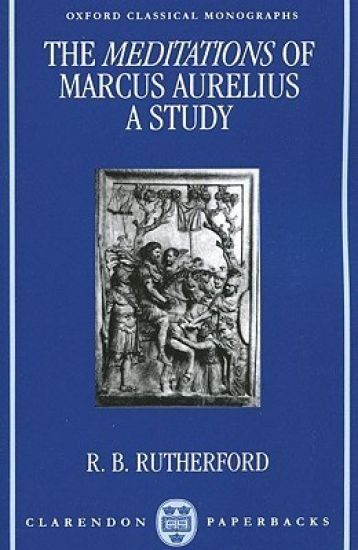
Marcus Aurelius, Roman emperor from AD 161 to 180, is renowned for his just rule at home and for his long frontier wars. But his lasting claim to fame rests on the work known as the Meditations - a bedside book of reflections and self-admonitions composed in Greek (the language of philosophy) during his last years and partly while on campaign. These sparse notes, intended for the author's eyes alone, give unique access to the mind of an ancient ruler; they also contain many passages of pungent epigram and poetic imagery. In this study, Dr Rutherford seeks to make the Meditations more approachable to the modern reader by explaining the historical and philosophical background, charting the main themes and tendencies of Marcus' thought, and relating stylistic detail to the intellectual and moral outlook of the author.

The defeat of the Spanish Armada did not put an end to Spanish sea power, nor to Spain's ambitions in northern Europe. By the mid-1590s Spain had recovered from the disaster of 1588, and the renewed naval wars together with the outbreak of rebellion in Ireland from the principal themes of this book. R B Wernham sets out to examine these major events of the last years of the Queen Elizabeth's reign and to assess their impact on English policy. Professor Wernham shows how much of the impetus in foreign policy derived from the Earl of Essex, whose personal ambition and practical incompetence brought frustration and danger, and ultimately led him through rebellion to the Scaffold. It was left to Mountjoy in Ireland, to Leveson and a new generation of sea commanders, and above all to Robert Cecil, to bring war and rebellion to a reasonably satisfactory conclusion. The Return of the Armadas is a superbly integrated and lucidly written study in grand strategy by a leading historian of Elizabethan affairs.

Ireland in the Age of Imperialism and Revolution, 1760-1801
R. B. McDowell
Clarendon Press
1991
nidottu
The latter decades of the eighteenth century were for Ireland an era of momentous political development. This book surveys the social, economic, and intellectual background; indicates the links between Ireland and Great Britain and the rest of the Empire; examines the machinery of central and local government; and describes the course of politics at a time when political activity greatly accelerated, and was strongly influenced by external forces. R. B. McDowell analyses the political agitation and agrarian discontent of the 1790s, and the threats which they posed both to national defence and to the maintenance of law and order. He concludes with an examination of the insurrection of 1798, and the British government's attempt to solve the Irish question by the union of Ireland with Great Britain.