Kirjojen hintavertailu. Mukana 11 699 587 kirjaa ja 12 kauppaa.

Kirjahaku

Etsi kirjoja tekijän nimen, kirjan nimen tai ISBN:n perusteella.

1000 tulosta hakusanalla R. B. Wernham

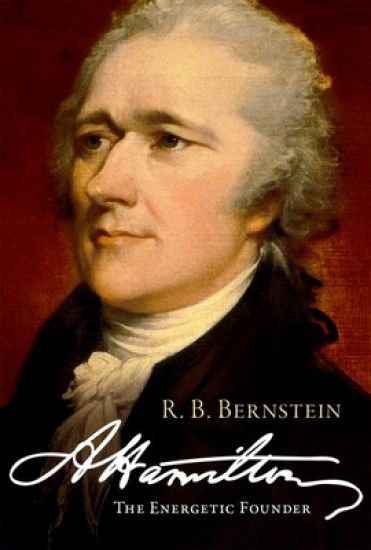
Hamilton

Hamilton

R. B. Bernstein

OXFORD UNIVERSITY PRESS INC
2023
sidottu
In Hamilton: The Energetic Founder, R. B. Bernstein provides a thorough history that reveals Hamilton's status as one of the key founding fathers of the United States. Hamilton: The Energetic Founder is a brief introduction to the life, thought, work, and legacy of Alexander Hamilton (1755-1804), but it is not a traditional biography. Public curiosity about Hamilton, his life, and his work has swelled, particularly among those intrigued by popular-culture portrayals in the Broadway musical Hamilton: An American Musical. This book presents a summary of Hamilton's life and explores his role in revolution, constitutionalism, economics, diplomacy, and war, as well as his relationship to honor culture and duelling. The epilogue considers Hamilton's legacies. The book considers Hamilton as a key founding father, focusing on his work as a politician, a constitutional thinker, and the nation's first secretary of the treasury. In that role, Hamilton was perhaps the leading American domestic policy-maker and nationalist. He led the effort to write the brilliant defense and exposition of the Constitution, The Federalist, and later, as treasury secretary, he pioneered efforts to interpret the Constitution broadly, as a generous grant of national power to the government of the United States. As part of that effort, he also pioneered expositions of the Constitution as a source of executive and judicial power. In addition, as a leading figure in the American world of honor culture, Hamilton was also a principal exponent of political combat in defense of personal and political honor. As such, he was a tragic victim of the honor culture he did so much to establish as a component of national politics, dying as the result of a mortal wound he suffered in his 1804 duel with Aaron Burr, his longtime antagonist and Vice President of the United States. Though not often an admired political figure in his own time, Hamilton was perhaps the leading and most enthusiastic exponent of American constitutional nationalism. In the more than two centuries since his death in 1804, Hamilton has continued to be the principal advocate of a nationalist reading of US constitutionalism.
Alexander Hamilton

Alexander Hamilton

R. B. Bernstein

OXFORD UNIVERSITY PRESS INC
2025
nidottu
This is a brief introduction to the life, thought, work, and legacy of Alexander Hamilton (1755-1804), but it is not a traditional biography. Public curiosity about Hamilton, his life, and his work has swelled, particularly among those intrigued by popular-culture portrayals in the Broadway musical Hamilton: An American Musical. This book presents a summary of Hamilton's life and explores his role in revolution, constitutionalism, economics, diplomacy, and war, as well as his relationship to honor culture and duelling. The epilogue considers Hamilton's legacies. The book considers Hamilton as a key founding father, focusing on his work as a politician, a constitutional thinker, and the nation's first secretary of the treasury. In that role, Hamilton was perhaps the leading American domestic policy-maker and nationalist. He led the effort to write the brilliant defense and exposition of the Constitution, The Federalist, and later, as treasury secretary, he pioneered efforts to interpret the Constitution broadly, as a generous grant of national power to the government of the United States. As part of that effort, he also pioneered expositions of the Constitution as a source of executive and judicial power. In addition, as a leading figure in the American world of honor culture, Hamilton was also a principal exponent of political combat in defense of personal and political honor. As such, he was a tragic victim of the honor culture he did so much to establish as a component of national politics, dying as the result of a mortal wound he suffered in his 1804 duel with Aaron Burr, his longtime antagonist and Vice President of the United States. Though not often an admired political figure in his own time, Hamilton was perhaps the leading and most enthusiastic exponent of American constitutional nationalism. In the more than two centuries since his death in 1804, Hamilton has continued to be the principal advocate of a nationalist reading of US constitutionalism.
The Founding Fathers: A Very Short Introduction

The Founding Fathers: A Very Short Introduction

R. B. Bernstein

Oxford University Press Inc
2015
nidottu
The Founding Fathers is a concise, accessible overview of the brilliant, flawed, and quarrelsome group of lawyers, politicians, merchants, military men, and clergy known as "the Founding Fathers"--who got as close to the ideal of the Platonic "philosopher-kings" as American or world history has ever seen. R. B. Bernstein reveals Washington, Franklin, Jefferson, Adams, Hamilton, and the other founders not as shining demigods but as imperfect human beings--people much like us--who nevertheless achieved political greatness. They emerge here as men who sought to transcend their intellectual world even as they were bound by its limits, men who strove to lead the new nation even as they had to defer to the great body of the people and learn with them the possibilities and limitations of politics. Bernstein deftly traces the dynamic forces that molded these men and their contemporaries as British colonists in North America and as intellectual citizens of the Atlantic civilization's Age of Enlightenment. He analyzes the American Revolution, the framing and adoption of state and federal constitutions, and the key concepts and problems that both shaped and circumscribed the founders' achievements as the United States sought its place in the world. Finally, he charts the shifting reputations of the founders and examines the specific ways that interpreters of the Constitution have used the Founding Fathers. A masterly blend of old and new scholarship, brimming with apt description and insightful analysis, this book offers a digestible account of how the Founding Fathers were formed, what they did, and how generations of Americans have viewed them.
Thomas Jefferson

Thomas Jefferson

R. B. Bernstein

Oxford University Press Inc
2008
sidottu
In this new concise biography Thomas Jefferson historian R.B. Bernstein finds the key to this enigmatic Founder not as a great political figure, but as leader of a "revolution of ideas that would make the world over again". Bernstein examines Jefferson's strengths and weaknesses, his achievements and failures, his triumphs, contradictions, and failings. Thomas Jefferson details his luxurious (and debt-burdened) life as a Virginia gentleman to his passionate belief in democracy, from his tortured defense of slavery to his relationship with Sally Hemings. An architect, inventor, writer, diplomat, propagandist, planter, party leader Jefferson was multifaceted, and Bernstein explores these roles even as he illuminates Jefferson's central place in American enlightenment the "revolution of ideas" that did so much to create the nation we are today. Bernstein also examines the less-remembered points in Jefferson's thinking the nature of the Union, his vision of who was entitled to citizenship, his dread of debt (both personal and national). Thomas Jefferson is the latest title in the Oxford Portraits series, which offers informative and insightful biographies of people whose lives shaped their times and continue to influence ours. Each volume in the series is heavily based on primary documents, including writings by and about each subject. Every Oxford Portrait is illustrated with a wealth of photographs, original letters, manuscripts, and memorabilia that frame the personality and achievements of its subject against the backdrop of history. Every volume in the series can be incorporated into the American history curriculum at the middle and high school levels.
The Founding Fathers Reconsidered

The Founding Fathers Reconsidered

R. B. Bernstein

Oxford University Press Inc
2009
sidottu
Here is a concise, scholarly, yet accessible overview of the brilliant, flawed, and quarrelsome group of lawyers, politicians, merchants, military men, and clergy known as "the Founding Fathers"--who got as close to the ideal of the Platonic "philosopher-kings" as American or world history has ever seen. In The Founding Fathers Reconsidered, R. B. Bernstein reveals Washington, Franklin, Jefferson, Adams, Hamilton, and the other founders not as shining demigods but as imperfect human beings--people much like us--who nevertheless achieved political greatness. They emerge here as men who sought to transcend their intellectual world even as they were bound by its limits, men who strove to lead the new nation even as they had to defer to the great body of the people and learn with them the possibilities and limitations of politics. Bernstein deftly traces the dynamic forces that molded these men and their contemporaries as British colonists in North America and as intellectual citizens of the Atlantic civilization's Age of Enlightenment. He analyzes the American Revolution, the framing and adoption of state and federal constitutions, and the key concepts and problems--among them independence, federalism, equality, slavery, and the separation of church and state--that both shaped and circumscribed the founders' achievements as the United States sought its place in the world. Finally, he charts the shifting reputations of the founders, both as a group and as individuals, and examining the specific uses to which interpreters of the Constitution have put the Founding Fathers, along with the problems besetting this "jurisprudence of original intent." A masterly blend of old and new scholarship, brimming with apt description and insightful analysis, this book offers a persuasive account of how the Founding Fathers were formed, what they did, and how generations of Americans have viewed them.
The Education of John Adams

The Education of John Adams

R. B. Bernstein

OXFORD UNIVERSITY PRESS INC
2022
nidottu
The Education of John Adams is the first biography of John Adams by a biographer with legal training. It examines his origins in colonial Massachusetts, his education, and his struggle to choose a career and define a place for himself in colonial society. It explores the flowering of his legal career and the impact that law had on him and his understanding of himself; his growing involvement with the American Revolution as polemicist, as lawyer, as congressional delegate, and as diplomat; and his commitment to defining and expounding ideas about constitutionalism and how it should work as the body of ideas shaping the new United States. The book traces his part in launching the government of the United States under the U.S. Constitution; his service as the nation's first vice president and second president; and his retirement years, during which he was first a vexed and rejected ex-president and then became the revered Sage of Braintree. It describes the relationships that sustained him - with his wife, the brilliant and eloquent Abigail Adams; with his children; with such allies and supporters as Benjamin Rush and John Marshall; with such sometime friends and sometime adversaries as Benjamin Franklin, George Washington, and Thomas Jefferson; and with such foes as Alexander Hamilton and Timothy Pickering. Bernstein establishes Adams as a key figure in the evolution of American constitutional theory and practice. This is the first biography to examine Adams's conflicted and hesitant ideas about slavery and race in the American context, raising serious questions about his mythic status as a friend of human equality and a foe of slavery. This book's foundation is the record left by Adams himself--in diaries, letters, essays, pamphlets, and books. The Education of John Adams concludes by re-examining the often-debated question of the relevance of Adams's thought to our own time.
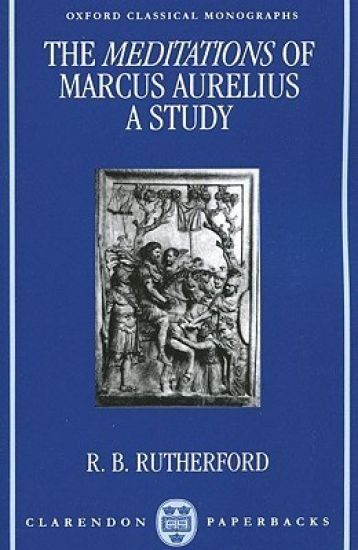
The Meditations of Marcus Aurelius: A Study

The Meditations of Marcus Aurelius: A Study

R. B. Rutherford

Clarendon Press
1991
nidottu
Marcus Aurelius, Roman emperor from AD 161 to 180, is renowned for his just rule at home and for his long frontier wars. But his lasting claim to fame rests on the work known as the Meditations - a bedside book of reflections and self-admonitions composed in Greek (the language of philosophy) during his last years and partly while on campaign. These sparse notes, intended for the author's eyes alone, give unique access to the mind of an ancient ruler; they also contain many passages of pungent epigram and poetic imagery. In this study, Dr Rutherford seeks to make the Meditations more approachable to the modern reader by explaining the historical and philosophical background, charting the main themes and tendencies of Marcus' thought, and relating stylistic detail to the intellectual and moral outlook of the author.
Ireland in the Age of Imperialism and Revolution, 1760-1801
The latter decades of the eighteenth century were for Ireland an era of momentous political development. This book surveys the social, economic, and intellectual background; indicates the links between Ireland and Great Britain and the rest of the Empire; examines the machinery of central and local government; and describes the course of politics at a time when political activity greatly accelerated, and was strongly influenced by external forces. R. B. McDowell analyses the political agitation and agrarian discontent of the 1790s, and the threats which they posed both to national defence and to the maintenance of law and order. He concludes with an examination of the insurrection of 1798, and the British government's attempt to solve the Irish question by the union of Ireland with Great Britain.
The Education of John Adams

The Education of John Adams

R. B. Bernstein

Oxford University Press Inc
2020
sidottu
The Education of John Adams is a concise biography of John Adams (1735-1826), the first by a biographer with legal training. It examines his origins in colonial Massachusetts, his education, and his struggle to choose a career and define a place for himself in colonial society. It explores his flourishing legal career and the impact that law had on him and his perception of himself; his growing involvement with the emerging American Revolution as polemicist, as lawyer, as congressional delegate, and as diplomat; and his role in defining and expounding ideas about constitutionalism and how it should work as the governing ideology of the new United States. The book traces his part in launching the new government of the United States under the U.S. Constitution; his service as the nation's first vice president and second president; and his retirement years, during which he passed from being a vexed and rejected ex-president to the Sage of Braintree. It describes the relationships that sustained him--with his wife, the brilliant and eloquent Abigail Adams; with his children; with such allies and supporters as Benjamin Rush and John Marshall; such sometime friends and sometime adversaries as Benjamin Franklin, George Washington, and Thomas Jefferson; and with such foes as Alexander Hamilton and Timothy Pickering. It establishes Adams as a key but neglected figure in the evolution of American constitutional theory and practice. It also is the first biography to examine Adams's conflicted and hesitant ideas about slavery and race in the American context, raising serious questions about his mythic status as a friend of human equality and a foe of slavery. The focus of this book is the record left by Adams himself - in diaries, letters, essays, pamphlets, and books. The Education of John Adams concludes by re-examining the often-debated question of the relevance of Adams's thought to our own time.
The Founding Fathers Reconsidered

The Founding Fathers Reconsidered

R. B. Bernstein

Oxford University Press Inc
2011
nidottu
Here is a vividly written and compact overview of the brilliant, flawed, and quarrelsome group of lawyers, politicians, merchants, military men, and clergy known as the "Founding Fathers"--who got as close to the ideal of the Platonic "philosopher-kings" as American or world history has ever seen. In The Founding Fathers Reconsidered, R. B. Bernstein reveals Washington, Franklin, Jefferson, Adams, Hamilton, and the other founders not as shining demigods but as imperfect human beings--people much like us--who nevertheless achieved political greatness. They emerge here as men who sought to transcend their intellectual world even as they were bound by its limits, men who strove to lead the new nation even as they had to defer to the great body of the people and learn with them the possibilities and limitations of politics. Bernstein deftly traces the dynamic forces that molded these men and their contemporaries as British colonists in North America and as intellectual citizens of the Atlantic civilization's Age of Enlightenment. He analyzes the American Revolution, the framing and adoption of state and federal constitutions, and the key concepts and problems--among them independence, federalism, equality, slavery, and the separation of church and state--that both shaped and circumscribed the founders' achievements as the United States sought its place in the world.
The History of Endocrine Surgery

The History of Endocrine Surgery

R. B. Welbourn; Stanley R. Friesen; Ivan D.A. Johnston; Ronald A. Sellwood

Praeger Publishers Inc
1990
sidottu
Richard B. Welbourn, a retired endocrine surgeon who has written two books on the subject, has compiled the definitive history of the new and advancing discipline of endocrine surgery. The book traces the history of endocrine surgery from its origins to the 1980s, detailing the stories behind the surgery of each gland. A valuable biographical index containing basic information as well as the ideas and achievements of great names in the field will prove an invaluable resource. Topics include: Evolution of Endocrine Surgery; The Pituitary; The Thyroid; Thyroid Cancer; The Adrenal Glands; The Parathyroid Glands; The Endocrine Gut and Pancreas; Islet Cell Transplantation; Multiple Endocrine Adenopathy and Paraendocrine Syndromes; Cancer of the Breast and Prostate; Essential and Renal Hypertension; Surgical Stress. The book also includes more than 80 photos and diagrams. A chronological table shows the main events described in the text in their temporal context via milestones in general medicine, surgery and science, and selected major events in political and social history.
Resistance in Colonial and Communist China, 1950-1963
The history of colonial East Asia is a human anatomy describing beneficial organs of foreign rule. Proclaiming itself a schematic diagram open to inspection, the anatomy of the late British Empire nevertheless obscured much more than it revealed. This analogy in Price’s provocative Cold War history is not presented only as an insight on imperialism but deciphers competing nationalist ideologies, too. The Kuomintang contended vigorously against communist rule in southern China for a decade after the end of the civil war in 1949 and Chinese communists disparaged British colonialism in Hong Kong in a war of words peaking in 1956–1957. These clashes of will did not produce new rulers in either place. They informed a period of Sino-British strategic partnership based on recognition that a capitalist enclave in southern China had its uses.By focusing on the Hong Kong region, Resistance in Colonial and Communist China compares anatomies of the British colonial government, the Chinese communists and stateless members of the remnant Kuomintang (1950–1963). Price asserts that after 1949, the colonial government of Hong Kong politically favoured the Kuomintang organised crime societies over their communist nationalist adversaries despite historiographical explanation that it favoured neither. This book challenges traditional concepts of the British colonial government and its attitude towards communist China. It engages in current debates surrounding Britain’s past by presenting a particularly devious episode of late colonial history.
Electronic Irradiation of Foods

Electronic Irradiation of Foods

R. B. Miller

Springer-Verlag New York Inc.
2005
sidottu
Food irradiation, the use of ionizing radiation to destroy harmful biological organism in food, is a safe, proven process that has many useful applications. It has been endorsed by numerous health organizations and has now been approved for many applications by governments around the world. Electronic Irradiation of Foods describes all the key aspects of electron accelerator technology in detail. It emphasizes the physical science and technology aspects of food irradiation using machine sources of ionizing radiation. The book provides significant technical depth for interested workers and present descriptive, introductory material that should help demystify technology for businessmen to make informed choices regarding important investments decisions. Introductory chapters summarize the effects of ionizing radiation on biological organisms and the organic compounds comprising foods, and give an overview of the food irradiation process. Subsequent chapters cover the details of the electron beam and x-ray energy deposition, electron accelerator technologies, beam scanning systems, material handling systems, shielding design, and process control considerations. Important appendices cover radiation dosimetry, induced radioactivity, and ozone generation.
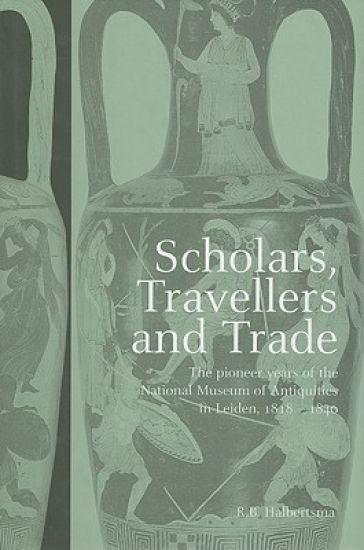
Scholars, Travellers and Trade

Scholars, Travellers and Trade

R. B. Halbertsma

Routledge
2003
sidottu
Today, the National Museum of Antiquities in Leiden is internationally known for its outstanding archaeological collections. Yet its origins lie in an insignificant assortment of artefacts used for study by Leiden University. How did this transformation come about? Ruurd Halbertsma has delved into the archives to show that the appointment of Caspar Reuvens as Professor of Archaeology in 1818 was the crucial turning point. He tells the dramatic story of Reuvens' struggle to establish the museum, with battles against rival scholars, red tape and the Dutch attitude of neglect towards archaeological monuments. This book throws new light on the process of creating a national museum, and the difficulties of convincing society of the value of the past.
Communist Indochina

Communist Indochina

R. B. Smith

Routledge
2008
sidottu
This book examines the history of communist Indochina, from the foundation of the Indochinese Communist Party in 1929-30 to the end of the 1970s. It explores the impact of the Japanese invasion of Indochina in 1940, and the subsequent relationship between the Japanese occupiers and the Vichy French colonial regime. It considers why, following the Japanese surrender, the cause of Vietnamese independence was championed by the Communist-led Viet Minh movement headed by Ho Chi Minh, culminating in the August Revolution and the Viet Minh seizure of power, and analyses the record of the Viet Minh Provisional Government of 1945-46. It goes on to consider key episodes of the Vietnam War which followed partition in 1954, including the Tet Offensive of 1967-68 - a crucial turning point in the course of the conflict - and the Cambodia Crisis of 1969-70. Throughout, it considers events within Indochina in the context of wider regional and international developments, focusing in particular on the role played by the Chinese, including their support to the Viet Minh in their struggle against the French from 1947, and the issue of Cambodia which eventually precipitated the Sino-Vietnamese War of 1979. The book also explores the main trends in social, economic and institutional development which characterised this period, including village and clan networks, economic and monetary developments, the contrasting systems of North and South after partition, and the consequences of choosing a Soviet economic alignment in preference to links with Japan and capitalist Asia. Written by the late Ralph Smith, a highly respected historian of Asia, this book is essential reading for anyone seeking to understand the history of Indochina.
Scholars, Travellers and Trade

Scholars, Travellers and Trade

R. B. Halbertsma

Routledge
2012
nidottu
Today, the National Museum of Antiquities in Leiden is internationally known for its outstanding archaeological collections. Yet its origins lie in an insignificant assortment of artefacts used for study by Leiden University. How did this transformation come about? Ruurd Halbertsma has delved into the archives to show that the appointment of Caspar Reuvens as Professor of Archaeology in 1818 was the crucial turning point. He tells the dramatic story of Reuvens' struggle to establish the museum, with battles against rival scholars, red tape and the Dutch attitude of neglect towards archaeological monuments. This book throws new light on the process of creating a national museum, and the difficulties of convincing society of the value of the past.