

Kirjahaku
Etsi kirjoja tekijän nimen, kirjan nimen tai ISBN:n perusteella.
1000 tulosta hakusanalla R. Michael Card


Confidence: Reclaim Your Power, One Step at a Time By Aji Michael, MCIPDIn Confidence: Reclaim Your Power, One Step at a Time, Aji Michael, MCIPD, draws on over a decade of experience, research, and personal transformation to help women reclaim their confidence, no matter where they are in their journey. She reveals that confidence isn't about perfection or external validation; it's about embracing your true self and stepping into your power - one vulnerable, courageous step at a time.For women who have faced life's challenges - from toxic relationships and abusive marriages to societal pressures and trauma - reclaiming confidence can feel like an impossible task. But Aji makes it clear: Reclaiming confidence is not a linear process. It's a journey of rediscovery, where healing doesn't follow a straight path but is full of growth, setbacks, and beautiful revelations.Aji boldly addresses what many women face today - a spiritual crisis of disconnection. But with her trademark blend of compelling storytelling, actionable insights, and unapologetic honesty, Aji introduces her transformative ACE framework to help women reconnect to their inner strength, self-worth, and power.Through a fusion of personal stories, research, and deep compassion, Aji is again changing the cultural conversation, guiding women to step into their fullest potential, embrace their truth and reclaim their power, one step at a time.

El P. Michael Muller, C.SS.R. escribe un hermoso tratado sobre lo que es un Sacerdote Cat lico. El honor que se les debe dar, el poder que poseen, el deber con el que deben vivir, etc. El Padre da historias, tambi n, para aumentar nuestra devoci n que debemos tener por los sacerdotes.

A darkly imaginative writer in the tradition of Joe Abercrombie, Peter V. Brett, and Neil Gaiman conjures a gritty mind-bending fantasy, set in a world where delusion becomes reality ...and the fulfillment of humanity's desires may well prove to be its undoing. When belief defines reality, those with the strongest convictions-the crazy, the obsessive, the delusional-have the power to shape the world. And someone is just mad enough to believe he can create a god ...Violent and dark, the world is filled with the Geisteskranken-men and women whose delusions manifest. Sustained by their own belief-and the beliefs of those around them-they can manipulate their surroundings. For the High Priest Konig, that means creating order out of the chaos in his city-state, leading his believers to focus on one thing: helping a young man, Morgen, ascend to become a god. A god they can control. Trouble is, there are many who would see a god in their thrall, including the High Priest's own doppelgangers, a Slaver no one can resist, and three slaves led by possibly the only sane man left. As these forces converge on the boy, there's one more obstacle: time is running out. Because as the delusions become more powerful, the also become harder to control. The fate of the Geisteskranken is to inevitably find oneself in the Afterdeath. The question, then, is: Who will rule there?

Advances in Alzheimer’s disease (AD) research have been challenging and without major breakthroughs in understanding its pathological basis. The reigning hypothesis suggests AD is the result of extracellular amyloid deposition that seed to form amyloid plaques, which then grow and kill neighboring neurons. However, there are several inconsistencies with this hypothesis, not to mention the inability to show clinical benefit in several failed clinical trials by pharmaceuticals (i.e., from Pfizer, Eli Lilly, etc.), and it is in the field’s best interest to explore and test multiple hypotheses for pathology rather than drive the majority of research on this single amyloid theory. Reviewing many scientifically peer-reviewed publications, this book describes the "Inside-Out" hypothesis on how amyloid escapes the circulatory system through a dysfunctional blood-brain barrier to bind to the alpha 7 nicotinic acetylcholine receptor on pyramidal neurons. Over time, excessive amounts of amyloid appear to be internalized, resulting in neuron death and lysis. This simple mechanism readily explains plaque composition, size, shape, and location. Based on the current direction of research in the field, this hypothesis appears years from any research and development.

Intracellular Consequences of Amyloid in Alzheimer's Disease
Michael R. D'Andrea
Academic Press Inc
2016
nidottu
Consequences of Intracellular Amyloid in Alzheimer’s Disease addresses one of the more currently unresolved aspects confounding Alzheimer’s research, the significance of intraneuronal amyloid. It seeks to explain some of the unresolved questions concerning intracellular amyloid and its origin, entry, and toxicity. Following up on Dr. D’Andrea’s first book, Bursting Neurons and Fading Memories: An Alternative Hypothesis for the Pathogenesis of Alzheimer’s Disease, this book further examines the Inside-Out or Bursting alternative hypothesis of how amyloid escapes the circulatory system to ultimately enter neurons, also examining whether there is a relationship between intracellular amyloid, amyloid plaques, and cognitive impairment. Through a comprehensive explanation of the currently relevant scientific research on intracellular amyloid compiled in this handy reference, readers will better understand the mechanisms that lead to neuron death.

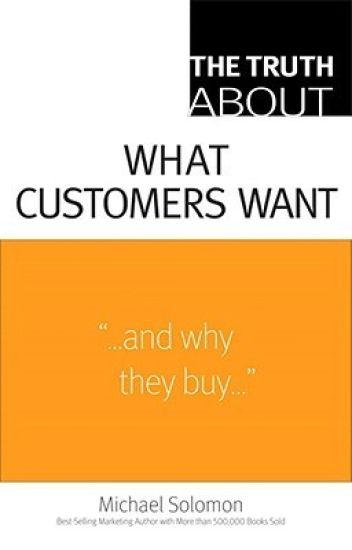
Customers demystified! How you can move them to buy...buy more...and keep on buying! The truth about what customers really want, think, and feel The truth about keeping current customers happy-and loyal The truth about the newest trends and advances in consumer behaviorSimply the best thinkingTHE TRUTH AND NOTHING BUT THE TRUTHThis book reveals 50 bite-size, easy-to-use techniques for finding and keeping highly profitable customers"Michael Solomon's The Truth About What Customers Want contains great insights into consumer behavior and is a must-have tool for anyone working in a consumer-driven field. His 50 truths take the guesswork out of marketing intelligence and give insight into navigating today's technology-driven world."Tim Dunphy, Senior Marketing Manager, Consumer Insights, Black & Decker
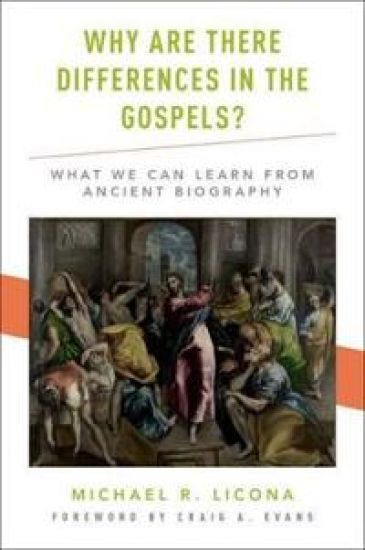
Why Are There Differences in the Gospels?
Michael R. Licona; Craig A. Evans
Oxford University Press Inc
2017
sidottu
Anyone who reads the Gospels carefully will notice that there are differences in the manner in which they report the same events. These differences have led many conservative Christians to resort to harmonization efforts that are often quite strained, sometimes to the point of absurdity. Many people have concluded the Gospels are hopelessly contradictory and, therefore, historically unreliable accounts of Jesus. The majority of New Testament scholars now hold that most if not all of the Gospels belong to the genre of Greco-Roman biography and that this genre permitted some flexibility in the manner that historical events were narrated. However, few scholars provide a robust discussion on how this plays out in Gospel pericopes (self-contained passages). Why Are There Differences in the Gospels? provides a fresh approach to the matter by examining the works of Plutarch, a Greek essayist who lived in the first and second centuries CE. Michael R. Licona discovers three-dozen pericopes narrated two or more times in Plutarch's Lives, identifies differences between the accounts, and views these differences in light of compositional devices acknowledged by classical scholars to have been commonly employed by ancient authors. The book then uses the same approach with nineteen pericopes narrated in two or more Gospels to demonstrate that the major differences found in them likely result from the same compositional devices employed by Plutarch. By suggesting that both the strained harmonizations and the hasty dismissals of the Gospels as reliable accounts are misguided, Licona invites readers to view the Gospels in light of their biographical genre in order to gain a clearer understanding of why the differences are present.

Despite current population movement towards urban areas, rural people remain a significant yet under-served population. According to the most recent statistics, 19% of the US and 20% of the Canadian populations reside in rural areas. These communities share a rich and distinctive culture, but also face specific problems including higher rates of poverty, increased rates of obesity and other chronic health problems, and decreased access to health coverage and social services. For any social worker to provide competent assistance to these communities it is essential that they comprehend both the culture of rural peoples and the specific problems they face. This book provides a survey of the many issues related to rural social work organized around the major content areas of the social work curriculum. The author addresses a wide range of practice issues including culture and behavior, diversity, social policy, and ethics of work.

The fields of molecular evolution, genome evolution, and evolutionary genetics are now well-established. Remarkably, however, although all evolutionary modifications begin at the cellular level, and despite the advances made in cell biology and microbiology over the past few decades, there is as yet no recognised discipline of evolutionary cell biology. The goal of this book is to help establish the foundations for this emerging field. Its principal aims are twofold: firstly, to promote an understanding among evolutionary biologists as to why the cellular details matter if we are to understand the mechanisms of evolution; secondly, to make clear to non-evolutionary biologists - cell biologists in particular - that evolution is not just a matter of natural selection and optimization, but a process whose reach depends on other population genetic features such as mutation, recombination, and random genetic drift. Although there are many excellent books on cell biology, microbiology, and biophysics, almost no attention is given to evolution. Likewise, although there are numerous evolutionary biology books on the market, none of them gives more than passing attention to details at the cellular level. Thus Evolutionary Cell Biology is genuinely novel, offering a broader understanding of evolutionary processes and an appreciation for the many interesting problems that remain to be solved at the cellular and subcellular levels. This advanced textbook is aimed at both cell biologists and evolutionary biologists. It will be accessible to upper-level undergraduates in biology, and certainly to graduate students in all areas of the life sciences. Professionals from a wide range of fields - cell biology, microbiology, evolution, biophysics, biochemistry, and mathematics - will be exposed to entirely new ideas not traditionally covered in their primary fields of expertise.
The Long Tomorrow: How Advances in Evolutionary Biology Can Help Us Postpone Aging
Michael R. Rose
Oxford University Press
2005
sidottu
The conquest of aging is now within our grasp. It hasn't arrived yet, writes Michael R. Rose, but a scientific juggernaut has started rolling and is picking up speed. A long tomorrow is coming. In The Long Tomorrow, Rose offers us a delightfully written account of the modern science of aging, spiced with intriguing stories of his own career and leavened with the author's engaging sense of humor and rare ability to make contemporary research understandable to nonscientists. The book ranges from Rose's first experiments while a graduate student--counting a million fruit fly eggs, which took 3,000 hours over the course of a year--to some of his key scientific discoveries. We see how some of his earliest experiments helped demonstrate that "the force of natural selection" was key to understanding the aging process--a major breakthrough. Rose describes how he created the well-known Methuselah Flies, fruit flies that live far longer than average. Equally important, Rose surveys the entire field, offering colorful portraits of many leading scientists and shedding light on research findings from around the world. We learn that rodents given fifteen to forty percent fewer calories live about that much longer, and that volunteers in Biosphere II, who lived on reduced caloric intake for two years, all had improved vital signs. Perhaps most interesting, we discover that aging hits a plateau and stops. Popular accounts of Rose's work have appeared in The New Yorker, Time magazine, and Scientific American, but The Long Tomorrow is the first full account of this exciting new science written for the general reader. "Among his peers, Rose is considered a brilliantly innovative scientist, who has almost single-handedly brought the evolutionary theory of aging from an abstract notion to one of the most exciting topics in science."--Malcolm Gladwell, The New Yorker

The Dissenters: Volume I: From the Reformation to the French Revolution
Michael R. Watts
Clarendon Press
1985
nidottu
Religious dissent has been a persistent feature of English and Welsh history for over four hundred years, influencing the economic, cultural, and political history of the two nations as well as their religious life. The Dissenters is the first of a projected three-volume study on the subject, which promises to be the first comprehensive overview of the subject in more than sixty years.

The Dissenters: Volume II: The Expansion of Evangelical Nonconformity
Michael R. Watts
Clarendon Press
1995
sidottu
The expansion of Evangelical Nonconformity was one of the most important developments in English and Welsh history in the late eighteenth and early nineteenth centuries. In eighty years the number of Nonconformist chapels increased ten-fold, and by 1851, nearly one person in five worshipped in such chapels. For millions of people the gospel preached and the religion practised in these chapels determined their choice of marriage partners, conditioned the upbringing of their children, and moulded their family life. Religion pervaded education, shaped morals, controlled leisure, provided music and literature, motivated philanthropy and decided political loyalties. In this, the second of a projected three-volume history of Dissent, Michael Watts argues that while the Quakers constituted an increasingly wealthy but numerically declining community of businessmen, farmers, and retailers, and that in many towns the Unitarians formed a vibrant, progressive, intellectual élite, the appeal of Nonconformity was primarily to the poor, the ill-educated, and the unsophisticated. The working-class adherents of Evangelical Nonconformity vastly outnumbered those of political radicalism, trade unionism, or Chartism, and Dissent was a major factor in making a section of the working class respectable, thus contributing to the social harmony of the 1850s and 1860s. The history of late Georgian and Victorian England and Wales, argues Dr Watts, cannot be understood without a knowledge of Nonconformity.
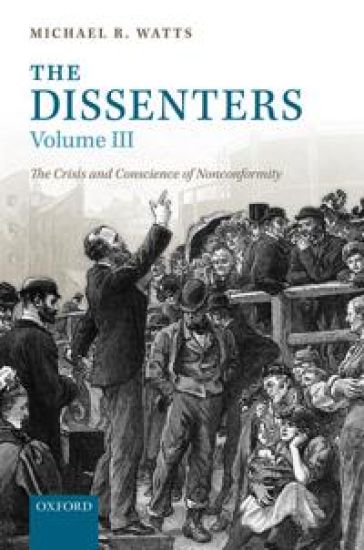
This third and final volume of Michael Watts's study of dissent examines the turbulent times of Victorian Nonconformity, a period of faith and of doubt. Watts assesses the impacts of the major Dissenting preachers and provides insights into the various movements, such as romanticism and the higher, often German, biblical criticism. He shows that the preaching of hell and eternal damnation was more effective in recruiting to the chapels than the gentler interpretations. A major feature of the volume is a thorough analysis of surviving records of attendance at Nonconformist services. He provides fascinating accounts of Spurgeon and the other key figures of Nonconformity, including of the Salvation Army. Dr Watts also provides a fresh discussion of the contribution which Nonconformity made to the politics of mid- to late-Victorian Britain. He examines such issues of reform as Forster's Education Act of 1871, temperance, and Balfour's Education Act of 1902, and considers Nonconformist interventions in such controversies as the Bulgarian Agitation, Home Rule for Ireland, the Armenian massacres of the mid 1890s, and the Boer War. The volume concludes with the Liberal landslide in the 1906 general election, which saw probably more Nonconformists elected than any time since the era of Oliver Cromwell.
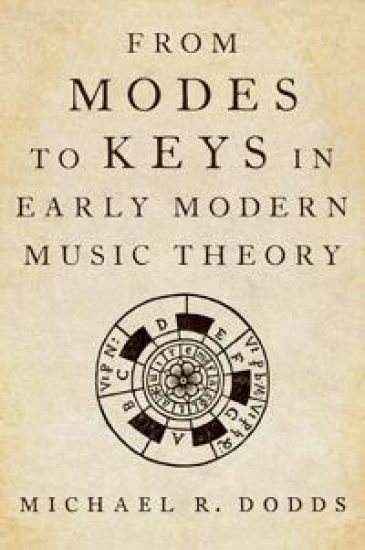
From Modes to Keys in Early Modern Music Theory
Michael R. Dodds
OXFORD UNIVERSITY PRESS INC
2024
sidottu
From Modes to Keys in Early Modern Music Theory addresses one of the broadest and most elusive open topics in music history: the transition from the Renaissance modes to the major and minor keys of the high Baroque. The system Glarean proposed in his 1547 Dodecachordon comprised twelve modes at two transposition levels; the scheme J.S. Bach used to order The Well-Tempered Clavier in 1722 featured two modes at twelve transposition levels. What took place in between? Through deep engagement with the corpus of Western music theory, author Michael R. Dodds presents a model to clarify the factors of this complex shift. The essence of this model lies in the dynamic interplay of three historical-conceptual layers arising successively in the Middle Ages, Renaissance, and Baroque, each layer continuing once introduced. Medieval theorists conceptualized mode along a continuum between tune and scale. Renaissance theorists extended mode from plainchant to polyphony, applying modal theory to such features as cadential hierarchies and contrapuntal imitation. Early Baroque mapping of vocal modality onto the keyboard catalyzed a transformation from the diatonic gamut to the chromatic keyboard as background pitch system, with a corresponding change from ladder to circle as the dominant model for tonal space, culminating in the circle of fifths. Spanning two centuries of music and music theory, and incorporating dozens of diagrams from historical treatises, Dodds provides the first comprehensive study of the transition from the Renaissance modes to the major and minor keys.

Explanations for inflation had for a long time been ceded to the purview of economists. The acceleration in rates of inflation within advanced economies during the 1960s and 1970s, however, prompted sociologists and political scientists to attempt their own accounts for this phenomenon.There are two major competing explanations of the postwar inflation. One, most commonly held by economists, is that inflation has been produced by governments through a combination of policy errors and cynical manipulation of policy for electoral purposes. The other, often advanced by sociologists and political scientists as an alternative, is that inflation has been an outcome of class conflict. In his study that ranges widely over the literature in the relevant disciplines, Smith examines the strengths and weaknesses of each account, with particular attention to the evidence presented in support of class-conflict explanations. He concludes that, on balance, the policy-error/cynical-manipulation explanation is better supported than its class-conflict rival.The clarity with which Smith presents these rival accounts and the critical rigor of his scrutiny make this a work of interest to advanced students in macroeconomic theory and to policy makers.
The International Transmission of Inflation
Michael R. Darby; James R. Lothian; Arthur E. Gandolfi; Anna J. Schwartz
University of Chicago Press
1983
sidottu
Inflation became the dominant economic, social, and political problem of the industrialized West during the 1970s. This book is about how the inflation came to pass and what can be done about it. Certain to provoke controversy, it is a major source of new empirical information and theoretical conclusions concerning the causes of international inflation. The authors construct a consistent data base of information for eight countries and design a theoretically sound model to test and evaluate competing hypotheses incorporating the most recent theoretical developments. Additional chapters address an impressive variety of issues that complement and corroborate the core of the study. They answer such questions as these: Can countries conduct an independent monetary policy under fixed exchange rates? How closely tied are product prices across countries? How are disturbances transmitted across countries? The International Transmission of Inflation is an important contribution to international monetary economics in furnishing an invaluable empirical foundation for future investigation and discussion.

The International Transmission of Inflation
Michael R. Darby; James R. Lothian; Arthur E. Gandolfi; Anna J. Schwartz
University of Chicago Press
1984
nidottu
Inflation became the dominant economic, social, and political problem of the industrialized West during the 1970s. This book is about how the inflation came to pass and what can be done about it. Certain to provoke controversy, it is a major source of new empirical information and theoretical conclusions concerning the causes of international inflation. The authors construct a consistent data base of information for eight countries and design a theoretically sound model to test and evaluate competing hypotheses incorporating the most recent theoretical developments. Additional chapters address an impressive variety of issues that complement and corroborate the core of the study. They answer such questions as these: Can countries conduct an independent monetary policy under fixed exchange rates? How closely tied are product prices across countries? How are disturbances transmitted across countries? The International Transmission of Inflation is an important contribution to international monetary economics in furnishing an invaluable empirical foundation for future investigation and discussion.