
Kirjahaku
Etsi kirjoja tekijän nimen, kirjan nimen tai ISBN:n perusteella.
1000 tulosta hakusanalla RANDALL PARRISH

Diaries of an Obsessed Fisherman is the author's journey from childhood to manhood, taking you on the amazing detailed stories of his most memorable accomplishments and adventures and of meeting people along the way, friends and family. His angling hobby turned into an obsession. With true stories like these, it is no wonder it morphed into a lifelong passion and quest for new experiences for him to explore.
Decisions God Made Before He Made the Heavens and the Earth
Randall Thomas
Christian Faith Publishing, Inc
2021
pokkari

How is the United States able to control the IMF with only 17 per cent of the votes? How are the rules of the global economy made? This book shows how a combination of formal and informal rules explains how international organizations really work. Randall W. Stone argues that formal rules apply in ordinary times, while informal power allows leading states to exert control when the stakes are high. International organizations are therefore best understood as equilibrium outcomes that balance the power and interests of the leading state and the member countries. Presenting a new model of institutional design and comparing the IMF, WTO, and EU, Stone argues that institutional variations reflect the distribution of power and interests. He shows that US interests influence the size, terms, and enforcement of IMF programs, and new data, archival documents, and interviews reveal the shortcomings of IMF programs in Mexico, Russia, Korea, Indonesia, and Argentina.
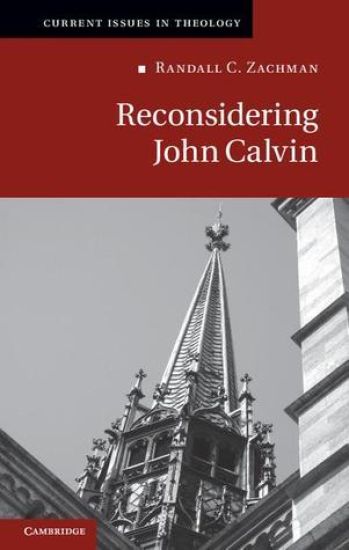
Randall C. Zachman places Calvin in conversation with theologians such as Pascal, Kierkegaard, Ezra the Scribe, Julian of Norwich and Karl Barth, and attends to themes in Calvin's theology which are often overlooked. Zachman draws out Calvin's use of astronomy and great concern to see ourselves in comparison to the immensity of the universe, acknowledging in wonder and awe our nothingness before God. Throughout, Zachman presents a Calvin who seeks a route out of self-deception to self-knowledge, though Kierkegaard shows that it is love, and not judgment, that most deeply reveals us to ourselves. The book discusses Calvin's understanding of the election of the Jews and their relationship to God, and further reconsiders Calvin's understanding of judgment and how the call to love our neighbour is undermined by the formation of alliances.
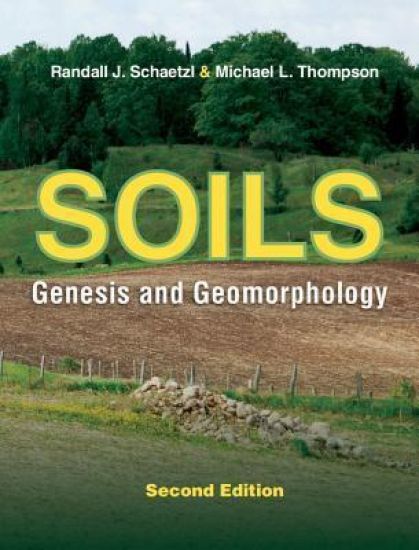
In its first edition, Soils established itself as the leading textbook in the fields of pedology and soil geomorphology. Expanded and fully updated, this second edition maintains its highly organized and readable style. Suitable as a textbook and a research-grade reference, the book's introductory chapters in soil morphology, mineralogy, chemistry, physics and organisms prepare the reader for the more advanced treatment that follows. Unlike its competitors, this textbook devotes considerable space to discussions of soil parent materials and soil mixing, along with dating and paleoenvironmental reconstruction techniques applicable to soils. Although introductions to widely used soil classification systems are included, theory and processes of soil genesis and geomorphology form the backbone of the book. Replete with more than 550 high-quality figures and photos and a detailed glossary, this book will be invaluable for anyone studying soils, landforms and landscape change anywhere on the globe.

This book is the first comprehensive analysis of eugenics in North America focused on the second half of the twentieth century. Based on new research, Randall Hansen and Desmond King show why eugenic sterilization policies persisted after the 1940s in the United States and Canada. Through extensive archival research, King and Hansen show how both superintendents at homes for the 'feebleminded' and pro-sterilization advocates repositioned themselves after 1945 to avoid the taint of Nazi eugenics. Drawing on interviews with victims of sterilization and primary documents, this book traces the post-1940s development of eugenic policy and shows that both eugenic arguments and committed eugenicists informed population, welfare, and birth control policy in postwar America. In providing revisionist histories of the choice movement, the anti-population growth movement, and the Great Society programs, this book contributes to public policy and political and intellectual history.

Randall C. Zachman places Calvin in conversation with theologians such as Pascal, Kierkegaard, Ezra the Scribe, Julian of Norwich and Karl Barth, and attends to themes in Calvin's theology which are often overlooked. Zachman draws out Calvin's use of astronomy and great concern to see ourselves in comparison to the immensity of the universe, acknowledging in wonder and awe our nothingness before God. Throughout, Zachman presents a Calvin who seeks a route out of self-deception to self-knowledge, though Kierkegaard shows that it is love, and not judgment, that most deeply reveals us to ourselves. The book discusses Calvin's understanding of the election of the Jews and their relationship to God, and further reconsiders Calvin's understanding of judgment and how the call to love our neighbour is undermined by the formation of alliances.

This book is the first comprehensive analysis of eugenics in North America focused on the second half of the twentieth century. Based on new research, Randall Hansen and Desmond King show why eugenic sterilization policies persisted after the 1940s in the United States and Canada. Through extensive archival research, King and Hansen show how both superintendents at homes for the 'feebleminded' and pro-sterilization advocates repositioned themselves after 1945 to avoid the taint of Nazi eugenics. Drawing on interviews with victims of sterilization and primary documents, this book traces the post-1940s development of eugenic policy and shows that both eugenic arguments and committed eugenicists informed population, welfare, and birth control policy in postwar America. In providing revisionist histories of the choice movement, the anti-population growth movement, and the Great Society programs, this book contributes to public policy and political and intellectual history.
In this groundbreaking book, Randall Kiser presents a multi-disciplinary, practice-based introduction to the major soft skills for lawyers: self-awareness, self-development, social proficiency, wisdom, leadership, and professionalism. The work serves as both a map and a vehicle for developing the skills essential to self-knowledge and fulfillment, organizational respect and accomplishment, client satisfaction and appreciation, and professional improvement and distinction. It identifies the most important soft skills for attorneys, describes and applies hundreds of studies regarding psychology, law, and soft skills, and provides concrete steps and methods to improve soft skills. The book should be read by law students, attorneys, and anyone else interested in how lawyers should practice law.
In this groundbreaking book, Randall Kiser presents a multi-disciplinary, practice-based introduction to the major soft skills for lawyers: self-awareness, self-development, social proficiency, wisdom, leadership, and professionalism. The work serves as both a map and a vehicle for developing the skills essential to self-knowledge and fulfillment, organizational respect and accomplishment, client satisfaction and appreciation, and professional improvement and distinction. It identifies the most important soft skills for attorneys, describes and applies hundreds of studies regarding psychology, law, and soft skills, and provides concrete steps and methods to improve soft skills. The book should be read by law students, attorneys, and anyone else interested in how lawyers should practice law.
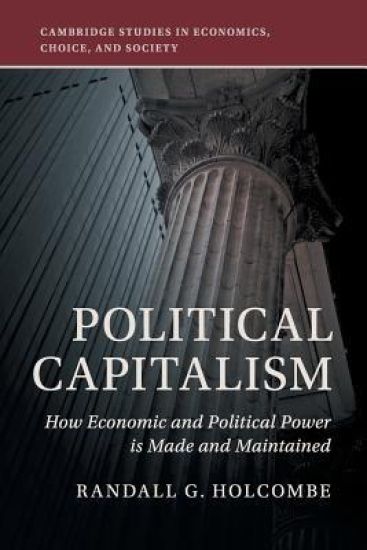
Problems associated with cronyism, corporatism, and policies that favor the elite over the masses have received increasing attention in recent years. Political Capitalism explains that what people often view as the result of corruption and unethical behavior are symptoms of a distinct system of political economy. The symptoms of political capitalism are often viewed as the result of government intervention in a market economy, or as attributes of a capitalist economy itself. Randall G. Holcombe combines well-established theories in economics and the social sciences to show that political capitalism is not a mixed economy, or government intervention in a market economy, or some intermediate step between capitalism and socialism. After developing the economic theory of political capitalism, Holcombe goes on to explain how changes in political ideology have facilitated the growth of political capitalism, and what can be done to redirect public policy back toward the public interest.
Problems associated with cronyism, corporatism, and policies that favor the elite over the masses have received increasing attention in recent years. Political Capitalism explains that what people often view as the result of corruption and unethical behavior are symptoms of a distinct system of political economy. The symptoms of political capitalism are often viewed as the result of government intervention in a market economy, or as attributes of a capitalist economy itself. Randall G. Holcombe combines well-established theories in economics and the social sciences to show that political capitalism is not a mixed economy, or government intervention in a market economy, or some intermediate step between capitalism and socialism. After developing the economic theory of political capitalism, Holcombe goes on to explain how changes in political ideology have facilitated the growth of political capitalism, and what can be done to redirect public policy back toward the public interest.
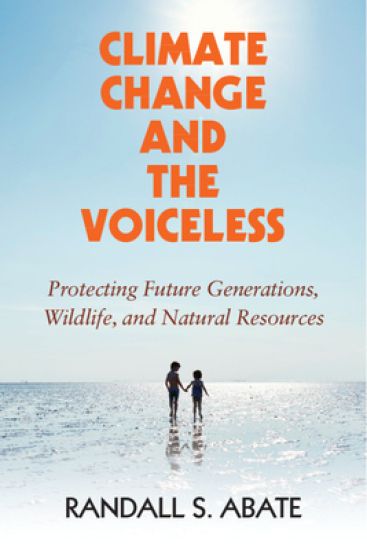
Future generations, wildlife, and natural resources - collectively referred to as 'the voiceless' in this work - are the most vulnerable and least equipped populations to protect themselves from the impacts of global climate change. While domestic and international law protections are beginning to recognize rights and responsibilities that apply to the voiceless community, these legal developments have yet to be pursued in a collective manner and have not been considered together in the context of climate change and climate justice. In Climate Change and the Voiceless, Randall S. Abate identifies the common vulnerabilities of the voiceless in the Anthropocene era and demonstrates how the law, by incorporating principles of sustainable development, can evolve to protect their interests more effectively. This work should be read by anyone interested in how the law can be employed to mitigate the effects of climate change on those who stand to lose the most.
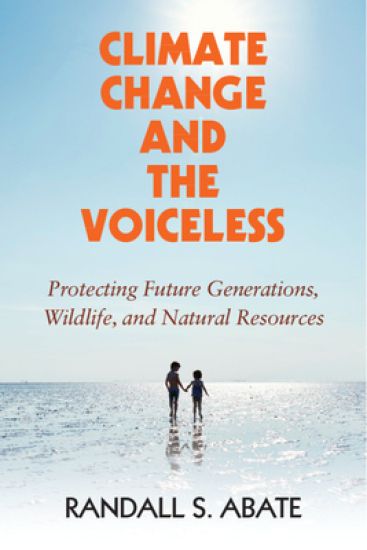
Future generations, wildlife, and natural resources - collectively referred to as 'the voiceless' in this work - are the most vulnerable and least equipped populations to protect themselves from the impacts of global climate change. While domestic and international law protections are beginning to recognize rights and responsibilities that apply to the voiceless community, these legal developments have yet to be pursued in a collective manner and have not been considered together in the context of climate change and climate justice. In Climate Change and the Voiceless, Randall S. Abate identifies the common vulnerabilities of the voiceless in the Anthropocene era and demonstrates how the law, by incorporating principles of sustainable development, can evolve to protect their interests more effectively. This work should be read by anyone interested in how the law can be employed to mitigate the effects of climate change on those who stand to lose the most.
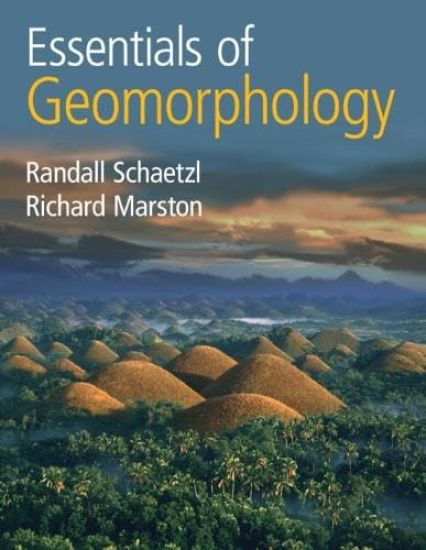
Essentials of Geomorphology
Randall Schaetzl; Richard Marston
Cambridge University Press
2025
pokkari
Essentials of Geomorphology is an introductory textbook covering the latest research on landforms, both on Earth as well as on planets and moons. This easy-to-read, non-quantitative textbook hones in on the knowledge of leading experts in the field, and presents the practicality, applications, and necessity of geomorphology. Replete with beautiful color figures and photographs, it contains in-depth discussions on fluvial and glacial geomorphology while also covering topics such as planetary geology, biogeomorphology, Earth history and climate change, and periglacial systems. Descriptive, but also process-driven, it is intended for readers interested in physical landscapes, regardless of their previous background or level of training in geography or geology. To this end, it only includes the basic mathematics needed to understand the concepts presented.
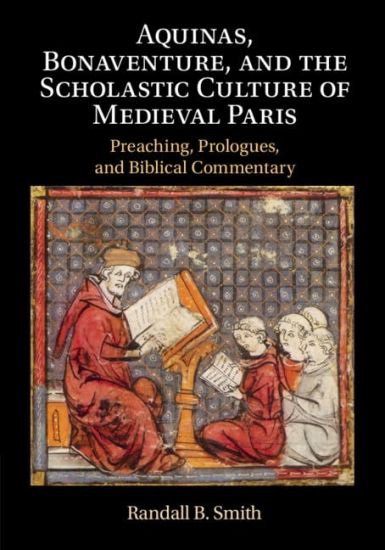
Aquinas, Bonaventure, and the Scholastic Culture of Medieval Paris
Randall B. Smith
Cambridge University Press
2024
pokkari
In this volume, Randall B. Smith provides a revisionist account of the scholastic culture that flourished in Paris during the High Middle Ages. Exploring the educational culture that informed the intellectual and mental habits of Thomas Aquinas and Bonaventure, he offers an in-depth study of the prologues and preaching skills of these two masters. Smith reveal the intricate interrelationships between the three duties of the master: lectio (reading), disputatio (debate), and praedicatio (preaching). He also analyzes each of Aquinas and Bonaventure's prologues from their student days to their final works, revealing both their artistry and their instructional character. Written in an engaging style, this book serves as an invaluable resource that will enable scholars and students to read thirteenth-century sermons, prologues, and biblical commentaries with greater understanding and ease.
Aquinas, Bonaventure, and the Scholastic Culture of Medieval Paris
Randall B. Smith
Cambridge University Press
2021
sidottu
In this volume, Randall B. Smith provides a revisionist account of the scholastic culture that flourished in Paris during the High Middle Ages. Exploring the educational culture that informed the intellectual and mental habits of Thomas Aquinas and Bonaventure, he offers an in-depth study of the prologues and preaching skills of these two masters. Smith reveal the intricate interrelationships between the three duties of the master: lectio (reading), disputatio (debate), and praedicatio (preaching). He also analyzes each of Aquinas and Bonaventure's prologues from their student days to their final works, revealing both their artistry and their instructional character. Written in an engaging style, this book serves as an invaluable resource that will enable scholars and students to read thirteenth-century sermons, prologues, and biblical commentaries with greater understanding and ease.