Kirjojen hintavertailu. Mukana 11 213 693 kirjaa ja 12 kauppaa.

Kirjahaku

Etsi kirjoja tekijän nimen, kirjan nimen tai ISBN:n perusteella.

1000 tulosta hakusanalla RICHARD EDW DENNETT

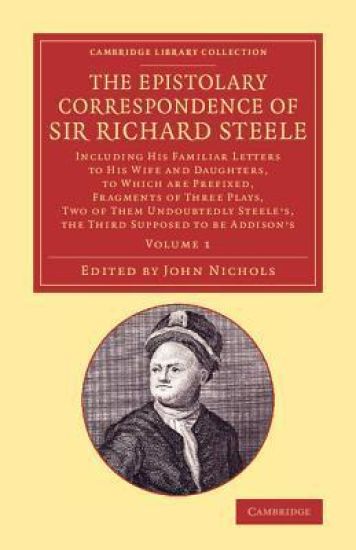
The Epistolary Correspondence of Sir Richard Steele

The Epistolary Correspondence of Sir Richard Steele

Richard Steele

Cambridge University Press
2014
pokkari
Sir Richard Steele (1672–1729), soldier, courtier and dramatist, is best remembered for his founding of two literary and political periodicals, the Tatler and the Spectator (the latter jointly with his friend Joseph Addison). These two volumes of his letters to friends and family were compiled by the publisher John Nichols and published in 1809. Nichols claims in his preface that these letters, 'some of them evidently scribbled when their amiable Author was probably not in the very best condition for penmanship', are nonetheless of great interest, 'as they contain the private and undisguised opinions of the man who took upon himself to be the Censor of the age'. In Volume 1, many of the letters are addressed to his second wife (both before and after their marriage), others to Addison, Swift, and the duke of Marlborough. Fragments of two unfinished plays by Steele, and one by Addison, are also included.
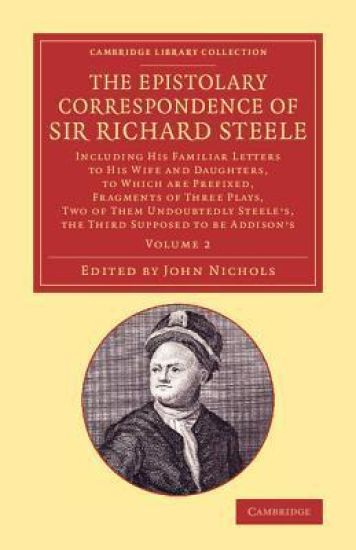
The Epistolary Correspondence of Sir Richard Steele

The Epistolary Correspondence of Sir Richard Steele

Richard Steele

Cambridge University Press
2014
pokkari
Sir Richard Steele (1672–1729), soldier, courtier and dramatist, is best remembered for his founding of two literary and political periodicals, the Tatler and the Spectator (the latter jointly with his friend Joseph Addison). These two volumes of his letters to friends and family were compiled by the publisher John Nichols and published in 1809. Nichols claims in his preface that these letters, 'some of them evidently scribbled when their amiable Author was probably not in the very best condition for penmanship', are nonetheless of great interest, 'as they contain the private and undisguised opinions of the man who took upon himself to be the Censor of the age'. Volume 2 contains letters to his wife and daughters, and to literary and political figures of his day, including Sir Robert Walpole, Robert Harley, earl of Oxford, the duke of Newcastle, and the theatre managers Cibber and Booth.
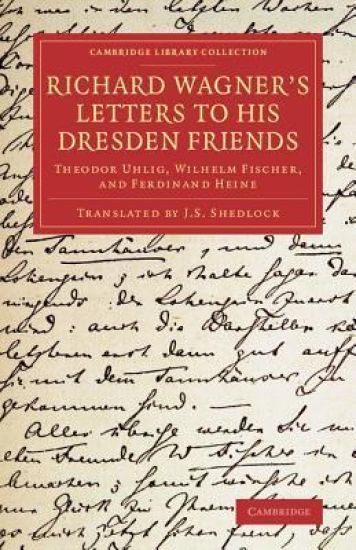
Richard Wagner's Letters to his Dresden Friends

Richard Wagner's Letters to his Dresden Friends

Richard Wagner

Cambridge University Press
2014
pokkari
Richard Wagner (1813–83) grew up in Dresden and served as Kapellmeister to King Frederick Augustus II of Saxony there from 1843 until he was forced to flee the country after the 1849 uprising. His operas Rienzi and Der fliegende Holländer received their first performances at the Dresden Court Theatre. During his time in the city, Wagner became firm friends with the composer and violinist Theodor Uhlig, the stage manager and chorus master Wilhelm Fischer, and the comedian and costume designer Ferdinand Heine. This collection of letters from the composer to his three great friends covers the period 1841–68. First published in 1888, the letters are reissued here in the 1890 English translation by the pianist and Beethoven scholar John South Shedlock (1843–1919). They offer an intimate and compelling insight into Wagner's personal and professional life and his forthright views on many contemporary musicians and public figures.
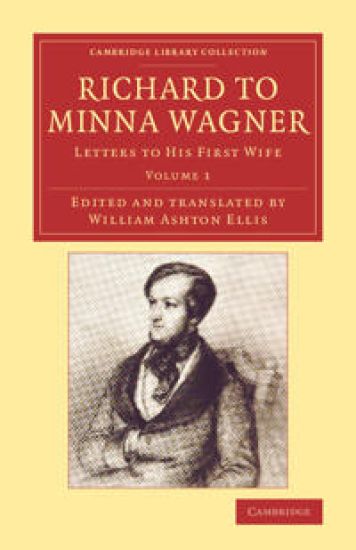
Richard to Minna Wagner

Richard to Minna Wagner

Richard Wagner

Cambridge University Press
2014
pokkari
The German actress Minna Planer (1809–66) was Wagner's first wife. Though it lasted until her death, their marriage, never an easy one, was punctuated by long periods of separation, and during its early years Minna was the main breadwinner. William Ashton Ellis (1852–1919) abandoned his medical career to devote himself to his Wagner studies. Best known for his translations of Wagner's prose works, he published in 1909 this collection of letters from the composer, translated from the originals in Baron Hans von Wolzogen's Richard Wagner an Minna Wagner (1908). Concerned predominantly with domestic and business affairs, many of them complaining at Minna's lack of support, the letters offer an intriguing and intimate view of this larger-than-life composer. Spanning 1842–58, Volume 1 covers the couple's period in Dresden, Wagner's hurried departure after the 1849 uprising, and the years in Zurich culminating in the relationship with Mathilde Wesendonck.
Richard to Minna Wagner

Richard to Minna Wagner

Richard Wagner

Cambridge University Press
2014
pokkari
The German actress Minna Planer (1809–66) was Wagner's first wife. Though it lasted until her death, their marriage, never an easy one, was punctuated by long periods of separation, and during its early years Minna was the main breadwinner. William Ashton Ellis (1852–1919) abandoned his medical career to devote himself to his Wagner studies. Best known for his translations of Wagner's prose works, he published in 1909 this collection of letters from the composer, translated from the originals in Baron Hans von Wolzogen's Richard Wagner an Minna Wagner (1908). Concerned predominantly with domestic and business affairs, many of them complaining at Minna's lack of support, the letters offer an intriguing and intimate view of this larger-than-life composer. Spanning the period 1858–63, Volume 2 covers their uneasy, brief reconciliation in Paris, Wagner's concerns over Minna's failing health, and her return to Dresden in 1862, which marked their final separation.
Richard to Minna Wagner 2 Volume Set

Richard to Minna Wagner 2 Volume Set

Richard Wagner

Cambridge University Press
2014
muu
The German actress Minna Planer (1809–66) was Wagner's first wife. Though it lasted until her death, their marriage, never an easy one, was punctuated by long periods of separation, and during its early years Minna was the main breadwinner. William Ashton Ellis (1852–1919) abandoned his medical career to devote himself to his Wagner studies. Best known for his translations of Wagner's prose works, he published in 1909 this collection of letters from the composer, translated from the originals in Baron Hans von Wolzogen's Richard Wagner an Minna Wagner (1908). Concerned predominantly with domestic and business affairs, many of them complaining at Minna's lack of support, the letters offer an intriguing and intimate view of this larger-than-life composer. Volume 1 covers the period 1842–58, during which the couple lived in Dresden and Zurich. Volume 2 spans the years 1858–63, during which the couple separated but did not divorce.
Letters of Richard Wagner to Emil Heckel

Letters of Richard Wagner to Emil Heckel

Richard Wagner

Cambridge University Press
2014
pokkari
A great admirer of Richard Wagner, the music publisher Emil Heckel (1831–1908) founded the first Wagner Society in Mannheim in 1871. His purpose was to inspire others to help raise the necessary funds for the inaugural Bayreuth Festival. William Ashton Ellis (1852–1919) abandoned his medical career in order to devote himself to his Wagner studies. Best known for his translations of Wagner's prose works, he published in 1899 this English translation of Heckel's memoirs (originally edited by his son Karl), interwoven with letters from Wagner to Heckel, who is described by the composer as his 'energetic friend'. Notwithstanding the stylistic idiosyncrasies of the translation, the work provides a valuable first-hand account of the progress made towards establishing what would become one of the world's most prestigious music festivals. The letters span the years 1871 to 1883.
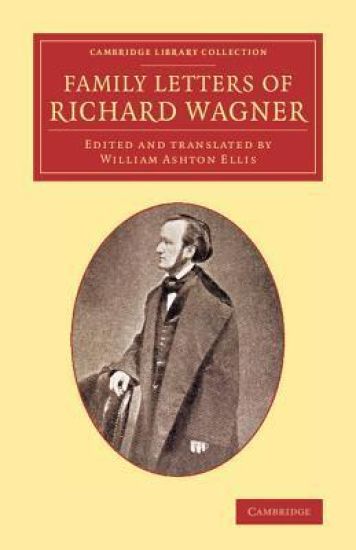
Family Letters of Richard Wagner

Family Letters of Richard Wagner

Richard Wagner

Cambridge University Press
2014
pokkari
William Ashton Ellis (1852–1919) abandoned his medical career in order to devote himself to his Wagner studies. Best known for his translations of Wagner's prose works and of Carl Friedrich Glasenapp's multi-volume biography of the composer, Ellis published in 1911 this English translation of Wagner's Familienbriefe, spanning the years 1832–74. An inveterate letter writer, Wagner was the youngest-but-one of ten children and Ellis describes the character of these letters to his sisters, his mother, his brother-in-law and his nieces as a reflection of the composer in the 'driest and most neutral of lights', claiming that within the family it is impossible to be pretentious. An appendix by Glasenapp, giving brief biographical details of family members, is also included. Despite the stylistic idiosyncrasies of the translations, these letters remain of importance, capturing something of the tone of Wagner's prose style and shedding light on his extraordinary life.
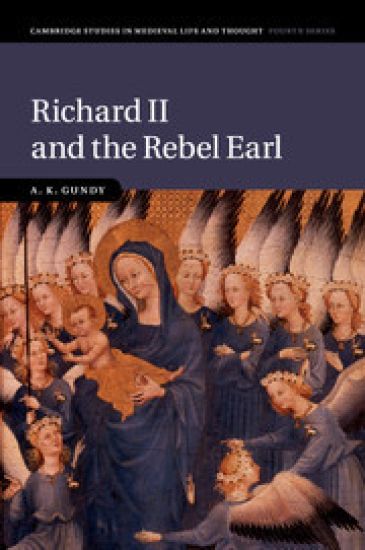
Richard II and the Rebel Earl

Richard II and the Rebel Earl

A. K. Gundy

Cambridge University Press
2017
pokkari
The reign of Richard II and the circumstances of his deposition have long been subject to intense debate. This new interpretation of the politics of the late-fourteenth century offers an in-depth survey of Richard's reign from the perspective of one of the leading nobles who came to oppose him, Thomas Beauchamp, the Appellant Earl of Warwick. This is the first full-length study of one of Richard II's opponents to explore not only why the Earl rebelled against the King, but also why Richard lost his throne. Rather than offering the traditional explanation of a subject grown too mighty, A. K. Gundy sets Warwick's rule in the context of the political and constitutional framework of the period. The interplay of local and national events helps to reveal Warwick's motives as a long-serving member of the nobility faced with a king determined to rule in a manner contradictory to contemporary political structures.
Richard Strauss in Context

Richard Strauss in Context

Cambridge University Press
2020
sidottu
Richard Strauss in Context offers a distinctive approach to the study of a composer in that it places the emphasis on contextualizing topics rather than on biography and artistic output. One might say that it inverts the relationship between composer and context. Rather than studies of Strauss's librettists that discuss the texts themselves and his musical settings, for instance, this book offers essays on the writers themselves: their biographical circumstances, styles, landmark works, and broader positions in literary history. Likewise, Strauss's contributions to the concert hall are positioned within the broader development of the orchestra and trends in programmatic music. In short, readers will benefit from an elaboration of material that is either absent from or treated only briefly in existing publications. Through this supplemental and broader contextual approach, this book serves as a valuable and unique resource for students, scholars, and a general readership.
Richard Strauss in Context

Richard Strauss in Context

Cambridge University Press
2022
pokkari
Richard Strauss in Context offers a distinctive approach to the study of a composer in that it places the emphasis on contextualizing topics rather than on biography and artistic output. One might say that it inverts the relationship between composer and context. Rather than studies of Strauss's librettists that discuss the texts themselves and his musical settings, for instance, this book offers essays on the writers themselves: their biographical circumstances, styles, landmark works, and broader positions in literary history. Likewise, Strauss's contributions to the concert hall are positioned within the broader development of the orchestra and trends in programmatic music. In short, readers will benefit from an elaboration of material that is either absent from or treated only briefly in existing publications. Through this supplemental and broader contextual approach, this book serves as a valuable and unique resource for students, scholars, and a general readership.
Richard Wright in Context

Richard Wright in Context

Cambridge University Press
2021
sidottu
Richard Wright was one of the most influential and complex African American writers of the twentieth century. Best known as the trailblazing, bestselling author of Native Son and Black Boy, he established himself as an experimental literary intellectual in France who creatively drew on some of the leading ideas of his time - Marxism, existentialism, psychoanalysis, and postcolonialism - to explore the sources and meaning of racism both in the United States and worldwide. Richard Wright in Context gathers thirty-three new essays by leading scholars relating Wright's writings to biographical, regional, social, literary, and intellectual contexts essential to understanding them. It explores the places that shaped his life and enabled his literary destiny, the social and cultural contexts he both observed and immersed himself in, and the literary and intellectual contexts that made him one the most famous Black writers in the world at mid-century.