Kirjojen hintavertailu. Mukana 12 450 603 kirjaa ja 12 kauppaa.

Kirjahaku

Etsi kirjoja tekijän nimen, kirjan nimen tai ISBN:n perusteella.

1000 tulosta hakusanalla ROBERT C. WATERSTON

An Introduction to Crime and Crime Causation

An Introduction to Crime and Crime Causation

Robert C. Winters; Julie L. Globokar; Cliff Roberson

Routledge Member of the Taylor and Francis Group
2014
sidottu
An Introduction to Crime and Crime Causation is a student-friendly textbook that defines and explains the concepts of crime, criminal law, and criminology. Ideal for a one-semester course, the book compares and contrasts early criminal behavior and today’s modern forms of crime. It also explores society’s responses to criminal behavior in the past and in the present day. It covers both major and lesser-known crime causation theories and their impact on society. Topics covered include: The importance of understanding crime data The goals of punishment The history of criminology, including the influence of social Darwinism on early trait theorists Crime causation theories, including a comparison of mainstream and critical theories The relationship between crime and biology, including the influence of genetics, substance use, and mental illness The social structural approach to crime, including a consideration of the changing contexts of urban criminality The nature and function of the justice system at the local, state, and federal levels, and basic categories of crimes Drug trafficking crimes, drug court efforts, and perceived weaknesses in current antidrug effortsEach chapter begins with a set of objectives and concludes with a summary. Interactive questions promote classroom discussion and practicum sections facilitate contextual learning. Drawn from different and distinct backgrounds, the authors each have unique perspectives on crime, making for a particularly well-rounded text that explores crime from several angles. The book attempts to educate readers in the development of new insights on crime and crime causation and provides a greater understanding of the steps that need to be taken before a significant reduction in crime can occur.

Fading Ads of Detroit

Fading Ads of Detroit

Robert C. Allen

History Press
2018
nidottu
Detroit Free Press journalist Robert Allen sifts through these advertising fossils, exposing the gripping stories connected to the Motor City's historic rises, falls and eccentricities.Across Detroit, fleeting symbols of the past hide in plain sight, behind weeds and under veneers of paint. Demolishing a vacant building among empty storefronts on the west side uncovered the telltale gold and green of a Vernors Ginger Ale sign, preserved almost as vibrantly as the artist intended. In faded red, white and blue, Mac-O-Lac Paint makes an expired pitch to passersby on Gratiot near Eastern Market. On the east side, Mohawk Rock and Rye still declares itself the World's Finest Carhartt, Stroh's and Faygo appear in odd, deserted places.
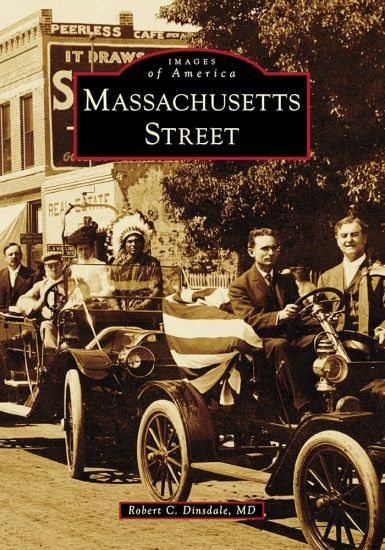
Massachusetts Street

Massachusetts Street

Robert C. Dinsdale

Arcadia Publishing (SC)
2024
nidottu
Local historian Robert C. Dinsdale, MD, searched more than 30,000 photographs to bring forth a time-travel tale of the founding, building, and full expression of what makes Mass Street one of the most beloved main thoroughfares in the country. Massachusetts Street (known as "Mass Street" in local lingo) has been the heart of Lawrence, Kansas, since 1854, when the political aspirations and commercial motivations of the abolitionist founders intersected on this ground between the right-angle bend of the Kansas River and the meandering Oregon Trail. It is where optimistic entrepreneurs built a dam and a bridge and railroads to power and grow our town for commerce and where residents of Kansas Territory met to form antislavery political parties. Mass Street, laid out to point to the North Star, was the scene of terror when mass murder and arson were visited on the town in 1863; within days, it was the hub of resolute reconstruction. This is the place to be, the place where people live, shop, parade, protest, and be themselves as only Lawrencians can. The story of Mass Street includes the inventor of basketball, James Naismith; the post-Prohibition rebirth of Kansas beer brewing; and the arena for the greatest Native American athlete ever.
Christ's Team: A 21st Century View of Christianity

Christ's Team: A 21st Century View of Christianity

Robert C. Frank

Createspace Independent Publishing Platform
2009
nidottu
This book summarizes the fundamental concepts and practices of Christianity in the context of the continuing creation of civilization on earth. It is intended to inspire ordinary Christians to become more active by helping them understand the Christian mission and the relevance of the relationship between Christianity and science in the 21st century. Their team is perhaps the largest and potentially most influential team on earth, but the members need to learn how to think like a team. This book can help. Appended Study Guides include questions to stimulate small group discussion
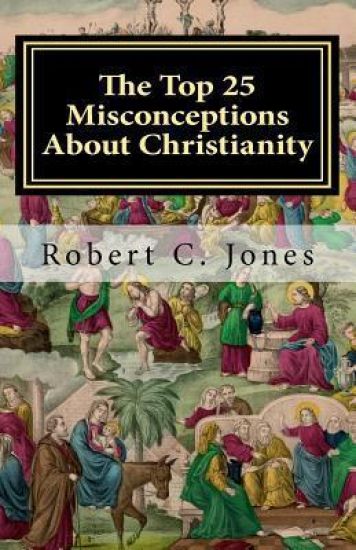
The Top 25 Misconceptions About Christianity

The Top 25 Misconceptions About Christianity

Robert C. Jones

Createspace Independent Publishing Platform
2011
nidottu
There are many misconceptions about Christianity. Some come from a skeptical and antagonistic press. Some come from Secular Humanists that question one of the basic premises of Christianity - original sin. Some come from people that consider themselves Christians - but don't believe in the Creeds or most of the New Testament. 1 Peter 3:15 tells us the importance of making a "ready defense" of Christianity. In the broader sense, this is often referred to as Christian "apologetics". "Apologetics" doesn't mean that we're apologizing for Christianity. Rather, it means defending the faith against detractors. This book is a book of apologetics. It examines 25 different misconceptions about Christianity, most of them from our times. There are 20 illustrations, with 10 of them in color.
Handbook of Genetics

Handbook of Genetics

Robert C. King

Springer-Verlag New York Inc.
2013
nidottu
The purpose of this and future volumes of the Handbook of Genetics is to bring together a collection of relatively short, authoritative essays or annotated compilations of data on topics of~ignificance to geneticists. Many of the essays will deal with various aspects of the biology of certain species selected because they are favorite subjects for genetic investigation in nature or the laboratory. Often there will be an encyclopedic amount o( information available on such a species, with new papers appearing daily. Most of these will be written for specialists in a jargon that is bewildering to a novice and sometimes even to a veteran geneticist working with evolu­ tionarily distant organisms. For such readers what is needed is a written introduction to the morphology, life cycle, reproductive behavior, and cul­ ture methods for the species in question. What are its particular ad­ vantages (and disadvantages) for genetic study, and what have we learned from it? Where are the classic papers, the key bibliographies, and how or mutant strains? A list giving the sym­ does one get stocks of wild type bolism for unknown mutations is helpful, but it need include only those mutants that have been retained and are thus available for future studies. Other data, such as up-to-date genetic and cytological maps, listings of break points for chromosomal aberrations, mitotic karyotypes, and hap­ loid DNA values, will be included when available.
Selling the Church

Selling the Church

Robert C. Palmer

The University of North Carolina Press
2014
nidottu
In the years of expanding state authority following the Black Death, English common law permitted the leasing of parishes by their rectors and vicars, who then pursued interests elsewhere and left the parish in the control of lay lessees. But a series of statutes enacted by Henry VIII between 1529 and 1540 effectively reduced such clerical absenteeism. Robert Palmer examines this transformation of the English parish and argues that it was an important part of the English Reformation.Palmer analyzes an extensive set of data drawn from common law records to reveal a vigorous and effective effort by the laity to enforce the new statutes. Motivated by both economic and traditional ideals, the litigants made the commercial activities of leaseholding and buying for resale and profit the exclusive domain of the laity and acquired the power to regulate the clergy. According to Palmer, these parish-level reformations presaged and complemented other initiatives of the crown that have long been considered central to the reign of Henry VIII.