Kirjojen hintavertailu. Mukana 11 699 587 kirjaa ja 12 kauppaa.

Kirjahaku

Etsi kirjoja tekijän nimen, kirjan nimen tai ISBN:n perusteella.

1000 tulosta hakusanalla ROSENTHAL MICHAEL

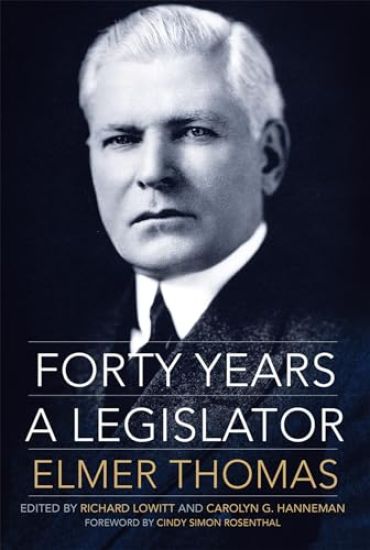
Forty Years a Legislator

Forty Years a Legislator

Elmer Thomas; Cindy Simon Rosenthal

UNIVERSITY OF OKLAHOMA PRESS
2024
nidottu
Elmer Thomas (1876–1965) represented the people of Oklahoma in the state’s first legislature and in Congress. This memoir, written shortly after he left the U.S. Senate in 1951 but never before published, chronicles his long career and offers a wealth of information on people and events that helped shape the development of the state and the course of American history. Thomas became one of Oklahoma’s first state senators in 1907 and was involved with financing the construction of public works. As a member of the U.S. Congress, he made it his business to understand the Federal Reserve System, and as the farm crisis of the 1920s worsened during the Great Depression, he consistently argued for inflating the currency to stimulate the economy—a struggle that became central to his career and that he eventually won. Thomas’s panoramic look at the issues of his time includes a behind-the-scenes view of the NÜrnberg War Crimes Trial and also tells how he helped push funding for the atomic bomb project through Congress without disclosing its true nature. Thomas dedicated his career to improving the lot of rural residents, Native Americans, and working people. Forty Years a Legislator is a rich source of insight for all concerned with twentieth-century politics or the early years of Oklahoma statehood.
The Emotional Revolution: Harnessing the Power of Your Emotions for a More Positive Life

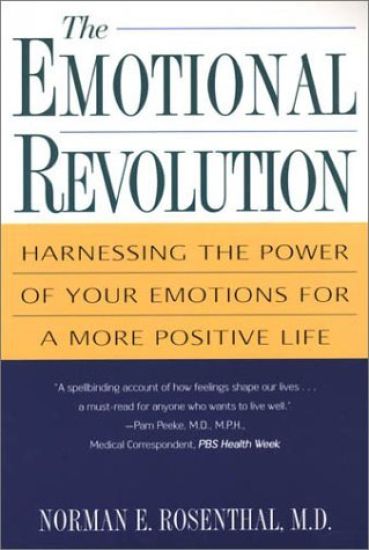
The Emotional Revolution: Harnessing the Power of Your Emotions for a More Positive Life

Norman E. Rosenthal; M. D. Norman E. Rosenthal

KENSINGTON PUBLISHING CORPORATION
2003
nidottu
Feel Better. . .Live Better Scientific discoveries are unlocking the mysteries of our emotional lives. Every week brings us new information on the environmental, hormonal, genetic, and chemical factors that affect our feelings, and an ever-expanding repertoire of methods to manage specific emotional conditions. But how can we apply this cutting-edge research to our own lives? In The Emotional Revolution, Norman E. Rosenthal, psychiatrist, researcher, and specialist in the fields of psychopharmacology and psychobiology, offers a comprehensive guide to these exciting breakthroughs. He explores the latest findings about the body mechanisms that create emotions--and why our feelings can sometimes go out of control. He also offers simple self-help strategies and evaluates dozens of the newest treatments--both traditional and alternative--that can help with everything from depression and addiction to anxiety and excessive anger. Here is fascinating, up-to-the-minute information you won't find in any other single resource, including: - Clues to the biological basis of monogamy - A new link between depression and heart disease, and what this means for the treatment of both conditions - How simple patterns of eye movements can help alleviate painful memories - How taking a commonly-used blood pressure medication can help you cope with trauma - How lying in the dark releases a hormone that can alleviate anxiety and craving - The surprising health benefits of friendship and religion - The deadly dangers of anger - The health-promoting powers of love The first book to combine scientific research with prescriptive guidelines for the general reader, The Emotional Revolution is your guide to understanding the complexities of human feelings--and improving your life. "A well-researched, clearly-written, and absorbing book. Highly recommended for anyone who's ever seen a psychiatrist--or who hasn't " --Dean Hamer, Ph.D., author of The Science of Desire Norman E. Rosenthal, M.D., is Clinical Professor of Psychiatry at Georgetown University. A practicing psychiatrist, Dr. Rosenthal has been listed in The Best Doctors in the U.S. For twenty years, he was a senior researcher in psychiatry and psychobiology at the National Institute of Mental Health. He has appeared on 20/20, CNN, National Public Radio, The Today Show, CBS Morning News, and Good Morning, America. Dr. Rosenthal lives and practices in Rockville, Maryland. Visit his Web site at www.normanrosenthal.com.
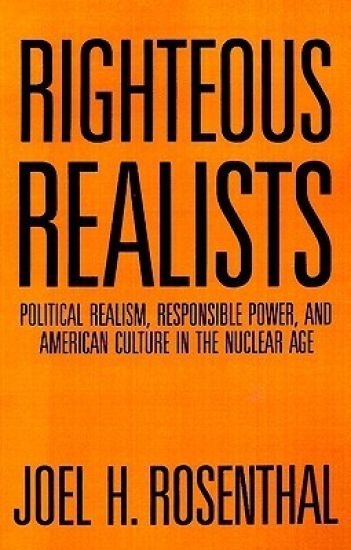
Righteous Realists

Righteous Realists

Joel H. Rosenthal

Louisiana State University Press
2002
nidottu
Political realism in post-World War II America has not been about power alone, but about reconciling power with moral and ethical considerations. The caricature of realism as an expression of amoral realpolitik has been inadequate and false, for realism in the nuclear age has pivoted as much on moral principles as on power politics. Joel H. Rosenthal's survey of five noteworthy self-proclaimed political realists explores the realists' overarching commitment to transforming traditional power politics into a form of ""responsible power"" commensurate with American values.Hans Morgenthau, George Kennan, Reinhold Niebuhr, Walter Lippman, and Dean Acheson, the most important and prolific of the American realists, all fought the excesses of crusading moralism while simultaneously promoting a concept of power politics that retained a moral component at its core. This is the story of how architects of containment, present at the creation of the new bipolar world shaped by the threat of ""mutual assured destruction,"" became ardent critics of that world. It describes realism as a product of a particular time and place, a set of values, assumptions, processes of moral reasoning, and views about America's role in the world.Much of the current scholarship on the modern American realists dwells on the alleged inconsistencies of realism as a political theory, and the tortuous mixture of piety and detachment exhibited in the lives of the realists themselves. Rosenthal takes the opposite tack, assembling the ties that bind realism into a coherent world view, rather than deconstructing it into irreconcilable fragments.Rosenthal maintains that the postwar American realists may be best understood as products of the historical and cultural context from which they emerged. Their attempts to articulate a ""public philosophy"" and integrate values into decision making in international affairs reflected their views on both the way the world ""is"" and the way the world ""ought to be."" This study explains realism as an effort to articulate a prescriptive framework for working toward the ideal while living in the real. In doing so, it reveals the realists' insistence on evaluating competing claims and on accepting paradox as an inevitable component of moral choice.
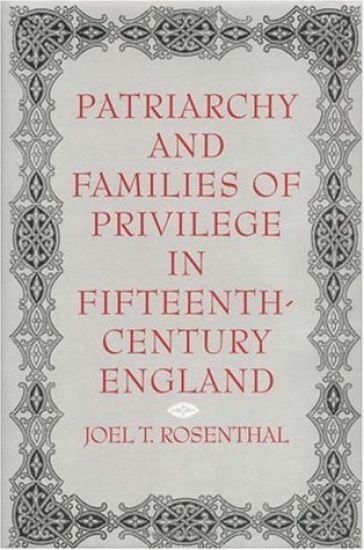
Patriarchy and Families of Privilege in Fifteenth-Century England

Patriarchy and Families of Privilege in Fifteenth-Century England

Joel T. Rosenthal

University of Pennsylvania Press
1991
sidottu
There are, contends Joel Rosenthal, two suppositions that have achieved almost full and unquestionable acceptance in contemporary social history and family studies. The first is that at any given time in any given culture one particular form or model of the family dominates; the second is that historical changes in the family operate in a single and compelling direction. In Patriarchy and Families of Privilege in Fifteenth-Century England, the author joins quantitative and legal evidence with case studies to yield a depiction of the family as something at once corporeal, fictive, and symbolic.
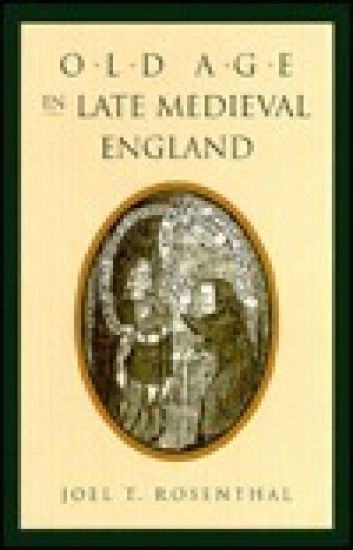
Old Age in Late Medieval England

Old Age in Late Medieval England

Joel T. Rosenthal

University of Pennsylvania Press
1996
sidottu
In Old Age in Late Medieval England, Joel T. Rosenthal explores the life spans, sustained activities, behaviors, and mentalites of the individuals who approached and who passed the biblically stipulated span of three score and ten in late medieval England. Drawing on a wide variety of documentary and court records (which were, however, more likely to specify with precision an individual's age on reaching majority or inheriting property than on the occasion of his or her death) as well as literary and didactic texts, he examines "old age" as a social construct and web of behavioral patterns woven around a biological phenomenon. Focusing on "lived experience" in late medieval England, Rosenthal uses demographic and quantitative records, family histories, and biographical information to demonstrate that many people lived into their sixth, seventh, and occasionally eighth decades. Those who survived might well live to know their grandchildren. This view of a society composed of the aged as well as of the young and the middle aged is reinforced by an examination of peers, bishops, and members of parliament and urban office holders, for whom demographic and career-length information exists. Many individuals had active careers until near the end of their lives; the aged were neither rarities nor outcasts within their world. Late medieval society recognized the concept of retirement, of old age pensions, and of the welcome release from duty for those who had served over the decades.
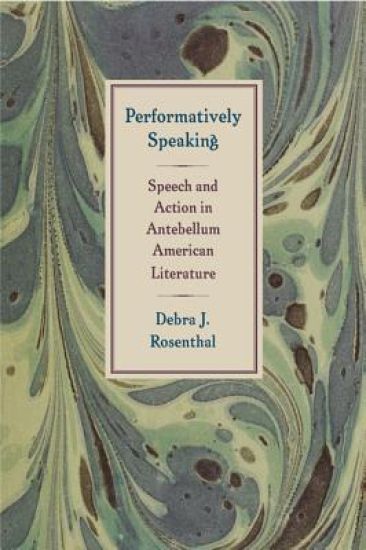
Performatively Speaking

Performatively Speaking

Debra J. Rosenthal

University of Virginia Press
2015
sidottu
In Performatively Speaking, Debra Rosenthal draws on speech act theory to open up the current critical conversation about antebellum American fiction and culture and to explore what happens when writers use words not just to represent action but to constitute action itself. Examining moments of discursive action in a range of canonical and noncanonical works—T. S. Arthur's temperance tales, Fanny Fern's Ruth Hall, Nathaniel Hawthorne's The Scarlet Letter, Harriet Beecher Stowe's Uncle Tom's Cabin, and Herman Melville's Moby-Dick—she shows how words act when writers no longer hold to a difference between writing and doing.The author investigates, for example, the voluntary self-binding nature of a promise, the formulaic but transformative temperance pledge, the power of Ruth Hall's signature or name on legal documents, the punitive hate speech of Hester Prynne's scarlet letter A, the prohibitory vodun hex of Simon Legree's slave Cassy, and Captain Ahab's injurious insults to second mate Stubb. Through her comparative methodology and historicist and feminist readings, Rosenthal asks readers to rethink the ways that speech and action intersect.
Performatively Speaking

Performatively Speaking

Debra J. Rosenthal

University of Virginia Press
2015
nidottu
In Performatively Speaking, Debra Rosenthal draws on speech act theory to open up the current critical conversation about antebellum American fiction and culture and to explore what happens when writers use words not just to represent action but to constitute action itself. Examining moments of discursive action in a range of canonical and noncanonical works—T. S. Arthur's temperance tales, Fanny Fern's Ruth Hall, Nathaniel Hawthorne's The Scarlet Letter, Harriet Beecher Stowe's Uncle Tom's Cabin, and Herman Melville's Moby-Dick—she shows how words act when writers no longer hold to a difference between writing and doing.The author investigates, for example, the voluntary self-binding nature of a promise, the formulaic but transformative temperance pledge, the power of Ruth Hall's signature or name on legal documents, the punitive hate speech of Hester Prynne's scarlet letter A, the prohibitory vodun hex of Simon Legree's slave Cassy, and Captain Ahab's injurious insults to second mate Stubb. Through her comparative methodology and historicist and feminist readings, Rosenthal asks readers to rethink the ways that speech and action intersect.
The Social Programs of Sweden

The Social Programs of Sweden

Albert H. Rosenthal; Marquis Childs

University of Minnesota Press
1967
nidottu
The Social Programs of Sweden was first published in 1967. Minnesota Archive Editions uses digital technology to make long-unavailable books once again accessible, and are published unaltered from the original University of Minnesota Press editions.In his forward to this book, Marquis Childs, author of the classic work Sweden: The Middle Way,comments: "There has been a great deal of emotional writing about the effort of the labor government in Stockholm to regulate capitalism and provide a decent standard of living for every citizen. Much of this emotional writing has come from those who for one reason or another have sought to discredit the Swedish experiment ... The net result of much of this highly colored writing has been to ignore the real contribution that Sweden has made in a half dozen fields and particularly in the fields of social security and health. But now comes an author ideally equipped to appraise this contribution by reason of his background. This is the great virtue of this book. It is a careful and thorough examination of Sweden's achievement by a specialist familiar with our own social security, public health and welfare systems ... No subsequent appraisal of what Sweden has done can be made henceforth without this basic work."The author traces the development of the Swedish programs and provides detailed descriptions of the social security, health insurance, public health, and welfare programs, with case examples. He evaluates and compares the programs with their American counterparts, and, in conclusion, considers the effects of the Swedish system on personal freedom. The work is based on extensive research done in Sweden.
Raqib Shaw

Raqib Shaw

Raqib Shaw; Sir Norman Rosenthal

RIZZOLI INTERNATIONAL PUBLICATIONS
2024
sidottu
Raqib Shaw is an Indian-born British artist whose work is as vibrant and ornate in color and detail as it is ambitious in scope, with a remarkable synergy between his fantastical and often violent imagery and the delicacy of his technique. Deeply inspired by the old masters but infused with his own personal iconography, and drawing equally on eastern and western mythology, his work represents a compelling and profoundly contemporary hybridization of aesthetics and sensibilities. His opulent and intricately detailed paintings of fantastical worlds, often with surfaces inlaid with vibrantly colored jewels and painted in enamel, reveal an eclectic fusion of influences from Persian carpets and Northern Renaissance painting to industrial materials and Japanese lacquerware but ultimately reflect the universality of the human condition. Collected here, in the first comprehensive monograph on the artist to date, are more than 100 of Shaw s works, representing thirty years of painting in which intricate detail, rich color, and bejeweled surfaces mask the intensity and depth of his imagery.
El Afortunado Cuento de DOS Perros

El Afortunado Cuento de DOS Perros

Cathy M. Rosenthal

Pet Pundit Publishing
2013
nidottu
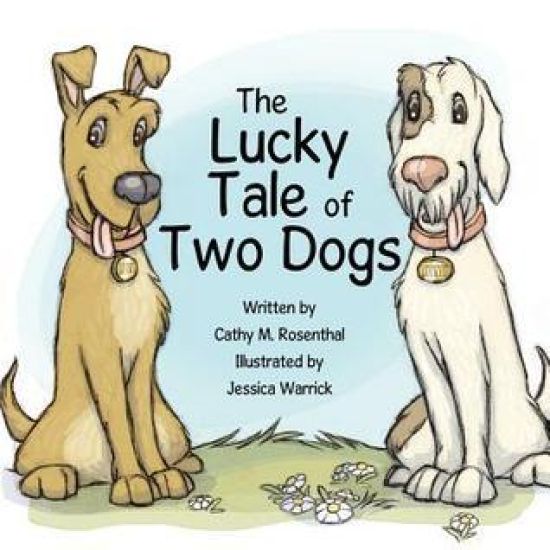
The Lucky Tale of Two Dogs traces the lives of two dogs who happen to live "in the very same town, on the very same street," but who share very different lives with their families. The lucky dog has lots of daily interaction with his family, from playtime to walks around the neighborhood. The unlucky dog spends most of his time alone in the backyard "rarely hearing a friendly voice." These comparisons give way to hope when the unlucky dog meets a "kind lady" from the animal shelter who helps him find a new "family to love." The Lucky Tale of Two Dogs tells a simple story that makes it easy for children to understand what dogs need to be healthy and happy. Every dog should be so lucky. (El Cuento Suerte de Dos Perros traza las vidas de dos perros que viven "en la misma ciudad, en la misma calle", pero que tienen vidas muy diferentes con sus familias. El perro de la buena suerte tiene mucho interacci n diaria con su familia, jugando y paseando por el barrio. El perro de mala suerte pasa la mayor parte del tiempo solo en el patio trasero "rara vez escucha una voz amigable". Esta comparativa da paso a la esperanza cuando el perro desafortunado se encuentra con una "amable se ora" en el refugio de animales que le ayuda a encontrar una nueva "familia para amar". El Cuento Suerte de Dos Perros narra una historia sencilla que facilita a los ni os a entender lo que los perros necesitan para estar saludables y felices. Cada perro debe tener tanta suerte.)